Nail Psoriasis Vs Fungus: 6 Key Differences And Treatments
Learn to distinguish nail psoriasis from fungal infections: symptoms, causes, diagnosis, and tailored treatments for healthier nails.
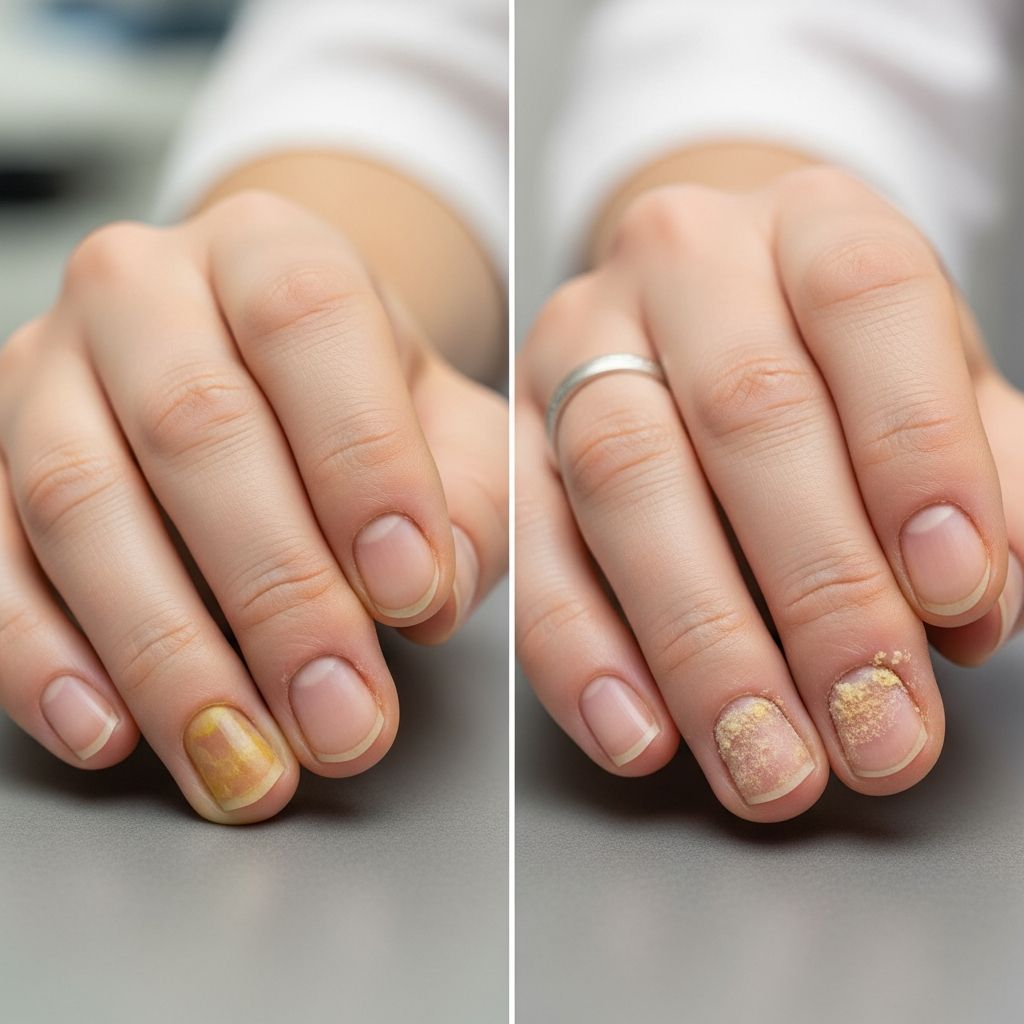
Nail psoriasis and fungal nail infections (onychomycosis) often present with overlapping symptoms like discoloration, thickening, and separation from the nail bed, making self-diagnosis challenging. Accurate differentiation is crucial because psoriasis stems from an autoimmune response, while fungus is an infectious condition requiring distinct treatments.
What Is Nail Psoriasis?
Nail psoriasis affects up to 50% of people with plaque psoriasis, an autoimmune disease causing rapid skin cell turnover that impacts nails and nail beds. It typically involves multiple nails, especially fingernails more than toenails, and is linked to psoriatic arthritis in severe cases.
Symptoms arise from inflammation in the nail matrix or bed, leading to abnormal growth. Unlike skin psoriasis with scaly plaques, nail involvement shows unique changes.
Symptoms of Nail Psoriasis
Common signs include:
- Nail pitting: Small dents or depressions on the nail surface, resembling a thimble, due to matrix damage.
- Onycholysis: Nail lifting from the bed, creating gaps prone to secondary infections.
- Oil drop discoloration: Yellowish-red or salmon-colored patches under the nail.
- Thickening and ridging: Nails become abnormally thick with longitudinal ridges.
- White chalky buildup: Debris under the nail causing lifting and tenderness.
- Cracking or splitting: Brittle nails prone to breakage.
Nail psoriasis rarely causes pain or odor but can signal broader psoriasis flares.
What Is Nail Fungus?
Nail fungus, or onychomycosis, is a common infection caused by dermatophytes, yeasts, or molds thriving in warm, moist environments. It often starts on one toenail, especially the big toe, and spreads if untreated, affecting up to 14% of adults.
Risk factors include trauma, tight shoes, athlete’s foot, diabetes, and poor circulation.
Symptoms of Nail Fungus
Key indicators are:
- Discoloration: White, yellow, brown, or black spots starting at the tip and spreading.
- Thickening: Nails harden and become difficult to trim.
- Brittleness: Crumbling edges and dull texture.
- Shape distortion: Misshapen, claw-like growth.
- Foul odor: Musty smell from debris buildup, absent in psoriasis.
- Spreading: May extend to skin, causing athlete’s foot.
Fungus progresses slowly, often without pain unless advanced.
Nail Psoriasis vs. Nail Fungus: Key Differences
While both cause nail changes, distinct features aid differentiation:
| Feature | Nail Psoriasis | Nail Fungus |
|---|---|---|
| Affected Nails | Multiple, often fingernails | Single or few, usually toenails |
| Color | Yellow-brown, oil spots, whitening | Yellow-white-brown-black, spots |
| Surface | Pitting, ridges | Smooth thickening, crumbling |
| Lifting | Onycholysis with chalky debris | Onycholysis with debris/odor |
| Odor/Pain | No odor, possible tenderness | Foul odor, rarely painful |
| Spread | With psoriasis flares | Contagious, from trauma/moisture |
Psoriasis often accompanies skin symptoms; fungus links to foot issues.
Causes and Risk Factors
Causes of Nail Psoriasis
Triggered by genetic and environmental factors activating T-cells, causing inflammation. Family history of psoriasis increases risk; stressors like injury (Koebner phenomenon) exacerbate it.
Causes of Nail Fungus
Dermatophytes like Trichophyton rubrum invade via microtrauma. Common in public pools, gyms, or shared shoes.
Risk Factors Comparison
- Psoriasis: Psoriasis diagnosis, psoriatic arthritis, stress, smoking.
- Fungus: Age >60, diabetes, weakened immunity, sweaty feet, pedicures.
Psoriasis patients risk secondary fungus due to nail separation.
How Are Nail Psoriasis and Nail Fungus Diagnosed?
Diagnosis starts with history and exam. Psoriasis history suggests it; single-toenail involvement points to fungus.
Tests include:
- Nail clipping/scraping: KOH prep or culture for fungus.
- Biopsy: For ambiguous cases or psoriasis confirmation.
- Wood’s lamp: Glows for certain fungi.
- Imaging: Rarely, for systemic psoriasis.
Consult a dermatologist or podiatrist for accuracy.
Related Stories



Nail Psoriasis vs. Nail Fungus Treatment
Treating Nail Psoriasis
No cure; focuses on inflammation control:
- Topicals: Corticosteroids, vitamin D analogs (calcipotriene), tazarotene.
- Injections: Steroids into nail bed for severe cases.
- Systemics: Methotrexate, biologics (e.g., adalimumab) for widespread psoriasis.
- Nail care: Trim short, moisturize, avoid trauma.
Improvement takes 6-12 months for nail regrowth.
Treating Nail Fungus
Aims to eradicate infection:
- Topicals: Ciclopirox, efinaconazole (12+ months).
- Oral: Terbinafine or itraconazole (3 months, liver monitoring).
- Laser: FDA-cleared light therapy, painless, 6 sessions.
- Prevention: Dry feet, breathable shoes, antifungal powder.
Success rates: 50-80% with orals; topicals lower.
Can You Have Both Nail Psoriasis and Nail Fungus?
Yes, nail separation in psoriasis creates entry for fungi, leading to co-infection. Treat both: antifungals for fungus, anti-inflammatories for psoriasis.
Prevention Tips
- Keep nails trimmed and clean.
- Wear breathable shoes/socks.
- Avoid barefoot in public areas.
- Moisturize cuticles; manage underlying psoriasis.
- Use separate clippers, disinfect tools.
When to See a Doctor
Seek care for persistent changes, pain, spreading, or diabetes. Early intervention prevents complications like cellulitis or joint damage.
Frequently Asked Questions (FAQs)
What does nail psoriasis look like?
Pitting, oil spots, lifting, ridging on multiple nails.
Does nail fungus smell?
Yes, advanced cases emit foul odor unlike psoriasis.
How long do treatments take?
6-12 months for full nail regrowth.
Can psoriasis cause nail fungus?
Yes, via onycholysis creating fungal entry points.
Is laser effective for fungus?
Yes, FDA-cleared with high success, no side effects.
References
- Nail Psoriasis vs. Nail Fungus: Differences & Treatments — Lexington KY Podiatry. 2023-10-15. https://www.lexingtonkypodiatry.com/foot-notes/nail-psoriasis-vs-nail-fungus-differences–treatments/?bp=33336
- Nail Psoriasis vs. Nail Fungus: Photos and 5 Differences — MyPsoriasisTeam. 2024-05-20. https://www.mypsoriasisteam.com/resources/nail-psoriasis-vs-nail-fungus-photos-and-differences
- Nail Psoriasis vs. Fungus: How to Tell the Difference — Healthline. 2024-08-12. https://www.healthline.com/health/nail-psoriasis-vs-fungus
- Toenail Psoriasis vs. Fungus — Tampa Foot Doctor (Sheehy Ankle & Foot Center). 2023-11-08. https://www.tampafootdoctor.com/toenail-psoriasis-vs-fungus-how-to-tell-the-difference/
- Nail Psoriasis vs. Nail Fungus: Differences & Treatments — Cleveland Clinic. 2024-02-14. https://health.clevelandclinic.org/nail-psoriasis-vs-fungus
- The Difference Between Toenail Psoriasis and Toenail Fungus — Alpine Foot and Ankle Clinic. 2024-01-22. https://www.alpinefootandankle.clinic/post/the-difference-between-toenail-psoriasis-and-toenail-fungus
Similar Articles








Read full bio of Sneha Tete