Nasal Polyps: Symptoms, Causes, Diagnosis & Treatment
Complete guide to understanding nasal polyps, their symptoms, diagnosis methods, and effective treatment options.
Understanding Nasal Polyps
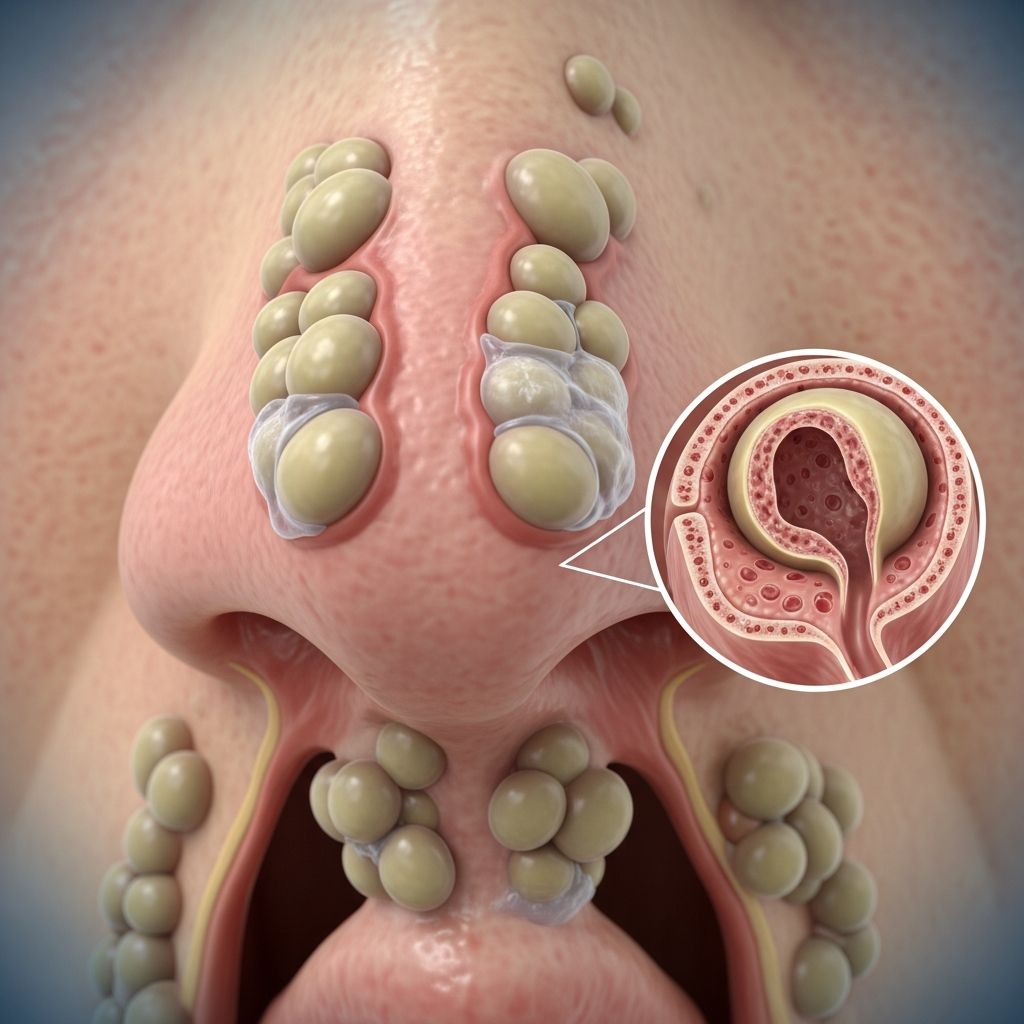
Nasal polyps are noncancerous growths that develop in the nose or sinuses. While these growths are typically painless, they can cause significant discomfort and complications when they enlarge or multiply. Nasal polyps are invariably associated with chronic rhinosinusitis and are strongly connected to asthma and other inflammatory conditions.
These growths consist of a mixture of loose connective tissue, edema, inflammatory cells (mostly eosinophils), glandular cells, and capillaries. They are covered with varying types of epithelium, mostly respiratory pseudostratified epithelium with ciliated cells and goblet cells. While nasal polyps can occur in individuals of any age, they are more prevalent among young and middle-aged adults.
Symptoms of Nasal Polyps
The symptoms of nasal polyps range from completely asymptomatic to significantly impairing quality of life. The severity and type of symptoms depend on the size and location of the polyps and the degree of associated mucosal inflammation.
Common symptoms include:
– Nasal congestion and blockage (often the most bothersome symptom)- Loss of smell or decreased sense of smell (hyposmia or anosmia)- Postnasal drip and rhinorrhea- Facial pressure or pain- Dull headaches- Decreased sense of taste (ageusia)- Snoring- Nasal discharge
If symptoms persist for more than three months, the condition becomes classified as chronic sinusitis. Larger polyps or clusters of polyps can obstruct nasal passages, causing breathing difficulties and increasing susceptibility to infections. Without treatment, nasal polyps can progressively worsen and potentially cause damage to the bones and tissues of the nose.
Causes and Risk Factors
While the exact etiology of nasal polyps remains unknown, several factors are known to increase the risk of developing them. Understanding these risk factors is essential for prevention and management.
Key risk factors include:
– Asthma- Allergies and chronic rhinosinusitis- Aspirin sensitivity or aspirin intolerance- Eosinophilic granulomatous polyangiitis (EGPA, formerly known as Churg-Strauss syndrome)- Allergic fungal rhinosinusitis (AFRS)- Genetic predisposition- Cystic fibrosis (nasal polyps are present in up to 86% of patients with this condition)
Polyposis often represents an end-stage manifestation of poorly controlled allergies. This means that managing the underlying allergic condition is crucial not only for treating existing polyps but also for preventing their rapid recurrence after treatment.
Diagnosis of Nasal Polyps
Proper diagnosis of nasal polyps requires a comprehensive evaluation combining clinical assessment with objective testing. Meticulous history taking and physical examination are crucial in establishing a comprehensive differential diagnosis, particularly in distinguishing nasal polyps from other nasal masses or neoplastic lesions.
Diagnostic Approach
The diagnosis of nasal polyps is based on a combination of history, physical examination, and often imaging studies. The presence of nasal polyps accompanied by two cardinal symptoms confirms the diagnosis of chronic rhinosinusitis with nasal polyps (CRSwNP).
Related Stories



Primary diagnostic methods include:
– Anterior rhinoscopy- Nasal endoscopy (which confirms the diagnosis and distinguishes CRS without polyps from CRSwNP)- Clinical history focusing on nasal obstruction and drainage
Additional diagnostic tests may include:
– Computed tomography (CT) scan of the sinuses (to assess disease extent and rule out alternative diagnoses)- Biopsy (to rule out tumors or cancerous growths, especially in older patients with unilateral disease)- Nasal smear and culture- Complete blood count (CBC) with differential- Antineutrophil cytoplasm antibodies (ANCA) testing- Erythrocyte sedimentation rate (ESR)- Skin prick tests or serum allergen-specific IgE tests- Aspirin challenge testing- Olfaction studies- Quality-of-life measures
An important step in the diagnostic process is obtaining a biopsy of the polyp to rule out a tumor or cancerous growth that can look similar to allergic polyps. This is particularly important in older patients who have unilateral polyp disease, especially if there is any extension beyond the sinus cavity. It is essential to distinguish nasal polyps from neoplastic lesions, particularly if symptoms are unilateral.
Treatment and Management Options
The treatment of nasal polyps depends on the severity of the condition and the patient’s response to therapy. The different endotypes and phenotypes of nasal polyps determine the appropriate management strategy. Treatment usually involves medications to reduce the size of the polyps or surgical removal, though recurrence of nasal polyps is common after treatment.
Medical Management
For patients with chronic rhinosinusitis with nasal polyps (CRSwNP), initial therapy typically focuses on conservative, nonsurgical approaches. Initial therapy with intranasal corticosteroids and nasal saline irrigations for approximately 2 to 3 months should be attempted as the first-line treatment.
Primary medical treatments include:
– Intranasal corticosteroid sprays (considered very safe for long-term use)- High-volume, low-pressure nasal saline irrigations (a safe and inexpensive method that increases the clearance of antigens, biofilms, and inflammatory mediators)- Short courses of oral corticosteroids (to help shrink polyps and improve symptoms, though they should be used cautiously due to potential side effects)- Topical antihistamines- Allergy testing and targeted immunotherapy- Aspirin therapy after desensitization (for patients with a convincing history of respiratory reaction to aspirin/NSAIDs)
Topical nasal steroids form an essential part of CRSwNP treatment both before and after surgical intervention. They help alleviate nasal congestion and reduce polyp size while improving symptoms including sense of smell. Steroid sprays help reduce polyp size and improve symptoms and are very safe for long-term use.
Surgical Treatment
When CRSwNP is refractory to adequate medical treatment, functional endoscopic sinus surgery (FESS) is considered. However, some debate persists among otolaryngologists regarding the optimal timing for surgical intervention. Patients whose symptoms do not improve with adequate medical therapy will need further evaluation with a paranasal sinus (PNS) CT scan, and those with unilateral symptoms or findings should undergo imaging studies as soon as possible.
Surgery is considered an alternative for patients with an established diagnosis of CRSwNP who are refractory to medical management. During endoscopic sinus surgery, surgeons remove the nasal polyps and open the sinuses where the growths had formed, improving outflow tract drainage and removing anatomic obstruction.
However, it is crucial to understand that surgery removes the anatomic obstruction but does not address the underlying allergic etiology. After surgery, topical nasal steroids, with or without topical antihistamines, remain a mainstay of treatment, together with formal allergic testing and targeted immunotherapy if available.
Long-Term Management and Follow-Up
Polyposis management only marks the beginning of treatment. Once polyps are addressed, local and systemic therapies targeting the underlying allergic etiology are crucial to prevent rapid recurrence. Nasal polyp patients require long-term follow-up and maintenance of their medical therapy to prevent complications.
In rare cases, polyps may erode the bone between the eye and brain area, which is the primary reason why polyp patients require ongoing medical supervision. Continuous management with appropriate medications and regular monitoring helps prevent disease progression and maintains quality of life.
Frequently Asked Questions
Q: Are nasal polyps cancerous?
No, nasal polyps are noncancerous growths. However, it is important to obtain a biopsy to distinguish them from tumors or cancerous growths that can appear similar, especially in cases of unilateral disease.
Q: Can nasal polyps be prevented?
While the exact cause of nasal polyps is unknown, managing underlying conditions such as allergies, asthma, and chronic rhinosinusitis may help reduce the risk of developing polyps. Addressing allergic triggers and maintaining good sinus health can be beneficial.
Q: Do nasal polyps always require treatment?
Not all nasal polyps require immediate treatment. Asymptomatic polyps may be monitored. However, polyps causing nasal obstruction, loss of smell, or other symptoms should be treated to improve quality of life and prevent complications.
Q: What is the recurrence rate for nasal polyps after surgery?
Recurrence of nasal polyps after treatment is common. Continued medical management, particularly with intranasal corticosteroids and attention to underlying allergic conditions, is essential for preventing recurrence and maintaining long-term control.
Q: How are nasal polyps related to cystic fibrosis?
Nasal polyps are present in up to 86% of patients with cystic fibrosis, a genetic condition affecting mucus production. Patients with cystic fibrosis and nasal polyps require specialized management.
Q: When should I see a specialist about nasal polyps?
You should consult with an otolaryngologist (ENT specialist) if you experience persistent symptoms such as runny nose, postnasal drip, loss of taste and smell, and pressure in the forehead and face. Those with severely impaired quality of life may require consultation for possible surgical intervention.
When to Seek Medical Attention
It is essential to seek professional medical assistance for proper diagnosis and treatment of nasal polyps. You should consult a healthcare provider if you experience:
– Persistent nasal congestion lasting more than a few weeks- Loss of smell or taste- Chronic postnasal drip- Facial pain or pressure- Sleep disturbances or snoring- Symptoms that affect your quality of life
Without treatment, nasal polyps can progressively worsen and potentially cause damage to the bones and tissues of the nose. Early diagnosis and appropriate management can help prevent complications and maintain your respiratory health.
References
- Nasal Polyps — NCBI Bookshelf, StatPearls. 2024. https://www.ncbi.nlm.nih.gov/books/NBK560746/
- Nasal Polyps — American Academy of Allergy, Asthma & Immunology (AAAAI). 2024. https://www.aaaai.org/tools-for-the-public/conditions-library/allergies/nasal-polyps
- Nasal Polyps – Symptoms, Diagnosis and Treatment — BMJ Best Practice. 2024. https://bestpractice.bmj.com/topics/en-us/1130
- Nasal Polyps: Symptoms, Causes, Treatment & Removal — Cleveland Clinic. 2024. https://my.clevelandclinic.org/health/diseases/15250-nasal-polyps
- Nasal Polyps – Diagnosis and Treatment — Mayo Clinic. 2024. https://www.mayoclinic.org/diseases-conditions/nasal-polyps/diagnosis-treatment/drc-20351894
- Chronic Sinusitis and Nasal Polyps: Diagnosis and Treatment — New Mexico Heart Institute. 2024. https://www.nm.org/healthbeat/medical-advances/chronic-sinusitis-and-nasal-polyps
- Nasal Polyps – Ear, Nose, and Throat Disorders — Merck Manuals. 2024. https://www.merckmanuals.com/home/ear-nose-and-throat-disorders/nose-and-sinus-disorders/nasal-polyps
Similar Articles








Read full bio of Sneha Tete