Natural Killer Cells: Your Body’s First Line of Defense
Discover how NK cells protect your body from infection, cancer, and disease.
What Are Natural Killer Cells?
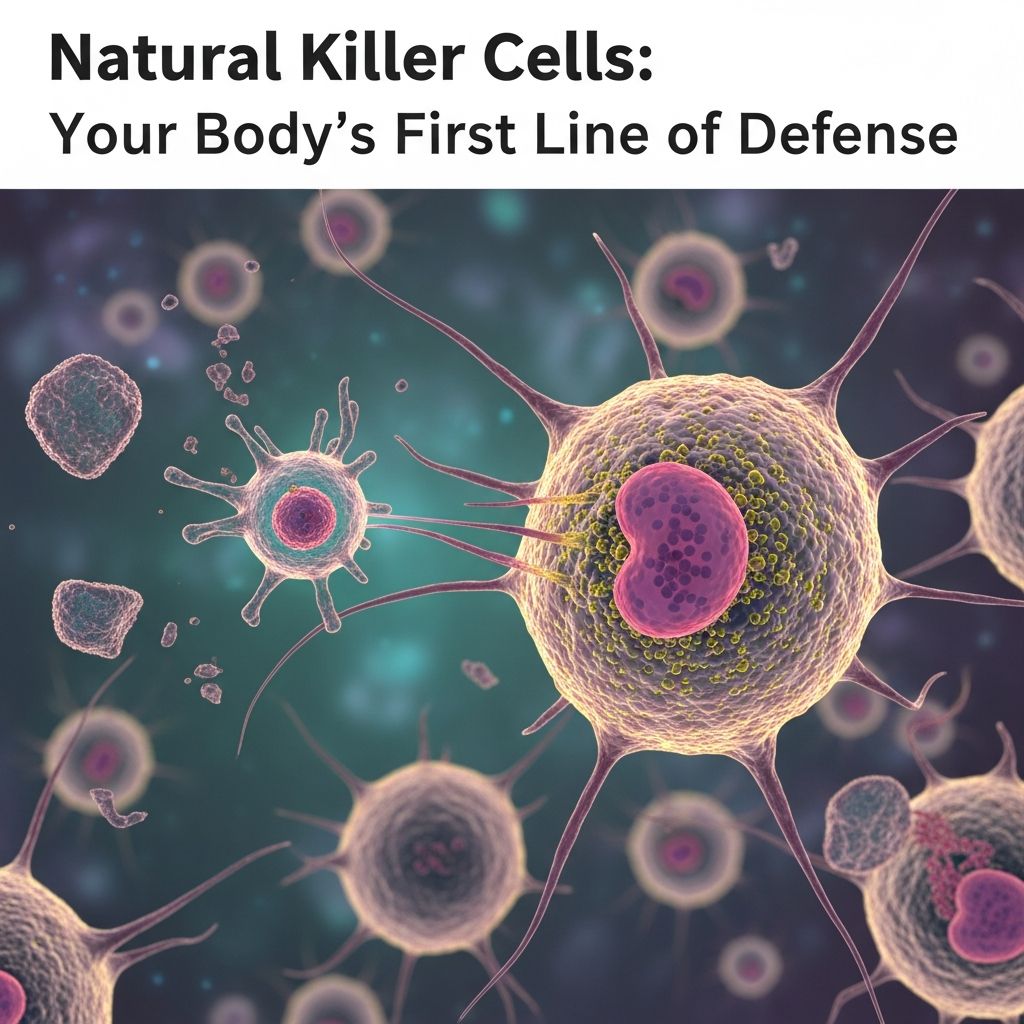
Natural killer cells, commonly referred to as NK cells, are a specialized type of white blood cell that plays a crucial protective role in your immune system. These remarkable lymphocytes represent between 5-15% of the circulating white blood cells in your bloodstream and serve as your body’s rapid response team against threats like viral infections, cancer cells, and other dangerous pathogens. Unlike other immune cells that require prior exposure to recognize threats, NK cells are part of your innate immune system and can mount an immediate defense without any prior activation or sensitization.
The name “natural killer” reflects an important characteristic of these cells: they can eliminate dangerous cells without requiring traditional immune system activation or antibody involvement. This unique ability allows your body to respond swiftly to emerging threats before more complex adaptive immune mechanisms have time to engage. This rapid response capability makes NK cells essential frontline defenders against infection and disease.
How Natural Killer Cells Work
Recognition and Activation
Natural killer cells function through a sophisticated system of receptors that allow them to distinguish between healthy cells and those that pose a threat. These cells continuously patrol your body using a delicate balance between activating and inhibitory receptor signals. Healthy cells in your body display major histocompatibility complex class I (MHC-I) molecules on their surface, which act as a “self” marker that tells NK cells: “I am safe; do not attack.” When NK cells detect these protective markers, they remain inactive and allow the cell to continue functioning normally.
However, when cells become infected with viruses, stressed, or transform into cancer cells, they often downregulate or lose their MHC-I molecules as a survival strategy. This loss of the “self” marker is detected by NK cells as a warning sign. Additionally, NK cells possess activating receptors such as NKG2D, DNAM-1, NKp46, and NKp30 that recognize stress signals on damaged or abnormal cells. When activating signals outweigh inhibitory signals, NK cells spring into action.
Mechanisms of Cell Destruction
Once an NK cell has identified a target that requires elimination, it employs multiple sophisticated killing strategies. The primary mechanism involves the release of cytotoxic granules containing specialized proteins called perforin and granzymes. Perforin creates pores in the target cell’s membrane, allowing granzymes to enter and trigger programmed cell death, or apoptosis. This process is highly efficient and causes the infected or malignant cell to self-destruct while minimizing damage to surrounding healthy tissue.
Beyond direct cell killing, NK cells produce powerful chemical messengers called cytokines and chemokines that regulate immune responses. These include interferon-gamma (IFN-γ) and tumor necrosis factor-alpha (TNF-α), which activate macrophages for enhanced phagocytosis and promote additional tumor cell killing. This multi-pronged approach makes NK cells exceptionally effective at controlling threats.
The Role of NK Cells in Your Immune System
Innate Immune Response
Natural killer cells are fundamental components of your innate immune system, which forms the first line of defense against pathogens. Unlike adaptive immunity, which develops over time through exposure to specific threats, innate immunity provides immediate protection. NK cells achieve this by maintaining constant vigilance through their germline-encoded receptors, which recognize broad patterns of danger rather than specific antigens. This allows them to respond immediately to novel threats without requiring prior sensitization.
Related Stories



Viral Infection Control
NK cells play an indispensable role in controlling viral infections before the adaptive immune response has fully mobilized. When cells become infected with viruses like herpes simplex virus, they upregulate stress-induced ligands that NK cells recognize. Research shows that patients with deficiencies in NK cell function are highly susceptible to early-phase herpes virus infections, demonstrating the critical importance of these cells in viral defense. By controlling viral replication in the initial stages of infection, NK cells buy time for cytotoxic T cells to develop antigen-specific responses that can completely clear the infection.
Tumor Surveillance and Cancer Control
One of the most promising roles for NK cells is in cancer prevention and treatment. Cancer cells often escape detection by the adaptive immune system by downregulating MHC-I molecules, making them invisible to cytotoxic T cells. However, cancer cells also typically display stress signals and altered surface molecules that NK cells recognize through their NKG2D receptors. This means NK cells can detect and eliminate many cancer cells that other immune mechanisms might miss. NK cells contribute to tumor immunosurveillance by directly inducing death in tumor cells through cytotoxicity and by secreting anti-tumor cytokines. The ability of NK cells to eliminate cancerous cells even in the absence of surface adhesion molecules and antigenic peptides makes them uniquely valuable in cancer immunotherapy.
Advanced Functions of Natural Killer Cells
Adaptive Immunity Interaction
While classified as part of innate immunity, NK cells possess surprising similarities to adaptive immune cells like T cells and B cells, including the ability to develop immunological memory. Recent research has demonstrated that NK cells can adapt to their immediate environment and formulate antigen-specific responses to secondary infections with the same pathogen. This “NK cell memory” provides benefits similar to those offered by the adaptive immune system, enhancing protection upon re-exposure to previously encountered threats.
Regulatory Functions
Beyond their cytotoxic functions, NK cells serve important regulatory roles in managing immune responses. These cells engage in reciprocal interactions with dendritic cells, macrophages, T cells, and endothelial cells. By producing cytokines like IFN-γ, NK cells can amplify immune responses when needed. Conversely, they can also help limit excessive inflammation when appropriate, maintaining the delicate balance necessary for effective immunity without autoimmunity.
Senescent Cell Removal
Recent research has revealed that NK cells play a role in removing senescent cells—cells that have stopped dividing and accumulate with age. By detecting these dysfunctional cells through NKG2D receptors, NK cells eliminate them using perforin and granzymes. This cleanup function may have important implications for age-related diseases and neuroinflammatory conditions. For example, in Parkinson’s disease patients, elevated NK cell levels have been associated with degradation of alpha-synuclein aggregates and reduction of neuroinflammation.
NK Cell Development and Maturation
Natural killer cells develop from common lymphoid progenitors in the bone marrow through a process that shares similarities with T cell development in the thymus. During development, NK cells undergo an “education” process where they learn to distinguish self from non-self. This education involves interactions with bone marrow stromal cells and MHC-I molecules. Proper NK cell education is essential for maintaining self-tolerance while preserving the ability to respond to threats. IL-15, a critical cytokine, plays a vital role in both NK cell development and homeostasis, supporting their survival and proliferation throughout life.
Clinical Significance and NK Cell Deficiencies
When NK Cells Are Low
NK cell deficiency, either quantitative (too few cells) or qualitative (cells that don’t function properly), can have serious health consequences. Patients with low or non-functional NK cells show increased susceptibility to viral infections, particularly herpesviruses, and elevated cancer risk. Some individuals are born with NK cell deficiencies, while others develop them through infections, medications, or age-related decline. Understanding an individual’s NK cell status can help guide clinical treatment decisions and preventive strategies.
Therapeutic Applications
The remarkable capabilities of NK cells have opened exciting possibilities for clinical intervention. NK cell manipulation shows promise in several therapeutic areas including improving outcomes in hematopoietic stem cell and solid organ transplantation, enhancing antitumor immunotherapy effectiveness, and controlling inflammatory and autoimmune disorders. Researchers are developing strategies to expand NK cells ex vivo for therapeutic use, genetically engineer them to improve targeting, and combine them with checkpoint inhibitors to enhance their anti-cancer activity.
Factors That Influence NK Cell Function
Several factors can affect the number and activity of your natural killer cells. Chronic stress, poor sleep, malnutrition, and certain infections can suppress NK cell function, reducing your body’s ability to fight cancer and infection. Conversely, regular exercise, adequate sleep, stress management, and a healthy diet rich in vitamins and minerals can support optimal NK cell activity. Age is another important factor; NK cell quantity and function typically decline with aging, which may contribute to increased cancer and infection risk in elderly individuals.
Frequently Asked Questions
Q: How are natural killer cells different from T cells?
A: While both are lymphocytes that fight infections and cancer, NK cells are part of innate immunity and can attack immediately without prior exposure, whereas T cells are part of adaptive immunity and require prior activation or sensitization. NK cells recognize stress signals on cell surfaces, while T cells recognize specific antigens presented on MHC molecules.
Q: Can you increase your natural killer cell count?
A: Yes, lifestyle factors can support healthy NK cell function and number. Regular exercise, adequate sleep (7-9 hours), stress management techniques, a balanced diet with sufficient vitamins and minerals (especially vitamin D, zinc, and selenium), and limiting alcohol consumption can all help maintain robust NK cell populations.
Q: What happens if you have too few natural killer cells?
A: Low NK cell counts or function can increase susceptibility to viral infections, particularly herpesviruses, and may elevate cancer risk. Some individuals are born with NK cell deficiencies, while others develop them through aging, infections, medications, or immune disorders. Blood tests can measure NK cell numbers and functional capacity.
Q: Are natural killer cells involved in autoimmune diseases?
A: Yes, NK cells play regulatory roles in autoimmune disease. They can help suppress excessive T cell responses that cause autoimmunity, and research suggests that NK cell dysfunction may contribute to certain autoimmune conditions. Understanding NK cell-mediated immune regulation has implications for treating inflammatory and autoimmune disorders.
Q: How do natural killer cells recognize cancer cells?
A: NK cells recognize cancer cells through activating receptors like NKG2D that detect stress-induced ligands on abnormal cells. Cancer cells often lose MHC-I molecules (the “don’t kill me” signal), and they display altered surface molecules that activate NK cell responses. This allows NK cells to detect cancers that other immune mechanisms might miss.
Q: Can NK cells be used as a cancer treatment?
A: Yes, NK cell-based immunotherapy is an emerging cancer treatment approach. Scientists can expand NK cells in the laboratory, genetically engineer them to improve targeting, and infuse them into patients to enhance anti-tumor immunity. NK cell therapy is being investigated for various cancers and shows promise when combined with other immunotherapies.
Summary: Your Natural Defenders
Natural killer cells represent a sophisticated and essential component of your immune defense system. These remarkable white blood cells provide rapid protection against viral infections, cancer, and other threats through multiple killing mechanisms and regulatory functions. By maintaining a delicate balance of activating and inhibitory signals, NK cells distinguish between healthy cells deserving protection and dangerous cells requiring elimination. Their dual role in innate immunity and emerging importance in adaptive immune memory makes them invaluable to your overall health. Supporting NK cell function through healthy lifestyle choices, adequate nutrition, and stress management can help maximize your body’s natural cancer-fighting and infection-fighting capabilities throughout your life.
References
- Natural killer cell — Wikipedia. Accessed 2025. https://en.wikipedia.org/wiki/Natural_killer_cell
- Functions of natural killer cells — Nature Immunology, 2008-04-06. https://www.nature.com/articles/ni1582
- Functions of natural killer cells — PubMed/NCBI, 2008-04-06. https://pubmed.ncbi.nlm.nih.gov/18425107/
- Natural Killer Cells and Their Role in Immunity — EMJ Reviews. Accessed 2025. https://www.emjreviews.com/allergy-immunology/article/natural-killer-cells-and-their-role-in-immunity/
- Natural Killer Cells — British Society for Immunology. Accessed 2025. https://www.immunology.org/public-information/bitesized-immunology/cells/natural-killer-cells
Similar Articles








Read full bio of Sneha Tete