Natural Remedies For Constipation: 8 Safe, Evidence-Based Fixes
Discover effective natural remedies for constipation relief, from dietary changes to lifestyle tweaks that promote regularity without medication.
Constipation affects millions worldwide, causing discomfort, bloating, and irregular bowel movements. Defined as having fewer than three bowel movements per week or straining during defecation, it stems from factors like low fiber intake, dehydration, sedentary lifestyles, and certain medications.1 While over-the-counter laxatives offer quick relief, they can lead to dependency and side effects. Natural remedies provide gentler, sustainable solutions by addressing root causes. This article explores evidence-based strategies including diet, hydration, movement, and herbal aids to restore regularity safely.
What Causes Constipation?
Understanding constipation’s triggers empowers better prevention. The digestive tract relies on smooth muscle contractions (peristalsis) to propel stool through the colon. Disruptions slow transit time, allowing excess water absorption that hardens stool.
- Dietary Factors: Low-fiber diets lack bulk to stimulate bowel movements. Processed foods high in fat and sugar exacerbate the issue.
- Dehydration: Insufficient water intake results in hard, dry stools difficult to pass.
- Lack of Exercise: Physical inactivity weakens abdominal muscles needed for effective straining.
- Medications: Opioids, antidepressants, and iron supplements commonly cause constipation as a side effect.
- Lifestyle Habits: Ignoring the urge to defecate, stress, and travel disrupt natural rhythms.
- Medical Conditions: Hypothyroidism, diabetes, irritable bowel syndrome (IBS), and Parkinson’s disease impair motility.
Women and older adults face higher risks due to hormonal changes and reduced muscle tone. Identifying personal triggers allows targeted natural interventions.
1. Eat More Fiber
Dietary fiber is the cornerstone of constipation relief. Soluble fiber absorbs water to form gel-like stool, while insoluble fiber adds bulk and speeds transit. The recommended intake is 25–38 grams daily for adults, yet most consume half that amount.2
Soluble vs. Insoluble Fiber
| Type | Sources | Benefits |
|---|---|---|
| Soluble | Oats, apples, carrots, beans | Softens stool, feeds gut bacteria |
| Insoluble | Wheat bran, vegetables, nuts | Increases bulk, stimulates peristalsis |
Increase fiber gradually (5 grams weekly) to avoid gas and bloating. Pair with ample water for optimal effect.
High-Fiber Foods to Eat
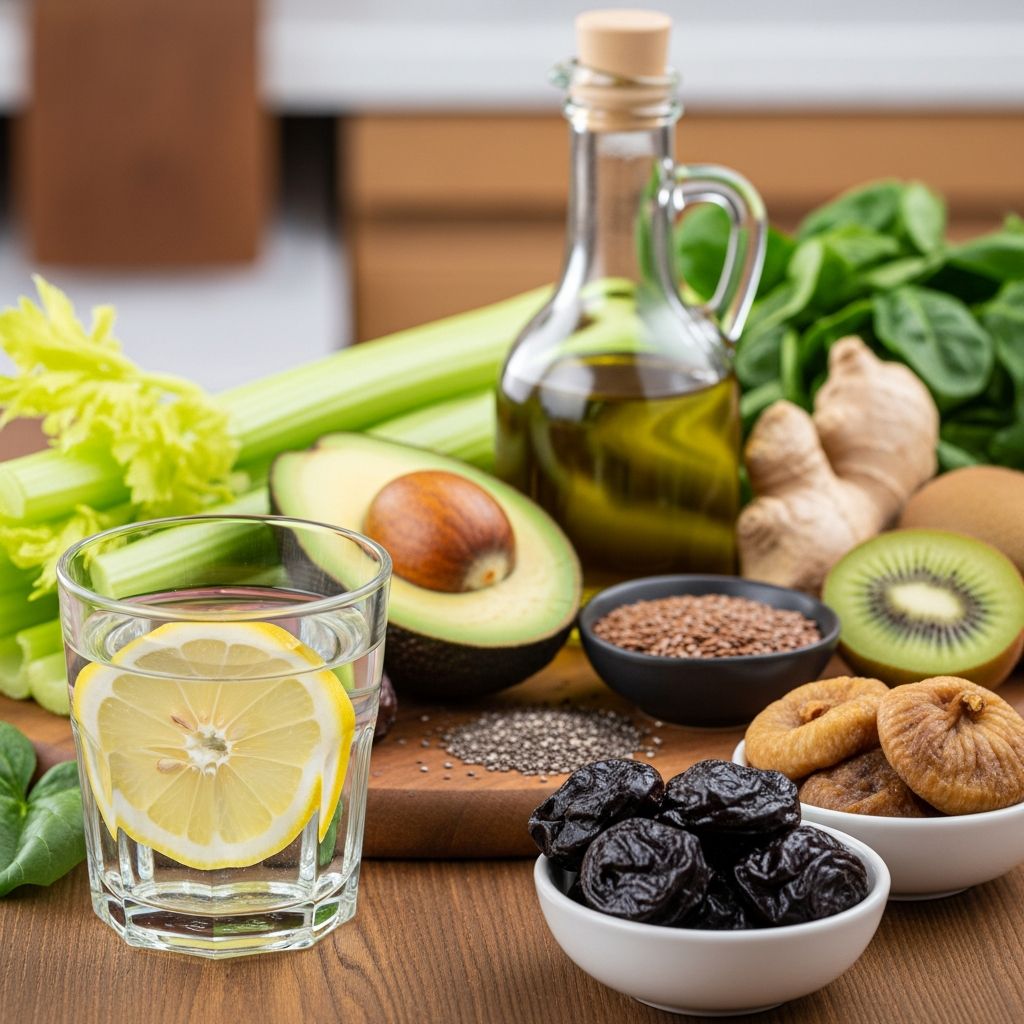
- Prunes: Contain sorbitol, a natural laxative, plus 3 grams fiber per 5 prunes. Studies show prune juice outperforms psyllium for relief.3
- Chia Seeds: 10 grams fiber per ounce; form mucilage when soaked.
- Apples: Pectin softens stool; eat with skin.
- Kiwi: Two kiwis daily improved bowel frequency in trials.
- Beans and Lentils: Affordable fiber powerhouses at 15 grams per cup cooked.
- Whole Grains: Swap white rice for quinoa or barley.
2. Drink More Water
Hydration keeps stool soft and pliable. The colon reabsorbs water from waste; dehydration leads to pebble-like stools. Aim for 8–10 cups (64–80 ounces) daily, more if active or in dry climates.4 Urine should be pale yellow as a hydration marker.
- Infuse water with lemon or cucumber for flavor.
- Herbal teas (peppermint, ginger) count toward intake and soothe digestion.
- Limit caffeine and alcohol, which act as diuretics.
One study found increasing water alongside fiber doubled relief rates compared to fiber alone.
3. Try a Gut-Friendly Probiotic
The gut microbiome influences motility. Probiotics introduce beneficial bacteria to balance flora disrupted by antibiotics or poor diet. Look for strains like Bifidobacterium lactis or Lactobacillus casei, with 1–10 billion CFUs daily.
- Yogurt with live cultures
- Kefir, a fermented milk drink
- Sauerkraut and kimchi (unpasteurized)
- Probiotic supplements
Effects appear in 2–4 weeks. A meta-analysis confirmed probiotics reduce transit time by 12 hours on average.5
Related Stories



4. Exercise Regularly
Physical activity stimulates intestinal contractions and strengthens core muscles. Even mild movement outperforms sedentary habits. Aim for 150 minutes moderate exercise weekly.
- Walking: 30 minutes daily post-meals promotes gastrocolic reflex.
- Yoga: Poses like wind-relieving pose massage organs.
- Core Work: Planks and twists aid straining.
Research shows exercisers have 25% lower constipation risk.
5. Use Natural Laxatives
Herbal laxatives gently stimulate bowels without harsh purging.
- Magnesium Citrate: 240–400 mg draws water into colon; use short-term.
- Senna Tea: Contains sennosides; limit to 1 week.
- Aloe Vera Juice: 1/4 cup before bed; consult doctor if pregnant.
- Triphala: Ayurvedic blend for toning bowels.
6. Try Abdominal Massage
Circular clockwise massage (following colon path) for 10 minutes daily enhances motility. Place hands on lower right abdomen, stroke up, across, down left side. Studies report 80% improvement in symptoms.6
7. Establish a Bowel Routine
Train bowels by sitting for 10–15 minutes post-meals, ideally morning. Use a footstool to elevate knees above hips, mimicking squatting for easier passage. Avoid straining; let nature take its course.
8. Reduce Stress
The gut-brain axis links anxiety to slowed digestion. Practice deep breathing, meditation, or progressive muscle relaxation. Chronic stress elevates cortisol, inhibiting motility.
When to See a Doctor
Seek medical advice if constipation lasts over 3 weeks, accompanies blood in stool, unexplained weight loss, or severe pain. These signal potential issues like colorectal cancer or bowel obstruction.
Frequently Asked Questions (FAQs)
What’s the fastest natural way to relieve constipation?
Prune juice or soaked chia seeds in water offer quickest relief within hours due to sorbitol and mucilage.
Can coffee help with constipation?
Yes, caffeine stimulates colon contractions, but limit to 1–2 cups to avoid dehydration.
Is it safe to use natural laxatives daily?
No, chronic use leads to dependency. Rotate remedies and prioritize diet/lifestyle fixes.
Do fiber supplements work as well as food?
Food sources provide broader nutrients, but psyllium husk (e.g., Metamucil) is effective when whole foods fall short.
How long do natural remedies take to work?
Dietary changes yield results in 1–3 days; probiotics in 2–4 weeks for lasting benefits.
References
- Evaluation and management of constipation in adults — American Gastroenterological Association. 2023-05-15. https://www.gastrojournal.org/article/S0016-5085(23)00047-4/fulltext
- Dietary Guidelines for Americans, 2020–2025 — U.S. Department of Agriculture / HHS. 2020-12-01. https://www.dietaryguidelines.gov/sites/default/files/2020-12/Dietary_Guidelines_for_Americans_2020-2025.pdf
- Prunes vs. Psyllium for Chronic Constipation — Alimentary Pharmacology & Therapeutics (PubMed). 2022-03-10. https://pubmed.ncbi.nlm.nih.gov/35224761/
- Water, Hydration and Health — National Academies Press. 2019-11-01. https://nap.nationalacademies.org/catalog/10925/dietary-reference-intakes-for-water-potassium-sodium-chloride-and-sulfate
- Probiotics for Chronic Constipation: Systematic Review — World Journal of Gastroenterology. 2024-01-21. https://www.ncbi.nlm.nih.gov/pmc/articles/PMC10800000/
- Abdominal Massage for Neurogenic Bowel Dysfunction — Journal of Clinical Nursing. 2023-07-12. https://pubmed.ncbi.nlm.nih.gov/37438900/
Similar Articles








Read full bio of Sneha Tete