Navel Stones: Causes, Symptoms, Removal, And Prevention
Understanding omphaloliths: causes, symptoms, treatment, and prevention strategies.
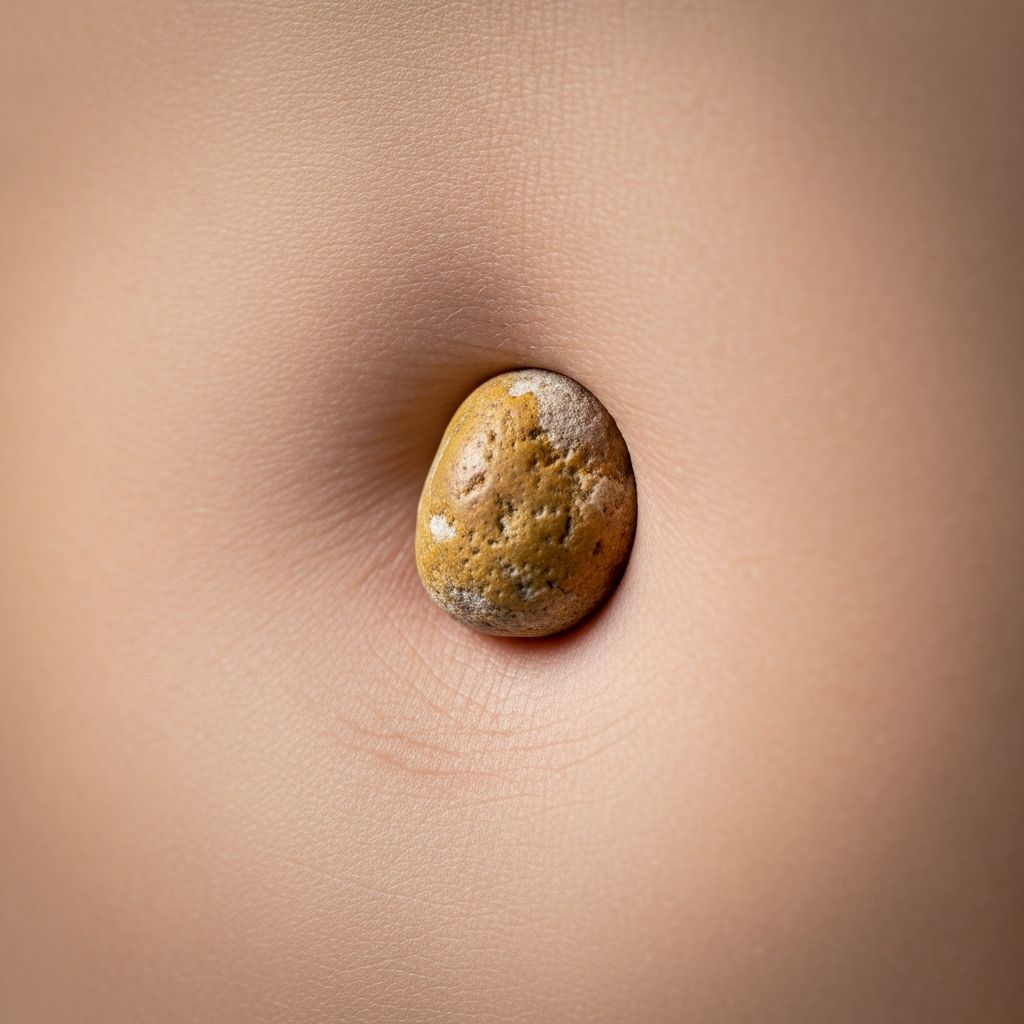
What Is a Navel Stone?
A navel stone, medically known as an omphalolith or umbilical stone, is a hard, stone-like object that forms inside your belly button (navel). Despite its name, a navel stone doesn’t actually consist of mineral deposits like a traditional stone. Instead, it is composed of sebum (skin oil), keratin (a tough protein), hair, bacteria, and dead skin cells that accumulate and harden over time within the navel cavity.
The visible appearance of a navel stone is typically dark brown or black, a coloration that results from melanin (the skin’s natural pigment) and the oxidation of fatty acids within the accumulated material. The stone feels remarkably hard and smooth to the touch, despite being made of organic material rather than mineral substances.
Navel stones are rare, and most people will never develop one in their lifetime. However, they can form in anyone, regardless of age or gender, though they are more commonly discovered in adults because the accumulation process takes years before the stone becomes large enough to be noticed.
How Do Navel Stones Form?
Understanding the formation process of navel stones requires knowledge of basic skin physiology. Sebum is an oily substance secreted by glands in the skin that travels to the skin’s surface via hair shafts. Keratin, a structural protein, is naturally present in hair and dead skin cells. When these substances, combined with bacteria, lint, and other debris, collect in your belly button and remain undisturbed, they gradually accumulate and compress into a hard, cohesive mass.
The belly button’s unique anatomy—particularly if it is deeply indented—creates an ideal environment for this accumulation. The deeper your navel, the more likely it is that substances will collect and remain trapped, eventually forming a stone. This is why people with deep belly buttons are at significantly higher risk of developing omphaloliths.
Who Is Most Likely to Develop Navel Stones?
While navel stones can theoretically develop in anyone, certain characteristics and conditions increase the likelihood of formation:
- Deep belly button anatomy: A deep navel is the single most significant anatomical risk factor, as it provides more space for debris to accumulate and become trapped.
- Poor hygiene practices: The biggest modifiable risk factor is failure to regularly cleanse the navel. Daily washing with mild soap removes buildup and prevents stone formation.
- Excess body hair: People with abundant body hair, particularly in the abdominal region, are more prone to navel stone development because more hair means more keratin and sebum accumulation.
- Obesity or overweight status: Individuals with obesity may struggle to access and thoroughly clean their belly button due to increased abdominal tissue and compression of the navel area. This difficulty in cleaning, combined with increased sweat and oil production, raises the risk significantly.
Symptoms and Warning Signs
One of the most interesting aspects of navel stones is that most people experience no symptoms whatsoever. Many individuals have harbored navel stones for years without any awareness, as the stone simply remains inert within the navel cavity.
However, as the stone grows larger or if it irritates the surrounding skin, symptoms may develop:
- Redness or inflammation around the navel area
- Pain or tenderness in the belly button
- Unpleasant odor emanating from the navel
- Drainage or discharge from the navel opening
- Visible dark mass protruding from or visible within the belly button
Infection or an open sore (ulceration) can eventually develop if the stone persists and continues to irritate the skin. These complications often prompt people to seek medical attention and discover their navel stone for the first time.
Related Stories



Are Navel Stones Dangerous?
The navel stone itself is not inherently dangerous or a symptom of an underlying medical condition. It is simply an accumulation of naturally occurring debris in a location that is difficult to clean. The stone poses no systemic health threat and is not contagious or life-threatening.
However, complications can arise if the stone is left untreated. Persistent irritation of the delicate skin inside the navel can lead to a skin infection, which requires medical treatment. In rare cases, if the infection spreads deeper, an abscess (a collection of pus resulting from infection) may develop beneath the skin, necessitating more aggressive medical intervention.
For this reason, if you notice symptoms such as increasing pain, redness, drainage, or odor, it is prudent to consult a healthcare provider for evaluation and treatment.
Navel Stones vs. Blackheads: Understanding the Difference
Navel stones are sometimes confused with blackheads because both involve accumulation of sebum and keratin. However, there are important distinctions between the two conditions:
| Feature | Navel Stone | Blackhead |
|---|---|---|
| Location | Inside the belly button cavity | In hair follicles on the skin surface |
| Composition | Sebum, keratin, hair, bacteria, dead skin | Oxidized sebum and keratin |
| Size | Can grow quite large | Typically small (few millimeters) |
| Removal Method | Pulled out with instruments or dissolved | Pushed out or treated topically |
| Professional Treatment | Dermatologist extraction | Retinoids or punch excision |
Both conditions can be evaluated and managed by a dermatologist, who can determine the most appropriate treatment approach based on the specific presentation.
How Are Navel Stones Treated and Removed?
The only definitive treatment for a navel stone is removal. Fortunately, doctors have several effective methods available:
Professional Medical Removal
A healthcare provider can usually remove a navel stone using noninvasive techniques. Common approaches include:
- Manual extraction: Using instruments such as forceps, a doctor can gently pull or grasp the stone and extract it from the navel.
- Chemical softening: Doctors may apply a liquid solution (such as sterilized olive oil) to soften the stone, making it easier to extract.
- Surgical removal: In cases where the stone is particularly large, hard, or has caused significant tissue damage, a doctor may make a small surgical incision in the surrounding skin to facilitate removal.
Home Removal Considerations
While some navel stones may be removable at home, medical professionals generally recommend seeking professional care, especially if the stone is large, deeply embedded, or has caused infection. A sterile clinical environment reduces the risk of introducing bacteria and causing further infection or tissue damage.
Treatment of Associated Infections
If the navel stone has caused a skin infection, your doctor will also prescribe appropriate treatment for the infection alongside stone removal. In rare cases where an abscess has formed, surgical drainage may be necessary in addition to removal of the stone.
Preventing Navel Stone Formation
Prevention is always preferable to treatment. The best way to avoid developing a navel stone is to maintain excellent navel hygiene:
- Daily washing: Wash your navel daily with mild soap and warm water, gently cleaning the interior and all folds.
- Thorough drying: After washing, ensure your belly button is completely dry, as moisture can promote bacterial growth.
- Regular inspection: Periodically examine your navel for any unusual changes, accumulation of material, or signs of irritation.
- Assistance if needed: If you have mobility limitations due to obesity or other conditions, ask a trusted individual to help ensure your navel is cleaned thoroughly.
- Appropriate clothing: Wear breathable clothing that doesn’t trap excessive moisture or lint in the navel area.
Frequently Asked Questions (FAQs)
Q: How common are navel stones?
A: Navel stones are rare. Most people will never develop one, though they can occur in anyone regardless of age or gender.
Q: Can a navel stone fall out on its own?
A: While possible, it is uncommon for a navel stone to spontaneously dislodge. Professional removal is recommended to ensure complete extraction and to prevent complications.
Q: Is it safe to try removing a navel stone at home?
A: Medical professionals advise against home removal, particularly if the stone is large, hard, or has caused infection. A sterile clinical environment minimizes infection risk and ensures proper extraction.
Q: Can navel stones come back after removal?
A: Without proper hygiene practices, accumulation can potentially recur. However, maintaining daily navel cleaning significantly reduces the likelihood of stone reformation.
Q: What should I do if my navel stone becomes infected?
A: Seek medical attention promptly. An infected navel requires professional treatment, including possible antibiotic therapy and removal of the stone to prevent abscess formation.
Q: Does obesity increase navel stone risk?
A: Yes, obesity increases risk because it makes accessing and thoroughly cleaning the navel more difficult, and excess tissue can compress the belly button.
Q: Should I see a dermatologist or general doctor for navel stone removal?
A: Either can evaluate and remove a navel stone, though dermatologists have specialized expertise in skin conditions. Your primary care physician can also assess and refer you as needed.
When to Seek Medical Attention
Although navel stones are usually harmless, consult a healthcare provider if you experience redness, pain, discharge, persistent odor, or visible changes in your navel. Early evaluation and treatment prevent infection and complications. If you suspect you have a navel stone but are uncertain about removal, a simple doctor’s visit can provide clarity and professional guidance.
Conclusion
Navel stones are a rare but manageable condition resulting from the accumulation of sebum, keratin, hair, and bacteria in the belly button. While most people with navel stones never experience symptoms, maintaining proper hygiene is the most effective prevention strategy. Professional medical removal is the only treatment and is typically simple and noninvasive. By understanding what navel stones are and how to prevent them, you can maintain optimal navel health and avoid potential complications.
References
- What to Know and Do About Navel Stones — Healthline. 2024. https://www.healthline.com/health/navel-stones
- Navel Stone: Definition, Causes, Symptoms, and Removal — Medical News Today. 2023. https://www.medicalnewstoday.com/articles/navel-stone
- A Navel Stone Mimicking a Urachal Sinus — National Institutes of Health, PubMed Central. 2013. https://pmc.ncbi.nlm.nih.gov/articles/PMC3902660/
- What to Know About Navel Stones — WebMD. 2024. https://www.webmd.com/skin-problems-and-treatments/what-to-know-navel-stones
- What to Know About Navel Stones — Healthgrades. 2024. https://resources.healthgrades.com/right-care/skin-hair-and-nails/navel-stones
Similar Articles








Read full bio of medha deb