Necrolytic Acral Erythema: 3 Clinical Stages And Treatment
Rare skin disorder linked to hepatitis C and zinc deficiency, presenting as symmetrical acral erythematous plaques.
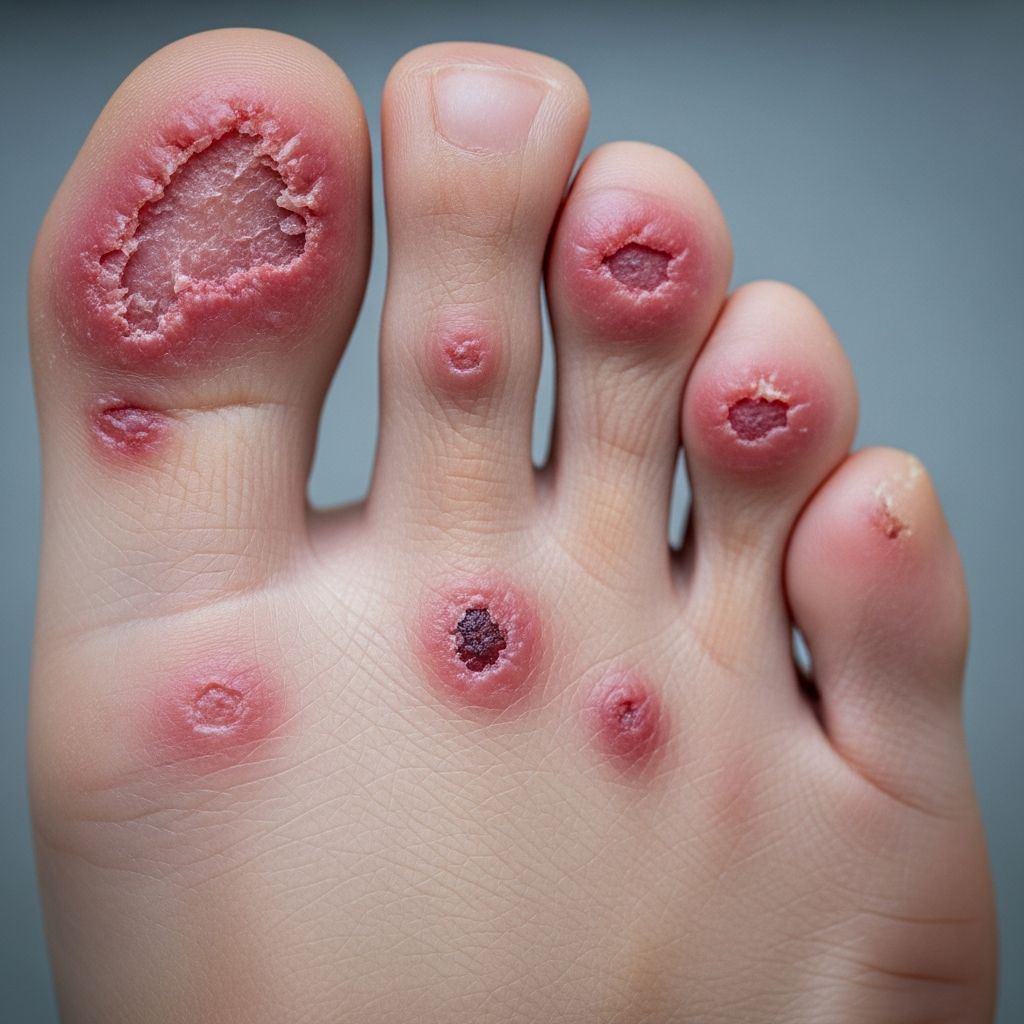
Necrolytic acral erythema (NAE) is a rare dermatological condition characterised by well-demarcated, hyperpigmented papules and plaques with adherent scales, primarily affecting the dorsa of the feet and toes. First described in Egypt in 1996, it has since been recognised worldwide, predominantly in patients with hepatitis C virus (HCV) infection and often associated with zinc deficiency. This symmetrical acral rash can be the initial presenting sign of underlying HCV or metabolic disturbances, underscoring the importance of early dermatological evaluation.
What is Necrolytic Acral Erythema?
Necrolytic acral erythema represents a distinct entity among necrolytic erythemas, setting it apart from conditions like necrolytic migratory erythema linked to glucagonoma. Unlike other necrolytic disorders that favour flexural or widespread distribution, NAE is strictly acral, sparing palms, soles, and mucous membranes. It manifests as dusky erythematous to hyperpigmented plaques with a collarette of scale, evolving through distinct clinical stages. All documented cases occur in individuals with skin of colour, including Asians and Africans, with equal sex distribution and mean onset around 40–45 years (range 11–78 years).
The condition’s hallmark is its association with HCV, reported in nearly 100% of cases, though the exact pathophysiological link remains under investigation. Low serum zinc levels are frequently observed, and zinc supplementation yields dramatic responses, even in normozincemic patients, suggesting multifactorial mechanisms involving nutritional, hepatic, and possibly genetic factors.
Who gets Necrolytic Acral Erythema?
NAE predominantly affects adults of Middle Eastern or African descent, though cases have emerged globally. Epidemiological data indicate:
- Equal male-to-female ratio (approximately 46% male, 54% female).
- Mean age at onset: 44 years (median 50 years; range 19–58 years, extremes 11–78).
- Strong correlation with chronic HCV infection (genotype 4 common in endemic areas).
- Skin phototypes IV–VI exclusively.
Risk factors include residence in HCV-endemic regions like Egypt, coexisting liver dysfunction, diabetes mellitus, and hypoalbuminemia. Rarely, NAE precedes overt HCV seropositivity, serving as a sentinel dermatosis.
Clinical Features
Lesions emerge symmetrically on acral sites, commencing with pruritic, scaly papules that progress to annular plaques. Key features include:
- Distribution: Dorsum of feet/toes (obligate); ankles/lower legs (common); knees/hands/elbows/genitalia/buttocks (rare). Palms/soles/nails spared.
- Morphology: Erythematous papules with dusky/violaceous centres, evolving to hyperkeratotic plaques with raised borders and adherent scale.
- Symptoms: Mild itch or burning; occasional oedema or pustules.
Clinical Stages
NAE progresses through three phases:
- Early stage: Erythematous papules/plaques with central erosion or dusky hue.
- Well-developed stage: Coalescing, thick hyperpigmented plaques with adherent keratotic scale; occasional flaccid bullae or pustules.
- Late stage: Thinning, circumscribed hyperpigmented patches with fine desquamation.
The disease follows a relapsing-remitting course, with spontaneous fluctuations but rapid resolution upon targeted therapy.
Diagnosis
Diagnosis hinges on characteristic clinico-histopathological correlation, supported by laboratory findings. No single test is pathognomonic.
Clinical Examination
Suspicion arises from acral distribution and morphology in at-risk patients. Dermoscopy reveals structureless red-brown areas with peripheral white scales, aiding differentiation from psoriasis or tinea.
Blood Tests
Essential investigations include:
- HCV serology/PCR (anti-HCV IgG, viral load).
- Serum zinc, albumin, glucagon, amino acids.
- Liver function tests (ALT/AST, bilirubin).
- Complete blood count, fasting glucose, HbA1c.
Zinc deficiency (<70 μg/dL) supports but does not confirm NAE.
Skin Biopsy
Histology varies by stage but typically shows:
| Feature | Early Lesions | Well-Developed | Late Lesions |
|---|---|---|---|
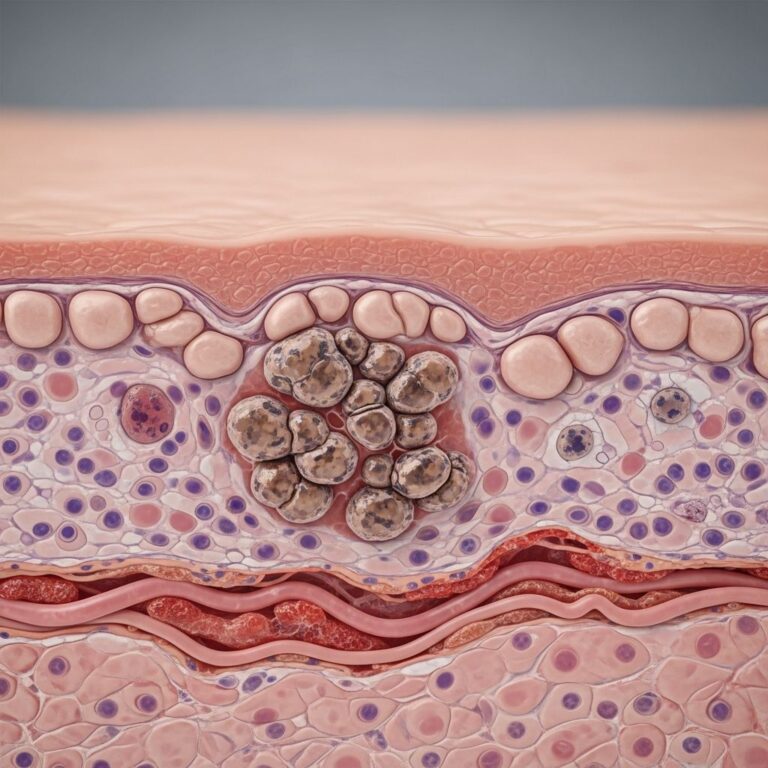
| Epidermis | Spongiosis, upper necrosis, bullae | Acanthosis, parakeratosis, necrotic keratinocytes | Psoriasiform hyperplasia, papillomatosis |
| Dermis | Superficial perivascular lymphohistiocytic infiltrate | Dilated vessels, sparse pigment incontinence | Fibrosis (chronic cases) |
Related Stories



Findings mimic other necrolytic erythemas but lack glucagonoma markers.
Differential Diagnosis
- Psoriasis (nail/palm involvement, Auspitz sign).
- Tinea pedis (KOH+ hyphae).
- Contact dermatitis (asymmetric, history exposure).
- Nummular eczema (flexural).
- Glucagonoma syndrome (periorificial).
What’s the Aetiopathogenesis?
Multifactorial, centred on HCV-hepatic dysfunction axis:
- HCV association: Genotype 4 predominates; viral proteins may trigger keratinocyte apoptosis.
- Zinc deficiency: Impairs epidermal repair; responds to supplementation regardless of baseline levels (anti-inflammatory, antiviral effects).
- Metabolic derangements: Hypoalbuminemia, hypoaminoacidemia, hypoglucagonemia mimic glucagonoma pathophysiology.
- Other: Genetic predisposition, oxidative stress, diabetes.
Treatment
Addresses underlying causes and symptoms. Oral zinc sulfate (220 mg twice daily, 8 weeks) is first-line, achieving clearance in most cases irrespective of HCV/zinc status.
- HCV-positive: Antivirals (interferon-alpha ± ribavirin; DAAs per guidelines) + zinc.
- Topicals: Steroids/tacrolimus (limited efficacy).
- Other: Narrowband UVB, PUVA (partial response); avoid if HCV uncontrolled.
Lesions resolve within weeks of zinc initiation, but relapse prompts maintenance therapy. Monitor HCV response.
Clinical Variants
Rare presentations include:
- Generalised NAE-like eruption.
- Nail involvement (challenging classic criteria).
- HCV-negative cases (zinc-responsive).
Prevention
Screen HCV-endemic populations; supplement zinc in at-risk HCV patients. Early biopsy-confirmed NAE mandates HCV workup.
Frequently Asked Questions
Is necrolytic acral erythema contagious?
No, NAE is not infectious; its HCV link requires bloodborne transmission, not skin contact.
Does NAE always indicate hepatitis C?
Over 95% of cases associate with HCV, but test all patients; rare idiopathic/zinc-only cases exist.
How long does treatment take?
Zinc therapy clears lesions in 4–8 weeks; HCV therapy duration varies by regimen.
Can NAE affect children?
Rarely; youngest reported 11 years, typically adults.
Is zinc therapy safe long-term?
Generally yes at therapeutic doses; monitor copper levels with prolonged use.
Related Topics
- Hepatitis C virus infection
- Zinc deficiency
- Necrolytic migratory erythema
- Acrodermatitis enteropathica
References
- Necrolytic Acral Erythema: Current Insights — Dove Press (Clinical, Cosmetic and Investigational Dermatology). 2019-10-15. https://www.dovepress.com/necrolytic-acral-erythema-current-insights-peer-reviewed-fulltext-article-CCID
- Resident Rounds. Part III: Necrolytic Acral Erythema — Journal of Drugs in Dermatology. 2012-11-01. https://jddonline.com/articles/resident-rounds-part-iii-necrolytic-acral-erythema-S1545961612P1370X
- Necrolytic Acral Erythema — DermNet NZ. 2023-01-01. https://dermnetnz.org/topics/necrolytic-acral-erythema
- Necrolytic Acral Erythema — NCBI StatPearls. 2023-07-17. https://www.ncbi.nlm.nih.gov/books/NBK608001/
- Necrolytic Acral Erythema Associated With Hepatitis C — JAMA Dermatology. 2000-03-01. https://jamanetwork.com/journals/jamadermatology/fullarticle/190290
Similar Articles








Read full bio of Sneha Tete