Necrotising Fasciitis Images: 6 Photos To Spot Early Signs
Clinical images and detailed insights into necrotising fasciitis, a life-threatening flesh-eating bacterial infection.
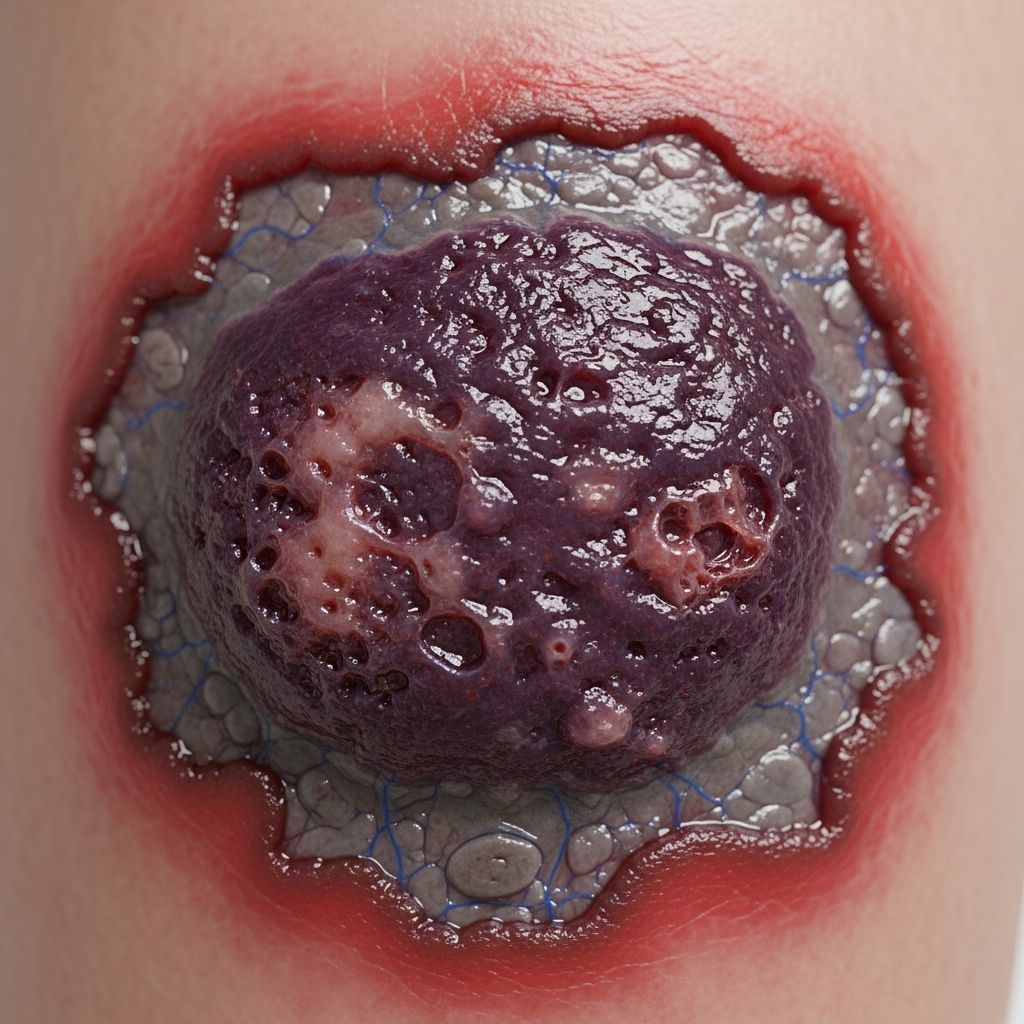
Necrotising fasciitis is a rapidly progressive and potentially fatal bacterial infection of the superficial fascia and surrounding soft tissue. It is also known as flesh-eating disease. Early recognition and aggressive treatment are critical for survival.
What is necrotising fasciitis?
Necrotising fasciitis is a severe, destructive bacterial infection that affects the fascia, the thin connective tissue surrounding muscles, nerves, and blood vessels. The infection spreads rapidly along fascial planes, causing extensive tissue necrosis (death) due to toxin production by the bacteria and impaired blood supply. Without prompt intervention, it leads to sepsis, multi-organ failure, and death. Mortality rates range from 20-30% even with treatment, and higher if diagnosis is delayed.[10]
The disease often begins with a minor trauma or surgical wound but progresses fulminantly, distinguishing it from less severe infections like cellulitis. Bacteria evade immune responses through exotoxins, particularly in cases involving Streptococcus pyogenes, leading to tissue destruction beyond the visible skin changes.
Who gets necrotising fasciitis?
Anyone can develop necrotising fasciitis, but certain risk factors increase susceptibility:
- Diabetes mellitus (most common comorbidity)
- Immunosuppression (e.g., HIV, chemotherapy, steroids)
- Obesity, alcoholism, intravenous drug use
- Chronic liver or kidney disease
- Peripheral vascular disease
- Recent surgery or trauma
- Age extremes (elderly or very young)
Up to 50% of cases occur in otherwise healthy individuals, emphasizing the importance of early symptom recognition regardless of risk profile.[10]
What causes necrotising fasciitis?
Multiple bacteria can cause necrotising fasciitis, classified by microbiology:
| Type | Bacteria | Features |
|---|---|---|
| Type I (Polymicrobial) | Anaerobes + Gram-negatives (e.g., Bacteroides, E. coli, Klebsiella) ± Gram-positives | Most common (70%), abdominal/perineal, diabetics |
| Type II (Monomicrobial) | Group A Streptococcus (S. pyogenes), occasionally MRSA | Healthy hosts, extremities, rapid progression |
| Type III (Marine) | Vibrio vulnificus, Aeromonas hydrophila | Liver disease, saltwater exposure, fulminant |
| Type IV (Fungal) | Candida, Zygomycetes | Immunocompromised |
Bacteria enter through breaks in skin (cuts, burns, insect bites, surgical sites). Flesh-eating toxins like streptolysin and superantigens cause tissue destruction and systemic toxicity.[10]
Clinical images of necrotising fasciitis
The following images illustrate characteristic features at different stages and anatomical sites. Note: These depict advanced disease; early recognition prevents such extensive damage.
Early necrotising fasciitis (perineal)
Image shows subtle erythema and swelling in the perineal region following minor trauma. Pain is disproportionate to visible changes. Wood-like induration of subcutaneous tissue is palpable. This Type I polymicrobial case progressed rapidly in a diabetic patient.
Limb necrotising fasciitis (Type II)
Leg showing violaceous discoloration, bullae, and crepitus. Pain extends beyond visible erythema. Group A strep confirmed. Characteristic “dishwater” pus exudes from fascial plane dissection. Early surgery saved the limb.
Abdominal necrotising fasciitis (post-surgical)
Post-appendectomy wound with rapid extension to abdominal wall. Necrotic eschar, crepitus, and systemic toxicity. Multiple debridements required; vacuum-assisted closure used for healing.
Marine-acquired necrotising fasciitis
Extremity involvement after saltwater exposure in cirrhotic patient (Vibrio vulnificus). Bullae, haemorrhagic necrosis, and rapid progression to amputation despite treatment. Highlights fulminant course in Type III.
Advanced necrosis with myonecrosis
Exposed fascia and muscle showing grey-black necrosis. Anaesthesia develops as nerves are destroyed. This late-stage image underscores why delays in surgery increase mortality.[10]
Post-debridement appearance
After aggressive surgical removal of necrotic tissue. Extensive defects require skin grafting or flaps. Daily re-exploration until healthy bleeding tissue obtained.
Symptoms of necrotising fasciitis
Symptoms evolve rapidly (hours to days):
- Severe pain out of proportion to skin findings (hallmark)
- Redness, swelling, warmth spreading rapidly
- Wooden-hard induration of subcutaneous tissue
- Crepitus (gas-forming organisms)
- Bullae, haemorrhagic blisters, skin necrosis
- Fever, chills, malaise, tachycardia
- Progression to shock, confusion, organ failure
- Loss of sensation as nerves necrose
On exam: Probing to fascia easily dissects planes beyond clinical margins (positive “finger test”).
How is necrotising fasciitis diagnosed?
Diagnosis is primarily clinical due to rapid progression:
- Laboratory Risk Indicator for Necrotising Fasciitis (LRINEC) score: CRP, WBC, Hb, Na, creatinine, glucose ≥6 suggests high risk
- Imaging: CT/MRI shows fascial thickening/gas; bedside ultrasound for crepitus
- Surgical exploration: Definitive – lack of bleeding, grey necrotic fascia, dishwater pus
- Cultures guide antibiotics but do not delay surgery
Skin biopsy rarely needed; imaging adjunct only.[10]
Treatment of necrotising fasciitis
Emergent surgical debridement is the cornerstone – delays >12-24 hours double mortality.
Surgical management
- Immediate wide debridement to healthy bleeding tissue
- Daily re-exploration until infection controlled
- Wound care: NPWT (vacuum devices), dressings
- Delayed closure/grafting/amputation as needed
Antibiotics
Broad-spectrum IV immediately:
- Vancomycin/daptomycin (MRSA)
- Pip/tazo + clindamycin (toxin suppression)
- ± Carbapenem/metronidazole for anaerobes
- De-escalate per cultures
Continue 7-14 days post-source control.
Supportive care
- IV fluids, vasopressors for shock
- ICU monitoring
- Hyperbaric oxygen (controversial adjunct)
- IVIG for streptococcal toxic shock
Complications
- Mortality: 20-30%, up to 70% if delayed
- Sepsis/multi-organ failure
- Amputation (25% limb cases)
- Extensive scarring, graft loss
- Chronic pain, lymphedema, contractures
- Psychological trauma
Prevention
- Prompt wound care, especially high-risk patients
- Avoid saltwater exposure if liver disease
- Diabetes control, smoking cessation
- Early antibiotic use for severe cellulitis
Frequently Asked Questions (FAQs)
What is the first sign of necrotising fasciitis?
Severe pain disproportionate to skin appearance, often with swelling and fever.
How quickly does necrotising fasciitis spread?
Can progress 1 cm/hour along fascia; fatal within 48 hours in aggressive cases like Vibrio.
Is necrotising fasciitis contagious?
No, but close contacts of Group A strep cases may receive prophylaxis.
Can necrotising fasciitis be treated with antibiotics alone?
No, surgery is mandatory as antibiotics cannot penetrate necrotic tissue.[10]
What does necrotising fasciitis look like in early stages?
Like cellulitis but with severe pain, induration, and rapid worsening.
Who is at highest risk?
Diabetics, immunocompromised, liver disease patients, post-surgical.
References
- Necrotising Fasciitis: Causes, Symptoms, and Treatment — Patient.info. 2023. https://patient.info/doctor/dermatology/necrotising-fasciitis-pro
- Necrotizing Fasciitis (Flesh-Eating Bacteria) — Palmdale Dermatology. 2023. https://palmdaledermatology.com/medical-dermatology/necrotizing-fasciitis-flesh-eating-bacteria/
- New therapeutic approaches for necrotising fasciitis — Helmholtz Centre for Infection Research. 2023. https://www.helmholtz-hzi.de/en/media-center/newsroom/news-detail/new-therapeutic-approaches-for-necrotising-fasciitis/
- Necrotizing fasciitis — NCBI StatPearls. 2023-10-01. https://www.ncbi.nlm.nih.gov/books/NBK430756/
- Necrotising fasciitis — HSE.ie (Health Service Executive). 2023. https://www2.hse.ie/conditions/necrotising-fasciitis/
Similar Articles








Read full bio of medha deb