Necrotizing Soft Tissue Infection: Causes, Symptoms & Treatment
Understanding necrotizing soft tissue infection: rapid diagnosis and emergency treatment save lives.
Necrotizing Soft Tissue Infection
Necrotizing soft tissue infection, commonly known as flesh-eating disease, is a rare but extremely serious bacterial condition that destroys muscle, skin, and underlying tissue with alarming speed. This medical emergency requires immediate recognition and aggressive treatment to prevent tissue destruction, systemic complications, and death. Despite advances in medical care and antibiotic therapy, mortality rates remain significant, ranging from 6 to 76 percent depending on the type of infection and how quickly treatment is initiated.
What is Necrotizing Soft Tissue Infection?
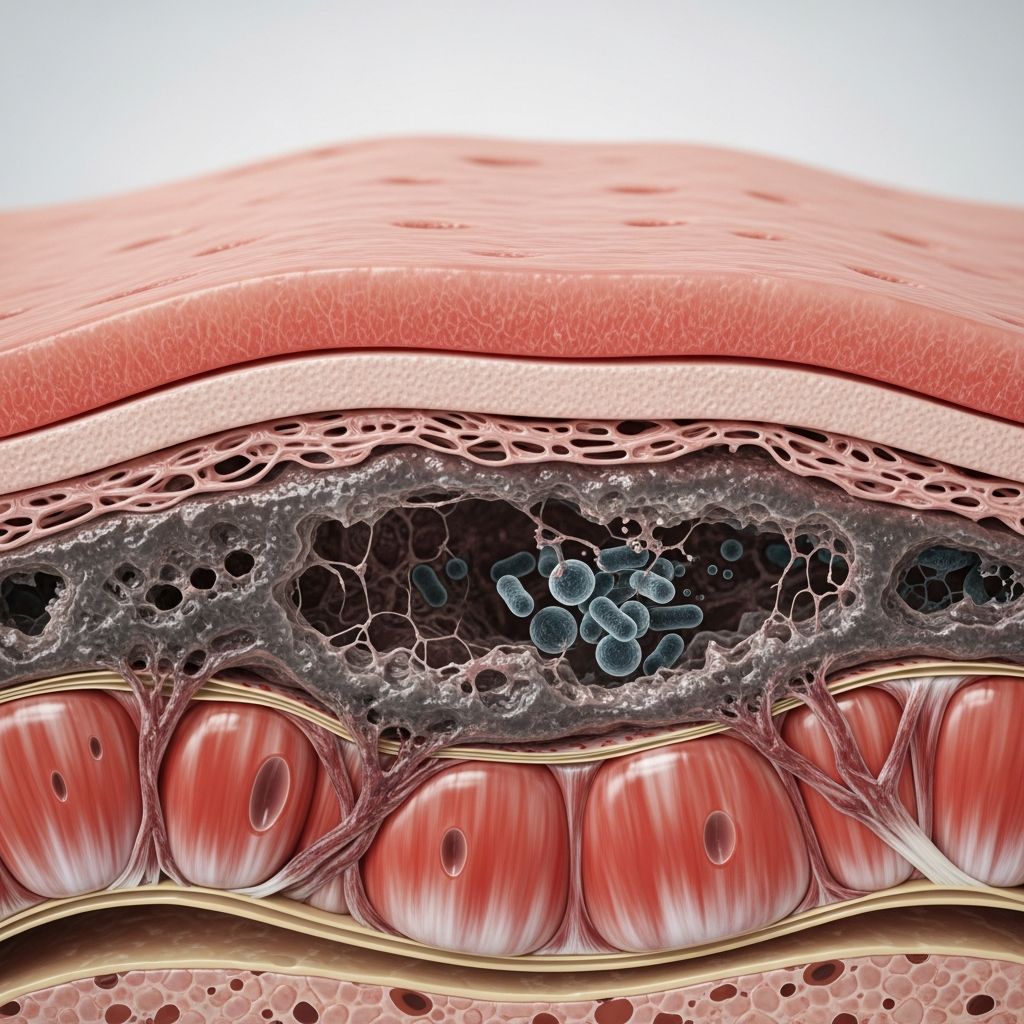
Necrotizing soft tissue infection (NSTI) is a severe, rapidly progressive infection that affects the layers of tissue beneath the skin. The infection spreads quickly through the tissue planes, causing extensive tissue death (necrosis) and can lead to systemic toxicity and organ failure. Unlike superficial skin infections, NSTI penetrates deep into the subcutaneous tissues and fascia, making early detection and treatment challenging because the skin surface may appear relatively normal while devastating damage occurs underneath.
Types of Necrotizing Soft Tissue Infections
Necrotizing soft tissue infections are classified based on their location and depth of invasion. Different anatomical areas present distinct clinical presentations and challenges:
– Necrotizing fasciitis: The most common form, affecting the deep subcutaneous tissues and fascia layers- Fournier’s gangrene: A necrotizing perineal infection affecting the genital and perineal region- Necrotizing myositis: Deep muscle involvement causing rapid muscle destruction
Causes and Risk Factors
Necrotizing soft tissue infections can result from various bacterial organisms, and understanding the causative agents is crucial for appropriate antibiotic selection. The infection may develop from a single pathogen or from multiple organisms working together.
Common Causative Organisms
The bacteria responsible for NSTI vary, but certain organisms are particularly aggressive. Group A Streptococcus (Streptococcus pyogenes), commonly known as flesh-eating bacteria, is the fastest-moving and most dangerous form of NSTI. Other significant causative organisms include Staphylococcus aureus, including antibiotic-resistant strains like MRSA, and Clostridium perfringens, which produces gas and causes particularly severe infections.
Research shows that approximately 69 percent of necrotizing soft tissue infections are polymicrobial, meaning they involve multiple bacteria simultaneously. These polymicrobial infections contain an average of 4.4 different organisms. About 29 percent of cases involve a single pathogen, while in 2 percent of infections, no organisms are identified from cultures.
Risk Factors for Development
Certain conditions and circumstances increase the risk of developing NSTI:
– Traumatic wounds or surgical incisions- Puncture wounds contaminated with soil or marine environments- Immunocompromised conditions including diabetes- Chronic liver disease or kidney disease- Recent surgery or invasive procedures- Immunosuppressive medications- Peripheral vascular disease- Obesity- Extremes of age
Symptoms and Signs
Recognizing the symptoms of NSTI is critical because the infection progresses rapidly, often causing visible changes within hours. The hallmark of NSTI is severe pain that is dramatically out of proportion to what the skin appearance would suggest, which is a key diagnostic clue.
Early Symptoms
Related Stories



Initial presentation typically includes a small, red, painful lump or bump that appears on the skin and begins spreading. This early stage may seem deceptively minor, but the underlying tissue destruction is occurring rapidly. Patients often experience:
– Severe pain at the infection site- Rapid progression of redness and swelling- Skin that becomes hot and indurated (hardened)- Initial fever and systemic symptoms- Feeling unwell and fatigued
Progressive Symptoms
As the infection advances, typically within hours to a few days, more dramatic changes occur. A painful bruise-like area develops and grows rapidly, sometimes expanding within less than an hour. The center becomes dark, dusky, and eventually turns black as the tissue dies. The overlying skin transitions from erythematous (red) to reddish-purple to bluish-gray, becoming shiny, swollen, and extremely tender to touch.
Additional progressive symptoms include:
– Blisters, bullae, or black dots appearing on the skin- Oozing of fluid or pus from the infected area- Crepitus (a crunchy feeling when the skin is pressed, indicating gas production)- Skin breakdown beginning 3 to 5 days after infection onset- Cutaneous gangrene and tissue necrosis
Systemic Symptoms
Because NSTI is a systemic disease affecting the entire body, patients develop constitutional symptoms including high fever (often exceeding 102°F/39°C), chills, profuse sweating, nausea, vomiting, weakness, dizziness, and in severe cases, shock. Changes in heart rate, blood pressure, and level of alertness may occur. Some patients experience decreased urine output, which indicates severe systemic involvement.
Diagnosis
Rapid and accurate diagnosis is essential for survival. NSTI must be distinguished from less serious skin and soft tissue infections because treatment approaches differ significantly.
Clinical Diagnosis
Diagnosis relies heavily on clinical suspicion based on presentation. Key diagnostic indicators include the combination of severe pain out of proportion to skin findings, rapid progression, and physical examination findings such as:
– Tense skin edema beyond the erythematous border- Crepitus from gas-producing bacteria- Bullae or blistering- Ecchymotic changes (bruising from tissue breakdown)- Dysesthesia or paresthesia (abnormal sensations)- Systemic toxicity with fever and hemodynamic instability
Laboratory and Imaging Studies
Laboratory studies often reveal abnormalities that support the diagnosis. Approximately 76 percent of patients with NSTI have platelet counts below 150 × 10³ per mm³ or coagulation abnormalities with prolonged prothrombin and partial thromboplastin times more than 1.5 times normal. These coagulation abnormalities are associated with higher mortality rates.
Plain radiographs may show gas within the tissues, though absence of gas does not exclude the diagnosis. MRI or CT imaging can help delineate the extent of tissue involvement but should never delay surgical intervention.
Treatment and Management
Necrotizing soft tissue infection is a surgical emergency requiring immediate, aggressive intervention. Treatment cannot be delayed and requires a multifaceted approach combining surgery, antibiotics, and supportive care.
Surgical Debridement
Emergency surgical debridement is the cornerstone of NSTI treatment and is the single most important factor determining survival. Surgery should not be delayed for confirmatory tests or specialist consultations. The goal of surgery is to remove all devitalized and infected tissue while preserving viable tissue. Frequent repeat surgeries are typically necessary as tissue death continues to progress even after initial debridement. Patients may require multiple operative interventions within 24-48 hours and continuing as needed until all necrotic tissue is removed.
Antibiotic Therapy
Powerful broad-spectrum antibiotics must be initiated immediately upon diagnosis, even before culture results are available. Empiric antibiotic regimens cover gram-positive organisms (including MRSA), gram-negative bacteria, and anaerobic organisms. Common combinations include clindamycin, daptomycin, intravenous vancomycin, and gentamicin. Gram-negative coverage may involve fluoroquinolones, piperacillin-tazobactam, or carbapenems.
Antibiotics are delivered intravenously to achieve adequate tissue penetration. Once culture and sensitivity results are available, antibiotic therapy can be refined to target the specific organisms identified. However, the antimicrobial regimen may need adjustment based on tissue cultures and clinical response.
Additional Therapeutic Options
Beyond surgery and antibiotics, additional treatments may be employed based on the specific clinical situation:
– Donor immunoglobulins (antibodies): Special medicines that help the immune system fight the infection in certain cases- Hyperbaric oxygen therapy: Treatment with 100 percent oxygen at high pressure, particularly beneficial for certain types of bacterial infections like those caused by Clostridium species- Supportive care: Management of systemic toxicity, fluid resuscitation, correction of coagulation abnormalities, and treatment of shock or sepsis
Reconstruction and Rehabilitation
After the acute infection is controlled and all necrotic tissue is removed, patients require skin grafts to promote wound healing and improve cosmetic appearance. Some patients may require amputation if the infection spreads extensively through an arm or leg, and cannot be controlled through debridement alone. Even with amputation, aggressive continued treatment is necessary, as NSTI can spread to the trunk or other body areas.
Prognosis and Outcomes
The prognosis for necrotizing soft tissue infection depends on multiple factors including the causative organism, extent of tissue involvement at presentation, presence of systemic complications, comorbid conditions, and speed of diagnosis and treatment initiation. Mortality rates range from 6 to 76 percent depending on these variables.
Factors associated with poor prognosis include delayed diagnosis and treatment, polymicrobial infections, presence of coagulation abnormalities, shock at presentation, and immunocompromised status. Patients who receive prompt surgical debridement and appropriate antibiotics within the first 24 hours have significantly better outcomes than those with delayed treatment.
Prevention
While NSTI cannot always be prevented, certain measures reduce risk:
– Promptly clean and appropriately treat all wounds, especially traumatic injuries- Avoid exposing wounds to saltwater or soil- Maintain good hygiene and wound care- Ensure tetanus immunization is current- Seek immediate medical attention for signs of infection- Follow post-operative wound care instructions carefully- Report unusual symptoms or rapid progression to healthcare providers immediately
Frequently Asked Questions
Q: How quickly does necrotizing soft tissue infection progress?
A: NSTI progresses extremely rapidly, often causing visible changes within hours. Symptoms may develop and spread in less than an hour. This rapid progression is why immediate medical attention and emergency surgery are critical for survival.
Q: Can necrotizing soft tissue infection be treated with antibiotics alone?
A: No. While antibiotics are essential, they cannot penetrate all infected tissue effectively. Emergency surgical debridement to remove dead and infected tissue is absolutely necessary and cannot be delayed. Surgery is the most important factor in determining survival.
Q: What should I do if I suspect necrotizing soft tissue infection?
A: Seek emergency medical care immediately. Do not wait for additional symptoms to develop. If you have severe pain out of proportion to skin appearance, rapid progression, fever, or signs of systemic illness following a wound or injury, go to the emergency department right away.
Q: Is necrotizing soft tissue infection contagious?
A: While the causative bacteria can be spread through direct contact with infected material, NSTI itself is not contagious in the traditional sense. Standard infection control precautions are recommended when caring for patients with NSTI.
Q: What is the survival rate for necrotizing soft tissue infection?
A: Survival rates vary widely, with mortality ranging from 6 to 76 percent depending on factors such as organism type, extent of involvement, delay in diagnosis and treatment, and patient factors. Early recognition and aggressive surgical intervention significantly improve survival rates.
Q: Will I need amputation if I develop necrotizing soft tissue infection?
A: Amputation may be necessary if the infection spreads extensively through an arm or leg and cannot be controlled through aggressive debridement alone. However, early surgical intervention and appropriate treatment prevent amputation in many cases.
References
- Necrotizing Soft Tissue Infection — MedlinePlus Medical Encyclopedia, National Library of Medicine. Updated 2024. https://medlineplus.gov/ency/article/001443.htm
- Necrotizing Fasciitis – StatPearls — NCBI Bookshelf, National Center for Biotechnology Information. 2024. https://www.ncbi.nlm.nih.gov/books/NBK430756/
- Necrotizing Soft Tissue Infections: A Primary Care Review — American Academy of Family Physicians, American Family Physician. 2003. https://www.aafp.org/pubs/afp/issues/2003/0715/p323.html
- Necrotizing Soft Tissue Infections — JAMA Network, Journal of the American Medical Association. https://jamanetwork.com/journals/jama/fullarticle/2732575
- Necrotizing Soft-Tissue Infection – Dermatologic Disorders — Merck Manuals Professional Edition. 2024. https://www.merckmanuals.com/professional/dermatologic-disorders/bacterial-skin-infections/necrotizing-soft-tissue-infection
Similar Articles








Read full bio of medha deb