Neonatal Cephalic Pustulosis: What You Need To Know
Benign facial pustules in newborns linked to Malassezia yeast, self-resolving with optional topical antifungal treatment.
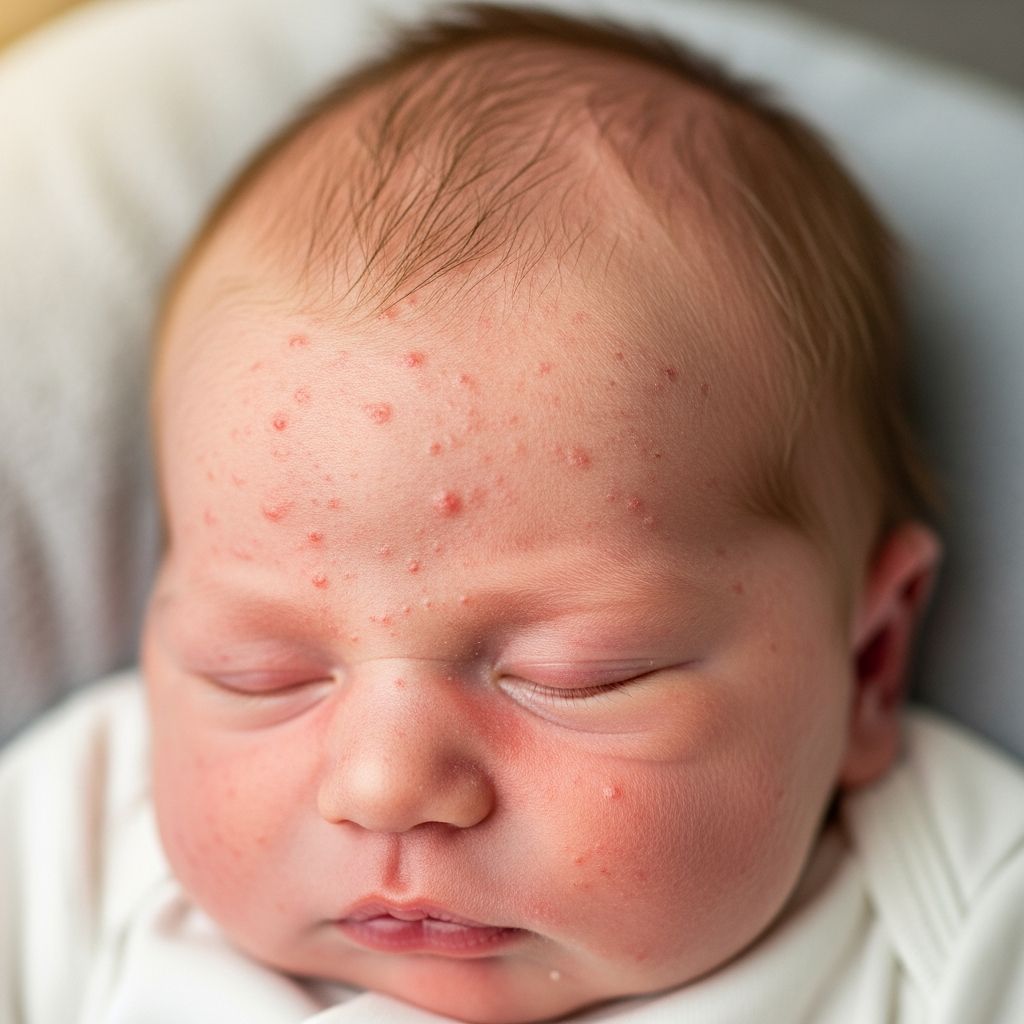
Neonatal cephalic pustulosis is a common, benign skin condition in newborns characterized by small pustules primarily on the face. It typically appears in the first few weeks of life and resolves spontaneously without scarring or long-term effects.
What is neonatal cephalic pustulosis?
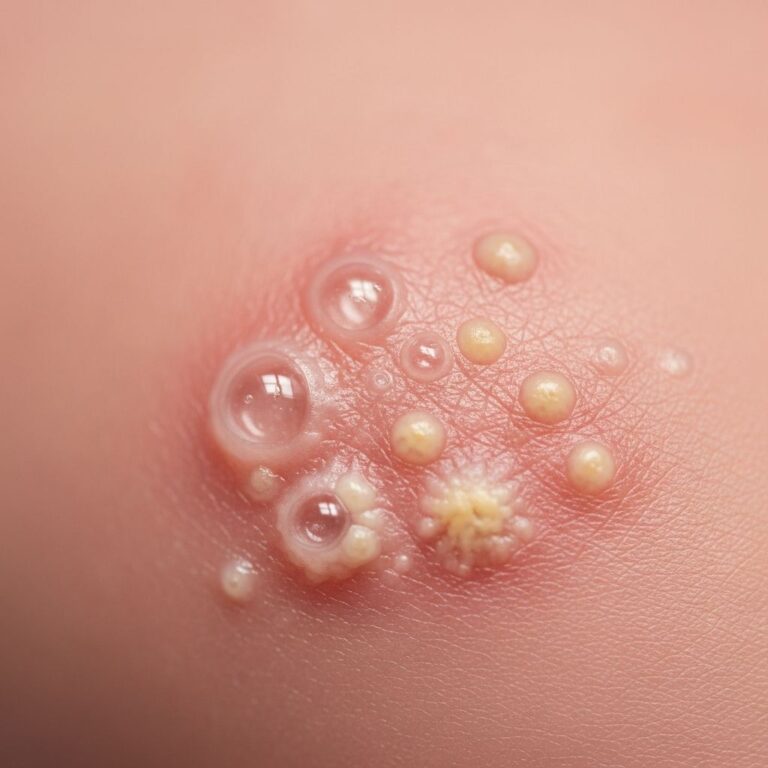
Neonatal cephalic pustulosis, also known as benign cephalic pustulosis, transient cephalic neonatal pustulosis, or historically mislabeled as neonatal acne, presents as multiple small white or yellow pustules on an erythematous base on the face of infants. These lesions are superficial, non-follicular, and surrounded by mild erythema, distinguishing them from true acne which involves pilosebaceous units.
The condition affects up to 40-50% of newborns in some populations, peaking between 2-6 weeks of age. Pustules are 1-2 mm in size, fragile, and may rupture leaving mild scaling. Unlike infectious pustules, there is no surrounding induration or systemic illness.
Who gets neonatal cephalic pustulosis?
This condition occurs in healthy, full-term newborns with no known risk factors. It is equally common in both genders and all ethnicities. Colonization with Malassezia yeast, facilitated by the newborn’s seborrheic-rich skin and immature immunity, plays a key role. Environmental factors like incubator use or certain tapes in NICU settings may increase colonization rates, though most cases occur in well infants.
- Age: 1-4 weeks old (peak at 2-3 weeks)
- Common sites: cheeks, forehead, chin, neck
- Prevalence: Common, self-limited
- No predisposition by sex, race, or gestation
What causes neonatal cephalic pustulosis?
Originally attributed to maternal hormones stimulating sebaceous glands, current evidence strongly implicates Malassezia species yeast (formerly Pityrosporum ovale or Malassezia furfur). Microscopy of pustule contents reveals yeast spores and hyphae in 70-90% of cases.
Malassezia sympodialis correlates with severe presentations, while overall skin colonization rates are similar in affected and unaffected neonates, suggesting a pathogenic response in susceptible infants. The yeast thrives in the lipid-rich sebum of newborns. Conflicting studies note some cases without detectable yeast, indicating multifactorial etiology including immune factors.
What are the clinical features of neonatal cephalic pustulosis?
Lesions emerge abruptly as tiny pustules on erythematous skin, predominantly on the face. They are asymptomatic—no itch, pain, or fever.
- Primary lesions: 1-3 mm pustules with white/yellow content
- Distribution: Central face (cheeks > forehead > chin); rarely trunk
- Evolution: Peak at 3-6 weeks, resolve by 3-4 months
- Associated findings: Mild scaling post-rupture; no comedones or cysts
No mucous membrane or palm/sole involvement. Lesions wax and wane but trend toward resolution.
Diagnosis
Clinical pattern is diagnostic in typical cases. Confirm with pustule smear: KOH preparation shows Malassezia yeast (spaghetti-and-meatball appearance). Wright or Giemsa stain reveals neutrophils without bacteria or eosinophils.
Gram stain/culture rules out bacteria. Tzanck smear excludes herpes (no multinucleated cells). No biopsy needed.
Differential diagnosis
| Condition | Key Features | Differentiator |
|---|---|---|
| Erythema toxicum neonatorum | ETN: Fleeting wheals/pustules anywhere; eosinophils on smear | ETN earlier onset (<7 days), trunk involvement, eosinophils |
| Neonatal acne | Comedones, inflammatory papules; later onset (4-6 weeks) | Acne has pilosebaceous involvement, persists longer |
| Miliaria | Sweat duct obstruction; neck/axilla/groin; pruritic | Miliaria: crystalline or rubra; PAS+ plugs |
| Candidiasis | Uniform pustules/satellites; oral involvement possible | Candida: pseudohyphae on KOH |
| Herpes simplex | Grouped vesicles/erosions; systemic signs | HSV: Tzanck multinucleated cells, PCR |
| Bacterial (Staph/Strep) | Honey crusts, bullae; fever | Positive Gram stain/culture |
| Eosinophilic pustular folliculitis | Follicular, pruritic, scalp/trunk; eosinophils | EPF: perifollicular eosinophils, recurrent |
Related Stories



Treatment of neonatal cephalic pustulosis
Observation is primary as it self-resolves in 1-4 months without sequelae. For cosmetic concern or persistence beyond 4 weeks, apply ketoconazole 2% cream twice daily for 7-14 days. Improvement seen in 3-7 days.
- First-line: Topical ketoconazole BID x 1-2 weeks
- Alternative: Observation; gentle cleansing
- Severe/refractory: Consider oral fluconazole (case reports only)
- Avoid: Topical steroids, antibiotics unless infected
Ketoconazole is safe in neonates; rare irritation. Reassure parents of benign course.
What is the outcome for neonatal cephalic pustulosis?
Complete resolution without scarring by 3-4 months. No recurrence or long-term effects. Untreated cases peak then fade; treated cases resolve faster.
Prevention
No proven prevention. Minimize NICU risk factors like occlusive tapes if possible. Daily gentle face washing may reduce yeast load.
Frequently asked questions
Is neonatal cephalic pustulosis contagious?
No, it is not infectious despite Malassezia association. Yeast is normal skin flora.
Can I pop the pustules?
No, avoid squeezing to prevent irritation or secondary infection. They rupture naturally.
Does it turn into acne later?
No relation to infantile or adolescent acne. Distinct pathophysiology.
When to see a doctor?
If fever, lethargy, spreading lesions, or no improvement after 2 months. Smear if atypical.
Is ketoconazole safe for newborns?
Yes, topical 2% is well-tolerated; use sparingly on face.
Related topics
- Neonatal acne
- Erythema toxicum neonatorum
- Malassezia folliculitis
- Baby skin care
References
- Neonatal cephalic pustulosis – DermNet — DermNet NZ. 2023. https://dermnetnz.org/topics/neonatal-cephalic-pustulosis
- Neonatal cephalic pustulosis (transient cephalic neonatal pustulosis; benign cephalic pustulosis; cephalic pustulosis) — Dermatology Advisor. 2023-10-01. https://www.dermatologyadvisor.com/home/decision-support-in-medicine/dermatology/neonatal-cephalic-pustulosis-transient-cephalic-neonatal-pustulosis-benign-cephalic-pustulosis-cephalic-pustulosis/
- Neonatal Pustular Dermatosis: An Overview — PubMed Central (PMC). 2015-03-24. https://pmc.ncbi.nlm.nih.gov/articles/PMC4372928/
- Neonatal pustular facial rash — Contemporary Pediatrics. 2023. https://www.contemporarypediatrics.com/view/neonatal-pustular-facial-rash
- Common rashes in neonates — RACGP. 2012-05-01. https://www.racgp.org.au/afp/2012/may/common-rashes-in-neonates
Similar Articles








Read full bio of medha deb