Neovascular Glaucoma: Expert Guide To Diagnosis And Treatment
Comprehensive insights into causes, diagnosis, and advanced treatments for neovascular glaucoma to preserve vision.
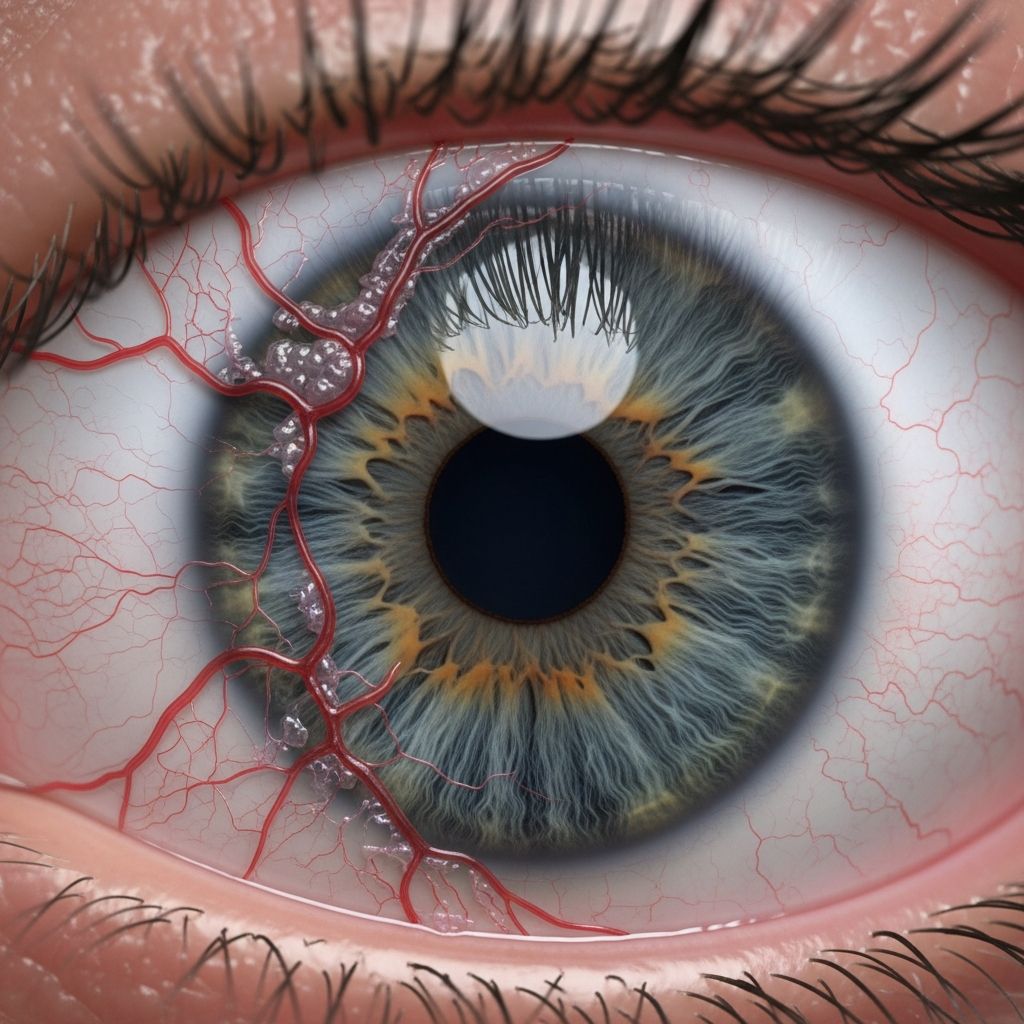
Neovascular glaucoma (NVG) represents a severe form of secondary glaucoma driven by abnormal blood vessel growth in the eye, often leading to rapid vision loss if not addressed promptly. This condition arises from retinal ischemia, prompting the release of vascular endothelial growth factor (VEGF) that fuels neovascularization on the iris and trabecular meshwork.
Understanding the Pathophysiology of NVG
The core mechanism of NVG involves hypoxia in the retina, which triggers VEGF production. This factor promotes fragile new vessels (neovascularization of the iris, or NVI, and angle, or NVA) that contract, causing synechial closure of the drainage angle and elevated intraocular pressure (IOP).
Common underlying causes include proliferative diabetic retinopathy, central retinal vein occlusion (CRVO), and ocular ischemic syndrome. These conditions create widespread retinal non-perfusion, escalating the ischemic drive.
- Diabetic retinopathy: Chronic hyperglycemia damages retinal capillaries, leading to ischemia.
- CRVO: Venous blockage causes retinal hemorrhage and hypoxia.
- Ocular ischemic syndrome: Carotid artery stenosis reduces ocular blood flow.
Without intervention, these vessels bleed easily, forming hyphema, and fibrose, permanently obstructing aqueous outflow.
Recognizing Early Signs and Symptoms
Patients often present with blurred vision, ocular pain, redness, and elevated IOP. Early detection hinges on identifying NVI or NVA before full angle closure. Gonioscopy is crucial to visualize angle neovascularization, even with normal IOP.
Slit-lamp examination reveals fine, irregular vessels on the iris surface, sparing the pupillary margin. Fundus evaluation assesses retinal ischemia via wide-field fluorescein angiography if media clarity allows.
| Stage | Key Features | IOP Status |
|---|---|---|
| Early (NVI/NVA) | Iris/angle vessels, clear media | Normal or mildly elevated |
| Moderate | Partial synechiae, hyphema | Elevated (25-40 mmHg) |
| Advanced | Total angle closure, corneal edema | >40 mmHg, pain |
High-risk patients, such as those with recent CRVO, require frequent monitoring.
Comprehensive Diagnostic Approaches
Diagnosis combines clinical exam, imaging, and risk assessment. Anterior segment OCT quantifies synechiae extent, while ultrasound biomicroscopy details angle status in opaque media.
Retinal evaluation via fundus photography or OCT angiography maps ischemic areas. B-scan ultrasonography aids when vitreous hemorrhage obscures views.
- Slit-lamp biomicroscopy for NVI.
- Gonioscopy for NVA and synechiae.
- Tonometry for IOP measurement.
- Fundus exam or imaging for ischemia source.
Staging guides urgency: Stage 1 (rubeosis with normal IOP) demands immediate retinal treatment; Stage 3 (high IOP, vision loss) requires multifaceted intervention.
Primary Treatment: Addressing the Ischemic Drive
The cornerstone of NVG management is halting neovascularization by treating retinal ischemia. Panretinal photocoagulation (PRP) ablates ischemic retina, reducing VEGF production.
For clear media, sector or full PRP (2000-4000 spots) is applied. In vitreal hemorrhage or cataract, pars plana vitrectomy (PPV) with endolaser is preferred.
Anti-VEGF injections (bevacizumab, ranibizumab, aflibercept) provide rapid regression of NVI/NVA, buying time for PRP. Intravitreal administration at diagnosis lowers IOP temporarily and enhances surgical outcomes.
Related Stories



Early anti-VEGF plus PRP prevents synechial closure in many cases, though long-term surgery is often needed.
Lowering Intraocular Pressure: Medical Strategies
Medical therapy controls IOP acutely using topical agents: beta-blockers (timolol), alpha-agonists (brimonidine), carbonic anhydrase inhibitors (dorzolamide), and prostaglandins (latanoprost).
Oral agents like acetazolamide or methazolamide offer adjunctive reduction. Steroids and cycloplegics manage inflammation and pain.
These provide temporary relief; 80% of patients eventually need surgery.
Surgical Interventions for IOP Control
Glaucoma drainage implants (GDIs) like Ahmed or Baerveldt valves are first-line for active NVG, bypassing inflammation-prone trabeculectomy.
Valved devices activate immediately, minimizing hypotony. Combined PPV, endolaser, and GDI suits complex cases.
- Ahmed Valve: Preferred for early postoperative function.
- Baerveldt Implant: Higher long-term success, non-valved.
- Trabeculectomy: With mitomycin C or 5-FU, but higher failure in NVG.
Cyclophotocoagulation (transscleral diode laser) suits poor visual prognosis eyes, destroying ciliary body production.
Staged Management Protocol
Adopt a stepwise approach based on presentation:
- Diagnosis: Confirm NVG, identify ischemia cause.
- Anti-VEGF: Inject bevacizumab promptly.
- Retinal Ablation: PRP or PPV/endolaser.
- IOP Control: Medical optimization, then GDI if needed.
- Follow-up: Monitor regression, IOP weekly initially.
In end-stage painful eyes without vision, cyclodestruction or enucleation may be considered.
Challenges and Complications in NVG Treatment
NVG’s aggressive nature leads to hyphema, corneal decompensation, phthisis bulbi, and recurrence. Anti-VEGF effects wane after 4-6 weeks, necessitating surgery.
Inflammation hampers filtering surgery; GDIs fare better. Patient comorbidities like diabetes complicate management.
Prevention in high-risk groups via vigilant screening and preemptive PRP/anti-VEGF is ideal.
Prognosis and Long-Term Outcomes
Visual preservation depends on intervention timing. Early treatment preserves vision in 50-70%; late cases often yield poor acuity.
GDI success rates exceed 70% at 2 years, with anti-VEGF adjuncts improving bleb survival.
Emerging Therapies and Future Directions
Novel anti-VEGF like faricimab and sustained-release implants promise prolonged action. Gene therapy targeting VEGF and minimally invasive glaucoma surgery (MIGS) combined with PRP are under investigation.
Frequently Asked Questions (FAQs)
What causes neovascular glaucoma?
Primarily retinal ischemia from diabetes, CRVO, or vascular occlusions stimulating VEGF-driven vessel growth.
How is NVG diagnosed?
Via slit-lamp for NVI, gonioscopy for NVA, tonometry for IOP, and retinal imaging.
Is laser treatment effective for NVG?
Yes, PRP reduces ischemic drive, often combined with anti-VEGF for optimal results.
When is surgery needed for NVG?
When medical therapy fails or angle closure advances; GDIs are preferred.
Can NVG be prevented?
Yes, through screening and early PRP/anti-VEGF in at-risk patients.
Patient Education and Lifestyle Advice
Educate on blood sugar control, smoking cessation, and prompt reporting of vision changes. Regular follow-ups are vital.
References
- Medical and Surgical Treatment of Neovascular Glaucoma — PMC/NCBI. 2011-06-20. https://pmc.ncbi.nlm.nih.gov/articles/PMC3107497/
- Five Pointers on Neovascular Glaucoma With Active Neovascularization — Glaucoma Today. 2019-07-01. https://glaucomatoday.com/articles/2019-july-aug/five-pointers-on-neovascular-glaucoma-with-active-neovascularization
- What is Neovascular Glaucoma? — BrightFocus Foundation. 2023. https://www.brightfocus.org/resource/what-is-neovascular-glaucoma/
- Treating Neovascular Glaucoma — Review of Ophthalmology. 2022. https://www.reviewofophthalmology.com/article/treating-neovascular-glaucoma
- Neovascular Glaucoma — EyeWiki (AAO). 2024-01-15. https://eyewiki.org/Neovascular_Glaucoma
- Managing Neovascular Glaucoma in Cardiovascular Disease — Eyes On Eyecare. 2023-05-10. https://eyesoneyecare.com/resources/managing-neovascular-glaucoma-cardiovascular-disease/
Similar Articles








Read full bio of medha deb