Nerve Ablation: Procedures, Benefits, Risks, What To Expect
A minimally invasive procedure to disrupt pain signals from nerves, offering long-term relief for chronic conditions like back pain and arthritis.
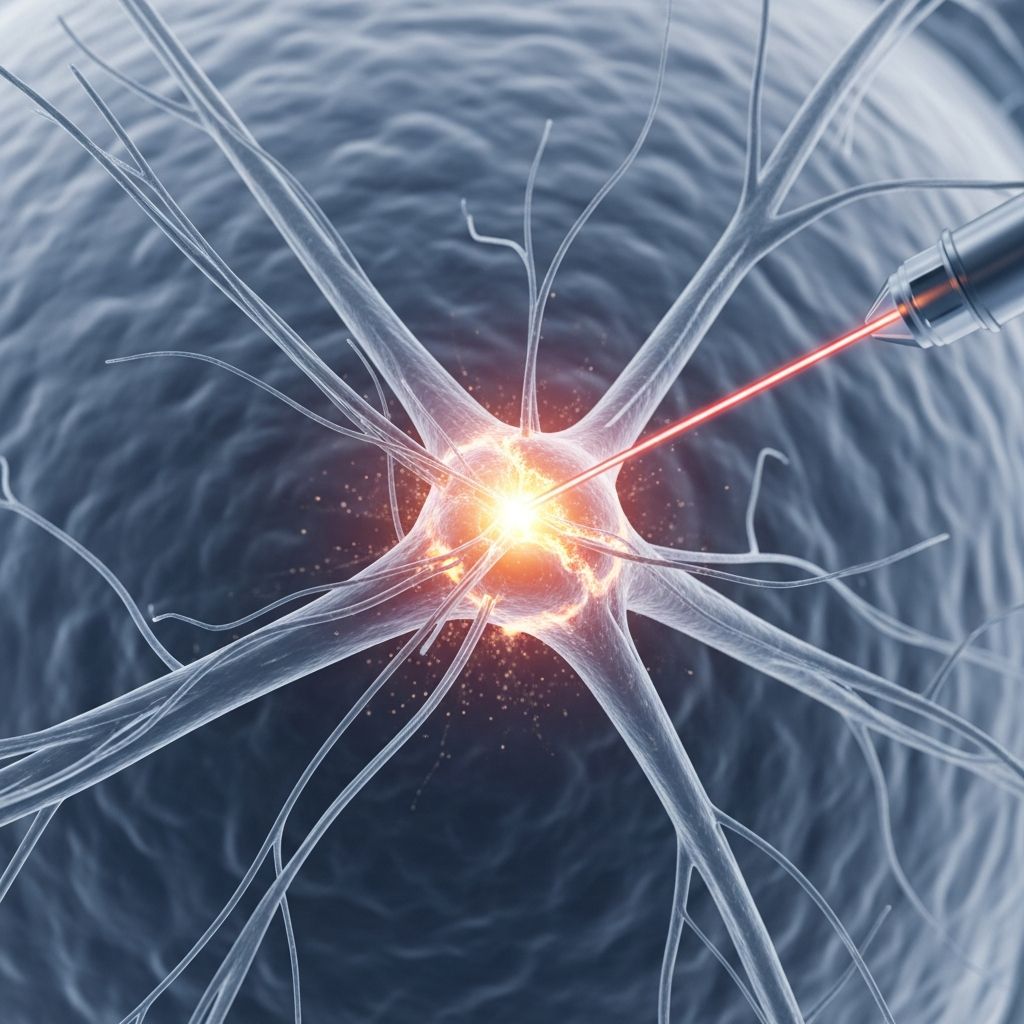
Nerve ablation, also known as radiofrequency ablation (RFA), is a minimally invasive medical procedure that uses heat generated by radio waves to disrupt specific nerves responsible for transmitting chronic pain signals to the brain. This targeted approach provides significant pain relief for conditions such as facet joint pain, knee osteoarthritis, and sacroiliac joint dysfunction, often lasting from 6 to 24 months.
What Is Nerve Ablation?
Nerve ablation involves inserting a thin needle-like probe near pain-conducting sensory nerves, guided by imaging like fluoroscopy or ultrasound. Radiofrequency energy is then applied to heat the nerve tissue to 60–80°C for at least 40–90 seconds, causing coagulation necrosis that interrupts pain signal transmission without damaging surrounding motor nerves or tissues.
The procedure selectively targets small-diameter C-fibers and A-delta fibers responsible for burning, aching pain, preserving larger motor fibers for strength and movement. Unlike temporary nerve blocks using anesthetics, ablation aims for prolonged disruption, though nerves can regenerate at 1–1.5 mm per week.
How Does Nerve Ablation Work?
The mechanism relies on thermal energy denaturing proteins in the nerve axon, leading to Wallerian degeneration where the nerve segment dies back. This blocks pain signals while connective tissue remains intact, allowing potential nerve regrowth over time. Pulsed RF modulates nerve function via electric fields without excessive heat, reducing inflammation, while cooled RF uses water circulation for larger lesions on bigger nerves like genicular or sacroiliac.
- Conventional RF: Standard heat-based ablation for precise small-nerve targeting.
- Pulsed RF: Non-thermal, safer near sensitive areas.
- Cooled RF: Creates broader lesions with less tissue charring, ideal for knee or SI joint pain.
Pain relief typically begins 2–4 weeks post-procedure as inflammation subsides and degeneration completes.
Types of Nerve Ablation
Three primary radiofrequency ablation variants address different anatomical and pain needs:
| Type | Description | Best Uses |
|---|---|---|
| Conventional (Thermal) RF | Heats nerve to 80–90°C for 90 seconds. | Spinal facet joints, precise targeting. |
| Pulsed RF | Electric pulses without sustained heat. | Sensitive nerves, reduces inflammation. |
| Cooled RF | Water-cooled probe for larger lesions. | Knee genicular nerves, sacroiliac joints. |
What Conditions Does Nerve Ablation Treat?
Nerve ablation is FDA-approved for facet-mediated lower back pain and increasingly used off-label for peripheral issues. Common indications include:
- Chronic low back pain: From lumbar facet joints, with 63–66% of patients achieving ≥50% relief for up to 2 years.
- Knee osteoarthritis: Genicular nerve ablation for moderate-severe pain unresponsive to conservatives; trials show pain reduction and improved mobility for 10–24 months.
- Sacroiliac (SI) joint pain: Cooled RF targets nerves innervating the joint.
- Other: Trigeminal neuralgia, peripheral neuropathy, post-thoracotomy pain.
Candidates typically have pain >6 months, failed medications/therapy, positive diagnostic block (>50% relief), and imaging confirmation.
Who Is a Candidate for Nerve Ablation?
Related Stories



Ideal candidates are adults with localized chronic pain confirmed by diagnostic block, no active infection, coagulopathy, or pregnancy. It’s suitable for those avoiding surgery or opioids. Contraindications include implantable devices like pacemakers, nerve dysfunction, or allergy to contrast.
- Positive predictors: >50% block relief, facet/OA diagnosis.
- Not for: Radicular pain, widespread neuropathy, active cancer.
The Nerve Ablation Procedure: Step by Step
Performed outpatient in 15–60 minutes under local anesthesia:
- Prep: IV sedation optional; skin sterilized, local numbed.
- Imaging guidance: Fluoroscopy/ultrasound positions cannula.
- Stimulation test: Low-current confirms location via tingling.
- Ablation: RF energy applied per type (e.g., 80°C/90s).
- Completion: Probes removed; bandage applied. Home same day.
What to Expect During Recovery
Post-procedure: Mild soreness, swelling for 1–2 weeks; ice/OTC pain meds help. Avoid driving 24 hours; resume light activity in days. Full relief in 2–4 weeks; duration 6–24 months based on RF type.
- Timeline: Soreness peaks day 2–3; improvement week 2+.
- Repeat if pain returns, often equally effective.
Benefits of Nerve Ablation
- Minimally invasive, no incisions/general anesthesia.
- Outpatient, quick recovery.
- Long-lasting relief (70% success rate), reduces meds/surgery need.
- Preserves function; repeatable.
Risks and Side Effects
Low risk (<1% serious): Temporary numbness/soreness (common), infection/bleeding (rare). Motor weakness transient if occurs. Cooled RF minimizes adjacent damage.
How Effective Is Nerve Ablation?
High success: 63–66% ≥50% relief for spinal pain up to 2 years; knee studies show VAS reductions superior to sham, durable 12+ months. Best with proper selection.
Cost of Nerve Ablation
Varies $1,500–$4,000 per session; insurance often covers if criteria met (e.g., positive block).
Nerve Ablation vs. Other Pain Treatments
| Treatment | Duration | Invasiveness | Relief Length |
|---|---|---|---|
| Nerve Block | Injection | Low | Hours–weeks |
| RFA | Needle RF | Moderate | 6–24 months |
| Surgery | Open | High | Permanent? |
Frequently Asked Questions (FAQs)
Does nerve ablation work for everyone?
No, success depends on accurate diagnosis and positive block response; ~70% benefit significantly.
Is nerve ablation permanent?
Not usually; relief lasts 6–24 months as nerves regrow, but repeatable.
How painful is nerve ablation?
Minimal with local anesthesia; feels like pressure or mild burn during ablation.
Can nerve ablation cause nerve damage?
Rare; targets sensory nerves, imaging ensures safety.
Who performs nerve ablation?
Pain specialists, interventional radiologists, or anesthesiologists.
Is nerve ablation covered by insurance?
Often yes for approved indications like facet pain with diagnostic block.
References
- How Nerve Ablation Relieves Chronic Pain — Polar Medical. 2023. https://www.polarmedical.co.uk/how-nerve-ablation-relieves-chronic-pain/
- Radiofrequency ablation for back pain: Results and risks — Medical News Today. 2023-10-24. https://www.medicalnewstoday.com/articles/radiofrequency-ablation-for-back-pain
- Ablation of Peripheral Nerves To Treat Pain — MyHealthPlanner (CAM 701154). 2024. https://myhealthplanner.com/web/public/brands/medicalpolicy/external-policies/ablation-of-peripheral-nerves-to-treat-pain/
- Ablative Treatment for Spinal Pain — UnitedHealthcare. 2024. https://www.uhcprovider.com/content/dam/provider/docs/public/policies/comm-medical-drug/ablative-treatment-spinal-pain.pdf
- Radiofrequency Ablation — NCBI StatPearls. 2023-08-14. https://www.ncbi.nlm.nih.gov/books/NBK482387/
Similar Articles








Read full bio of Sneha Tete