Nerve Conduction Studies: Diagnostic Testing for Nerve Function
Understand nerve conduction studies: How this diagnostic test measures nerve health and function.
What Are Nerve Conduction Studies?
Nerve conduction studies (NCS) are non-invasive diagnostic tests designed to measure how well your nerves transmit electrical signals. These studies evaluate the health and function of peripheral nerves—the network of nerves that connect your brain and spinal cord to the rest of your body. By measuring the speed and strength of electrical impulses traveling along nerves, healthcare providers can identify nerve damage, disease, or dysfunction that may not be apparent through physical examination alone.
Nerve conduction studies are commonly performed as part of a comprehensive neurological evaluation and are often combined with electromyography (EMG) testing to provide a complete picture of neuromuscular function. The combination of these two tests offers valuable diagnostic information for conditions affecting nerves and muscles.
How Nerve Conduction Studies Work
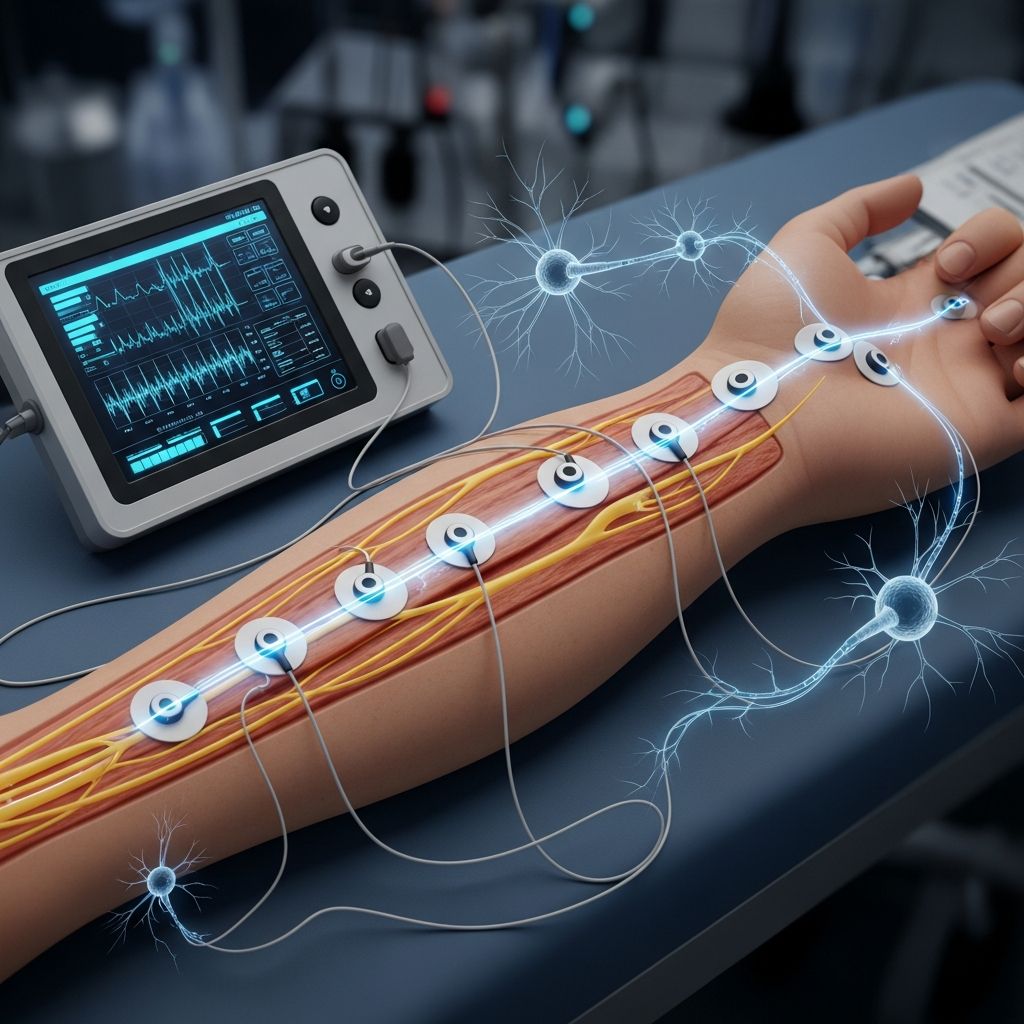
During a nerve conduction study, a trained technician applies small electrical shocks to the skin overlying a nerve at specific locations. These electrical stimuli are carefully calibrated to be equivalent to a strong static electricity shock—noticeable but not painful or dangerous. The shocks stimulate the nerve fibers and cause them to generate electrical impulses.
Once the nerve is stimulated, a second set of electrodes placed on the skin surface records the electrical response generated by the nerve. The equipment measures several important parameters:
- Nerve conduction velocity: The speed at which electrical impulses travel along the nerve
- Amplitude: The size or strength of the electrical response
- Latency: The time it takes for a nerve impulse to travel from the stimulation point to the recording electrode
- Duration: How long the electrical response lasts
These measurements help clinicians determine whether nerves are functioning normally or if there is evidence of damage, compression, or disease affecting nerve conduction.
When Are Nerve Conduction Studies Recommended?
Healthcare providers may recommend nerve conduction studies for patients presenting with a variety of symptoms and conditions. Common indications include:
- Unexplained weakness or numbness in the arms or legs
- Tingling or burning sensations (paresthesias)
- Suspected carpal tunnel syndrome or other compression neuropathies
- Peripheral neuropathy from diabetes or other causes
- Suspected nerve injuries from trauma
- Evaluation of conditions like amyotrophic lateral sclerosis (ALS)
- Investigation of myositis or inflammatory muscle conditions
- Assessment of nerve function before and after surgical procedures
- Monitoring of chronic nerve compression syndromes
The test is particularly valuable for distinguishing between different types of nerve damage, such as demyelinating disorders (where the nerve’s protective covering is damaged) versus axonal degeneration (where the nerve fiber itself is damaged).
What to Expect During the Procedure
Before Your Test
Proper preparation ensures accurate test results. On the day of your nerve conduction study, avoid applying lotion or creams to your skin, as these substances can interfere with electrical conductivity and electrode placement. Inform your healthcare provider if you are taking blood thinning medications, as this may affect your comfort during testing.
It’s helpful to wear comfortable, loose-fitting clothing that allows easy access to the areas being tested. Most nerve conduction studies are performed in an outpatient setting and typically take 30 to 60 minutes, depending on which nerves are being evaluated and how many different sites need to be tested.
Related Stories



During the Test
Once you arrive for your appointment, the technician will explain the procedure and answer any questions you may have. You will be positioned comfortably, usually sitting or lying down. The technician will identify specific landmarks on your skin and prepare the area by cleaning it with a gentle cleanser.
Two sets of electrodes will be applied to your skin. The first set delivers the small electrical shocks that stimulate the nerve, while the second set records the nerve’s response. The technician may test multiple nerves and different segments of the same nerve to gather comprehensive data about nerve function.
During stimulation, you will feel brief electrical pulses that may be mildly uncomfortable but should not cause pain. If you experience significant discomfort, communicate with the technician immediately, as the intensity of the shocks can be adjusted. The study may be repeated at different locations or at different times to fully evaluate nerve function.
After Your Test
Nerve conduction studies require no recovery time, and you can return to your normal activities immediately after testing. Some patients may experience mild temporary redness or slight irritation at the electrode sites, which typically resolves within hours. There are no lasting effects from the electrical stimulation used during the test.
Nerve Conduction Studies vs. Electromyography (EMG)
While nerve conduction studies and electromyography are often performed together, they measure different aspects of neuromuscular function. Understanding the differences can help you appreciate the comprehensive diagnostic information these tests provide:
| Aspect | Nerve Conduction Studies (NCS) | Electromyography (EMG) |
|---|---|---|
| What it measures | Nerve function and electrical signal transmission | Muscle electrical activity at rest and during contraction |
| Equipment | Surface electrodes delivering electrical stimulation | Thin needle electrode inserted into muscle |
| Procedure | Nerve is stimulated externally; response is recorded | Needle is inserted into muscle; electrical patterns are recorded |
| Information provided | Nerve conduction velocity, amplitude, latency | Muscle response patterns, fibrillations, motor unit activity |
| Conditions assessed | Neuropathies, nerve compression, demyelinating diseases | Muscle diseases, myositis, neuromuscular disorders |
Many neurological conditions require both tests to establish an accurate diagnosis. The combination provides complementary information about the entire neuromuscular system.
Risks and Safety Considerations
Nerve conduction studies are among the safest diagnostic procedures available in medicine. The electrical stimulation used is carefully controlled and delivered at safe levels. The risks associated with this test are minimal and include:
- Mild discomfort or unusual sensations during stimulation
- Temporary redness or slight irritation at electrode sites
- Rare cases of increased discomfort in patients with severe nerve damage
- Minimal risk for patients with pacemakers or other implanted electronic devices, though this should be discussed with your provider
The test is generally safe for pregnant women, children, and elderly patients. However, inform your healthcare provider about any medical devices you have, severe pain conditions, or other health concerns before undergoing testing.
Understanding Your Results
Nerve conduction study results are interpreted by a neurologist or other qualified physician who specializes in nerve and muscle disorders. Normal results indicate that nerves are conducting electrical impulses at appropriate speeds and with appropriate amplitude. Abnormal results may indicate:
- Slowed conduction velocity: May suggest demyelination or myelin damage
- Reduced amplitude: May indicate axonal loss or nerve fiber damage
- Prolonged latency: May suggest nerve compression or damage
- Conduction blocks: May indicate focal nerve injury or compression
Your physician will interpret results in the context of your symptoms, physical examination findings, medical history, and any other diagnostic tests performed. Results are typically available within a few days to a week, and your healthcare provider will discuss the findings and next steps during a follow-up appointment.
Advantages of Nerve Conduction Studies
Nerve conduction studies offer several advantages as a diagnostic tool:
- Non-invasive: Uses only electrical stimulation applied to the skin surface
- Objective measurements: Provides quantifiable data about nerve function
- Safe and well-tolerated: Minimal risks with excellent safety profile
- Quick results: Can be performed in an outpatient setting with rapid interpretation
- Diagnostic accuracy: Highly sensitive and specific for identifying nerve disorders
- Reproducible: Tests can be repeated to monitor disease progression or treatment response
- No recovery time: Patients can resume normal activities immediately
Clinical Applications and Benefits
Nerve conduction studies have become an essential tool in modern neurology and are used to diagnose and manage a wide range of conditions. In patients with diabetic peripheral neuropathy, NCS helps assess the extent of nerve damage and monitor disease progression. For individuals suspected of having carpal tunnel syndrome or other compression neuropathies, these studies confirm the diagnosis and determine severity. In patients with systemic diseases like myositis, NCS combined with EMG provides critical diagnostic information that guides treatment decisions.
Research applications are also significant, with NCS being used to evaluate new treatments and understand the natural history of nerve diseases. Non-invasive neurosensory testing combined with nerve conduction studies has even been used to diagnose and guide surgical management of exertional compartment syndromes in athletes.
Frequently Asked Questions
Q: Is the electrical stimulation during nerve conduction studies painful?
A: The stimulation causes unusual sensations and mild discomfort but should not cause significant pain. Most patients describe it as feeling like brief electrical pulses or a “pins and needles” sensation. If you experience severe pain, inform the technician immediately.
Q: How long does a nerve conduction study take?
A: Most nerve conduction studies take 30 to 60 minutes, depending on how many nerves are being tested and how many different sites require evaluation.
Q: Can I eat or drink before my test?
A: Yes, there are no dietary restrictions before nerve conduction studies. You can eat and drink normally on the day of your test.
Q: Will the test results affect my insurance or employment?
A: Test results are confidential medical information protected by privacy laws. You should discuss how results might affect your situation with your healthcare provider.
Q: Can nerve conduction studies be performed on children?
A: Yes, nerve conduction studies can be safely performed on children. A parent or guardian should be present during testing, and the technician will explain the procedure in age-appropriate terms.
Q: How often can nerve conduction studies be repeated?
A: Tests can be repeated as needed to monitor disease progression or treatment response. Your healthcare provider will determine the appropriate frequency based on your condition.
Q: What conditions can nerve conduction studies help diagnose?
A: NCS can help diagnose peripheral neuropathy, carpal tunnel syndrome, other compression neuropathies, demyelinating diseases, nerve injuries, amyotrophic lateral sclerosis, and various neuromuscular disorders.
Conclusion
Nerve conduction studies represent a valuable, non-invasive diagnostic tool that provides objective, quantifiable information about nerve function. By measuring how quickly and efficiently nerves transmit electrical signals, these tests help healthcare providers accurately diagnose nerve disorders, assess disease severity, and monitor treatment response. With minimal risks, excellent safety profile, and no recovery time required, nerve conduction studies remain an essential component of neurological evaluation and continue to play an important role in diagnosing and managing neuromuscular diseases.
References
- Non-invasive neurosensory testing used to diagnose and confirm successful surgical management of lower extremity deep distal posterior compartment syndrome — Williams, E. H., et al., Division of Plastic and Reconstructive Surgery, Johns Hopkins University School of Medicine. 2009. https://pmc.ncbi.nlm.nih.gov/articles/PMC2694806/
- Electromyography (EMG) and Nerve Conduction Studies (NCS) — Johns Hopkins Myositis Center. https://www.hopkinsmyositis.org/unique/diagnosis-myositis/tests/emg-ncs/
- Nerve Conduction Studies in Amyotrophic Lateral Sclerosis — Johns Hopkins University, Pure Research Portal. https://pure.johnshopkins.edu/en/publications/nerve-conduction-studies-in-amyotrophic-lateral-sclerosis-5
- Peripheral Neuropathy — Limerick, G., & Khoshnoodi, N., Johns Hopkins Diabetes Guide. 2023-09-10. https://www.hopkinsguides.com/hopkins/view/Johns_Hopkins_Diabetes_Guide/547118/all/Peripheral_Neuropathy
- Nerve Conduction Studies in Adrenomyeloneuropathy — Johns Hopkins University, Pure Research Portal. https://pure.johnshopkins.edu/en/publications/nerve-conduction-studies-in-adrenomyeloneuropathy-3/
Similar Articles








Read full bio of medha deb