Nerves: Structure, Function, And 7 Ways To Protect Them
Understand how nerves transmit signals, their types, and essential roles in body function.
Understanding Nerves: Structure and Function
Nerves are clusters of specialized cells called neurons that form the communication network throughout your body. These remarkable structures send electrical signals at remarkable speeds to control sensations, movement, and countless other bodily functions. Your entire nervous system relies on nerves to transmit information between your brain, spinal cord, and the rest of your body, creating an intricate web of communication that keeps you functioning moment by moment.
The human nervous system contains approximately 100 billion neurons in the brain alone, with trillions of connections throughout your body. Each neuron is designed with long, arm-like extensions called axons and dendrites that allow nerve cells to communicate with one another. These extensions twist and intertwine together to form nerve fibers, similar to how multiple strands of thread weave together to create a stronger cord.
What Are Nerves Made Of?
Nerves are composed of several key components that work together to transmit signals efficiently throughout your body. Understanding nerve structure helps explain how these vital components function and maintain communication between different body systems.
Nerve Cell Structure
Neurons, the basic building blocks of nerves, contain several distinct parts. The cell body, or soma, contains the nucleus and most of the cell’s metabolic machinery. From this cell body extend dendrites, which receive signals from other neurons, and axons, which transmit signals to other cells. The axon can be incredibly long in some nerves, extending several feet in cases like the sciatic nerve.
Nerve Bundles
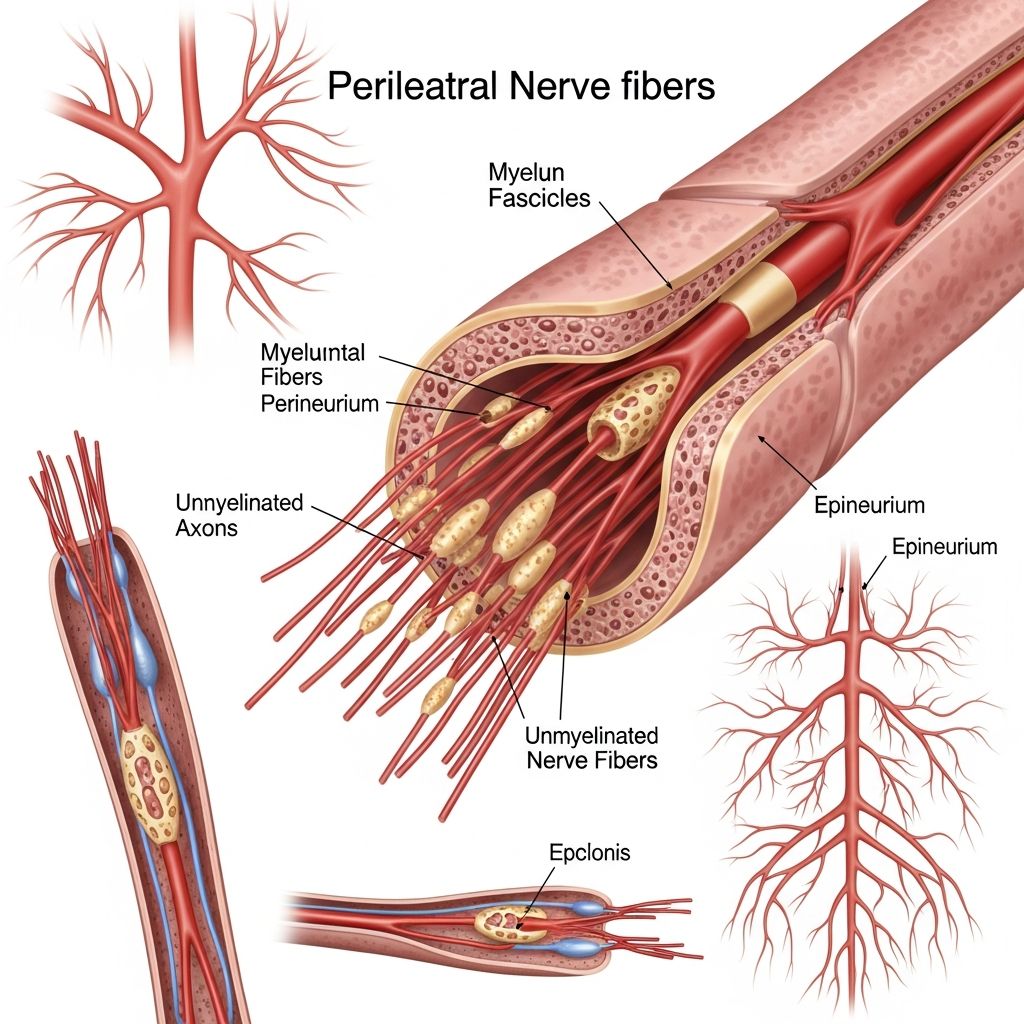
Individual nerve fibers don’t work alone. Instead, they bundle together in organized groups called fascicles, which are then wrapped in protective connective tissue. Multiple fascicles come together to form a complete nerve, creating a structure similar to a cable made of smaller wires. This bundling arrangement provides both protection and efficiency for signal transmission.
Types of Nerves
Nerves are classified into three primary types based on their function: sensory nerves, motor nerves, and autonomic nerves. Each type plays a distinct role in maintaining body function and communication between the central and peripheral nervous systems.
Sensory Nerves
Sensory nerves, also called afferent nerves, carry information from your body’s sensory receptors to your central nervous system. These nerves detect and transmit signals related to touch, temperature, pain, and proprioception (body position awareness). When you touch a hot surface, sensory nerves in your skin immediately send pain and temperature signals to your spinal cord and brain, triggering the reflexive response to pull your hand away.
Motor Nerves
Motor nerves, or efferent nerves, transmit signals from your central nervous system to your muscles and glands. These nerves carry instructions for voluntary movements and coordinate the contraction of skeletal muscles. When you decide to walk across a room, your brain sends signals through motor nerves to the muscles in your legs, initiating the complex sequence of muscle contractions necessary for movement.
Autonomic Nerves
Autonomic nerves regulate involuntary bodily processes that occur without conscious control. These nerves manage heart rate, breathing, digestion, blood pressure, and other vital functions. The autonomic nervous system further divides into the sympathetic nervous system (fight-or-flight response) and the parasympathetic nervous system (rest-and-digest response).
Related Stories



The Peripheral Nervous System Organization
Your peripheral nervous system extends throughout your body like the branches of a tree, with your brain and spinal cord serving as the trunk. This system includes both somatic nerves that control voluntary movements and sensations, and autonomic nerves that manage involuntary functions.
Peripheral nerves can be quite large, containing thousands of individual nerve fibers bundled together. The sciatic nerve, the largest nerve in the human body, contains over 2,000 individual nerve fibers and extends from your lower back through your legs. This vast network of nerves ensures that every part of your body maintains communication with your central nervous system.
Cranial Nerves and Specialized Functions
You have 12 pairs of cranial nerves that emerge directly from your brain, each designated by Roman numerals. These nerves have highly specialized functions related to your head, face, neck, and upper torso. The cranial nerves handle everything from smell and taste to facial movement and swallowing.
Notable Cranial Nerves
The olfactory nerve (CN I) enables your sense of smell by detecting scents and odors. The optic nerve (CN II) transmits visual information from your eyes to your brain. The trigeminal nerve (CN V), the largest cranial nerve, manages sensations in your face and the muscles involved in chewing.
The vagus nerve (CN X) is the longest cranial nerve, extending from your brain all the way to your large intestine. This remarkable nerve innervates numerous tissues along its path and comprises about 75% of your parasympathetic nervous system, connecting to your heart, lungs, and other vital internal organs.
How Nerve Signals Work
Nerve signal transmission occurs through both electrical and chemical processes. When a nerve fiber is stimulated, an electrical impulse travels along the axon through the movement of ions across the cell membrane. This electrical signal travels at speeds ranging from one to over 100 meters per second, depending on the nerve fiber type.
When the electrical signal reaches the end of one nerve fiber, it triggers the release of neurotransmitters—chemical messengers that cross the tiny gap (synapse) between neurons. These neurotransmitters bind to receptors on the next nerve cell, continuing the signal transmission. This elegant system allows for rapid communication throughout your body and enables complex processing at multiple levels.
Common Nerve Disorders and Conditions
When nerves become damaged or diseased, they cannot function properly, resulting in specific movement or sensory issues depending on which nerves are affected. Several conditions can compromise nerve function and require medical attention.
Cranial Nerve Palsies
When cranial nerves with motor functions experience damage, healthcare providers often refer to the condition as a palsy, meaning paralysis. These conditions result in muscle weakness and movement issues in the areas controlled by the affected nerves.
Trigeminal Neuralgia
This condition causes episodes of intense facial pain, often described as electrical or shock-like, that can significantly disrupt daily activities. Trigeminal neuralgia typically occurs when a blood vessel puts pressure on the trigeminal nerve, causing the characteristic facial pain.
Peripheral Neuropathy
Damage to peripheral nerves causes peripheral neuropathy, affecting sensory, motor, or autonomic nerves. Symptoms vary depending on which nerves are affected, ranging from numbness and tingling to weakness or autonomic dysfunction.
Nerve Compression Injuries
Nerves can become compressed by surrounding tissues, bones, or muscles, leading to pain, weakness, or numbness. Carpal tunnel syndrome, where the median nerve becomes compressed in the wrist, exemplifies this type of injury.
Diagnosing Nerve Problems
Healthcare providers use several diagnostic approaches to evaluate nerve function and identify problems. The most common starting point is a neurological examination where your provider assesses how different parts of your body respond to various stimuli.
Electrodiagnostic testing, including nerve conduction studies and needle electrode examination, serves as an extension of the neurological examination. These tests evaluate focal and generalized neuromuscular conditions by providing information about nerve location, injury severity, chronicity, and pathophysiology.
Maintaining Nerve Health
While some nerve conditions are unpreventable, you can support overall nerve health and function through proactive lifestyle choices. Protecting your nervous system requires attention to several key areas:
- Maintain regular physical activity to support nerve function and circulation
- Eat a balanced diet rich in B vitamins, particularly important for nerve health
- Avoid prolonged pressure on nerves by maintaining good posture
- Protect your head and spine during activities that pose injury risks
- Manage chronic conditions like diabetes that can damage nerves over time
- Limit alcohol consumption, as excessive alcohol can harm nerve tissue
- Manage stress through relaxation techniques and adequate sleep
Treatment and Management Options
Treatment for nerve disorders depends on the underlying cause and severity of the condition. Some conditions respond well to conservative management including rest, physical therapy, and anti-inflammatory medications. Others may require more intensive interventions including nerve blocks, medications specifically targeting nerve pain, or in some cases surgical intervention to relieve compression or repair damaged nerves.
Even with incurable nerve conditions, healthcare providers can usually implement strategies to limit how symptoms affect daily life. The range of treatment options has expanded significantly in recent years, offering hope for people dealing with nerve-related challenges.
Frequently Asked Questions
Q: How fast do nerve signals travel?
A: Nerve signals travel at speeds ranging from approximately one to over 100 meters per second, depending on the nerve fiber type, diameter, and whether the axon is myelinated (insulated with a fatty coating).
Q: Can damaged nerves repair themselves?
A: Some nerve damage can repair itself, particularly peripheral nerves that have been injured but not completely severed. However, the central nervous system (brain and spinal cord) has more limited repair capacity. The timeline and extent of recovery depend on the severity and type of injury.
Q: What’s the difference between sensory and motor nerves?
A: Sensory nerves carry information from your body to your brain (detecting touch, temperature, and pain), while motor nerves carry signals from your brain to your muscles (controlling movement and action).
Q: How many nerves does the human body have?
A: Your body has 31 pairs of spinal nerves, 12 pairs of cranial nerves, and countless autonomic nerve fibers distributed throughout your body. Combined with the billions of neurons in your brain and spinal cord, this creates an incredibly complex nervous system.
Q: What should I do if I suspect nerve damage?
A: Contact a healthcare provider if you experience persistent numbness, weakness, unexplained pain, or other symptoms suggesting nerve problems. Early diagnosis and treatment can help prevent complications and improve outcomes.
References
- Cranial Nerves: Function, Anatomy & Location — Cleveland Clinic. 2024. https://my.clevelandclinic.org/health/body/21998-cranial-nerves
- Peripheral Nervous System (PNS): What It Is & Function — Cleveland Clinic. 2022. https://my.clevelandclinic.org/health/body/23123-peripheral-nervous-system-pns
- Central Nervous System (CNS): What It Is & Function — Cleveland Clinic. 2024. https://my.clevelandclinic.org/health/body/central-nervous-system-cns
- Nervous System: What It Is, Parts, Function & Disorders — Cleveland Clinic. 2024. https://my.clevelandclinic.org/health/body/21202-nervous-system
- Using and Interpreting Electrodiagnostic Tests — Cleveland Clinic Journal of Medicine. 2010. https://www.ccjm.org/content/87/11/671
- Trigeminal Nerve: What It Is, Anatomy, Function & Conditions — Cleveland Clinic. 2024. https://my.clevelandclinic.org/health/body/21581-trigeminal-nerve
- Autonomic Nervous System: What It Is, Function & Disorders — Cleveland Clinic. 2024. https://my.clevelandclinic.org/health/body/23273-autonomic-nervous-system
- Parasympathetic Nervous System (PSNS): What It Is & Function — Cleveland Clinic. 2024. https://my.clevelandclinic.org/health/body/23266-parasympathetic-nervous-system-psns
Similar Articles








Read full bio of medha deb