Netherton Syndrome: Complete Guide To Diagnosis And Treatment
Rare genetic disorder affecting skin, hair, and immune system with ichthyosis, bamboo hair, and atopy.
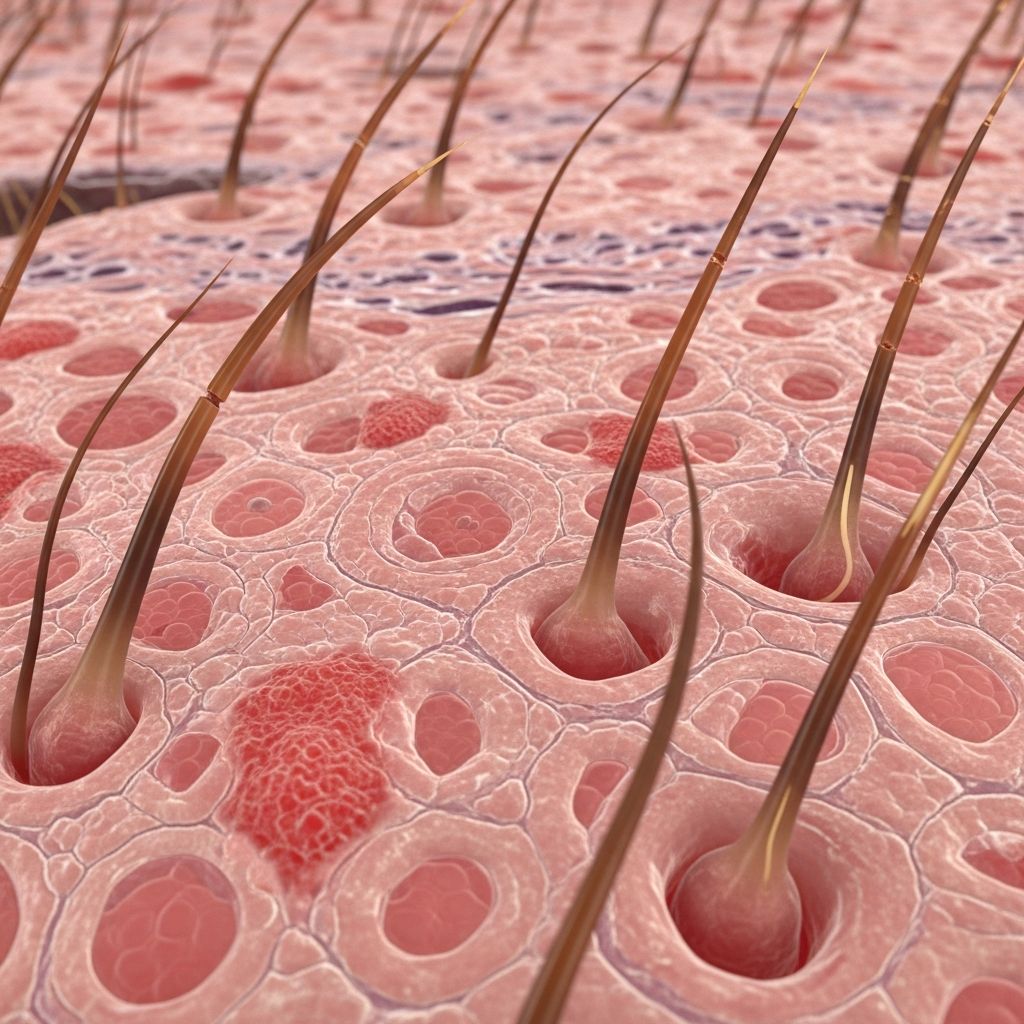
Netherton syndrome is a rare autosomal recessive disorder caused by mutations in the SPINK5 gene, leading to deficiency of the protease inhibitor LEKTI. It features a clinical triad of ichthyosis linearis circumflexa or congenital ichthyosiform erythroderma, trichorrhexis invaginata (bamboo hair), and atopic diathesis with elevated IgE.
What is Netherton syndrome?
Netherton syndrome (NS), also known as Comel-Netherton syndrome, is a severe form of ichthyosis classified as a congenital ichthyosiform erythroderma. It manifests from birth with generalised erythroderma and scaling, evolving into distinctive migratory serpiginous plaques in ichthyosis linearis circumflexa (ILC). The pathognomonic hair abnormality, trichorrhexis invaginata, results from structural defects in hair shafts resembling bamboo nodes.
Prevalence is estimated at 1 in 200,000, though underdiagnosis occurs due to variable presentation. It affects skin barrier function profoundly, predisposing to dehydration, infections, and failure to thrive in neonates. Immune dysregulation leads to atopy, recurrent infections, and elevated IgE levels.
Who gets Netherton syndrome?
NS follows autosomal recessive inheritance, requiring mutations in both SPINK5 alleles from carrier parents. Consanguinity increases risk. It presents at birth or early infancy, equally affecting males and females. No ethnic predilection is noted, though cases are reported worldwide.
What causes Netherton syndrome?
Mutations in the SPINK5 gene on chromosome 5q32 encode LEKTI (lympho-epithelial Kazal-type-related inhibitor), a serine protease inhibitor essential for skin desquamation and barrier integrity. Loss of LEKTI function causes uncontrolled kallikrein-5 (KLK5) activity, leading to epidermal hyperproliferation, parakeratosis, and impaired cornification.
Over 100 mutations identified, including nonsense, frameshift, and missense variants. Genotype-phenotype correlation is poor; severity varies independently of mutation type. LEKTI deficiency also dysregulates inflammation, contributing to Th2-skewed atopy and elevated IgE.
What are the clinical features of Netherton syndrome?
Skin features
Neonates present with erythroderma, often encased in collodion membrane (10-20% cases), which sheds within weeks, revealing shiny, red, scaly skin (congenital ichthyosiform erythroderma, CIE).
- Generalised erythema with fine white scales
- Evolves to ichthyosis linearis circumflexa: annular, polycyclic plaques with trailing double-edged scales, migrating across trunk and limbs
- Intense pruritus leading to excoriations
- Hypernatraemic dehydration from transepidermal water loss
- Thermoregulatory instability
Skin barrier defects cause increased percutaneous absorption of topicals, risking toxicity. Ears accumulate scales, impairing hearing.
Hair features
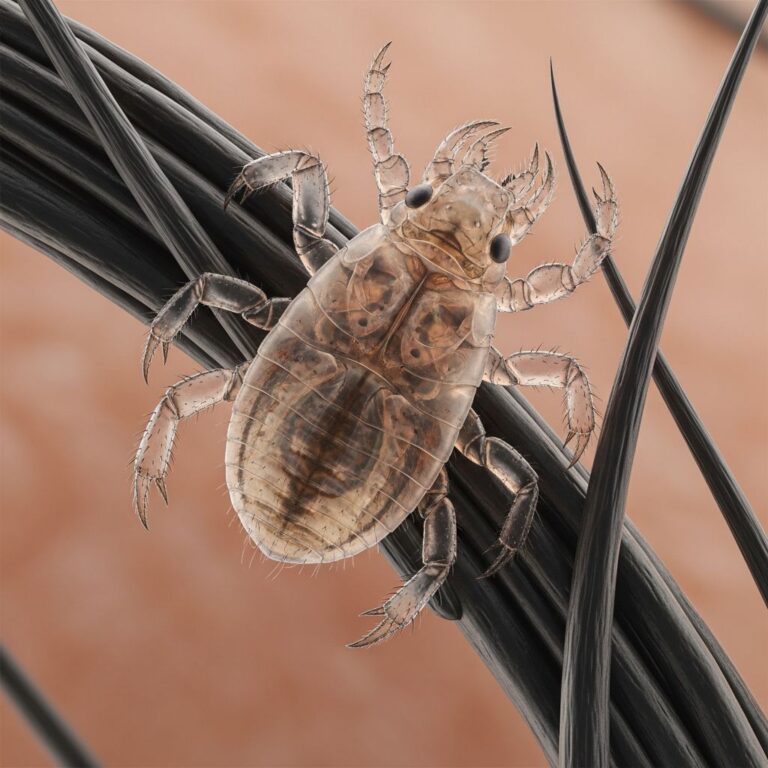
Trichorrhexis invaginata (‘bamboo hair’) is diagnostic: proximal hair shaft invaginates into distal portion under microscopy, causing fragility, sparseness, and breakage. Scalp hair most affected; eyebrows, eyelashes, and body hair may show pili torti or trichorrhexis nodosa. Hair defects may appear post-infancy.
Atopic and immune features
- Marked elevation of serum IgE (>2000 IU/mL)
- Food allergies, asthma, allergic rhinitis
- Eczematous dermatitis
- Recurrent bacterial (Staph. aureus), viral (HSV, HPV), and fungal skin infections
- Bamboo-like nodes predispose to sepsis in infancy
Related Stories



Systemic complications
Infants risk failure to thrive, electrolyte imbalance, bronchopneumonia. Older patients may have short stature, chronic diarrhoea, pancreatic insufficiency, developmental delay, and skin cancer risk from chronic inflammation.
Diagnosis of Netherton syndrome
Clinical triad suggests NS; confirm with:
- Hair microscopy/polarimetry: Trichorrhexis invaginata (diagnostic)
- Skin biopsy: Psoriasiform hyperplasia, parakeratosis, absent stratum granulosum
- LEKTI immunostaining: Reduced/absent in epidermis
- Genetic testing: SPINK5 mutations (gold standard)
- Serum IgE >1000 IU/mL supports diagnosis
Differential diagnosis
| Condition | Key Features | Distinguishing from NS |
|---|---|---|
| ARCI (lamellar ichthyosis) | Plate-like scales, no erythroderma | No bamboo hair, normal IgE |
| Hyper-IgE syndrome (STAT3) | Coarse facies, skeletal anomalies | No LEKTI deficiency, retained teeth |
| Atopic dermatitis | Flexural eczema, family history | No ichthyosis or hair defects |
| Omenn syndrome | Generalised erythroderma, eosinophilia | T-cell expansion, no SPINK5 mutation |
Treatment of Netherton syndrome
Symptomatic, multidisciplinary: dermatology, immunology, nutrition, genetics. No cure; focus on barrier repair, infection control, atopy management.
Neonatal management
- Emollient baths, bland ointments (petrolatum)
- Electrolyte monitoring, IV fluids if dehydrated
- Humidified incubators for thermoregulation
- Antibiotics for infections
Skincare
- Daily emollient application (urea 10%, lactic acid)
- Avoid irritants, fragrances
- Low-potency topical steroids (1% hydrocortisone) for flares
- Antihistamines for pruritus
Wet wraps enhance absorption but monitor for systemic effects.
Anti-infectives
- Prophylactic topical mupirocin for Staph colonisation
- Antivirals for HSV outbreaks
Systemic therapies
- Immunosuppressants: Ciclosporin, methotrexate for severe erythroderma (monitor toxicity)
- Biologics: Dupilumab (anti-IL4/13) shows promise for atopy
- Retinoids: Acitretin for hyperkeratosis (contraindicated in pregnancy)
- IVIG for immunodeficiency
Other
- Nutritional support (medium-chain triglycerides)
- Phototherapy (narrowband UVB) cautiously
- Scalp hair removal if painful
Complications of Netherton syndrome
- Neonatal: Sepsis, hypernatraemia, FTT (mortality 10-20%)
- Chronic: Growth retardation, malnutrition, hearing loss
- Malignancy: Increased cutaneous SCC risk
- Psychosocial: Itch, appearance impact quality of life
Prognosis for Netherton syndrome
Neonatal phase is critical; survivors improve post-infancy with milder skin symptoms, though atopy persists. Short stature common; life expectancy near-normal with management. Regular monitoring for infections, nutrition, and skin cancer essential.
Frequently asked questions
What is bamboo hair?
Trichorrhexis invaginata: hair shaft invagination creating bamboo-like nodes under microscopy, fragile and diagnostic for NS.
Is Netherton syndrome curable?
No cure; lifelong symptomatic treatment improves quality of life.
Can Netherton syndrome be fatal?
Yes, neonatal sepsis/dehydration (10-20% mortality); improves with age.
How is Netherton syndrome inherited?
Autosomal recessive; both parents carriers.
What gene causes Netherton syndrome?
SPINK5 mutations abolishing LEKTI function.
References
- Netherton Syndrome: A Comprehensive Literature Review — PMC / Authors not specified. 2024. https://pmc.ncbi.nlm.nih.gov/articles/PMC12406987/
- Netherton Syndrome – Symptoms, Causes, Treatment — NORD (Rare Diseases Org). 2023-10-12. https://rarediseases.org/rare-diseases/ichthyosis-netherton-syndrome/
- Netherton syndrome — MedlinePlus Genetics / NIH. 2024-05-01. https://medlineplus.gov/genetics/condition/netherton-syndrome/
- Comel-Netherton syndrome — Immune Deficiency Foundation. 2023. https://primaryimmune.org/understanding-primary-immunodeficiency/types-of-pi/comel-netherton-syndrome
- Netherton Syndrome — Foundation for Ichthyosis & Related Skin Types. 2024. https://www.firstskinfoundation.org/types-of-ichthyosis/netherton-syndrome
Similar Articles








Read full bio of Sneha Tete