Neurocutaneous Melanosis: Symptoms, Risks & Treatment Guide
Rare congenital disorder with melanocytic nevi and CNS melanosis, often leading to neurological symptoms and poor prognosis.
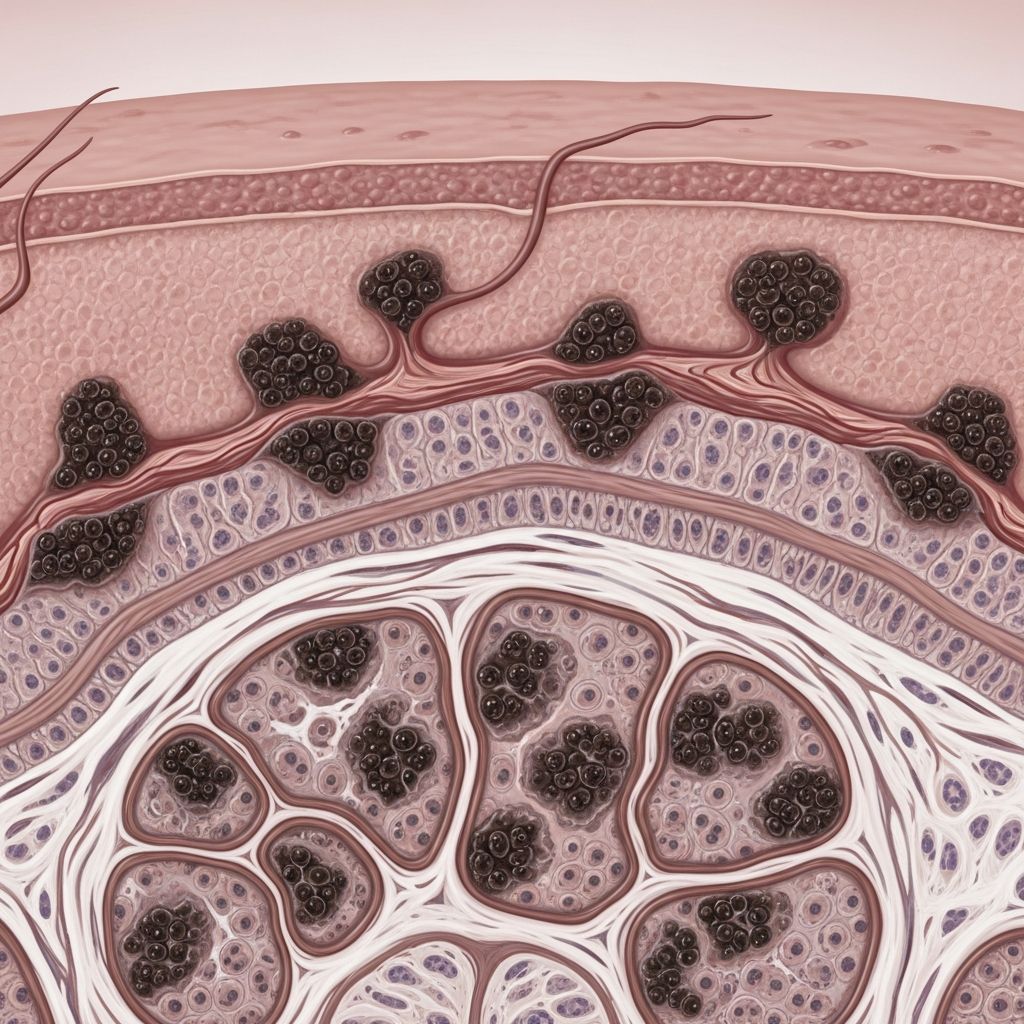
Neurocutaneous melanosis (NCM), also known as neurocutaneous melanocytosis, is a rare congenital neurocutaneous disorder characterized by the proliferation of melanocytic cells in both the skin and the central nervous system (CNS). It involves large or multiple congenital melanocytic nevi (CMN) on the skin alongside benign or malignant melanocytic tumors in the leptomeninges, the membranes covering the brain and spinal cord. While many cases remain asymptomatic, symptomatic NCM often presents severe neurological complications, with malignancy developing in over 50% of cases, leading to a guarded prognosis.
Introduction
Neurocutaneous melanosis arises from abnormal development of melanoblasts derived from the neural crest during embryogenesis. These cells fail to migrate properly, resulting in deposits in the skin and leptomeninges. The condition is exceptionally rare, with an estimated incidence of 1 in 500,000 to 1,000,000 live births, predominantly affecting infants. Symptoms, when present, typically emerge before age 2, including increased intracranial pressure from hydrocephalus, seizures, and cranial nerve palsies. Early detection via MRI in high-risk patients with giant CMN is crucial, though no curative treatment exists.
Demographics
NCM primarily affects infants and young children, with neurological symptoms often manifesting in the first two years of life. It shows no strong gender predilection, though some series report a slight female predominance. The condition is sporadic, with no familial cases documented to date. Patients with large or multiple CMN (>1.5 cm in diameter at birth or posterior axial distribution) carry a 5-15% risk of developing NCM. Giant CMN, covering >2% of body surface area, confer the highest risk. Racial demographics align with CMN prevalence, slightly higher in fair-skinned individuals, but underdiagnosis may occur in darker skin types.
Causes
The etiology of NCM stems from post-zygotic somatic mutations in melanocyte precursors during early embryogenesis. Key genetic drivers include mutations in the NRAS gene (most common, up to 70% of cases), followed by BRAF and NRAS alterations activating the MAPK/ERK pathway. Aberrant migration of neural crest-derived melanoblasts leads to ectopic melanocyte proliferation in leptomeninges. Environmental factors are not implicated; it’s purely developmental. Post-mortem and biopsy studies confirm melanocytic infiltration without primary skin melanoma metastasis in most cases.
- Key genetic factors: NRAS mutations (Q61K hotspot), BRAF V600E.
- Embryological basis: Failed apoptosis or excessive proliferation of melanoblasts along neural crest migration paths.
- Risk stratification: Posterior axial CMN increase NCM risk to 15-20%.
Clinical Features
Cutaneous manifestations include one or more CMN, often large (>20 cm projected adult size) or multiple, with satellite lesions. Common sites: posterior trunk, head, neck (axial distribution). Skin lesions are hyperpigmented, irregular, hairy, with potential for nodular changes signaling malignancy.
Neurological symptoms arise from leptomeningeal thickening and melanin deposits, compressing CSF pathways:
- Hydrocephalus: Most common, due to aqueductal obstruction; presents with irritability, vomiting, bulging fontanelle, macrocephaly.
- Seizures: Focal or generalized, often intractable.
- Cranial nerve palsies: Especially VI (abducens), causing diplopia.
- Other: Headaches, lethargy, papilledema, spasticity, developmental delay, spinal cord compression (paraparesis).
Symptomatic onset median age: 1.5 years. Asymptomatic CNS involvement detected in 25-40% via MRI.
Related Stories



Variation in Skin Types
CMN appearance varies by skin phototype. In lighter skin (Fitzpatrick I-III), nevi are dark brown-black, prominent. In darker skin (IV-VI), they may blend with background pigmentation, appearing as subtle hyperpigmentation or café-au-lait-like macules, delaying recognition. Hairiness (hypertrichosis) is universal. Nodular or ulcerated changes warrant biopsy regardless of skin type, as they may indicate melanoma. Prognosis and CNS risk remain consistent across ethnicities.
| Skin Type | Appearance | Diagnostic Challenges |
|---|---|---|
| I-III (Light) | Dark brown-black, verrucous, hairy | Obvious; easy surveillance |
| IV-VI (Dark) | Subtle brown, flat, less contrast | May mimic normal variation; MRI essential |
Diagnosis
Diagnosis requires:
- Large or multiple CMN (major criterion).
- Symptomatic neurological dysfunction and/or typical MRI findings (T1-hyperintense leptomeningeal/meningeal deposits, no other cause).
MRI (gold standard): Non-contrast T1-weighted hyperintensity in amygdala, temporal lobes, cerebellum, brainstem, spine (melanin signature). T2/FLAIR variable; no enhancement unless malignant. Screen high-risk CMN patients at diagnosis and age 4-6 months.
CSF analysis: Elevated protein, melanocytes. Biopsy (skin/nodular lesions/CNS) confirmatory but risky. EEG for seizures; fundoscopy for papilledema.
Differential Diagnoses
- CMN without NCM: No CNS findings on MRI.
- Sturge-Weber syndrome: Port-wine stain, leptomeningeal angiomatosis (enhancing on MRI).
- Leptomeningeal melanoma (metastatic): Known primary skin melanoma.
- Infectious meningitis: Fever, enhancing meninges.
- Neurofibromatosis: Café-au-lait spots, Lisch nodules.
Treatment
No curative therapy exists; management is symptomatic and palliative. Focus:
- Hydrocephalus: Ventriculoperitoneal (VP) shunt with Millipore filter to prevent melanocyte seeding.
- Seizures: Anticonvulsants (levetiracetam, topiramate).
- Malignant transformation: Surgery (resectable lesions), chemotherapy, radiotherapy (limited efficacy).
- Emerging targeted therapies: MEK inhibitors (trametinib, MEK162) for NRAS-mutated cases; preclinical promise in reducing proliferation (Ki67, pERK downregulation).
Skin surgery (excision) not recommended prophylactically in symptomatic NCM; prioritize CNS management. Multidisciplinary: neurology, neurosurgery, oncology, dermatology.
| Category | Interventions | Indications |
|---|---|---|
| Medical | Anticonvulsants, MEK inhibitors | Seizures, NRAS+ symptomatic |
| Surgical | VP shunt, lesion resection | Hydrocephalus, focal masses |
| Oncology | Chemotherapy, radiation | Melanoma |
Prevention
No known preventive measures, as NCM is congenital and sporadic. High-risk CMN families should pursue genetic counseling. Routine prenatal screening ineffective. Early MRI screening in giant/multiple CMN infants prevents delayed diagnosis.
Outcome
Asymptomatic NCM: Excellent prognosis; normal lifespan with monitoring. Symptomatic: Poor; 50-70% mortality within 3 years from hydrocephalus, melanoma, or complications. MEK-targeted therapy offers hope in select cases. Long-term survivors rare but documented (e.g., 10+ years post-shunt).
Frequently Asked Questions (FAQs)
Q: What is the risk of NCM in children with giant CMN?
A: Approximately 5-15%, highest with posterior axial distribution; MRI screening recommended.
Q: Can NCM be cured?
A: No, treatment is palliative; MEK inhibitors show promise for NRAS-mutated cases.
Q: When should MRI be performed?
A: At CMN diagnosis, 4-6 months, and if neurological symptoms arise.
Q: Is skin excision preventive?
A: Not routinely; focus on CNS surveillance in high-risk cases.
Q: What is the prognosis for symptomatic NCM?
A: Guarded; ~50% fatal within 3 years, but some live normal lives with management.
References
- Neurocutaneous melanosis – Wikipedia — Wikipedia. 2023-10-15. https://en.wikipedia.org/wiki/Neurocutaneous_melanosis
- Neurocutaneous Melanosis (Neurocutaneous melanocytosis) — Dermatology Advisor. 2024-05-20. https://www.dermatologyadvisor.com/home/decision-support-in-medicine/dermatology/neurocutaneous-melanosis-neurocutaneous-melanocytosis/
- Symptomatic neurocutaneous melanosis: mild clinical onset in a … — PMC (NCBI). 2020-11-24. https://pmc.ncbi.nlm.nih.gov/articles/PMC7705374/
- Neurocutaneous Melanosis – DermNet — DermNet NZ. 2024-08-01. https://dermnetnz.org/topics/neurocutaneous-melanosis
- Neurocutaneous melanocytosis – Orphanet — Orphanet. 2023-07-12. https://www.orpha.net/en/disease/detail/2481
Similar Articles








Read full bio of Sneha Tete