Neurofibroma Pathology: Comprehensive Guide For Diagnosis
Detailed histopathological analysis of neurofibromas, from solitary lesions to plexiform variants in neurofibromatosis.
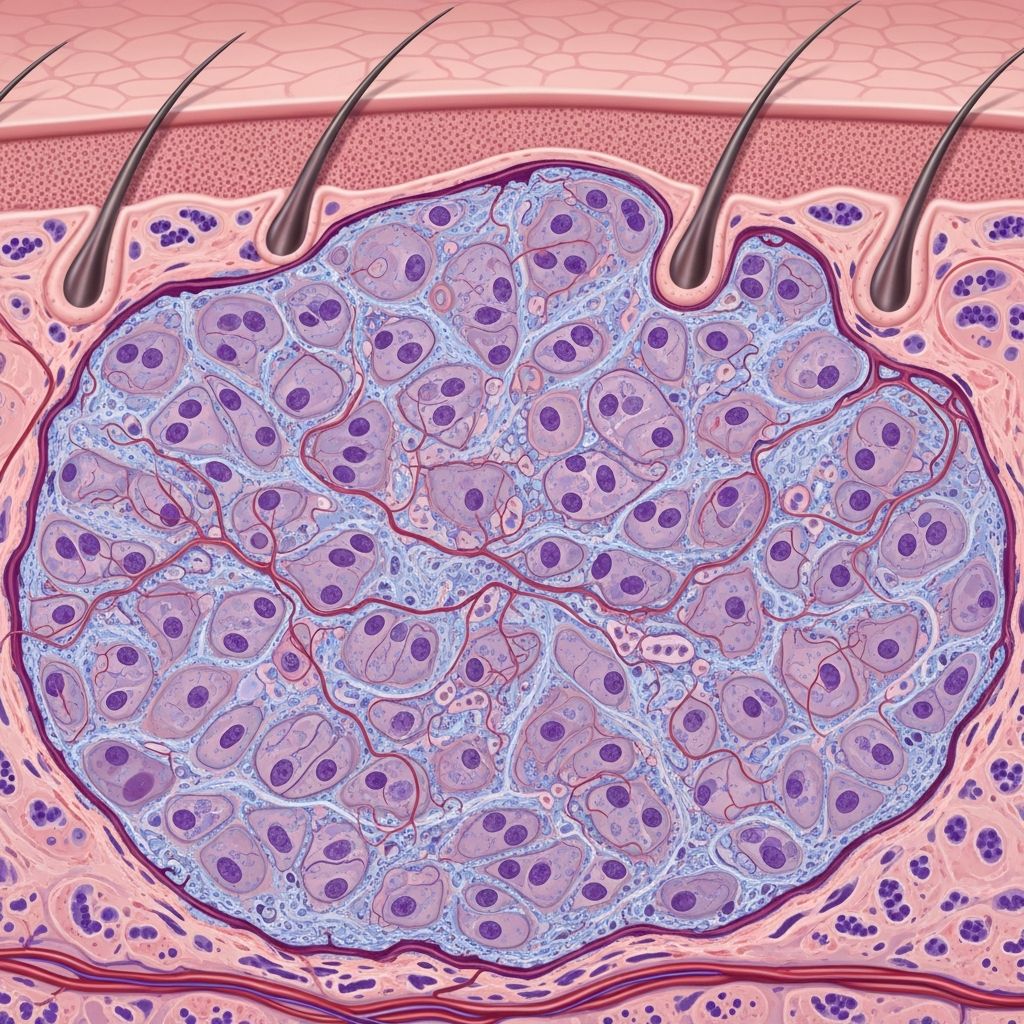
Neurofibromas represent benign peripheral nerve sheath tumours that can manifest as solitary lesions or multiple growths characteristic of neurofibromatosis type 1 (NF1). These tumours arise from a heterogeneous proliferation involving Schwann cells, fibroblasts, perineural cells, mast cells, and axonal elements within a myxoid stroma. Understanding their histopathological features is crucial for accurate diagnosis, differentiation from other neural neoplasms like schwannomas, and assessing association with genetic syndromes such as NF1 (von Recklinghausen disease).
Introduction
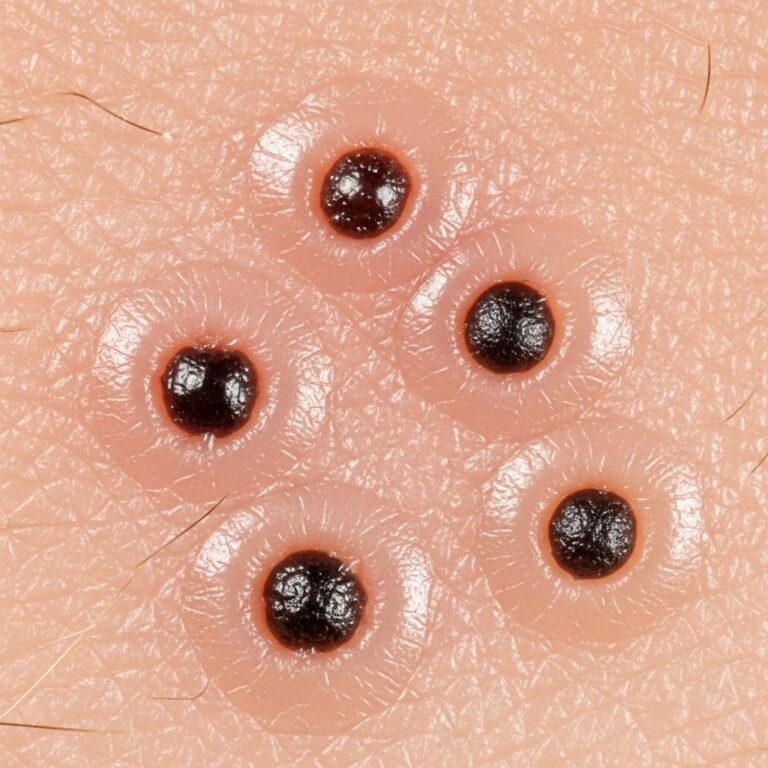
Neurofibromas are among the most common peripheral nerve sheath tumours encountered in dermatopathology practice. They may occur sporadically as solitary cutaneous or subcutaneous nodules or, more significantly, in multiplicity as part of the autosomal dominant disorder neurofibromatosis type 1, affecting approximately 1 in 3000 individuals. Solitary neurofibromas typically present in the second or third decade as soft, skin-coloured papules or nodules on the head, neck, trunk, or proximal extremities, often exhibiting the classic “buttonhole” invagination upon digital pressure. In contrast, multiple neurofibromas in NF1 emerge around puberty, progressively increasing in number and size, accompanied by café-au-lait macules, axillary freckling, and other systemic features.
Histopathologically, neurofibromas are defined by their unencapsulated nature, infiltrating growth pattern within the dermis or subcutis, and mixed cellular composition recapitulating all elements of a peripheral nerve. Unlike schwannomas, which are encapsulated and predominantly Schwann cell-derived, neurofibromas incorporate axons traversing through the lesion, a feature demonstrable by neurofilament immunohistochemistry. Plexiform neurofibromas, a diagnostically significant subtype virtually pathognomonic for NF1, display a tortuous, thickened nerve trunk with myxoid expansion, carrying a risk of malignant transformation to peripheral nerve sheath sarcoma in 2-10% of cases.
Clinical features
- Solitary neurofibroma: Dome-shaped or polypoid papule/nodule, 0.5-1.5 cm, skin-coloured to pink, soft-to-firm consistency, trunk/extremities common.
- Multiple neurofibromas (NF1): Soft, pedunculated or sessile dermal/subcutaneous tumours, often hundreds in number, increasing with age; plexiform variants cause bag-like disfigurement.
- Symptoms: Usually asymptomatic; larger lesions may itch, cause pain, or hypertrophilluminate upon compression (buttonholing).
- Associations: NF1 features include ≥6 café-au-lait spots, Lisch nodules, optic gliomas, skeletal dysplasias; 50% inheritance risk.
Pathology
Histology
Low-power examination reveals a non-encapsulated neoplasm expanding the dermis without epidermal disruption (figure 1). The lesion infiltrates between collagen bundles in a haphazard fashion, lacking the lobular architecture of schwannomas or neurothekeomas. Higher magnification discloses bland spindle cells with slender, wavy (serpentine) nuclei, tapered cytoplasmic ends, and scant eosinophilic cytoplasm—features reminiscent of Schwann cells and fibroblasts (figures 2-4). Intermixed are thin collagen fibrils, delicate axons, and variable stromal mucin (Alcian blue-positive), imparting a myxoid or shredded carrot appearance.
Mast cells are conspicuous, often highlighted by metachromatic staining (toluidine blue), reflecting their role in NF1 tumourigenesis via histamine-mediated angiogenesis. Perivascular lymphocytic aggregates may occur, but atypia, mitoses, or necrosis are absent in benign lesions. Rarely, ancient change with bizarre nuclei can mimic sarcoma, necessitating clinicopathologic correlation.
- Cutaneous neurofibroma: Superficial dermal, often polypoid with epidermal atrophy.
- Subcutaneous neurofibroma: Deeper, more collagenized, less myxoid.
- Plexiform neurofibroma: Enlarged, tortuous nerve trunks with perineurial cuffing, myxoid cores, and endoneurial/perineurial proliferation; infiltrates adjacent fat/soft tissue (diagnostic of NF1).
Histopathology images
Scanning magnification shows non-encapsulated dermal-based neoplasm (H&E).
Spindle cells with wavy nuclei in myxoid stroma (H&E).
Related Stories



Mucin deposition and fibroplasia (H&E).
Mast cells (arrow) amid spindle cells (H&E).
S100-positive spindle cells.
CD34 highlights fibroblastic elements.
Neurofilament stains residual axons.
Immunohistochemistry
| Antibody | Staining Pattern | Notes |
|---|---|---|
| S100 | Diffuse in Schwann cells | Strong, nuclear/cytoplasmic; 80-100% cells. |
| CD34 | Focal in fibroblasts/perineural cells | Helpful vs. schwannoma (negative). |
| SOX10 | Schwann lineage | Complements S100. |
| Neurofilament | Trapped axons | Key differentiator from schwannoma. |
| EMA | Perineural cells (focal) | Not diffuse as in perineurioma. |
| GFAP | Negative | Excludes meningioma. |
Differential diagnosis
| Diagnosis | Key Distinguishing Features |
|---|---|
| Schwannoma | Encapsulated, Antoni A/B areas, Verocay bodies, S100 diffuse, axons pushed aside (neurofilament negative within). |
| Neurofibroma vs. Schwannoma | Feature | Neurofibroma | Schwannoma Wavy nuclei | Yes | No Mucin | Abundant | Focal Axons within | Yes | No Encapsulation | No | Yes. |
| Perineurioma | EMA+, slender bipolar cells, collagen rosettes, no S100. |
| Dermal nerve sheath myxoma | Lobulated, plexiform, deep myxoid nodules, CRABP1+. |
| Neurothekeoma | Nested epithelioid cells, no axons/S100 (cellular variant). |
| Malignant peripheral nerve sheath tumour (MPNST) | Atypia, mitoses>4/mm², necrosis, p53+, H3K27me3 loss; 3-15% NF1 risk. |
| Leiomyoma | Vertically oriented fascicles, desmin+. |
Genetics
Solitary neurofibromas lack recurrent mutations, but NF1-associated lesions harbour biallelic NF1 inactivation (17q11.2), encoding neurofibromin—a Ras-GAP tumour suppressor. Loss of neurofibromin hyperactivates MAPK signalling, promoting Schwann cell proliferation and mast cell recruitment. Plexiform neurofibromas often show chromosomal gains (8q, 17q) and SUZ12/EED mutations (BAP1 complex), mirroring MPNST progression. NF1 mosaicism explains segmental disease.
Prognosis
- Solitary: Benign, cosmetic concern only; no malignant potential.
- NF1: Plexiform >10% transform to MPNST; monitor growth/pain. Lifespan near-normal with surveillance.
Treatment
- Observation for asymptomatic lesions.
- Excision for symptomatic/cosmetic issues; Mohs unsuitable due to poor margins.
- NF1: MEK inhibitors (selumetinib) for inoperable plexiform; surgery/radiotherapy for MPNST.
- Genetic counselling for NF1 families.
Frequently asked questions
Q: What is the hallmark histological feature of neurofibroma?
A: Non-encapsulated dermal spindle cell proliferation with wavy nuclei, myxoid stroma, mast cells, and intralesional axons.
Q: How does neurofibroma differ from schwannoma pathologically?
A: Neurofibromas are unencapsulated with axons running through (neurofilament+), focal CD34, abundant mucin; schwannomas encapsulated, no intratumoural axons, strong S100 without CD34.
Q: Are plexiform neurofibromas diagnostic of NF1?
A: Yes, large plexiform variants (>2cm, bag-like) are pathognomonic for NF1, though small plexiform patterns occur in solitary lesions.
Q: What stains confirm neurofibroma?
A: S100 (Schwann cells), CD34 (fibroblasts), neurofilament (axons); negative EMA diffusely.
Q: Is malignant transformation common in solitary neurofibroma?
A: No, only in NF1 plexiform (2-10% lifetime risk to MPNST).
References
- Neurofibromatosis – StatPearls — National Center for Biotechnology Information (NCBI). 2023-07-17. https://www.ncbi.nlm.nih.gov/books/NBK459329/
- Neurofibroma pathology – DermNet — DermNet New Zealand. 2023. https://dermnetnz.org/topics/neurofibroma-pathology
- Neurofibromatosis (NF1, NF2) – DermNet — DermNet New Zealand. 2023. https://dermnetnz.org/topics/neurofibromatosis
- Solitary neurofibroma – DermNet — DermNet New Zealand. 2023. https://dermnetnz.org/topics/solitary-neurofibroma
- Neurofibroma – Pathology – Orthobullets — Orthobullets. 2023. https://www.orthobullets.com/pathology/8056/neurofibroma
Similar Articles








Read full bio of medha deb