Neurofibromas: Types, Symptoms, and Treatment Options
Complete guide to understanding neurofibromas, their causes, symptoms, diagnosis, and available treatment approaches.
Understanding Neurofibromas: A Comprehensive Guide
Neurofibromas are benign tumors that develop from nerve tissue and represent one of the most common manifestations of neurofibromatosis. These tumors can appear anywhere in the body where nerve tissue exists, including beneath the skin, along nerves deep within the body, and on various organs. Understanding the nature of neurofibromas, their development, and available treatment options is essential for patients and families affected by this condition.
What Are Neurofibromas?
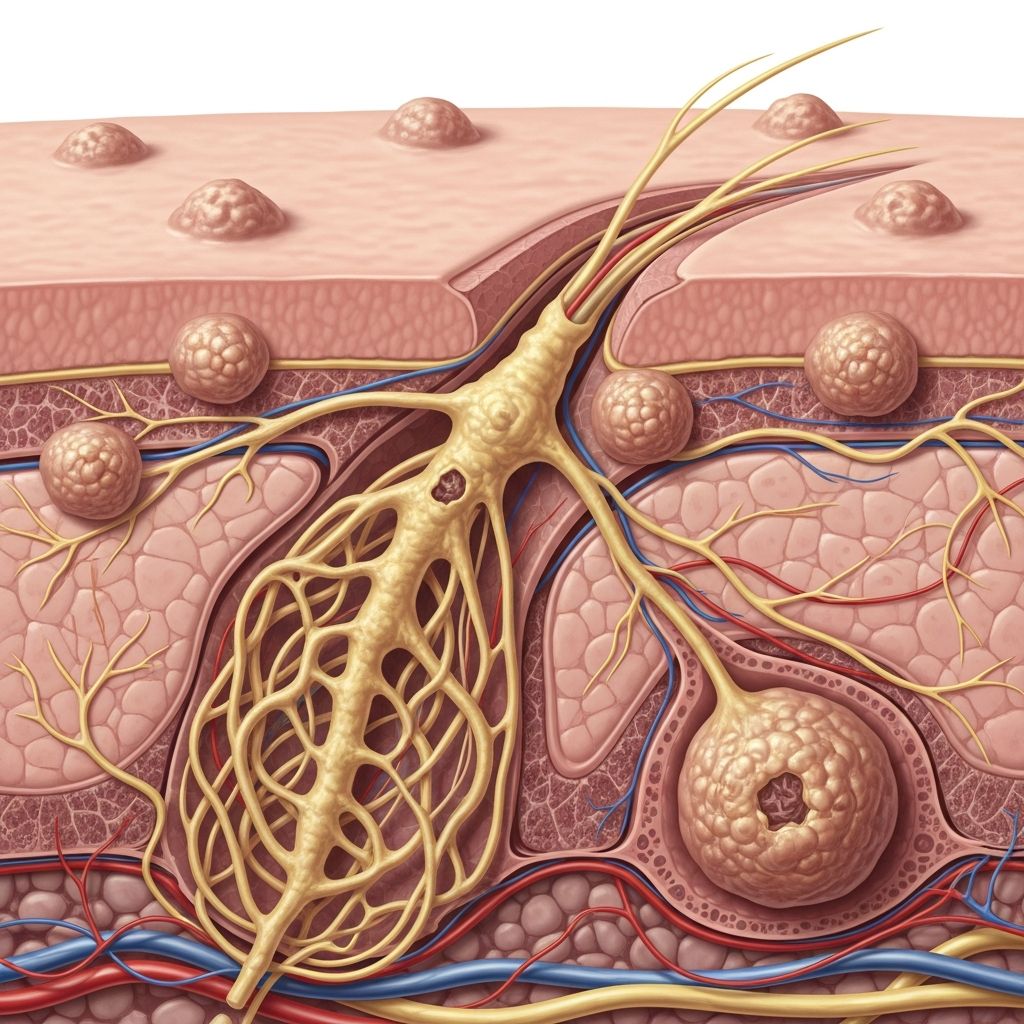
Neurofibromas are growths that arise from the cells that form the protective coverings around nerves. These benign tumors develop when genetic mutations cause the body to grow abnormal nerve tissue. While they are non-cancerous by definition, neurofibromas can cause significant complications depending on their size, location, and growth rate. The tumors can range from small, barely noticeable lesions to large masses that compress surrounding tissues and nerves, potentially affecting normal bodily functions.
There are three main types of neurofibromas classified by their location and characteristics. Cutaneous neurofibromas are located in the skin and affect up to 99% of adults with neurofibromatosis type 1 (NF1). Subcutaneous neurofibromas are found deeper beneath the skin in the fatty tissue layer. Plexiform neurofibromas are larger, more complex tumors that involve multiple nerve bundles and can be located deep within the body, potentially affecting internal organs.
Types of Neurofibromatosis
Neurofibromas are primarily associated with neurofibromatosis, a genetic disorder that causes the development of multiple tumors throughout the nervous system. There are three distinct types of neurofibromatosis, each with different characteristics and implications:
Neurofibromatosis Type 1 (NF1)
NF1 is caused by mutations in the gene that controls the production of a protein called neurofibromin, which functions as a tumor suppressor. This is the most common type of neurofibromatosis and represents one of the most frequent genetic disorders worldwide. Individuals with NF1 typically develop multiple cutaneous neurofibromas that become increasingly apparent during childhood and puberty. The condition is autosomal dominant, meaning only one copy of the mutated gene is needed to cause the disorder.
Neurofibromatosis Type 2 (NF2)
NF2 is a rarer form of neurofibromatosis characterized by the development of benign tumors on the eighth cranial nerves (vestibulocochlear nerves), often leading to hearing loss. This type is also associated with other nervous system tumors and frequently requires intensive medical management and surveillance.
Schwannomatosis
Schwannomatosis is the rarest form of neurofibromatosis and involves the development of multiple schwannomas, which are tumors of the nerve sheath cells. This type typically does not involve the eighth cranial nerves and presents different clinical challenges compared to NF1 and NF2.
Clinical Features and Diagnostic Criteria
The diagnosis of NF1 relies on specific clinical criteria that help physicians identify the condition. Patients typically present with distinctive skin manifestations, including café-au-lait macules, which are flat, brown spots on the skin that appear in childhood. Additional diagnostic features include axillary or inguinal freckling (small spots in the armpits and groin), multiple cutaneous neurofibromas, or at least one plexiform neurofibroma.
Related Stories



Other diagnostic criteria include the presence of optic nerve gliomas, Lisch nodules (small hamartomas of the iris), bone abnormalities such as long-bone dysplasia or sphenoid wing dysplasia, or confirmation of the diagnosis in a first-degree relative. The presence of two or more of these criteria generally confirms an NF1 diagnosis.
Symptoms and Clinical Manifestations
The symptoms of neurofibromas vary widely depending on the tumor type, size, location, and growth rate. Many individuals with cutaneous neurofibromas experience primarily cosmetic concerns, as these tumors appear as soft bumps on or under the skin. However, when neurofibromas grow in size or compress surrounding nerves and tissues, they can cause significant symptoms.
Common Symptoms
Patients may experience pain, particularly when tumors press on nerve tissue or surrounding structures. Numbness and tingling sensations can occur when tumors affect nerve function. In some cases, neurofibromas may cause weakness or limited mobility if they involve motor nerves. Visual problems may arise if tumors affect the optic nerves, while hearing loss can result from NF2-associated tumors on the vestibulocochlear nerves.
Other potential complications include high blood pressure, scoliosis (curvature of the spine), skeletal deformities, short stature, larger head size, learning disabilities, and attention-deficit/hyperactivity disorder (ADHD). Some patients develop seizures, vision problems, speech impairment, or in rare cases, malignant tumors, including malignant peripheral nerve sheath tumors (MPNST).
Diagnosis of Neurofibromas
Diagnosis of neurofibromas typically begins with a comprehensive clinical evaluation. Physicians assess the patient’s medical history, family history of neurofibromatosis, and perform a thorough physical examination to identify characteristic skin manifestations and palpable tumors.
Imaging Studies
Advanced imaging techniques are essential for evaluating neurofibromas, particularly those located deep within the body. Magnetic resonance imaging (MRI) is the gold standard imaging modality for detecting and characterizing neurofibromas, providing detailed information about tumor size, location, and relationship to surrounding tissues. Computed tomography (CT) scans may be used to evaluate bone involvement or when MRI is contraindicated. Positron emission tomography (PET) scans can help identify potentially malignant tumors that may require urgent intervention.
Genetic Testing
Genetic testing can identify mutations in the NF1 gene, confirming the diagnosis of neurofibromatosis type 1. This testing is particularly valuable for family members of affected individuals, allowing for early identification and appropriate monitoring and management.
Tissue Biopsy
In some cases, a tissue biopsy may be performed to confirm the diagnosis histologically, particularly when there is uncertainty about the nature of a lesion or concern for malignant transformation.
Treatment Options for Neurofibromas
The management of neurofibromas depends on various factors, including the tumor type, size, growth rate, symptoms, and location. Currently, outside of procedural-based methods, there are no established medical treatments for cutaneous neurofibromas, though research continues to advance in this area.
Observation and Monitoring
Many patients with asymptomatic neurofibromas are managed conservatively through regular monitoring. Physicians may recommend periodic clinical examinations and imaging studies to track tumor growth and ensure early detection of any changes that might warrant intervention.
Surgical Intervention
Surgical removal is the primary definitive treatment for neurofibromas that cause symptoms, cosmetic concerns, or functional impairment. Surgeons may be brought in when tumors are growing quickly, causing pain, or causing neurological compromise or deficit. Surgical options range from removal of individual tumors to more extensive procedures for plexiform neurofibromas or tumors affecting vital structures. Microsurgical techniques help preserve nerve function while removing tumor tissue.
Dermatologic Procedures
For cutaneous neurofibromas with primarily cosmetic concerns, various dermatologic procedures may be considered. These include laser therapy, radiofrequency ablation, or other minimally invasive approaches to reduce the appearance of skin-based tumors.
Pain Management
Patients experiencing pain from neurofibromas may benefit from pain management strategies, including nonsteroidal anti-inflammatory drugs, topical treatments, and in some cases, more advanced pain management techniques such as nerve blocks or spinal cord stimulation.
Emerging Therapies
Ongoing research is exploring new therapeutic approaches for neurofibromas. Clinical trials are investigating pharmacological treatments that may slow tumor growth or reduce symptoms. The Neurofibromatosis Therapeutic Acceleration Program (NTAP) and other research initiatives are advancing understanding of the biology of cutaneous neurofibromas and identifying potential therapeutic targets.
Comprehensive Neurofibromatosis Care
Specialized centers, such as the Johns Hopkins Comprehensive Neurofibromatosis Center, provide multidisciplinary care for patients with neurofibromatosis and associated neurofibromas. These comprehensive clinics bring together experts in neurology, dermatology, orthopedic surgery, genetics, and other specialties to provide coordinated, evidence-based care throughout the patient’s lifespan.
The multidisciplinary approach ensures that all aspects of the patient’s condition are addressed, from tumor monitoring and management to treatment of associated complications such as bone deformities, learning disabilities, and other manifestations of neurofibromatosis. Researchers at these specialized centers integrate clinical care with cutting-edge research to develop new therapeutic approaches and improve patient outcomes.
Quality of Life and Patient Support
Living with neurofibromas and neurofibromatosis can significantly impact quality of life. Many adult patients report that cutaneous neurofibromas represent the greatest burden of their condition, particularly regarding cosmetic concerns and potential social stigma. Psychological support, educational resources, and patient advocacy organizations play important roles in helping individuals and families cope with the physical and emotional aspects of the condition.
Patient-reported outcome measures are being developed to help guide clinical trials and therapeutic development, ensuring that new treatments address the concerns most important to patients, including pain, stigma, and overall quality of life.
Frequently Asked Questions
Q: Are all neurofibromas cancerous?
A: No, neurofibromas are benign tumors by definition. However, in rare cases, neurofibromas can undergo malignant transformation to malignant peripheral nerve sheath tumors (MPNST), particularly in patients with NF1. This risk underscores the importance of regular monitoring.
Q: Can neurofibromas be prevented?
A: Since neurofibromas result from genetic mutations, they cannot be prevented. However, genetic counseling can help families understand inheritance patterns and make informed reproductive decisions. Early detection through screening allows for timely management.
Q: How fast do neurofibromas grow?
A: Growth rates vary considerably. Many cutaneous neurofibromas grow slowly or remain stable for years. Some patients develop new tumors throughout life. Plexiform neurofibromas may grow at variable rates, sometimes rapidly during childhood and puberty.
Q: What is the best treatment for neurofibromas?
A: Treatment depends on the tumor characteristics and symptoms. Asymptomatic tumors may require only monitoring, while symptomatic or cosmetically concerning neurofibromas may benefit from surgical removal or dermatologic procedures. Consultation with specialists is essential for personalized treatment planning.
Q: How often should patients with neurofibromas be monitored?
A: Monitoring frequency depends on the number, size, and growth characteristics of tumors, as well as individual risk factors. Most patients require periodic clinical examinations and imaging studies, with frequency determined by their healthcare providers.
References
- Creating a comprehensive research strategy for cutaneous neurofibromas — Neurology, American Academy of Neurology. 2023-03-14. https://www.neurology.org/doi/10.1212/WNL.0000000000005789
- The Johns Hopkins Comprehensive Neurofibromatosis Center — Johns Hopkins Medicine. 2017-11-07. https://www.youtube.com/watch?v=NJm7I6xUwPQ
- Creating a comprehensive research strategy for cutaneous neurofibromas — National Center for Biotechnology Information (NCBI). 2023. https://pmc.ncbi.nlm.nih.gov/articles/PMC9703337/
- Neurofibromatosis Factsheet — Kennedy Krieger Institute. 2020. https://www.kennedykrieger.org/sites/default/files/library/documents/community/specialized-health-needs-interagency-collaboration-shnic/factsheets-medical-conditions/Neurofibromatosis%20Factsheet%202020.pdf
- Research Tools Catalog for Neurofibromatosis Research — Neurofibromatosis Therapeutic Acceleration Program (NTAP). 2025. https://www.n-tap.org/for-researchers/research-tools-catalog
Similar Articles








Read full bio of Sneha Tete