Neurofibromatosis: Types, Symptoms, and Clinical Manifestations
Understanding neurofibromatosis: Genetic disorder causing nerve tumors and skin changes.
Neurofibromatosis: Overview and Genetic Basis
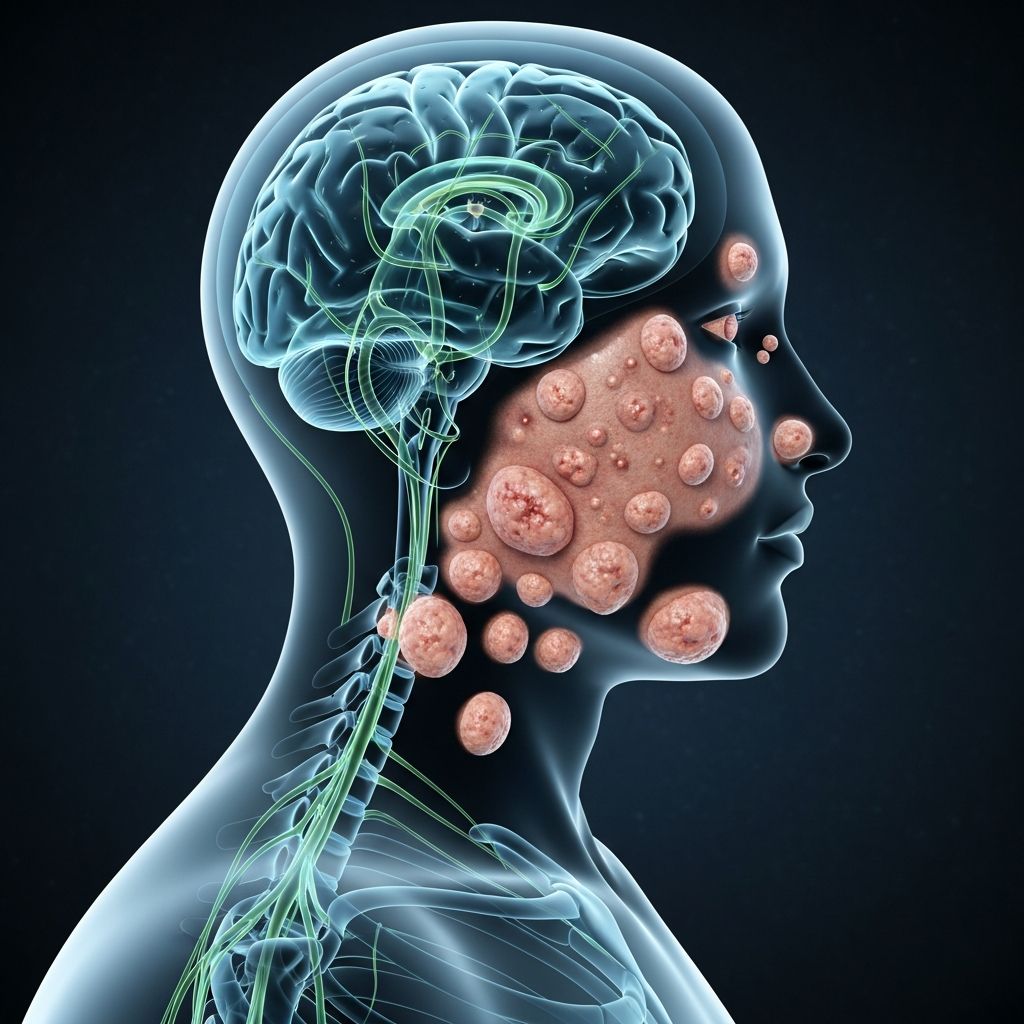
Neurofibromatosis is an incurable genetic disorder of the nervous system that primarily affects the development of nerve cell tissues and causes tumors to form on nerve tissue throughout the body. The condition is inherited in an autosomal dominant pattern, meaning only one mutated gene from either parent is needed to develop the disease. However, approximately 25–30% of cases occur due to spontaneous gene mutations rather than inheritance. The disorder manifests differently in each individual, with symptoms ranging from mild skin changes to severe complications affecting multiple organ systems.
The neurofibromas associated with this condition are usually noncancerous (benign) tumors that develop on nerve pathways in the skin and deep within the body. These tumors arise from Schwann cells, specialized glial cells that form the protective myelin sheath around nerve fibers. While the tumors themselves are often painless, they may cause significant discomfort if they compress nearby structures or nerves, leading to pain, numbness, tingling, and weakness in affected areas.
Types of Neurofibromatosis
There are three main types of neurofibromatosis, each with distinct genetic causes and clinical presentations:
Neurofibromatosis Type 1 (NF1)
NF1, also known as von Recklinghausen disease, is the most common form of neurofibromatosis, accounting for up to 96% of all cases. It is caused by a loss-of-function mutation in the NF1 gene, which normally produces a protein that keeps the growth of nerve tissue in check. NF1 affects approximately 1 in every 3,000 people and primarily affects the peripheral nervous system—the nerves of the outer parts of the body.
Symptoms of NF1 typically develop early in life, often appearing by age 10, and include multiple manifestations affecting the skin, skeletal system, and nervous system. The hallmark sign is the presence of more than six café-au-lait spots (light brown skin patches) that usually become apparent shortly after birth. These sharply demarcated macules have a homogenous appearance and may increase in number and size over time.
Common Symptoms of NF1:
- Multiple café-au-lait spots on the skin
- Freckles in the armpits, groin, or under the breast (Crowe sign—the most specific criterion for NF1)
- Multiple neurofibromas or plexiform neurofibromas on the skin or deep within the body
- Lisch nodules (benign growths in the eyes)
- Optic pathway gliomas (small tumors in or near the optic nerve causing vision loss)
- Enlarged head size (macrocephaly) in children
- Short stature
- Delayed developmental milestones (learning to walk, speech problems)
- Attention deficit hyperactivity disorder (ADHD) and learning disabilities
- Skeletal abnormalities including scoliosis, kyphosis, and bone dysplasias
- Congenital pseudarthrosis of the tibia
- Hypertension and cardiovascular complications
- Seizures and headaches
Plexiform Neurofibromas:
A significant subset of NF1 patients develop plexiform neurofibromas, affecting approximately 25% of individuals with the condition. These are large neurofibromas that spread around major nerves as they grow, causing the nerve to become thick and misshapen. Plexiforms typically feel like knots or cords under the skin, can be quite large, and are often painful and disfiguring. They normally begin to form during childhood and may cause severe complications including nerve compression, impaired function, and cosmetic concerns.
Spinal Involvement:
Neurofibromatosis may cause tumors on or around the spinal cord, resulting in pain and weakness in severe cases. Scoliosis (irregular side-to-side spine curvature) and kyphosis (rounded or forward-angulated back) occur together or separately in approximately one in every five people with NF1. Spinal cord tumors may develop on nerves surrounding the spine, resulting in trembling, numbness, and pain in the limbs. Tumors around the neck area may cause facial problems, including difficulty with smiling, blinking, or swallowing.
Related Stories



Neurofibromatosis Type 2 (NF2)
NF2, also known as bilateral acoustic neurofibromatosis, is a less common form of the disease, accounting for approximately 3–5% of neurofibromatosis cases. It is caused by a mutation in the NF2 gene and primarily affects the central nervous system, causing tumors of the brain and spinal cord. Unlike NF1, neurofibromas do not occur in NF2; instead, the condition is characterized by bilateral vestibular schwannomas and meningiomas.
Symptoms of NF2 typically develop in the teens or early twenties, often later than NF1. The acoustic neuromas form on the main nerve leading from the inner ear to the brain, resulting in hearing and balance complications that can significantly impact quality of life.
Common Symptoms of NF2:
- Bilateral acoustic neuromas (tumors on the vestibulocochlear nerve)
- Progressive hearing loss, often bilateral and symmetric
- Tinnitus (ringing in the ears)
- Balance problems, dizziness, and vertigo
- Facial pain or numbness
- Headaches
- Brain and spinal cord tumors (meningiomas and gliomas)
- Facial weakness, sometimes progressing to paralysis
The acoustic neuromas in NF2 may compress the brainstem, which can be life-threatening as tumors grow. Small tumors may not cause any problems, but symptoms tend to worsen as the tumor enlarges, potentially affecting facial function, hearing, and balance. In some cases, the tumors can cause sudden rather than gradual hearing loss.
Schwannomatosis
Schwannomatosis is a third, rarer form characterized by the development of schwannomas—a type of neurofibroma that arises specifically in Schwann cells in the peripheral nervous system. This form is distinguished from NF1 and NF2 by its unique genetic basis and clinical presentation, though it remains less commonly encountered than the other two types.
Skin Manifestations and Clinical Features
Café-au-Lait Spots
The most recognizable skin manifestation of neurofibromatosis is the presence of café-au-lait spots (CALMs), light brown macules that typically appear at birth or in early infancy. These lesions are sharply demarcated with a homogenous tan to brown color resembling the color of coffee with milk. The diagnostic criterion for NF1 specifies that six or more CALMs exceeding 5 mm in diameter in prepubertal individuals, or 15 mm in postpubertal individuals, indicate probable NF1. The spots may increase in number and grow larger and darker over time as the individual ages.
Freckling
Axillary and inguinal freckling, also known as Crowe sign, represents the most specific diagnostic criterion for NF1. These fine, dark freckles appear in the armpits, groin area, and under the breast and develop during late childhood or adolescence. Unlike café-au-lait spots, which are larger and more uniform, freckling consists of multiple small, distinct spots concentrated in intertriginous areas.
Cutaneous and Subcutaneous Neurofibromas
Small, round bumps (approximately 1 centimeter or the size of a pea) may form on or under the skin. These neurofibromas are usually soft and may feel like small, rubbery nodules. Some individuals develop more than two small bumps, while others develop one larger skin growth (plexiform neurofibroma) that forms from multiple nerves under the skin. The tumors are typically painless but may cause discomfort if they press on nearby structures or nerves.
Optic Pathway Gliomas
Optic pathway gliomas are small tumors in or near the optic nerve that occur in a significant proportion of NF1 patients. These tumors can cause vision loss in one or both eyes, ranging from subtle visual changes to significant impairment. Many optic pathway gliomas remain asymptomatic and require monitoring rather than immediate intervention.
Musculoskeletal and Systemic Complications
Neurofibromatosis affects multiple organ systems beyond the skin and peripheral nerves. Skeletal abnormalities include scoliosis, kyphosis, long bone dysplasias, and congenital pseudarthrosis (incomplete or absent bone formation). Cardiovascular complications such as hypertension and vascular dysplasias occur with increased frequency. Neurological complications include seizures, learning disabilities, ADHD, and behavioral problems. Some individuals experience short stature and other growth-related abnormalities.
Prognosis and Lifestyle Considerations
Many individuals with NF1 experience only mild symptoms and can live a normal, healthy life with few restrictions. The severity and progression of symptoms vary considerably among affected individuals, even within families. While complications may shorten lifespan in some cases, particularly when malignant peripheral nerve sheath tumors develop, most individuals with NF1 can expect to live for approximately the same duration as the general population. Regular monitoring, early intervention for complications, and multidisciplinary care optimize outcomes and quality of life.
Frequently Asked Questions
Q: Is neurofibromatosis curable?
A: Neurofibromatosis is currently incurable. However, symptoms can be managed, and complications can be treated with medication, surgery, or other interventions to improve quality of life and function.
Q: Can neurofibromatosis turn into cancer?
A: While most neurofibromas are benign, individuals with neurofibromatosis have an increased risk of developing malignant peripheral nerve sheath tumors and other cancers. Regular screening and monitoring are recommended.
Q: Is neurofibromatosis hereditary?
A: NF is inherited in an autosomal dominant pattern, meaning one mutated gene from either parent can cause the disease. However, approximately 25–30% of cases result from new, spontaneous mutations rather than inheritance.
Q: At what age do symptoms appear?
A: NF1 symptoms typically appear by age 10, often in infancy or early childhood. NF2 symptoms usually develop in the teens or early twenties, typically later than NF1.
Q: How is neurofibromatosis diagnosed?
A: NF1 is diagnosed based on clinical criteria including café-au-lait spots, axillary freckling, neurofibromas, optic pathway gliomas, and specific skeletal dysplasias. Genetic testing can confirm mutations in the NF1 or NF2 gene.
References
- Neurofibromatosis: Symptoms, Causes and Treatment — OrthoIndy. 2018-10-03. https://blog.orthoindy.com/2018/10/03/neurofibromatosis-symptoms-causes-and-treatment/
- Neurofibromatosis: Types, Causes, and Symptoms — Medical News Today. https://www.medicalnewstoday.com/articles/179083
- Neurofibromatosis Signs & Symptoms — Moffitt Cancer Center. https://www.moffitt.org/cancers/neurofibromatosis/symptoms/
- Neurofibromatosis: What It Is, Symptoms, Types & Treatment — Cleveland Clinic. https://my.clevelandclinic.org/health/diseases/neurofibromatosis
- Neurofibromatosis — National Center for Biotechnology Information (NCBI), NIH Bookshelf. https://www.ncbi.nlm.nih.gov/books/NBK459329/
- Neurofibromatosis — Upstate Neurological Institute. https://www.upstate.edu/neuroinstitute/symptoms-conditions/neurofibromatosis.php
Similar Articles








Read full bio of medha deb