Undefined Neutrophilic Dermatosis Of The Hands: 123 Cases
Understanding NDDH: A rare localized variant of Sweet syndrome affecting the dorsal hands.
What is Neutrophilic Dermatosis of the Hands?
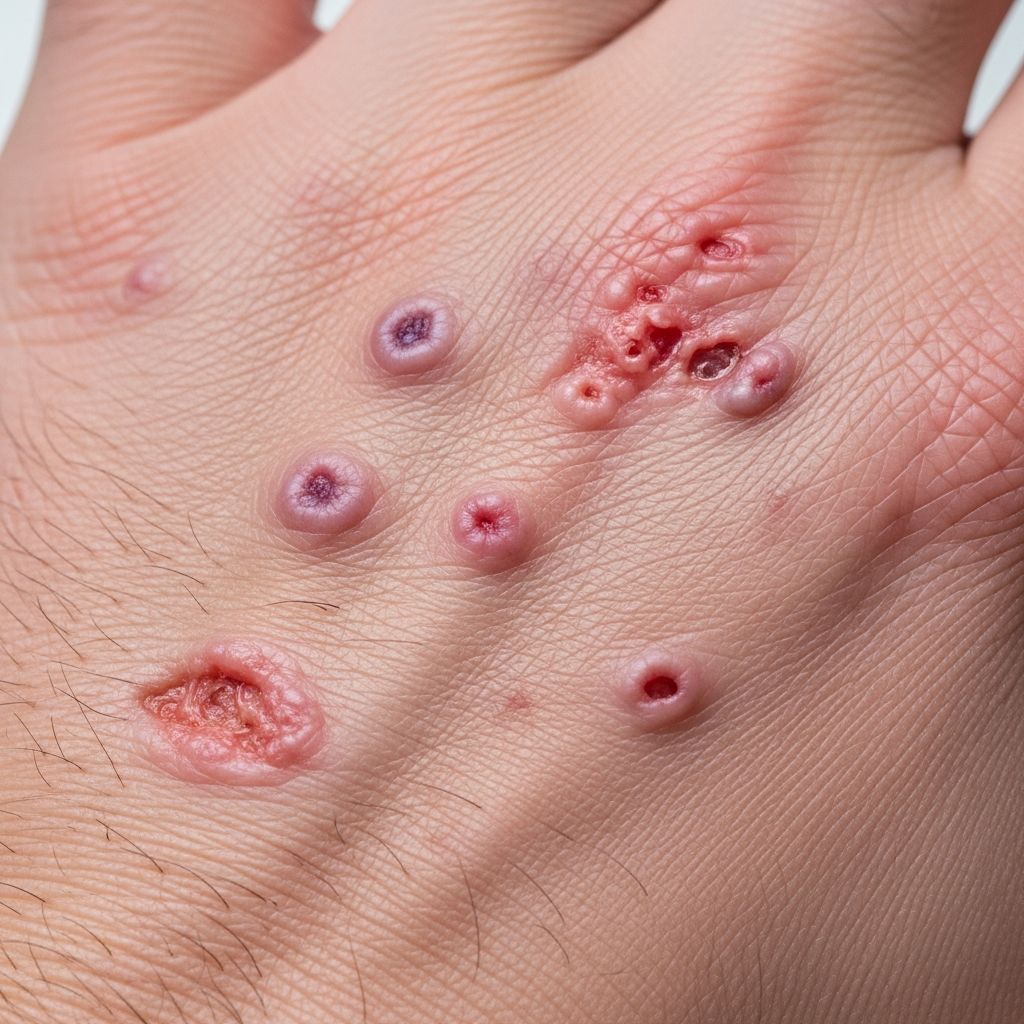
Neutrophilic dermatosis of the dorsal hands (NDDH) is a rare, localized cutaneous inflammatory condition that primarily affects the dorsal (back) surfaces of the hands. First described in 1995, NDDH is recognized as a localized variant of Sweet syndrome, an uncommon neutrophil-rich inflammatory skin disorder. The condition is characterized by the sudden onset of tender, erythematous (reddened) plaques, pustules, bullae, and potentially ulcerative lesions confined predominantly to the dorsal aspects of the hands.
The distinctive feature of NDDH is its limited distribution compared to classic Sweet syndrome, which typically presents with lesions distributed across the face, trunk, and extremities. In NDDH, the skin manifestations are usually restricted to the dorsal hands, often appearing in the areas between the thumb and index finger, though involvement of other hand regions has been documented. This localized presentation, combined with its inflammatory nature, distinguishes NDDH from other cutaneous conditions and makes accurate diagnosis clinically important.
Clinical Presentation and Symptoms
The clinical presentation of NDDH is characterized by distinctive skin manifestations that develop over the dorsal hands. Patients typically present with severely painful, tender nodules and plaques that are predominantly erythematous or violaceous in appearance. These lesions are frequently accompanied by various morphological features that contribute to the diagnostic complexity of the condition.
The characteristic morphological patterns observed in NDDH patients include:
- Pustular nodules and boggy red plaques with ulceration
- Violaceous edematous plaques with variable involvement of radial and ulnar aspects
- Bullous and hemorrhagic lesions on an erythematous base
- Ulcerated plaques with violaceous undermined borders
- Necrotic pyoderma-like lesions with pseudovesiculation
- Atypical pyoderma gangrenosum-like presentations with hemorrhagic bullous lesions
The severity of pain associated with these lesions is notable, often exceeding what would be expected from their clinical appearance. Patients frequently report that initial lesions are accompanied by systemic symptoms in some cases, including fever and general malaise, though not all patients experience systemic manifestations. The lesions typically develop acutely and may progress rapidly over days to weeks.
Epidemiology and Demographics
NDDH demonstrates a clear demographic predilection, with the vast majority of reported cases occurring in women. Among reviewed cases, the female predominance is striking, appearing in studies where 7 out of 7 patients were women in one series and representing the overwhelming majority in larger case reviews. The condition has been documented across various age groups, ranging from younger adults to elderly patients, with cases reported in individuals in their 60s and beyond.
The uncommon nature of NDDH is reflected in the relatively limited number of case reports and case series published in the medical literature. A comprehensive review documented 123 cases of NDDH, highlighting its rarity in the broader context of dermatological conditions. Despite its rarity, NDDH is increasingly recognized by dermatologists, reducing the incidence of initial misdiagnosis, though it remains a condition that may not be immediately considered in the differential diagnosis of hand lesions.
Pathophysiology and Etiology
The exact underlying cause of NDDH remains incompletely understood, though research suggests it shares pathophysiological mechanisms with Sweet syndrome. The condition is characterized by an intense inflammatory response mediated by neutrophils and various inflammatory cytokines. Current evidence indicates that potential causative agents may stimulate the production of pro-inflammatory cytokines, including interleukin-1 (IL-1), interleukin-8 (IL-8), and granulocyte colony-stimulating factor (G-CSF).
Related Stories



The localized presentation of NDDH to the dorsal hands may relate to regional differences in cytokine concentration or tissue responsiveness. Unlike systemic Sweet syndrome where cytokine production in the dermis leads to widespread lesions, NDDH may result from a more compartmentalized inflammatory response. The female predominance and occasional association with systemic conditions suggest potential links to hormonal factors, autoimmune mechanisms, or underlying inflammatory states, though definitive causal relationships remain to be established.
Histopathological Findings
Histopathological examination of NDDH lesions reveals characteristic microscopic features that are essential for accurate diagnosis. The hallmark finding is a dense infiltrate of mature neutrophils in the papillary and mid-dermis, which is typically the most prominent histological feature. Associated findings on microscopic examination include:
- Leukocytoclastic debris (fragmented neutrophilic nuclei) extracellularly and within dermal macrophages
- Subepidermal edema (fluid accumulation beneath the epidermis)
- Fibrinoid necrosis of small blood vessels in the dermis
- Vessel wall dilatation
- Variable numbers of eosinophils and lymphocytes
- Epidermal changes including spongiosis, ulceration, and neutrophilic microabscesses
An important histological distinction exists between lesions on the hands and lesions that may appear on other body sites in affected individuals. Hand lesions characteristically demonstrate fibrinoid vascular necrosis consistent with leukocytoclastic vasculitis, while lesions on other areas (such as the back) may show neutrophilic infiltration without associated vasculitis, further supporting the view of NDDH as a distinct localized variant of Sweet syndrome.
Diagnosis and Differential Diagnosis
Accurate diagnosis of NDDH is clinically important because the condition is frequently misdiagnosed as a bacterial or fungal infection, leading to inappropriate treatment. The clinical presentation as pustular, ulcerative lesions on the hands naturally suggests infectious etiologies to clinicians, resulting in initial treatment with antibiotics or antifungal agents that prove ineffective.
Key diagnostic approaches include:
- Clinical evaluation: Recognition of tender, painful plaques and pustules limited to or predominantly affecting the dorsal hands
- Culture studies: Negative bacterial, fungal, and mycobacterial cultures from lesions help exclude infectious causes
- Skin biopsy: Histopathological examination showing dense neutrophilic infiltrates with leukocytoclastic vasculitis is confirmatory
- Immunological staining: Direct immunofluorescence studies to exclude immunoglobulin or complement deposition patterns
- Systemic evaluation: Assessment for fever, peripheral blood neutrophilia, and potential systemic associations
The differential diagnosis of NDDH includes infectious pyoderma (bacterial skin infection), pyoderma gangrenosum, pustular vasculitis, atypical presentations of erythema nodosum, and systemic Sweet syndrome with localized hand involvement. The finding of negative cultures combined with characteristic histopathology demonstrating neutrophilic infiltration with vasculitis helps distinguish NDDH from these conditions.
Associated Systemic Conditions
While NDDH is defined as a localized cutaneous condition, emerging evidence suggests potential associations with systemic diseases, though these associations are less clearly established than those documented for classic Sweet syndrome. Possible associations that have been reported in NDDH patients include inflammatory bowel disease, urinary tract infections, and other systemic inflammatory conditions.
In contrast, Sweet syndrome has well-documented associations with:
- Myeloproliferative disorders and hematologic malignancies
- Visceral malignancies
- Inflammatory bowel disease
- Connective tissue diseases
- Infections and post-infectious states
- Pregnancy-related inflammatory states
- Medications and drug reactions
Given that NDDH is considered a variant of Sweet syndrome, clinicians should maintain vigilance for potential underlying systemic associations, particularly bowel disorders, though routine screening for occult malignancy in all NDDH patients is not universally recommended without clinical indication.
Treatment and Management
The treatment of NDDH involves therapeutic approaches aimed at suppressing the underlying inflammatory process. Unlike infectious conditions that require antimicrobial therapy, NDDH responds to immunosuppressive and anti-inflammatory medications.
First-line treatment typically involves systemic corticosteroids, particularly oral prednisone, which often produces rapid clinical improvement and symptom resolution. Patients frequently demonstrate remarkable response to corticosteroid therapy, with lesions improving significantly within days to weeks of treatment initiation. The dramatic response to corticosteroids further supports the inflammatory, non-infectious nature of the condition.
Alternative and adjunctive medications that have demonstrated benefit in NDDH management include:
- Dapsone (diaminodiphenyl sulfone) – often helpful as a steroid-sparing agent
- Minocycline hydrochloride – of uncertain benefit but occasionally employed
- Other corticosteroid-sparing immunosuppressive agents (based on individual case reports)
A significant clinical challenge with NDDH is the tendency for recurrent lesions even with appropriate treatment. Relapse rates are notable, with recurrences documented in multiple case series. Some patients require prolonged corticosteroid therapy or combination approaches to achieve sustained control. The optimal treatment duration and tapering strategies remain areas requiring further investigation and individualization based on patient response.
Prognosis and Course
The long-term prognosis of NDDH is generally favorable in terms of morbidity and mortality, as the condition does not pose direct life-threatening complications. However, the chronic or recurrent nature of the condition in many patients can result in significant morbidity related to pain, functional impairment of the hands, and potential scarring or permanent skin changes. Early recognition and appropriate treatment are important to minimize complications and improve quality of life.
Without appropriate treatment, NDDH has been documented to lead to severe consequences including unnecessary antibiotic courses, inappropriate surgical interventions, and in extreme cases, amputations. These outcomes underscore the critical importance of accurate diagnosis and recognition of NDDH as a non-infectious inflammatory condition rather than a surgical emergency or severe infection.
Clinical Significance and Implications
The clinical significance of NDDH lies in its potential for misdiagnosis and inappropriate management. The acutely painful, purulent appearance of lesions and the rapid progression in some cases may prompt emergency department evaluation and empiric antimicrobial therapy before dermatological consultation. However, the failure of lesions to improve with antibiotics, combined with negative culture results, should prompt consideration of NDDH and other non-infectious inflammatory conditions.
Recognition of NDDH is important because:
- It prevents unnecessary antibiotic exposure and development of antimicrobial resistance
- It avoids inappropriate surgical interventions or debridement
- It enables initiation of appropriate corticosteroid and anti-inflammatory therapy
- It guides appropriate follow-up for potential systemic associations
- It provides accurate prognostic information to patients
Frequently Asked Questions
Q: What is the relationship between NDDH and Sweet syndrome?
A: NDDH is considered a localized variant of Sweet syndrome. While Sweet syndrome presents with widespread lesions on the face, trunk, and extremities accompanied by systemic symptoms like fever and leukocytosis, NDDH is limited almost exclusively to the dorsal hands. Both conditions share similar histopathological features of dense neutrophilic infiltration in the dermis.
Q: Why is NDDH often initially misdiagnosed?
A: NDDH is commonly misdiagnosed as a bacterial or fungal infection because the pustular, ulcerative appearance of lesions resembles pyoderma or other infectious skin conditions. However, negative culture results combined with lack of response to antibiotics, along with characteristic histopathology, help establish the correct diagnosis.
Q: Is NDDH contagious?
A: No, NDDH is not contagious. It is a non-infectious inflammatory condition mediated by an abnormal immune response. Culture studies consistently yield negative results, confirming the absence of infectious organisms.
Q: What is the best treatment for NDDH?
A: Systemic corticosteroids, particularly oral prednisone, are the first-line treatment and typically produce rapid clinical improvement. Dapsone and other immunosuppressive agents may be used as adjunctive or steroid-sparing therapies. Treatment should be individualized based on patient response and the tendency for recurrences.
Q: Do all NDDH patients require screening for systemic diseases?
A: While NDDH may be associated with underlying systemic conditions, routine screening for occult malignancy is not universally recommended without clinical indication. However, evaluation for inflammatory bowel disease and other systemic disorders may be warranted, particularly in patients with recurrent or refractory disease.
Q: Can NDDH leave permanent scars?
A: While NDDH itself typically responds well to treatment, prolonged or recurrent lesions may result in permanent scarring or skin changes. Early recognition and appropriate treatment help minimize the risk of permanent disfigurement and functional impairment.
References
- Neutrophilic Dermatosis of Dorsal Hands — National Center for Biotechnology Information (NCBI), National Institutes of Health. 2014. https://pmc.ncbi.nlm.nih.gov/articles/PMC4314889/
- Neutrophilic Dermatosis (Pustular Vasculitis) of the Dorsal Hands — JAMA Dermatology, American Medical Association. https://jamanetwork.com/journals/jamadermatology/fullarticle/478724
- Neutrophilic Dermatosis of the Dorsal Hands: Clinical and Histopathologic Review — Scholastica Health Media. https://bhm.scholasticahq.com/article/115811-neutrophilic-dermatosis-of-the-dorsal-hands
- Neutrophilic Dermatosis of the Dorsal Hands: A Review of 123 Cases — PubMed, National Center for Biotechnology Information. https://pubmed.ncbi.nlm.nih.gov/31499154/
- Sweet Syndrome: Causes, Symptoms, Management & Treatment — Cleveland Clinic. https://my.clevelandclinic.org/health/diseases/17725-sweet-syndrome
Similar Articles








Read full bio of Sneha Tete