Neutrophilic Sebaceous Adenitis: 6 Key Treatment Options
Rare inflammatory skin disorder targeting sebaceous glands, primarily affecting young men on face and torso with annular plaques.
Neutrophilic sebaceous adenitis is a rare inflammatory dermatosis that most commonly affects the face and torso of young men.
What is neutrophilic sebaceous adenitis?
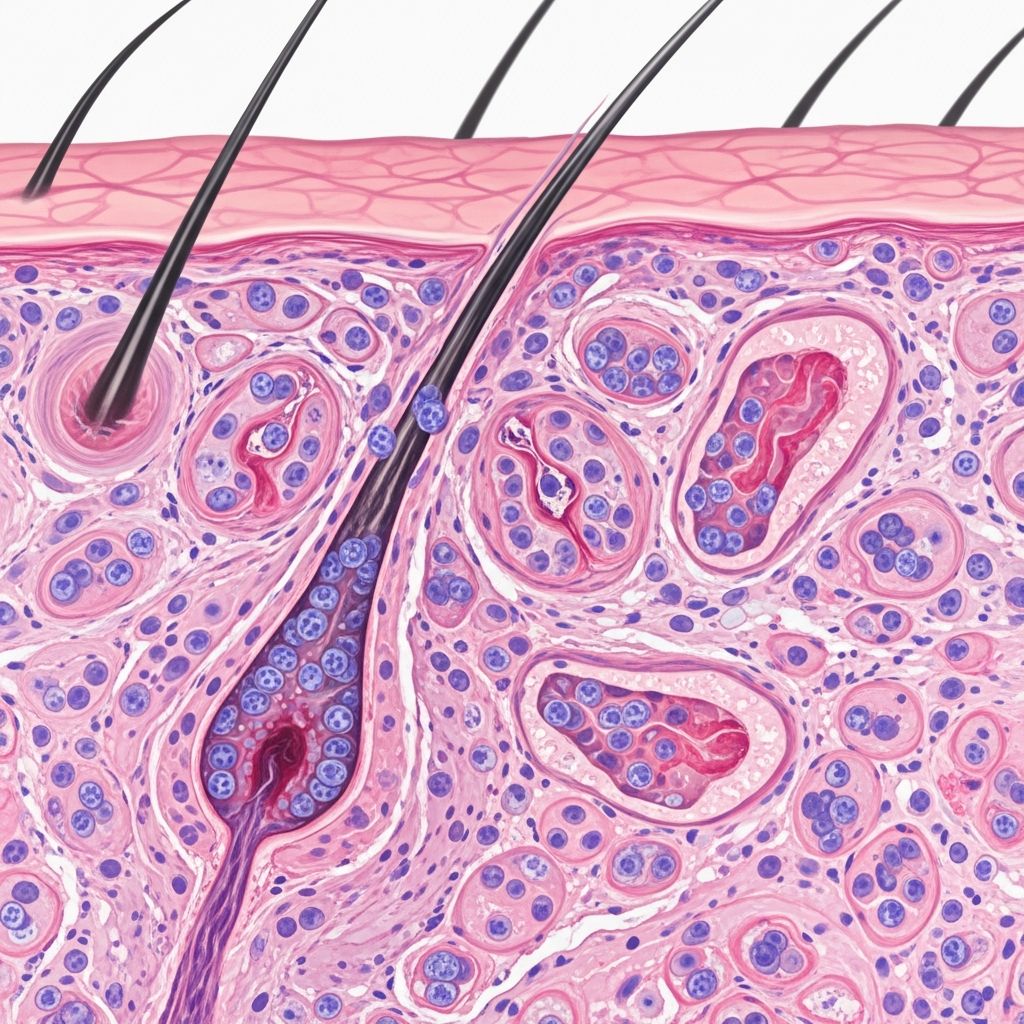
Neutrophilic sebaceous adenitis is a form of sebaceous adenitis characterised by annular or arcuate plaques on the face and trunk. On biopsy, it shows a mononuclear infiltrate around blood vessels and follicles, plus several necrotic sebocytes accompanied by neutrophils. Similar histological findings may appear in a rare painful vulval papular eruption.
This condition belongs to the family of neutrophilic dermatoses, where neutrophils play a central role in the inflammatory process targeting sebaceous glands specifically. Unlike common folliculitis, the inflammation is confined to sebaceous glands without involving hair follicles.
Who gets neutrophilic sebaceous adenitis?
This is an exceedingly rare condition, described in fewer than 15 individuals worldwide. Most cases occur in young men, though a few reports exist in women. One case involved a 25-year-old woman presenting after sun exposure.
In reported cases, patients often have skin phototypes II-III, but no consistent demographic patterns beyond male predominance and youth (typically 20s-30s). Two new cases highlighted male patients with facial involvement responding well to therapy.
What causes neutrophilic sebaceous adenitis?
The aetiology remains unknown. Some facial cases may be exacerbated by light exposure, with lesions appearing or recurring after sunny periods. One report noted seasonal summer recurrences, suggesting photodermatosis.
However, lesions on non-exposed areas question pure photosensitivity, possibly implicating heat as a trigger. Association with Demodex mites was noted in one case adjacent to affected glands. Autoimmunity is hypothesized based on response to immunosuppressants in analogous canine conditions.
Photodynamic therapy studies show neutrophil-predominant infiltrates around pilosebaceous units, hinting at external triggers mimicking acne treatments. No infectious agents or genetic links are confirmed.
What are the clinical features of neutrophilic sebaceous adenitis?
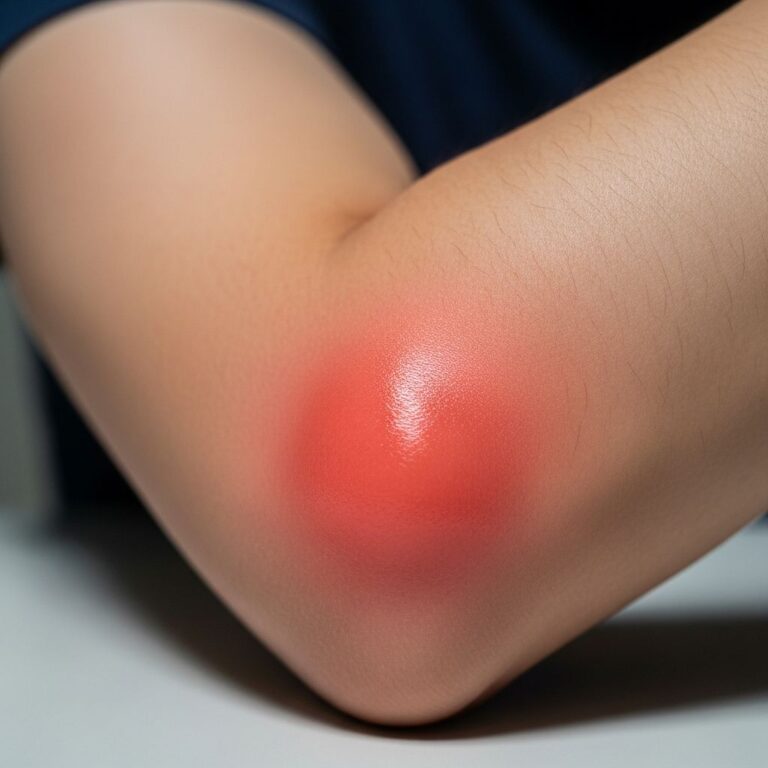
The facial rash features acute, recurrent erythematous annular or arcuate oedematous plaques on cheeks, forehead, and torso. Plaques are indurated, circinate with raised edges, erythematous to violaceous.
Occasional pustules appear in acute stages. Erythema may be subtle in skin of colour. Exacerbations can occur annually in summer.
Rarely, vulvar presentation includes tender papular or cyst-like lesions on labia minora, yellowish-orange or erythematous, discharging pus (culture-negative). These are chronic-relapsing in premenopausal women, worsening in luteal phase.
Systemic symptoms are absent except one case with fever, joint pain, and lymphadenopathy. Blood tests may show neutrophilia and elevated ESR.
Diagnosis
Clinical suspicion requires skin biopsy confirmation: focal sebocyte necrosis surrounded by neutrophils, perisebaceous mononuclear infiltrate (lymphocytes, histiocytes), superficial/deep perivascular involvement.
Key: inflammation targets sebaceous glands exclusively, sparing follicles (differentiates from folliculitis). Late stages show lymphohistiocytic surrounds without neutrophils. Vulvar biopsies mirror facial findings.
| Feature | Description |
|---|---|
| Primary infiltrate | Neutrophils around sebaceous lobules, necrotic sebocytes |
| Secondary | Lymphocytes, histiocytes perisebaceous/perivascular |
| Distribution | Sebaceous glands only (no follicular involvement) |
| Late stage | Lymphohistiocytic, absent neutrophils |
Treatment of neutrophilic sebaceous adenitis
Related Stories



Treatment is empirical due to rarity. Options include:
- Topical steroids + photoprotection: rapid regression, no relapse at 2 months.
- Oral dapsone (100mg daily, taper over 12 weeks): great improvement in 3-5 weeks in two cases.
- Systemic steroids: short-term benefit.
- Isotretinoin: long-term remission via sebostatic/anti-inflammatory effects.
- Antibiotics/antifungals (tetracycline, griseofulvin): ineffective.
- For vulvar form: tetracyclines (minocycline) or antiandrogens (spironolactone, cyproterone): excellent response.
Dapsone’s neutrophil antichemotactic action suits this neutrophilic dermatosis. Avoid pricier immunosuppressants like cyclosporine unless needed. Sun protection advised if photoexacerbated.
Spontaneous regression occurs frequently.
Frequently asked questions
What does neutrophilic sebaceous adenitis look like?
Erythematous, indurated annular plaques on face/torso; pustules acutely. Vulvar: tender papules on labia minora.
Is neutrophilic sebaceous adenitis serious?
Benign, self-limited often; treatable. No scarring typically, but recurrent.
How is neutrophilic sebaceous adenitis diagnosed?
Skin biopsy essential: neutrophilic sebaceous gland inflammation with necrosis.
What is the best treatment for neutrophilic sebaceous adenitis?
Dapsone, topical steroids, photoprotection; vulvar responds to tetracyclines/antiandrogens.
Does sun exposure trigger it?
Possible in some; seasonal cases reported, but not all.
References
- [Neutrophilic sebaceous adenitis in a woman] — PubMed/NCBI. 2013-11. https://pubmed.ncbi.nlm.nih.gov/24206807/
- Neutrophilic Sebaceous Adenitis: A Challenger Diagnosis with Favorable Response to Dapsone – Contribution of Two New Cases — Athenaeum Scientific Publishers. 2020. https://athenaeumpub.com/neutrophilic-sebaceous-adenitis-a-challenger-diagnosis-with-favorable-response-to-dapsone-contribution-of-two-news-cases-2/
- Neutrophilic sebaceous adenitis — DermNet NZ. 2023 (accessed 2026). https://dermnetnz.org/topics/neutrophilic-sebaceous-adenitis
- Sebaceous adenitis of the vulva responsive to antiandrogens — PMC/NCBI. 2018-06-20. https://pmc.ncbi.nlm.nih.gov/articles/PMC5990069/
- Vulvar sebaceous adenitis — VisualDx. 2023 (accessed 2026). https://www.visualdx.com/visualdx/diagnosis/?diagnosisId=56527&moduleId=101
Similar Articles








Read full bio of medha deb