Nevi and Moles: Types, Symptoms, and Treatment
Comprehensive guide to understanding moles and nevi: causes, types, diagnosis, and management options.
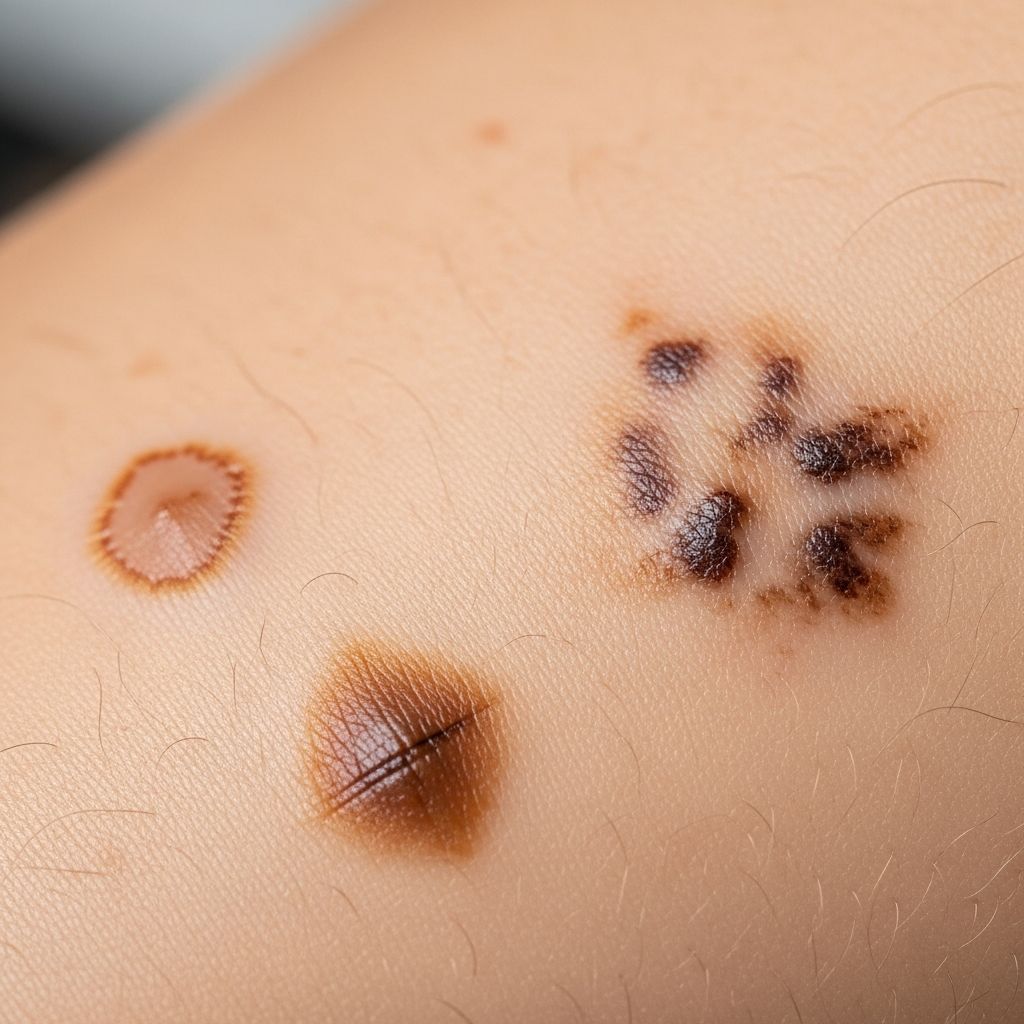
Understanding Nevi and Moles
Nevi, commonly known as moles, are among the most prevalent skin growths found in humans. A nevus (plural: nevi) is the medical term for a mole, and these benign skin lesions result from a local proliferation of pigment-producing cells called melanocytes. Most people develop between 10 and 40 moles during their lifetime, making them a normal part of human skin. While the vast majority of moles are harmless, understanding their characteristics, types, and when to seek medical attention is essential for maintaining skin health.
Moles can appear anywhere on the body and vary significantly in color, size, shape, and texture. They typically present as small brown, tan, or pink spots on the skin. Some moles are present from birth, while others develop throughout childhood, adolescence, and adulthood. The development of moles is influenced by genetic factors and sun exposure, with many appearing as a normal response to the skin’s aging process.
What Causes Moles to Develop?
Moles form due to the clustering of melanocytes, the cells responsible for producing melanin, the pigment that gives skin its color. The high concentration of melanin in these areas creates the dark appearance characteristic of most moles. While the exact mechanisms triggering mole formation are not completely understood, several factors contribute to their development:
Genetic Factors
Genetics play a significant role in mole development. If your parents have numerous moles or specific types of moles, you are more likely to develop similar patterns. This hereditary component influences both the number of moles you develop and their characteristics.
Sun Exposure
Ultraviolet (UV) radiation from sun exposure is a major contributor to mole development, particularly acquired nevi that develop later in life. Individuals who spend significant time in the sun or have experienced sunburns are more likely to develop additional moles throughout their lives.
Age
Most moles develop during childhood and adolescence, though new moles can continue to appear into adulthood. This progression is considered a normal part of skin aging and development.
Types of Nevi and Moles
Medical professionals classify moles into several distinct types based on their appearance, location, and characteristics. Understanding these categories helps in proper identification and appropriate management.
Congenital Nevus
A congenital nevus is a mole present at birth. These moles are generally categorized by size as small, medium, or giant, with some congenital nevi covering large areas of the body. They vary considerably in color, shape, and consistency. Congenital moles require regular monitoring, as those larger than 20 millimeters carry a slightly elevated risk of melanoma development.
Common Nevus
Common nevi are the most frequently encountered type of mole. These smooth, round moles typically display a uniform color and can appear either flat or dome-shaped. They may be pink, tan, or brown in color. Common nevi are benign and do not require treatment unless they become irritated or patients desire removal for cosmetic reasons.
Related Stories



Blue Nevus
Blue nevi are distinctive moles characterized by their blue-gray to blue-black coloration. These moles can be either congenital or acquired and commonly appear flat or dome-shaped with a smooth surface. Blue nevi are particularly common in people of Asian descent and typically range from 0.5 to 1 centimeter in size, though cellular blue nevi can reach larger dimensions.
Miescher Nevus
A Miescher nevus is a brownish or skin-colored, dome-shaped mole that commonly appears on the face or neck. These moles are typically firm, round, smooth, and may have hair protruding from them. Miescher nevi are benign and generally do not require treatment.
Unna Nevus
Unna nevi are soft, brownish moles that resemble Miescher nevi in appearance. However, these moles are typically located on the trunk, arms, and neck rather than the face. An Unna nevus may resemble a raspberry in texture, with a papillomatous surface.
Meyerson Nevus
Meyerson nevi are unique moles surrounded by a small ring of eczema, which appears as an itchy, red rash. These moles can develop on anyone’s skin regardless of eczema history. Notably, Meyerson nevi affect men nearly three times as often as women, with most developing around age 30.
Halo Nevus
A halo nevus is distinctive for the white ring of unpigmented skin surrounding the mole itself. Over time, the mole in the center gradually fades from brown to pink before disappearing entirely. It is not uncommon for individuals to have several halo nevi at different stages of fading.
Spitz Nevus
A Spitz nevus is a raised, pink, dome-shaped mole that typically appears before age 20. These moles may have varying colors and can occasionally bleed or ooze, making them difficult to distinguish from melanoma. Professional evaluation is recommended for suspected Spitz nevi.
Reed Nevus
A Reed nevus, also called a spindle cell nevus, is a dark brown or black, raised, dome-shaped mole that most often affects women. These moles can grow quickly and may be mistaken for melanoma due to their appearance. Dermoscopic examination helps differentiate them from malignant lesions.
Atypical and Dysplastic Nevi
Dysplastic nevi, also called atypical moles, are moles that look different from common moles. These moles are often larger than 5 millimeters in diameter and may display a mixture of tan, brown, and red or pink shades. People with multiple atypical nevi have an increased risk of melanoma and require more frequent skin monitoring.
Agminated Nevus
An agminated nevus refers to a cluster of similar moles located in one area of the body. These groups of similar-looking moles can vary in appearance and type, appearing as multiple moles in close proximity rather than scattered across the skin.
Symptoms and When to Seek Medical Attention
While most moles are benign and require no treatment, certain changes warrant professional evaluation. The ABCDE rule provides a useful framework for identifying potentially problematic moles:
Key Warning Signs
Asymmetry: If a mole appears asymmetrical, with one half looking different from the other, medical evaluation is recommended.
Border Irregularity: Moles with irregular, scalloped, or poorly defined borders warrant professional assessment.
Color Variation: Multiple colors within a single mole, particularly if they include black, dark blue, or red, should be evaluated by a dermatologist.
Diameter: Moles larger than 6 millimeters, approximately the size of a pencil eraser, should be professionally examined.
Evolution: Any mole that changes in size, shape, color, or texture over time requires medical attention.
Additionally, moles that bleed, itch, become painful, or develop unusual surface characteristics should be evaluated promptly. Regular skin self-examinations help identify changes early.
Diagnosis and Evaluation
Healthcare providers use several methods to evaluate moles and determine whether further investigation is necessary.
Clinical Examination
Dermatologists conduct thorough visual examinations of moles, assessing size, shape, color, and surface characteristics. They may use dermoscopy, a specialized magnification technique that reveals subsurface patterns and structures not visible to the naked eye.
Dermoscopy
Dermoscopic examination allows healthcare providers to identify specific patterns associated with different mole types and detect potentially concerning features that may suggest malignancy.
Biopsy
If a mole displays concerning characteristics or shows changes over time, a biopsy may be recommended. This procedure involves removing tissue for microscopic examination to determine whether the growth is benign or malignant.
Treatment and Management Options
Most moles do not require treatment as they are benign and pose no health risk. However, removal may be pursued for cosmetic reasons or if a mole becomes irritated by clothing or shaving.
Observation
Many individuals choose to simply monitor their moles for changes rather than pursue removal. Regular self-examination and periodic professional skin checks provide adequate surveillance for benign moles.
Surgical Removal
When removal is desired, several surgical options are available:
Excision: Surgical excision involves removing the mole and surrounding tissue, often with sutures. This method is appropriate for larger moles or those requiring complete removal and histopathological examination.
Shave Biopsy: This technique involves shaving the mole flush with the skin surface using a scalpel. It leaves minimal scarring and is suitable for raised moles.
Laser Removal: Laser procedures can effectively remove moles, though they may be less suitable for pigmented lesions requiring histopathological examination.
Dermabrasion and Chemical Peeling
These techniques can reduce the appearance of flat moles, though complete removal may not be achievable with these methods alone.
Prevention and Risk Management
While genetic factors determine susceptibility to mole development, sun protection measures can reduce the formation of new moles and lower melanoma risk.
Sun Protection Strategies
Use Sunscreen: Apply broad-spectrum sunscreen with SPF 30 or higher daily, reapplying every two hours and after swimming.
Seek Shade: Limit sun exposure, particularly during peak UV hours between 10 a.m. and 4 p.m.
Protective Clothing: Wear protective clothing, hats, and sunglasses when outdoors for extended periods.
Avoid Tanning Beds: UV radiation from tanning beds significantly increases skin cancer risk and should be avoided.
Regular Monitoring
Individuals with numerous moles, a family history of melanoma, or atypical moles should schedule regular dermatological examinations. Professional surveillance helps identify changes early when intervention is most effective.
Frequently Asked Questions
Q: Are all moles cancerous?
A: No, the vast majority of moles are benign and never become cancerous. However, atypical moles and those showing signs of change warrant professional evaluation.
Q: Can moles be removed at home?
A: No, home removal attempts can lead to infection, scarring, and improper assessment of potentially concerning lesions. Professional medical removal is always recommended.
Q: How often should I have my moles checked?
A: Individuals with numerous moles, atypical moles, or family history of melanoma should have professional skin checks annually or as recommended by their dermatologist.
Q: Do all moles need to be removed?
A: No, moles only require removal if they show concerning changes, become irritated, or are removed for cosmetic reasons. Most benign moles can safely remain on the skin.
Q: Can moles return after removal?
A: When moles are properly excised, they do not return. However, new moles may develop elsewhere on the body over time.
Q: What is the difference between a mole and a freckle?
A: Freckles are flat spots caused by concentrated melanin, while moles are raised or flat growths containing clusters of melanocytes. Moles are typically larger and darker than freckles.
References
- Nevus: Definition, Common Types, Photos, Diagnosis, and Treatment — Healthline. Accessed December 1, 2025. https://www.healthline.com/health/nevus
- Moles (Melanocytic Naevi, Pigmented Nevi) — DermNet. Accessed December 1, 2025. https://dermnetnz.org/topics/melanocytic-naevus
- Types of Moles and Skin Lesions — AIM at Melanoma Foundation. Accessed December 1, 2025. https://www.aimatmelanoma.org/melanoma-101/understanding-melanoma/moles-and-other-lesions/types-moles-skin-lesions/
- Melanocytic Nevus — National Cancer Institute. Accessed December 1, 2025. https://www.cancer.gov/types/skin/moles-fact-sheet
- Common Moles, Dysplastic Nevi, and Risk of Melanoma — National Cancer Institute. Accessed December 1, 2025. https://www.cancer.gov/types/skin/moles-fact-sheet
Similar Articles








Read full bio of Sneha Tete