New Treatments for Geographic Atrophy in AMD
Discover how FDA-approved injections like Syfovre and Izervay are changing the game for managing geographic atrophy, the advanced stage of dry AMD.
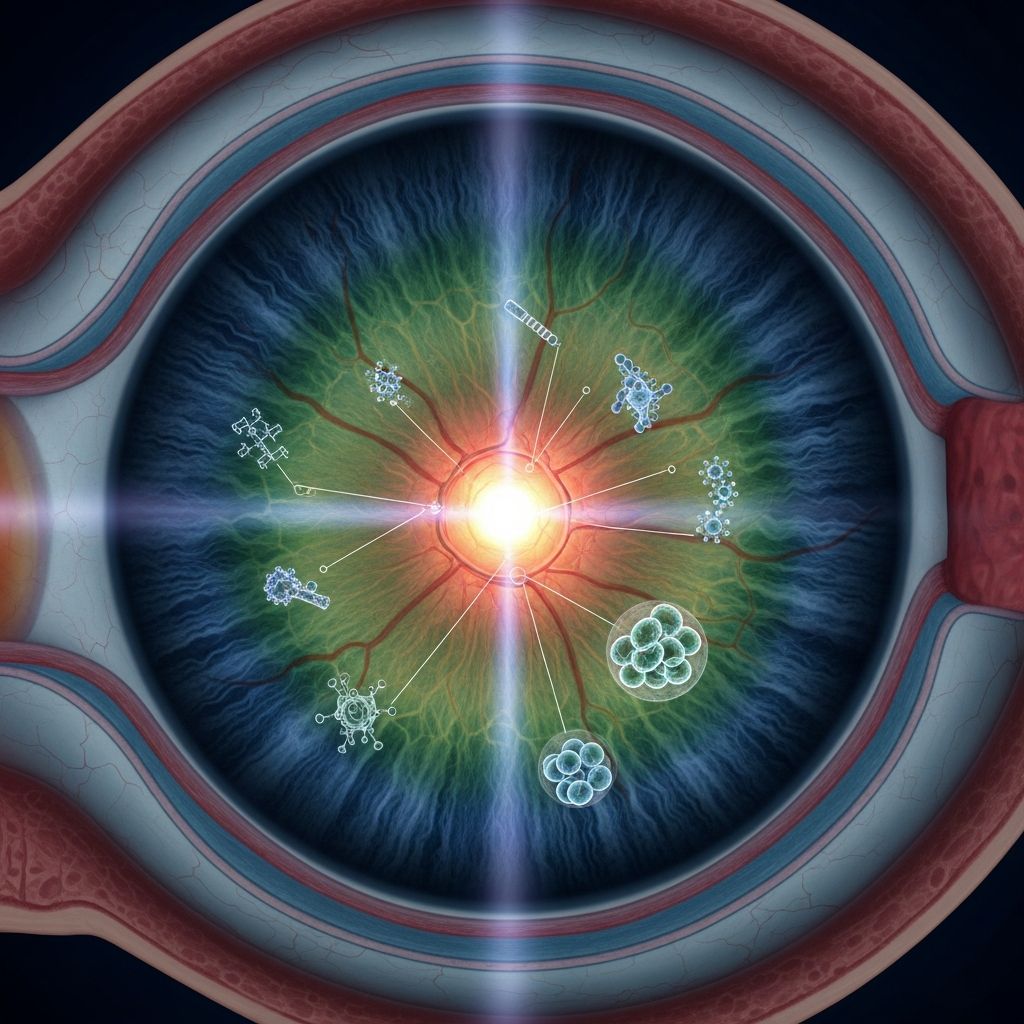
Geographic atrophy represents the most severe form of dry age-related macular degeneration (AMD), leading to irreversible central vision loss. Recent FDA approvals of targeted therapies mark a pivotal shift, offering patients the first options to slow disease progression rather than merely managing symptoms.
Understanding Geographic Atrophy and Its Impact
Geographic atrophy (GA) develops when retinal pigment epithelial (RPE) cells and photoreceptors in the macula deteriorate, creating well-defined atrophic patches resembling maps on fundus images. This advanced dry AMD stage affects central vision critical for reading, driving, and facial recognition. GA contributes to about 20% of legal blindness cases linked to AMD, often impacting both eyes asymmetrically.
The macula’s vulnerability stems from its high metabolic demands and exposure to light-induced oxidative stress. Over time, drusen accumulation and chronic inflammation erode retinal layers, expanding atrophic zones that encroach on the fovea—the eye’s sharpest vision center.
Key Symptoms to Recognize Early
GA symptoms emerge gradually, starting in peripheral central vision before advancing centrally. Common indicators include:
- Blurring or distortion in the center of your visual field, making text or faces hard to discern.
- Appearance of central blind spots or scotomas that grow over months.
- Diminished color intensity, with hues seeming faded or washed out.
- Challenges adapting to low-light conditions or heightened glare sensitivity.
- Difficulty with fine tasks like threading a needle or spotting small objects.
These signs often prompt self-testing with an Amsler grid, where straight lines appear wavy or missing segments signal macular changes. Early detection via comprehensive dilated exams allows intervention before foveal involvement worsens quality of life.
Root Causes and Risk Factors
GA arises from a confluence of genetic predispositions, aging, and environmental triggers. Oxidative damage from prolonged light exposure and metabolic byproducts initiates RPE dysfunction. Dysregulated complement system activation—part of innate immunity—exacerbates this, depositing inflammatory complexes like C3 and membrane attack complex (MAC) in retinal tissues.
Risk factors mirror broader AMD:
| Factor | Description | Impact Level |
|---|---|---|
| Age | Over 50, risk escalates sharply after 75 | High |
| Genetics | CFH, ARMS2 variants increase susceptibility | High |
| Smoking | Doubles AMD progression odds | Moderate-High |
| Diet | Lacking leafy greens, omega-3s | Moderate |
| UV Exposure | Cumulative sunlight without protection | Moderate |
Complement dysregulation, observed in higher levels among GA patients versus early AMD, underscores why inhibitors target this pathway.
Breakthrough FDA-Approved Therapies
In 2023, the FDA greenlit two complement inhibitors: pegcetacoplan (Syfovre) and avacincaptad pegol (Izervay), revolutionizing GA management. These intravitreal injections target upstream (C3 for Syfovre) or downstream (C5 for Izervay) complement components to curb inflammation and atrophy expansion.
Syfovre (Pegcetacoplan): Clinical Evidence
Syfovre, administered monthly or every other month (EOM), reduced GA lesion growth by 22% (monthly) and 18% (EOM) at 24 months in the OAKS trial, and 19% (monthly)/16% (EOM) in DERBY. These phase 3 studies involved over 1,200 patients, measuring growth via fundus autofluorescence.
Izervay (Avacincaptad Pegol): Key Results
Monthly Izervay injections slowed GA progression by 27-28% at 12 months in GATHER1 (phase 2/3), outperforming sham in non-foveal lesions. Phase 3 data confirmed sustained benefits, particularly for extrafoveal GA.
Related Stories



Both therapies slow—but do not halt or reverse—lesion growth by 20-35%, preserving photoreceptors longer. Best outcomes occur in early GA with lesions under 4 disc areas.
Administration and What to Expect
Treatment involves office-based intravitreal injections using topical anesthesia and antiseptics to minimize infection risk. Sessions last 5-10 minutes:
- Eye numbed with drops and lid speculum applied.
- Antibiotic drops/prophylaxis given.
- Needle injects 0.1 mL drug into vitreous gel.
- Post-injection pressure check and recovery monitoring.
Frequencies: monthly or EOM based on specialist assessment and lesion dynamics. Patients often notice stabilized vision after 6-12 months, though gains are modest (few letters on eye charts).
Potential Side Effects and Safety Profile
Injections carry standard risks like endophthalmitis (0.01-0.05% per injection), retinal detachment, or floaters. GA-specific concerns include elevated wet AMD conversion (12-29% higher vs. sham), necessitating vigilant monitoring.
- Common: Subconjunctival hemorrhage, vitreous floaters, mild discomfort.
- Serious (rare): Infection, inflammation (uveitis), neovascular AMD.
Regular OCT imaging and exams mitigate complications. Not suitable for all; contraindications include active ocular infections.
Complementary Management Strategies
Beyond injections, holistic care enhances outcomes:
- AREDS2 Supplements: High-dose vitamins C/E, zinc, lutein/zeaxanthin slow AMD progression in intermediate stages.
- Lifestyle: Quit smoking, UV-protective eyewear, antioxidant-rich diet (kale, fish).
- Low Vision Aids: Magnifiers, high-contrast screens, eccentric viewing training.
- Monitoring: Home Amsler grids, frequent specialist visits.
Emerging Therapies on the Horizon
Research pipelines brim with promise. Gene therapies aim to deliver complement regulators subretinally for sustained effect. Cell therapies replenish lost RPE/photoreceptors. Transpalpebral microcurrent stimulation showed 10-letter vision gains in pilots (P<0.001).
Other candidates: oral complement inhibitors, neuroprotective agents. Long-term data will clarify combination regimens and optimal patient selection.
Patient Journey: Diagnosis to Long-Term Care
Diagnosis blends multimodal imaging: fundus photography, OCT for RPE loss, FAF for atrophy borders. Fluorescein angiography differentiates from wet AMD. Genetic testing identifies high-risk profiles.
Post-treatment, quarterly visits track lesion growth (<1mm>
Frequently Asked Questions (FAQs)
Is geographic atrophy curable?
No, but Syfovre and Izervay slow progression significantly.
How often are injections needed?
Monthly or every other month, tailored by your retina specialist.
Can GA turn into wet AMD?
Treatments slightly raise this risk; monitoring is essential.
Who qualifies for these therapies?
Adults with FDA-defined GA lesions, confirmed via imaging.
What lifestyle changes help?
Non-smoking, healthy diet, UV protection reduce progression.
Consult a retina specialist promptly for personalized evaluation. These advancements empower proactive vision preservation amid GA’s challenges.
References
- Geographic Atrophy Symptoms: What to Watch for in Late-Stage AMD — Southeastern Retina Associates. 2023. https://www.southeasternretina.com/blog/geographic-atrophy-symptoms-what-to-watch-for-in-late-stage-amd
- Treating patients with geographic atrophy: are we there yet? — PMC (National Library of Medicine). 2023-11-01. https://pmc.ncbi.nlm.nih.gov/articles/PMC10658861/
- Geographic Atrophy and Wet AMD: What You Need to Know — ReFocus Eye Doctors. 2024. https://waterbury.refocuseyedoctors.com/article/geographic-atrophy-and-wet-amd-what-you-need-to-know-about-your-eye-health/
- Game-Changing Treatment for Geographic Atrophy | Duke Health — Duke Health (YouTube). 2023-04-25. https://www.youtube.com/watch?v=onmsJ5KWFUw
- Geographic atrophy – Diagnosis and treatment — Mayo Clinic. 2024. https://www.mayoclinic.org/diseases-conditions/geographic-atrophy/diagnosis-treatment/drc-20582994
- Geographic Atrophy: Symptoms, Causes & Treatment — Cleveland Clinic. 2024. https://my.clevelandclinic.org/health/diseases/24890-geographic-atrophy
Similar Articles








Read full bio of medha deb