New Zealand Prescription Fees: $5 Charge And 12-Month Scripts
Understand NZ prescription charges, exemptions, changes, and tips to minimize costs for subsidized medicines.
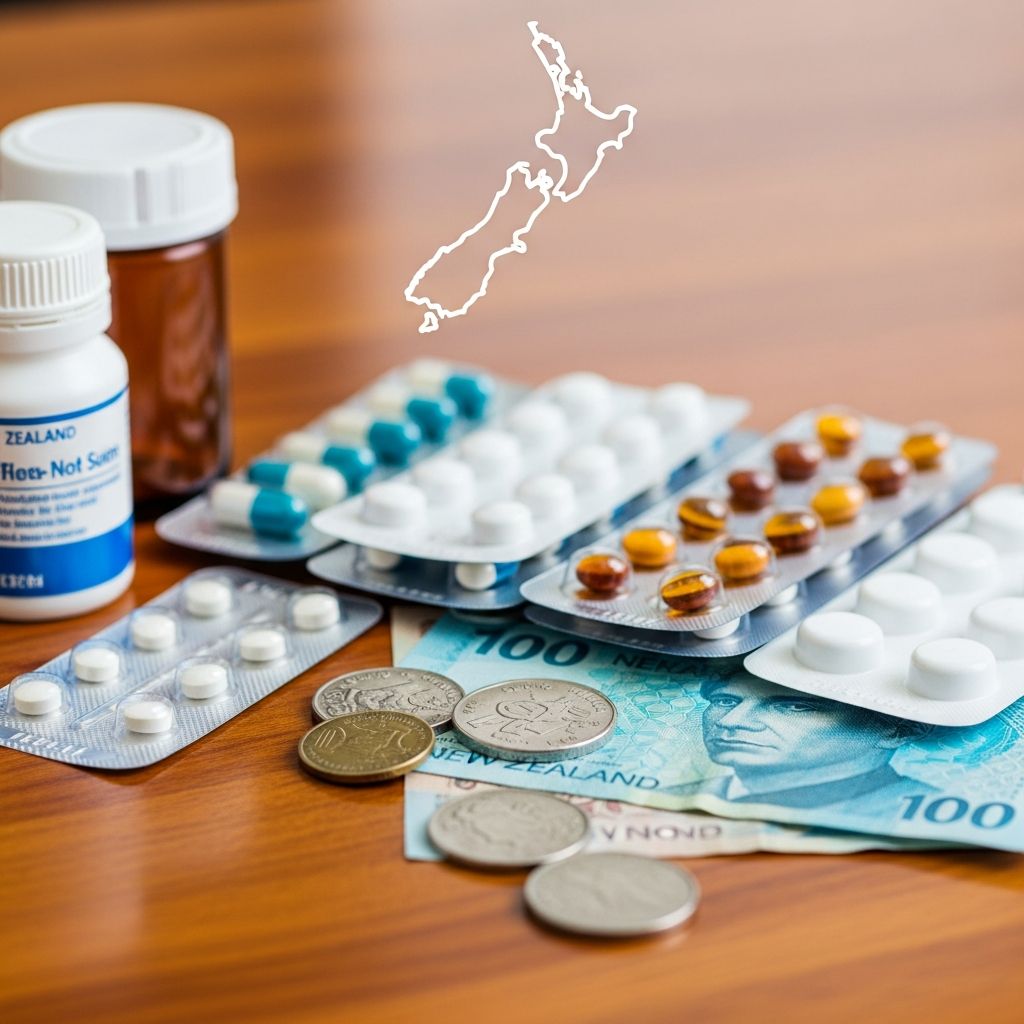
New Zealand’s public health system subsidizes most prescription medicines through Pharmac, but patients typically contribute a standard co-payment. This guide breaks down the $5 prescription charge, exemptions, recent policy shifts like 12-month prescriptions, and practical advice for managing costs.
Understanding the Standard Prescription Charge
The core of New Zealand’s prescription funding model is a flat co-payment of $5 per subsidized item for most adults. This fee, collected by community pharmacies, applies regardless of the medicine’s actual price and covers part of the dispensing and subsidy costs.
Subsidized medicines dominate prescriptions filled in pharmacies. Fully subsidized items incur only the $5 charge plus any pharmacy dispensing fee. Partially subsidized ones require the $5 plus the patient’s share of the medicine cost. Unsubsidized prescriptions mean full payment by the patient.
- $5 charge triggers: Applies to each new prescription item from approved providers like GPs.
- No charge for repeats: Refills on the same script (e.g., months 2-3) are free from the co-payment if subsidized.
- Annual reset: Prescription counts restart February 1, affecting high users.
Exemptions and Free Prescriptions
Certain groups access medicines without the $5 fee, easing financial burdens for vulnerable populations. These exemptions promote equity in healthcare access.
| Group | Eligibility for Free Scripts | Conditions |
|---|---|---|
| Children under 14 | Full exemption | All subsidized prescriptions from approved providers. |
| Seniors 65+ | Full exemption | Applies nationwide for Pharmac-subsidized items. |
| Community Services Card (CSC) holders & dependents | $0 co-payment | Must present valid CSC; covers family. |
| High Use Health Card holders | Reduces fees to $5 max per item | For frequent users after 20+ prescriptions annually. |
ACC-related claims also qualify for exemptions from approved prescribers, supporting injury recovery without added costs.
Higher Charges from Non-Standard Providers
Prescriptions from private specialists or dentists carry elevated fees, reflecting less government oversight on these services.
- Adults (18-64): $15 per item
- Juniors (14-17): $10 per item
- Seniors (65+): $15 (but often exempt elsewhere)
Reductions apply: Oral contraceptives drop to $5, and CSC/High Use cards cap at $5 regardless of prescriber.
Recent Reforms: 12-Month Prescriptions
A major 2026 update introduces 12-month prescriptions for chronic conditions, slashing repeat fees. Patients pay $5 only once at initial pickup, with free refills every three months.
Announced in the 2025 Budget, this reverses an initial plan for quarterly $5 charges. Health Minister Simeon Brown cited barriers—191,000 adults skipped scripts in 2023/24 due to cost—as rationale. Implementation starts February 1, 2026, benefiting asthma, diabetes, epilepsy, and hypertension management.
Pharmac and Health New Zealand coordinate rollout, minimizing admin complexity. Annual cost to Health NZ: $6-23 million, offset by better adherence and health outcomes.
Community Services Card and High Use Health Card Details
Community Services Card (CSC)
Issued to low-income households, CSC grants $0 co-payments on subsidized scripts for holders and dependents. Apply via Work and Income; eligibility based on income thresholds (e.g., under $30,000 single, adjusted for family).
High Use Health Card
For those filling 20+ prescriptions yearly post-February reset. Reduces all fees to $5 max, ideal for polypharmacy patients. No income test; auto-issued by pharmacies.
Special Authority Requirements
High-cost or specialized medicines need Special Authority (SA) approval from Pharmac. Prescribers apply; approval subsidizes the item. Without SA, full unsubsidized price applies—often hundreds of dollars.
Related Stories



- GP-applicable: Many SAs handled by general practice.
- Specialist-required: Some need hospital endorsement.
- Processing: 15-20 working days; urgent options exist.
Impact on Health Equity and Access
Even $5 fees deter uptake among low-income, Māori, Pacific, and deprived-area residents, exacerbating inequalities. Studies link charges to poorer adherence and outcomes.
Removing or minimizing fees boosts medicine access, reduces hospitalizations. NZ’s model keeps per-capita drug spend low OECD-wide via Pharmac’s tendering and reference pricing.
Practical Tips to Lower Costs
- Check eligibility: Apply for CSC online or at Work and Income.
- Track prescriptions: Aim under 20 annually for High Use Card.
- Prefer GP scripts: Avoid private specialist $15 fees.
- 12-month scripts: Request for stables chronic meds from Feb 2026.
- Generic choices: Pharmac-subsidized equivalents cost the same $5.
Pharmacies offer blister packs or adherence aids at extra fees—discuss necessities.
Frequently Asked Questions (FAQs)
Do I pay $5 for every medicine on a script?
Yes, per item (e.g., multi-drug script = multiple $5). Repeats exempt.
Are emergency scripts free?
No, standard charges apply unless exempt group.
What if I lose my CSC?
Fees revert to standard; renew promptly.
Can tourists get subsidies?
No; full costs unless eligible resident.
How does Pharmac decide subsidies?
Balances cost, efficacy, need via national formulary.
Future Outlook and Policy Evolution
12-month prescriptions mark progress toward free-at-point-of-service primary care. Ongoing debates weigh full fee abolition against fiscal pressures. Monitor Health NZ and Pharmac for updates.
For chronic illness, these changes could save $15+ yearly per script, enhancing adherence. Equity-focused reforms target underserved groups, aligning with Aotearoa’s health strategy.
References
- Impact of removing prescription charges on health outcomes — PMC. 2021-12-14. https://pmc.ncbi.nlm.nih.gov/articles/PMC8728355/
- Government u-turns on prescription co-payment fees — RNZ News. 2025-01 (approx). https://www.rnz.co.nz/news/political/583592/government-u-turns-on-prescription-co-payment-fees
- Increasing prescribing lengths — Ministry of Health NZ. 2025 (updated). https://www.health.govt.nz/strategies-initiatives/programmes-and-initiatives/primary-and-community-health-care/increasing-prescribing-lengths
- Prescription charges — Healthify. Recent access. https://healthify.nz/medicines-a-z/p/prescription-charges
- Pharmaceutical co-payment — Health New Zealand | Te Whatu Ora. 2024-07-01. https://www.tewhatuora.govt.nz/for-health-providers/claims-provider-payments-and-entitlements/pharmaceutical-co-payments
- New Zealand | International Health Care System Profiles — Commonwealth Fund. Recent. https://www.commonwealthfund.org/international-health-policy-center/countries/new-zealand
Similar Articles








Read full bio of Sneha Tete