Newborn Bloodspot Test: Complete Guide To Early Screening
Essential guide to the newborn bloodspot test: what it detects, how it's done, and why timely screening saves lives.
The
newborn bloodspot test
, also known as the heel prick test, is a vital screening procedure performed on nearly all babies shortly after birth to detect rare but serious conditions that may not show symptoms immediately. This simple blood test uses a few drops from the baby’s heel to check for up to 10 or more disorders, depending on regional programs, allowing early intervention that can prevent severe health issues or even death.What is the newborn bloodspot test?
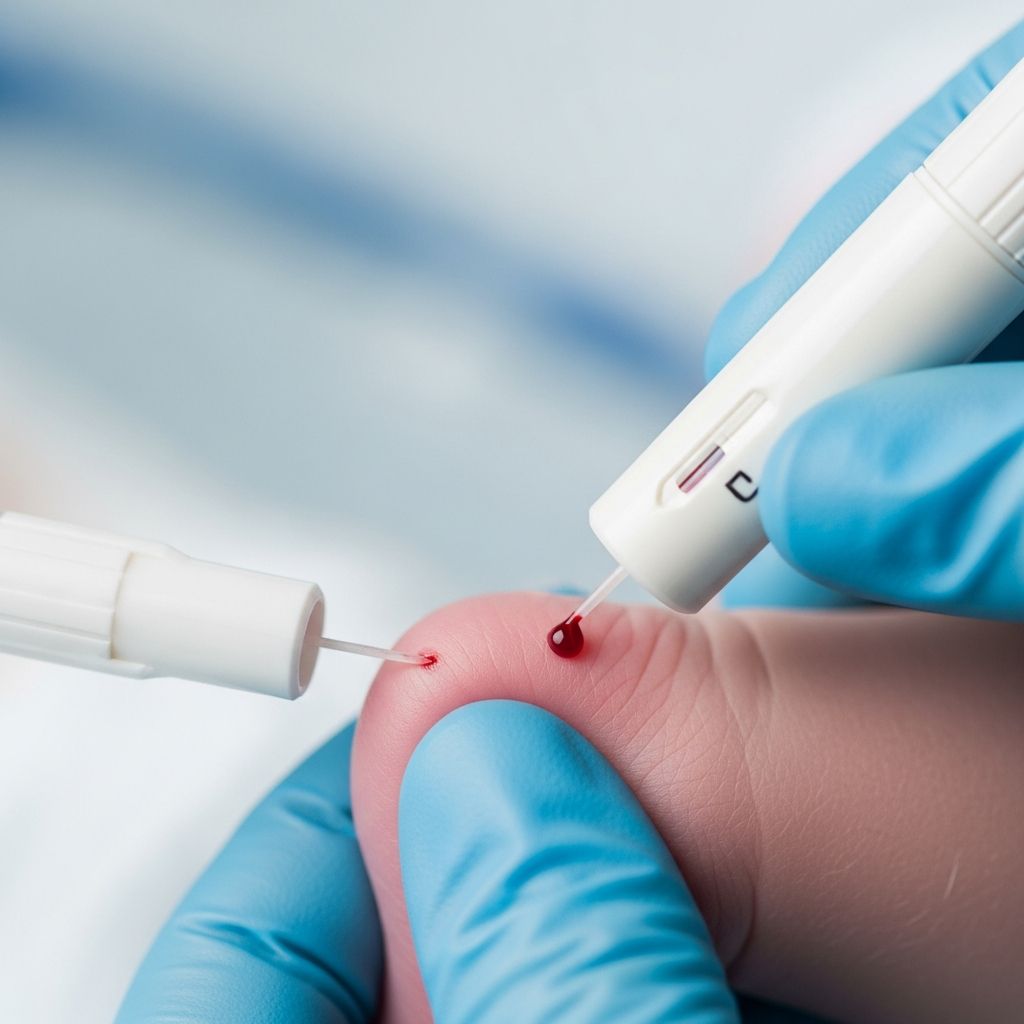
The test involves pricking the baby’s heel to collect small blood samples on a special filter paper card, which is then analyzed in a laboratory for metabolic, hormonal, and genetic disorders. It is recommended worldwide as a standard part of newborn care, typically conducted between 24-48 hours after birth or before hospital discharge. Programs like those in the US, UK, and Australia test for conditions such as phenylketonuria (PKU), cystic fibrosis, and sickle cell disease, with variations by state or country. Early detection is crucial because many screened conditions are treatable if caught promptly, transforming lifelong management into preventable outcomes.
Why is the test needed?
Many serious conditions screened by the bloodspot test do not display obvious signs in newborns, potentially leading to developmental delays, organ damage, or fatality without treatment. For instance, untreated PKU can cause intellectual disability, while congenital hypothyroidism may result in growth issues. The test identifies babies at risk, enabling immediate diagnostic confirmation and therapies like special diets or medications. Public health authorities emphasize its role in reducing mortality and morbidity, with over 99% of newborns screened in compliant programs.
How is the newborn bloodspot test done?
The procedure is quick, safe, and performed by trained midwives or healthcare providers. Here’s a step-by-step overview:
- Warm the heel: Gently warm the baby’s foot with a commercial heel warmer or warm cloth for up to 3 minutes to improve blood flow.
- Clean the site: Wipe the heel with an alcohol pad and dry with sterile gauze to prevent contamination.
- Puncture: Use a sterile lancet or automated device to prick the side of the heel at a slight angle, avoiding the center to minimize injury.
- Collect blood: Wipe away the first drop (which may contain tissue fluid), then touch the filter paper to successive large drops, filling 4-5 pre-marked circles completely through to the back without pressing or layering.
- Dry and store: Air-dry spots horizontally for at least 3 hours on a clean surface, away from heat or sunlight, then seal in an envelope.
Babies may be swaddled or fed during the process to comfort them; the prick causes brief discomfort but no lasting risks.
When is the test done?
Optimal timing is 24-48 hours after birth for accurate results, as earlier samples (under 24 hours) may yield false negatives or require repeats. Key guidelines include:
| Scenario | Timing | Notes |
|---|---|---|
| Standard birth | 24-48 hours or pre-discharge | Ideal for full screening panel |
| Early discharge (<24 hours) | At discharge + repeat at 48-72 hours | Ensures adequate age for testing |
| Low birth weight (<2000g) | Initial + repeat at 28 days or discharge | Multiple screens needed |
| Pre-transfusion/TPN | Before treatment if possible | These can invalidate results |
If transfusions or total parenteral nutrition (TPN) are anticipated, collect prior; post-treatment requires additional tests at 3 days and 4 months post-final transfusion.
Related Stories



What does the test check for?
The bloodspot test screens for multiple conditions via biochemical markers, with genetic follow-up if needed (e.g., for cystic fibrosis). Common disorders include:
- Metabolic: Phenylketonuria (PKU), maple syrup urine disease, homocystinuria.
- Endocrine: Congenital hypothyroidism, congenital adrenal hyperplasia.
- Hemoglobinopathies: Sickle cell disease.
- Other: Cystic fibrosis, spinal muscular atrophy (in expanded panels), medium-chain acyl-CoA dehydrogenase deficiency (MCAD).
Specific panels vary; for example, UK tests 9 conditions, while US states screen 30+ via Recommended Uniform Screening Panel.
What happens after the sample is taken?
The dried card is sent to a state or regional lab for analysis, often within days. Labs punch discs from spots for tandem mass spectrometry and other assays. Unsuitable samples (e.g., insufficient blood, hemolysis) prompt recalls. Results are typically available in 1-2 weeks, sent to the baby’s doctor.
What are the risks?
The test poses minimal risks: a small heel bruise that resolves quickly, rare infection if hygiene lapses (prevented by sterile technique). No long-term effects reported; benefits far outweigh risks.
Understanding the results
Normal results: No contact; most babies (99%+) pass.
Abnormal (screen-positive): Doctor notified immediately for confirmatory tests; false positives occur but lead to treatment if confirmed.
Borderline/Repeat: Common for early or low-volume samples; retest normal in most cases. Parents should track results via health portals if available.
Problems with the bloodspot test sample
Invalid samples delay screening; causes include:
- Insufficient saturation or layering.
- Alcohol residue causing hemolysis.
- Clotted or overlayered blood.
- Early collection (<24h).
Hospitals recollect in-house if possible; otherwise, outpatient follow-up scheduled.
Your baby needs a second bloodspot test
Repeats are routine for:
- Birth <24h or <2000g.
- Borderline first results.
- Post-transfusion/TPN.
Schedule via midwife/doctor; home visits common.
Refusing the test
Parents can decline, but it’s strongly advised against due to risks of undetected conditions. Discuss concerns with providers; some programs require signed refusal.
Storing newborn bloodspot samples
Residual spots may be stored 1-2 years for quality control or retesting, then destroyed per privacy laws. Parental consent often sought for research use.
Frequently Asked Questions (FAQs)
Why does my baby need the bloodspot test?
It detects treatable conditions early, preventing severe complications.
Does the heel prick hurt?
Brief discomfort; comfort measures like feeding help.
What if results are abnormal?
Follow-up diagnostics; most screen-positives are false.
Can I do the test at home?
No, requires trained professionals for accuracy.
How soon are results back?
1-2 weeks, sent to your doctor.
References
- Newborn Screening – Specimen Collection — Wadsworth Center. 2025-07. https://www.wadsworth.org/programs/newborn/screening/providers/specimen-collection
- Newborn Bloodspot Screening Frequently Asked Questions — Maryland Department of Health. Accessed 2026. https://health.maryland.gov/phpa/cyshcn/Pages/NBS_FAQ.aspx
- Newborn bloodspot screening — Better Health Channel, Victoria Government. Accessed 2026. https://www.betterhealth.vic.gov.au/health/conditionsandtreatments/newborn-screening
- Newborn blood spot test — NHS UK. Accessed 2026. https://www.nhs.uk/baby/newborn-screening/blood-spot-test/
- Newborn Screening Process — HRSA.gov. Accessed 2026. https://newbornscreening.hrsa.gov/newborn-screening-process
- Newborn Screening Program — California Department of Public Health. Accessed 2026. https://www.cdph.ca.gov/Programs/CFH/DGDS/Pages/nbs/default.aspx
Similar Articles








Read full bio of Sneha Tete