Newborn Skin Rashes And Birthmarks: A Parent’s Guide
Discover common newborn skin conditions, from harmless rashes to birthmarks, with expert guidance on identification and care.
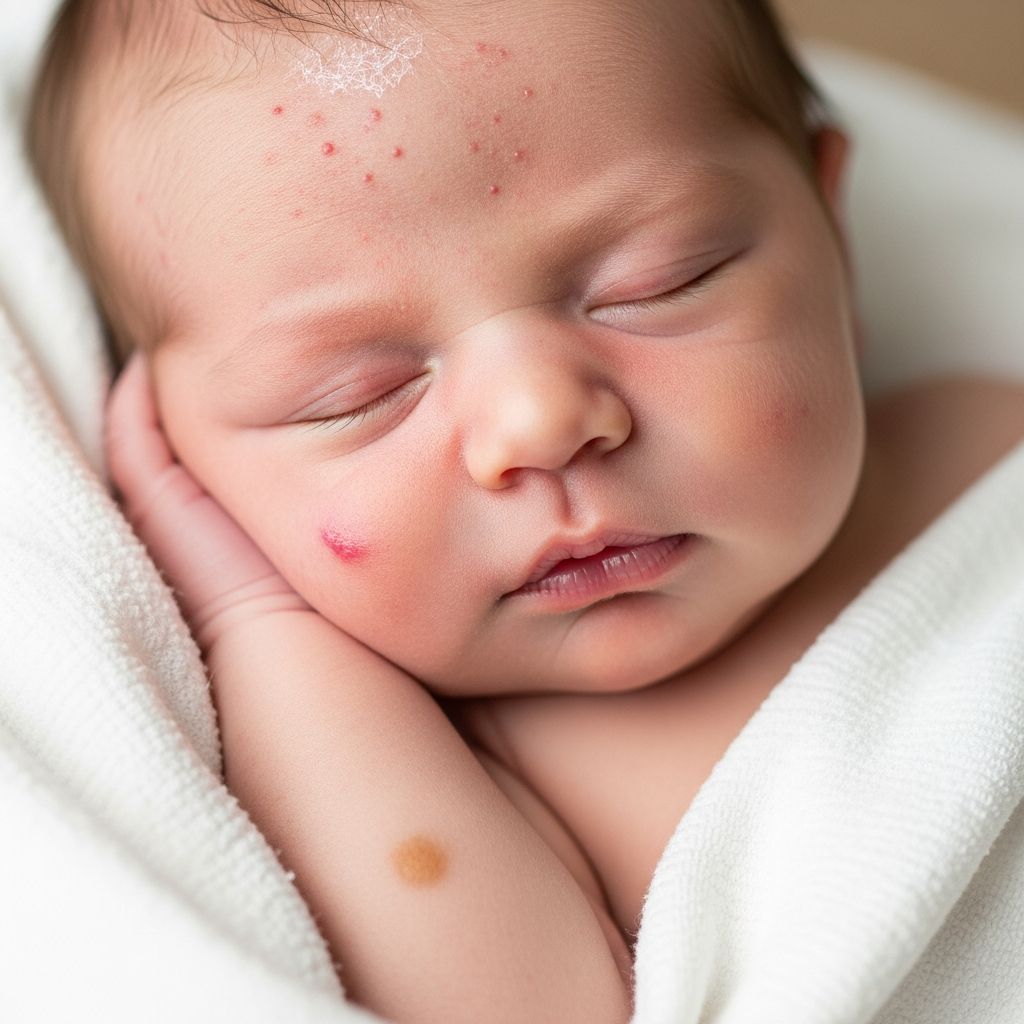
Newborns often develop various skin changes shortly after birth due to their immature skin barrier and adapting physiology. These conditions, ranging from transient rashes to permanent birthmarks, affect up to 70% of infants and are usually benign. Understanding them helps parents differentiate normal variations from issues needing attention.
Why Newborn Skin Behaves Differently
A baby’s skin is thinner, more permeable, and richer in moisture than an adult’s, making it prone to peeling, dryness, and reactions. Hormonal shifts from the mother, exposure to the birth canal, and environmental adjustments trigger many eruptions. Most resolve without intervention within weeks.
Common Transient Rashes
Many rashes appear and fade quickly, signaling the skin’s maturation process.
Erythema Toxicum Neonatorum
This frequent pustular rash impacts 40-70% of term infants over 2,500 grams, emerging on days 2-3. It features yellow-white pustules amid red flares on the trunk, limbs, and face, sparing palms and soles. Eosinophils confirm diagnosis via smear. It self-resolves in days without treatment.
Transient Neonatal Pustular Melanosis
Seen in 5% of Black newborns and under 1% of white infants, this presents at birth with fragile pustules lacking red surrounds. Pustules burst, leaving scaly collars and hyperpigmented spots that fade in 3-4 weeks. Neutrophils in fluid distinguish it; no therapy needed.
Milia and Neonatal Acne
Milia, tiny keratin cysts, dot 40-50% of newborns’ noses and cheeks at birth, resolving spontaneously. Neonatal cephalic pustulosis, or baby acne, involves comedones and pustules from maternal hormones or yeast, clearing by 2-3 months; mild cleansers suffice.
Physiological Skin Changes
Non-rash alterations reflect normal adaptation.
- Desquamation: Peeling on hands, feet, and ankles, especially post-term, is harmless; moisturize if dry.
- Acrocyanosis: Blue hands/feet from cold vasoconstriction, common in first days, unlike central cyanosis.
- Cutis Marmorata: Mottled, net-like redness on cooling, prevalent in preemies, fades with warmth.
- Harlequin Phenomenon: Half-body flushing with midline divide, lasts 20 minutes in first weeks.
Scalp and Diaper Area Conditions
Cradle Cap (Seborrheic Dermatitis)
Greasy, yellow scales on scalp, face, or diaper zone arise from sebum buildup in first month. Unlike atopic dermatitis, it starts early, stays limited, and responds to emollients or antifungals. Gentle brushing and oil aid removal.
| Feature | Seborrheic Dermatitis | Atopic Dermatitis |
|---|---|---|
| Onset | First month | After 3 months |
| Locations | Scalp, face, diaper area | Body-wide, flexures |
| Course | Self-limited | Recurrent |
Diaper Dermatitis
The top infancy skin issue, from irritants like urine and friction, affects covered areas. Prevent with frequent changes, barrier creams; candidal overgrowth shows satellites.
Pigmented and Vascular Birthmarks
These congenital marks vary in persistence.
Mongolian Spots
Blue-gray patches over buttocks/sacrum in most non-white infants, from dermal melanocytes, fade by school age.
Related Stories



Salmon Patches (Stork Bites)
Pink, blanching patches on nape, eyelids, or glutes from dilated capillaries; most nape ones persist.
Other Marks
- Café-au-Lait Spots: Light brown, oval; few are normal, many signal syndromes.
- Hemangiomas: Red, raised vascular growths peaking at 3 months, often involuting.
Rarer or Concerning Conditions
Though uncommon, watch for:
- Miliaria: Heat rash with clear vesicles in sweat ducts, common in clothed areas.
- Collodion Baby: Tight membrane peeling in weeks, linked to ichthyosis.
- Infections: Candidal (satellites), herpes (vesicles/clusters), syphilis (palms/soles).
Home Care Strategies
Maintain skin health with:
- Fragrance-free cleansers, daily baths.
- Moisturizers post-bath.
- Avoid powders, harsh wipes.
- Loose cotton clothing.
For cradle cap: Mineral oil soak, soft brush. Acne: No picking.
When to Contact a Doctor
Seek care for fever, lethargy, spreading rash, blisters, poor feeding, or non-fading marks. Persistent issues warrant dermatology referral.
Frequently Asked Questions (FAQs)
Is erythema toxicum harmful?
No, it’s benign and resolves alone.
Do Mongolian spots indicate bruising?
No, they’re dermal pigment, not trauma.
How to treat cradle cap at home?
Oil, comb gently; shampoos if stubborn.
Can baby acne scar?
Rarely, if uncomplicated.
Are all newborn spots birthmarks?
Many are transient rashes.
Long-Term Skin Health Outlook
Most conditions vanish, fostering resilience. Early care prevents complications like secondary infections. Regular check-ups monitor evolution.
Newborn dermatology blends reassurance with vigilance. Empowered parents spot normals from concerns, ensuring thriving skin.
References
- Newborn Skin: Part I. Common Rashes — American Academy of Family Physicians. 2008-01-01. https://www.aafp.org/pubs/afp/issues/2008/0101/p47.html
- Newborn Skin: Common Skin Problems — National Center for Biotechnology Information (PMC). 2017-09-01. https://pmc.ncbi.nlm.nih.gov/articles/PMC5574071/
- Skin conditions and birthmarks in newborns — AboutKidsHealth.ca (Hospital for Sick Children). Accessed 2026. https://www.aboutkidshealth.ca/skin-conditions-and-birthmarks-in-newborns
- Baby Birthmarks & Rashes — American Academy of Pediatrics (HealthyChildren.org). Accessed 2026. https://www.healthychildren.org/English/ages-stages/baby/bathing-skin-care/Pages/Your-Newborns-Skin-Birthmarks-and-Rashes.aspx
- Skin | Newborn Nursery — Stanford Medicine. Accessed 2026. https://med.stanford.edu/newborns/professional-education/photo-gallery/skin.html
Similar Articles








Read full bio of Sneha Tete