Nicotine Stomatitis: Causes, Symptoms, & Treatment Guide
Understanding nicotine stomatitis: causes, symptoms, diagnosis, and effective treatments for smokers' palate condition.
Synonyms: Smoker’s palate, nicotine palatitis, tobacco pouch keratosis (when related to smokeless tobacco)
What is nicotine stomatitis?
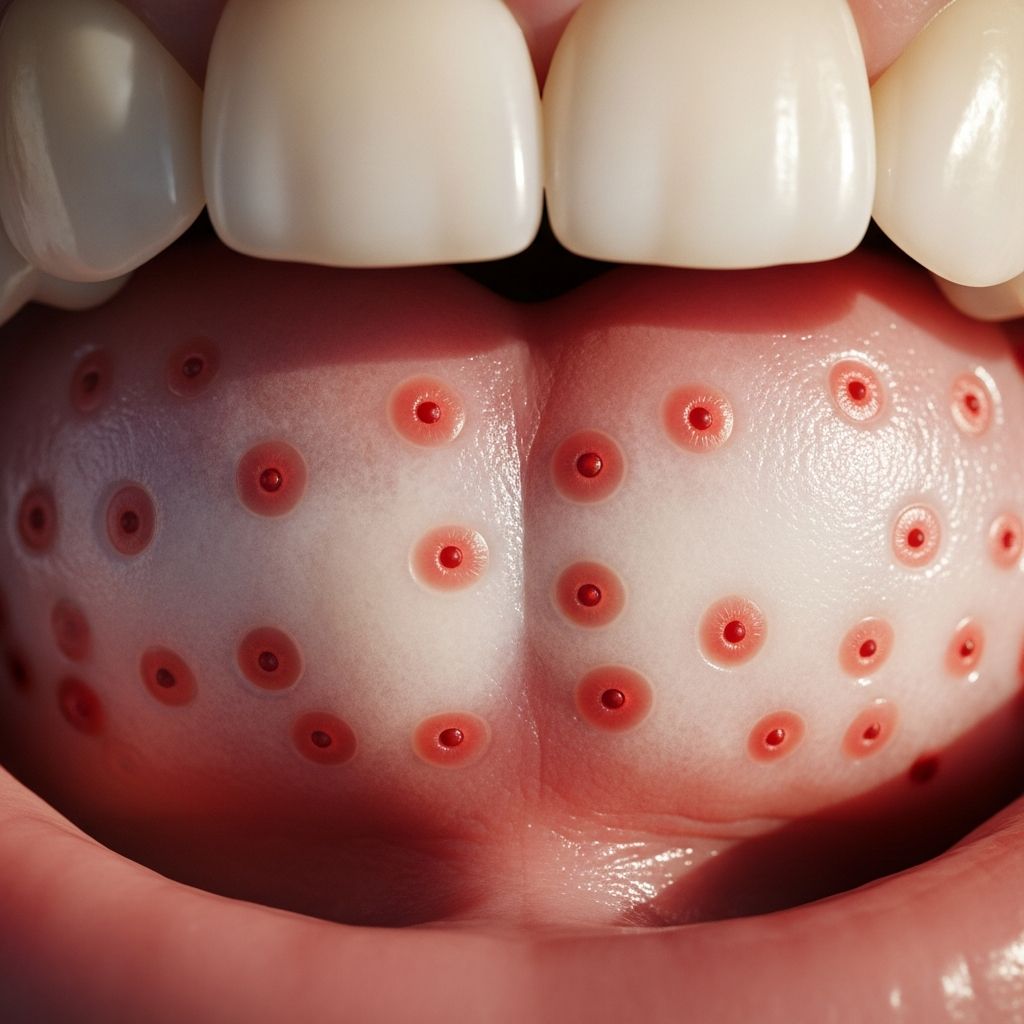
Nicotine stomatitis is a benign condition characterized by inflammation and distinctive changes to the palatal mucosa, primarily affecting the hard palate. It presents as diffuse white or greyish plaques with punctate erythema at the openings of minor salivary glands, giving a cracked porcelain-like appearance. This condition is strongly associated with tobacco smoking, particularly pipe and reverse cigarette smoking, due to direct exposure of the palate to heat and irritants from smoke.
The palate develops epithelial thickening (hyperkeratosis) and inflammation of the underlying salivary glands as a protective response to chronic irritation. While generally painless and asymptomatic, it serves as a marker of heavy tobacco use and warrants attention due to the increased risk of oral cancer in affected individuals.
Who gets nicotine stomatitis?
Nicotine stomatitis predominantly affects chronic tobacco users, with the highest incidence in:
- Pipe smokers, due to the concentrated heat stream directed at the palate.
- Reverse smokers (those who place the lit end of the cigarette inside the mouth), a practice more common in certain cultural contexts.
- Cigar smokers and heavy cigarette smokers to a lesser extent.
- Rarely, individuals consuming extremely hot beverages combined with smoking.
It is more prevalent in older adults with a long history of heavy smoking, though not all smokers develop it. Concomitant factors such as poor oral hygiene, spicy/acidic diets, alcohol consumption, medications, and allergies may contribute.
What causes nicotine stomatitis?
The primary cause is repeated thermal injury and chemical irritation from tobacco smoke directly impacting the palate. Key mechanisms include:
- Heat damage: Temperatures from smoke (up to 60-80°C) inflame minor salivary gland ducts, causing red dots amid white plaques.
- Chemical irritants: Nicotine, tar, and carcinogens induce hyperkeratosis and epithelial dysplasia.
- Multifactorial contributors: Microbial imbalance, reduced immunity, and habits like hot/spicy food intake exacerbate the condition.
Vaping may cause similar but milder changes due to aerosol heat, though evidence is emerging. Unlike other stomatitis, the palate is specifically targeted as it bears the brunt of smoke exposure.
What are the clinical features of nicotine stomatitis?
The condition is often asymptomatic and discovered incidentally during dental exams. Characteristic features include:
- Appearance: Diffuse, symmetrical white/greyish opalescent plaques on the hard palate, resembling cracked porcelain. Central red dots (1-3 mm) represent inflamed salivary duct openings.
- Texture: Roughened, thickened mucosa; may extend to soft palate or adjacent gingiva.
- Symptoms (if present): Dry mouth, bad breath, mild burning on spicy/hot foods, roughness, or ageusia (taste loss).
In severe cases, bacterial superinfection can lead to ulcers, white tongue coating, pain, fever, and trismus. Lesions are typically painless unless complicated.
| Stage | Features |
|---|---|
| Early/Mild | Subtle erythema, minor thickening |
| Moderate | White plaques with red dots |
| Severe | Ulceration, secondary infection |
Related Stories



Diagnosis
Diagnosis is clinical, based on the classic palatal pattern in a tobacco user. No symptoms are usually reported, aiding differentiation from painful conditions like aphthous ulcers.
- Differential diagnosis: Oral leukoplakia, candidiasis, squamous cell carcinoma, thermal burns, discoid lupus erythematosus.
- Investigations: Biopsy if atypical, persistent, or suspicious for dysplasia/cancer (e.g., asymmetry, induration).
Histology shows hyperkeratosis, acanthosis, chronic inflammation, and glandular duct dilation without atypia.
Treatment of nicotine stomatitis
The definitive and only effective treatment is complete smoking cessation. Lesions improve dramatically within 1-2 weeks and resolve fully in 4-6 weeks.
Supportive measures include:
- Avoid irritants: Hot/spicy foods, alcohol.
- Oral hygiene: Chlorhexidine mouthwashes for antisepsis.
- Symptomatic relief: Corticosteroid rinses or gels for severe inflammation; laser therapy to accelerate healing.
- Nutritional support: Vitamins (esp. C, B), iron, calcium.
Persistent areas require biopsy to rule out malignancy. Regular dental surveillance is essential for smokers.
What is the outcome for nicotine stomatitis?
Prognosis is excellent with smoking cessation: full reversal is typical. Continued smoking leads to persistence or progression to dysplasia/oral cancer (elevated risk). Biopsy-proven cases need vigilant follow-up every 3-6 months.
While benign, it indicates significant tobacco exposure, prompting lifestyle intervention.
Prevention
- Primary: Quit all tobacco products; use nicotine replacement therapy under guidance.
- Secondary: Regular dental check-ups, hydration, humidifiers for dry mouth.
- Avoid risk modifiers: Poor hygiene, irritant diets.
Frequently Asked Questions
Q: Is nicotine stomatitis cancerous?
A: No, it is benign, but indicates high cancer risk; biopsy suspicious areas.
Q: How long does it take to reverse after quitting smoking?
A: Improvements in 1-2 weeks; full resolution in 4-6 weeks.
Q: Can vaping cause nicotine stomatitis?
A: Possibly milder forms due to heat; evidence limited but cessation advised.
Q: What does smoker’s palate look like?
A: White cracked plaques with red dots on the hard palate.
Q: Is treatment needed if asymptomatic?
A: Smoking cessation is essential; monitor for changes.
Related topics
- Leukoplakia
- Oral cancer
- Smokeless tobacco keratosis
- Geographic tongue
- Aphthous ulcers
References
- Nicotine stomatitis: causes, symptoms and treatments — KIN. 2023. https://www.kin.es/en/patologias/estomatitis-por-nicotina/
- Nicotine Stomatitis: Symptoms, Causes, and Treatment Options — GetLabTest. 2024. https://www.getlabtest.com/news/post/nicotine-stomatitis-causes-symptoms-treatments
- Nicotine stomatitis — DermNet NZ. 2024-01-15. https://dermnetnz.org/topics/nicotine-stomatitis
- Nicotine stomatitis (smoker’s leukoplakia) — Prizma Dental Clinic. 2023. https://prizma.ua/en/nicotine-stomatitis-smokers-leukoplakia/
- Nicotine Stomatitis — Altamont General Dentistry. 2024. https://altamontgeneraldentistry.com/nicotine-stomatitis/
- Smoker’s Palate: An Often Misunderstood Benign Lesion of the Oral Cavity — PMC (NCBI). 2023-12-01. https://pmc.ncbi.nlm.nih.gov/articles/PMC10724502/
Similar Articles








Read full bio of medha deb