Night Driving Glasses: Myth or Safety Aid?
Uncover the science behind yellow-tinted night driving glasses and discover proven strategies for safer nighttime road vision.
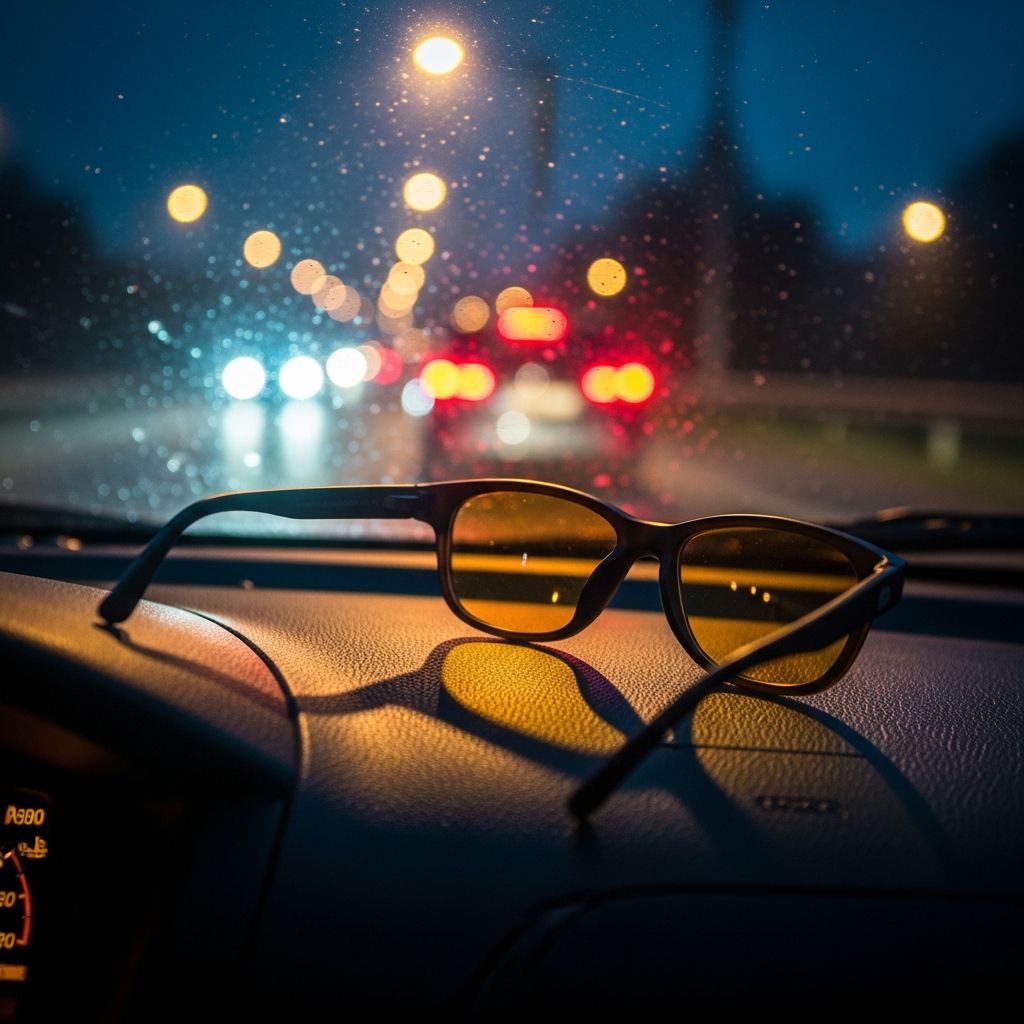
Marketed as a solution to the blinding glare of oncoming headlights, night driving glasses with yellow or amber tints promise clearer vision and safer roads after dark. However, rigorous scientific scrutiny reveals a more nuanced picture: these lenses often fail to deliver on their claims and may even compromise safety.
The Hidden Challenges of Nighttime Driving
Driving in darkness presents unique visual hurdles that go beyond simple low light. Oncoming headlights create intense glare, temporarily impairing vision and slowing reaction times to hazards like pedestrians. Contrast sensitivity drops, making it harder to distinguish road edges, signs, or obstacles from the surrounding black. Eye fatigue builds quickly from constant refocusing, increasing accident risk.
- Glare from LEDs: Modern LED headlights are brighter and more focused, exacerbating temporary blindness known as “headlight glare” (HLG).
- Reduced Peripheral Vision: Night limits side awareness, critical for merging or spotting cyclists.
- Age-Related Factors: Older drivers experience more pronounced glare sensitivity due to lens yellowing and pupil shrinkage.
These issues contribute to disproportionate nighttime crash rates, with data showing higher pedestrian fatalities after sunset.
How Night Driving Glasses Claim to Work
Yellow-tinted lenses purportedly filter blue light from headlights, boosting contrast and cutting glare. Proponents argue this sharpens focus on the road while easing eye strain. Some products add marketing flair, claiming enhanced object detection and acuity. Yet, the optics tell a different story: tints reduce overall light transmission by 10-20%, darkening the scene in already dim conditions.
| Claim | Mechanism | Potential Drawback |
|---|---|---|
| Glare Reduction | Blocks short-wavelength blue light | Diminishes total luminance |
| Contrast Boost | Alters color balance | May distort traffic signals |
| Comfort Increase | Less harsh light scatter | Placebo-driven perception |
Scientific Evidence Debunking the Hype
Peer-reviewed studies consistently challenge the efficacy of yellow lenses. A cohort study at Harvard’s Schepens Eye Institute tested 22 participants in simulated night drives, comparing yellow-tinted glasses to clear ones under glare conditions. Response times to detect pedestrians showed no improvement with tints; glare’s negative impact persisted unchanged.
The National Highway Traffic Safety Administration (NHTSA) echoed this, finding no visual performance gains over clear lenses and stressing maintenance like clean windshields instead. University of Toronto research confirmed minimal benefits, attributing user satisfaction to subjective feelings rather than objective metrics.
“Yellow-lens night-driving glasses did not appear to improve pedestrian detection at night or reduce the negative association between headlight glare and pedestrian detection performance.”
Potential harms include overconfidence: drivers feeling safer may take risks, while reduced light intake hinders hazard spotting. For those with conditions like cataracts, tints exacerbate scotopic vision loss.
Promising Alternatives: What Actually Helps
Rather than gimmicky tints, evidence supports practical upgrades. Anti-reflective (AR) coatings on clear lenses minimize back-glare from dashboard lights and fronts from headlights, proven effective in National Library of Medicine studies.
Neodymium oxide-doped glass shows promise in lab tests, improving letter readability under glare and speeding after-image recovery without dimming vision. However, it’s not yet standard in consumer glasses.
Related Stories



- Polycarbonate Lenses with AR: Shatter-resistant and glare-minimizing.
- Progressive Lenses: Optimize for distance viewing without bifocal lines.
- Photorefractive Keratectomy (PRK): Surgical option for high-glare sensitivity.
Vehicle and Behavioral Adjustments for Safety
Glasses alone won’t suffice; integrate these habits:
- Clean headlights, mirrors, and windshield daily to cut scatter.
- Align headlights properly per manufacturer specs.
- Dim interior lights and use night mode on dashboards.
- Increase following distance by 2-3 seconds.
- Avoid staring directly at oncoming lights; glance to the road’s edge.
Regular eye exams detect issues like dry eye or early macular degeneration that worsen night vision.
Who Might Benefit from Specialized Lenses?
Not everyone dismisses night glasses outright. Drivers with mild astigmatism report comfort from high-index materials. Individual variability plays a role: glare hypersensitive users may perceive gains, though placebo effects loom large. Consult an optometrist before purchase; they can simulate tints during fitting.
For pilots or occupational drivers, aviation-grade AR coatings outperform consumer tints.
Common Myths About Night Vision Aids
| Myth | Fact |
|---|---|
| Yellow tints sharpen everything | They filter light but reduce total input |
| They’re safer than contacts | Neither inherently; fit matters more |
| All glare is blue light | Scatter from all wavelengths contributes |
Frequently Asked Questions (FAQs)
Do night driving glasses reduce accidents?
No strong evidence links them to fewer crashes; studies prioritize vehicle prep and exams.
Are they legal everywhere?
Yes, but not recommended by vision authorities like AAO equivalents.
What if I have 20/20 vision?
Perfect daytime acuity doesn’t guarantee night prowess; test under low light.
Can kids use them?
Not advised; developing eyes need full spectrum exposure.
Alternatives for glasses wearers?
AR-coated prescription lenses or contacts with high oxygen permeability.
Long-Term Vision Health for Drivers
Preventive care trumps gadgets. Antioxidant-rich diets (leafy greens, fish) combat age-related decline. UV-protective sunglasses daytime preserve retinal health. Monitor for halos or floaters signaling issues.
Tech evolves: adaptive headlights and HUDs may soon outpace lens tweaks. Until then, evidence guides us away from yellow myths toward proven paths.
References
- Comparison of Pedestrian Detection With and Without Yellow-Lens Glasses During Nighttime Driving With Oncoming Headlight Glare — JAMA Ophthalmology (PMC). 2019-07-03. https://pmc.ncbi.nlm.nih.gov/articles/PMC6681548/
- The Dangers of Yellow Night Driving Glasses — Laramy-K Optical. 2023. https://www.laramyk.com/resources/education/dispelling-the-dangers-of-night-driving-glasses/
- How Effective Are Night Driving Glasses? — Mega Vision Center. 2024. https://www.megavisionbrooklyn.com/how-effective-are-night-driving-glasses/
- The Truth About Night Driving Glasses — Fond Vue. 2022. https://www.fondvue.com/blogs/posts/the-truth-about-night-driving-glasses
- NHTSA Research on Night Driving — National Highway Traffic Safety Administration (via secondary). 2020. https://www.nhtsa.gov/
- Anti-Reflective Coatings Study — National Library of Medicine (PubMed). 2021. https://pubmed.ncbi.nlm.nih.gov/
Similar Articles








Read full bio of medha deb