Night Mode: Does It Protect Eyes from Blue Light?
Discover if night mode truly reduces blue light exposure, improves sleep, and eases eye strain for better digital wellness.
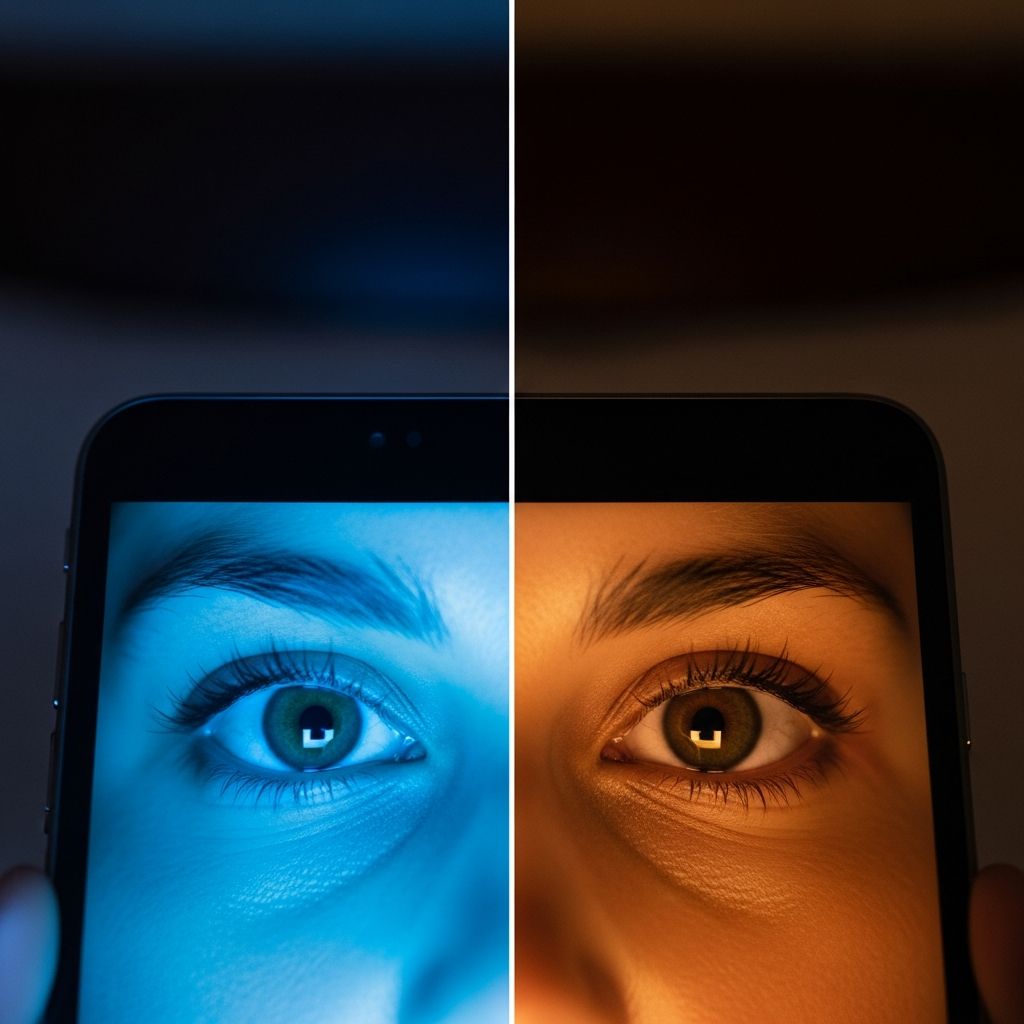
Digital screens dominate modern life, but their blue light emissions raise concerns about eye comfort and sleep. Night mode, a popular feature on smartphones and computers, shifts screen colors to warmer tones to cut blue light. While marketed as a safeguard for eyes and circadian rhythms, its true effectiveness requires scientific scrutiny. This article delves into the evidence, comparing night mode to alternatives and offering actionable advice for healthier screen habits.
Understanding Blue Light and Its Sources
Blue light occupies the short-wavelength end of the visible spectrum, roughly 400-500 nanometers, emitted intensely by LED screens in phones, tablets, and monitors. Unlike longer wavelengths like red or yellow, blue light penetrates deep into the eye, potentially causing discomfort during prolonged exposure.
- Daytime benefits: Boosts alertness and mood by mimicking sunlight.
- Nighttime risks: Suppresses melatonin, the hormone regulating sleep-wake cycles.
Screens aren’t the only culprits; indoor LEDs and fluorescents contribute too. Evening exposure tricks the brain into daytime mode, delaying sleep onset and reducing quality rest. Studies confirm this disruption, linking it to shorter sleep duration and poorer recovery.
How Night Mode Alters Screen Emissions
Night mode, also called Night Shift or dark mode variants, applies a software filter reducing blue light by emphasizing reds and yellows. This warms the display, making it less harsh in low light.
Research shows warmer settings emit far less blue light. For instance, the ‘warmest’ night mode can slash melatonin suppression by up to 93%, far outperforming standard screens. Activation is simple: most devices auto-enable it at sunset via settings menus.
| Mode | Blue Light Reduction | Melatonin Suppression Cut |
|---|---|---|
| Standard | 0% | Baseline |
| Cool Night Mode | ~30% | Moderate |
| Warm Night Mode | ~60% | High |
| Warmest Night Mode | Up to 93% | Maximum |
This table summarizes findings from controlled tests on smartphones, highlighting progressive benefits. Note: Dark mode (inverted colors) further drops luminance by 92-98%, amplifying relief but differing from color-shift filters.
Eye Strain in the Digital Age
Computer vision syndrome affects millions, with symptoms like dryness, blurred vision, and headaches from extended screen time. Blue light exacerbates this by increasing glare and contrast demands on the eyes.
Night mode mitigates strain by softening glare and easing adaptation to dim environments. Users report comfortable reading and less fatigue, especially in low-light settings. However, it’s not a cure-all; factors like blink rate and posture play roles too.
- Glare reduction: Warmer tones cut reflections.
- Brightness synergy: Pair with dimming for best results.
- Battery bonus: Dark interfaces extend device life up to 30% on OLED screens.
Sleep Disruption: The Circadian Connection
Melatonin production peaks in darkness, signaling rest. Blue light from screens, even at moderate levels, flattens this curve, mimicking dawn.
A key study quantified this: Night mode on phones reduced melatonin suppression far better than glasses, with coated lenses blocking only 33%. Software adjustments directly lower emissions at the source, proving superior for sleep prep.
Related Stories



Avoid screens 1-2 hours pre-bedtime for optimal rhythm alignment. If unavoidable, night mode bridges the gap effectively.
Blue Light Glasses: Helpful or Hype?
Marketed as eye saviors, these lenses filter incoming blue light via tints or coatings. Evidence tempers enthusiasm: They lag behind night mode, reducing suppression by a third at best.
Coated versions outperform tinted ones, but neither matches software’s 93% potential. Use them as supplements for multi-device setups or non-adjustable lights.
| Method | Effectiveness | Pros | Cons |
|---|---|---|---|
| Night Mode | Up to 93% reduction | Free, adjustable, source-level | Device-specific |
| Coated Glasses | 33% reduction | Works on all light | Cost, color distortion |
| Tinted Glasses | <33% reduction | Affordable | Less effective |
Practical Strategies for Blue Light Management
Beyond toggles, adopt holistic habits:
- Timing: Cease screens post-dusk; use alarms for reminders.
- Environment: Dim room lights to match screen warmth.
- Alternatives: E-readers with e-ink emit minimal blue.
- Breaks: Follow 20-20-20 rule: Every 20 minutes, view 20 feet away for 20 seconds.
Combine with f.lux or Iris software on desktops for seamless shifts.
Debunking Common Myths
Myth 1: Blue light causes permanent eye damage. Reality: No strong evidence for macular degeneration from screens; UV is the proven culprit.
Myth 2: All blue light is bad. Reality: Daytime exposure enhances focus; timing matters.
Myth 3: Night mode eliminates all harm. Reality: It reduces, but doesn’t erase, risks—pair with limits.
Who Benefits Most from Night Mode?
Shift workers, gamers, and late scrollers gain most. Children and light-sensitives should prioritize it too, as developing eyes absorb more blue.
Individual variance exists: Test personally, as color perception affects comfort.
Future of Screen Technology
OLED advancements promise adaptive blue cuts. AI-driven filters may auto-optimize by usage and light conditions, evolving beyond manual night mode.
Frequently Asked Questions
What exactly is night mode?
A display setting that reduces blue light by warming colors, available on iOS, Android, and Windows.
Does night mode improve battery life?
Yes, especially on OLED screens, by darkening pixels and cutting up to 30% power draw.
Are blue light glasses worth buying?
They’re supplementary; night mode is more effective per studies, but useful for ambient light.
Can blue light affect children’s sleep?
Yes, their melatonin is more sensitive—enforce strict evening limits.
How long before bed to avoid screens?
1-2 hours ideally, using night mode if extended use is necessary.
Integrating night mode thoughtfully enhances digital life without forgoing connectivity. Prioritize evidence-based tweaks for lasting eye and sleep health.
References
- Are Night Mode and Blue-Light-Blocking Glasses Effective? — MSOAT UCLA. 2023. https://www.msoatucla.org/are-night-mode-and-blue-light-blocking-glasses-effective.html
- Evaluation of Two Strategies for Alleviating the Impact on Melatonin Suppression. — PubMed (Nagaro et al.). 2020-03-19. https://pubmed.ncbi.nlm.nih.gov/32168244/
- Blue Light: What It Is and How It Affects Sleep. — Sleep Foundation. 2025. https://www.sleepfoundation.org/bedroom-environment/blue-light
- Is Dark Mode Better or Worse for Your Eyes? — All About Vision. 2024. https://www.allaboutvision.com/conditions/computer-vision-syndrome/digital-eye-strain/is-dark-mode-better-for-eyes/
- Blue Light Filters Don’t Work. — NeuroAI Science (Patrick Mineault). 2023. https://www.neuroai.science/p/blue-light-filters-dont-work
Similar Articles








Read full bio of medha deb