Nikolsky’s Sign Explained: Diagnosis, Variants & Management
Understanding Nikolsky's sign: A key diagnostic tool for blistering skin disorders like pemphigus and scalded skin syndrome.
Author: Dermatological Research Team
Peer reviewed by: Dr. Salonee Shah, Northwick Park Hospital, London, UK (2025)
Reviewing dermatologist: Dr. Ian Coulson
Edited by: DermNet Content Department
What is Nikolsky’s sign?
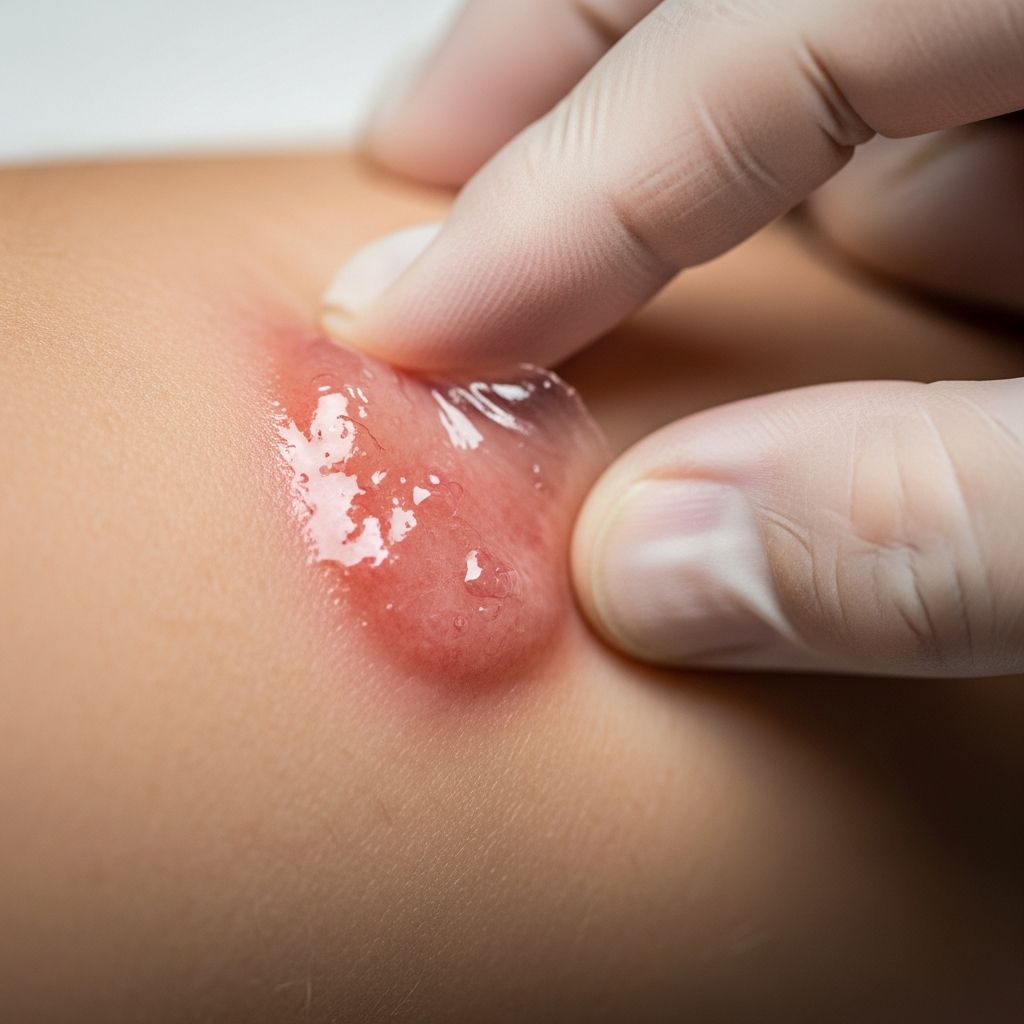
Nikolsky’s sign is a clinical dermatological finding where gentle rubbing or shearing pressure on the skin surface causes the superficial epidermis to separate from the underlying layers, resulting in exfoliation or erosion. This sign indicates a weakened adhesion within the epidermis, specifically at the epidermal-epidermal junctions such as desmosomes. Originally described in pemphigus foliaceus, it reveals a plane of cleavage where the skin layers lose coherence, even in apparently normal areas between lesions.
The test is performed by applying tangential pressure, such as rubbing with a finger, pencil eraser, or sliding a glass slide over perilesional skin. A positive result shows the epidermis sloughing off, exposing a moist or dry base. This simple bedside test is invaluable in diagnosing intraepidermal blistering disorders.
History
Named after Pyotr Vasilyevich Nikolskiy (1858–1940), a Russian dermatologist born in Usman, Russia, who became Professor of Dermatology at Warsaw University and later headed the Department of Dermatology and Venereology at North-Caucasian University in Rostov-on-Don. In his 1896 doctoral thesis, Nikolskiy described the sign in patients with pemphigus foliaceus, noting that rubbing the skin revealed a ‘weakening relationship and contact among its layers… on all surfaces even in places between lesions on the seemingly unaffected skin.’ He emphasized its specificity to pemphigus foliaceus, distinguishing it from pemphigus vulgaris due to the suprabasal split level unique to foliaceus.
Nikolskiy’s work laid the foundation for understanding acantholysis, the loss of keratinocyte cohesion, as a hallmark of certain autoimmune blistering diseases.
Who gets Nikolsky’s sign? (Direct and indirect Nikolsky signs)
Nikolsky’s sign is primarily associated with conditions causing intraepidermal acantholysis or cleavage.
Direct Nikolsky sign
occurs when pressure on healthy or perilesional skin induces immediate epidermal detachment.Indirect Nikolsky sign
(also called Nikolsky’s phenomenon) involves extension of an existing blister upon pressure at its margin.- Classic positive Nikolsky’s sign: Pemphigus foliaceus (superficial cleavage in granular layer).
- Positive in: Pemphigus vulgaris (suprabasal), staphylococcal scalded skin syndrome (SSSS), Stevens-Johnson syndrome (SJS)/toxic epidermal necrolysis (TEN).
- Negative in: Bullous pemphigoid, mucous membrane pemphigoid, epidermolysis bullosa (subepidermal blisters).
It helps differentiate intraepidermal (positive) from subepidermal (negative) blistering.
Clinical variants
Several variants exist, reflecting different cleavage planes and appearances:
- Wet Nikolsky sign: Reveals a moist, glistening eroded base after pressure; seen in active pemphigus or SSSS.
- Dry Nikolsky sign: Produces a dry, parchment-like base; less common, observed in chronic or resolving lesions.
- False (pseudo) Nikolsky sign: Positive in subepidermal disorders like bullous pemphigoid; elicited by pulling the blister roof, causing limited extension without widespread acantholysis.
- Nikolsky’s phenomenon: Superficial epidermis shifts over deeper layers without immediate erosion; blisters form delayed.
| Variant | Description | Associated Conditions |
|---|---|---|
| Wet | Moist eroded base | Pemphigus, SSSS |
| Dry | Dry base | Resolving pemphigus |
| False | Limited subepidermal extension | Bullous pemphigoid |
| Phenomenon | Delayed blistering | Intraepidermal disorders |
Related Stories



How is the Nikolsky sign elicited?
The test is non-invasive and quick:
- Identify perilesional, lesional, or normal-appearing skin.
- Apply gentle tangential shearing force using a finger, pencil eraser, or glass slide.
- Rub or roll in a circular motion for 10-20 seconds.
- Observe for epidermal detachment: positive if skin peels, revealing pink/moist base.
Cautions: Avoid in fragile skin to prevent iatrogenic worsening; interpret with histology and immunofluorescence for confirmation.
Differential diagnosis
Intraepidermal (positive Nikolsky):
- Pemphigus vulgaris/foliaceus: Autoimmune; anti-desmoglein antibodies cause acantholysis.
- SSSS: Toxin-mediated (*S. aureus* exfoliative toxin cleaves desmoglein 1); mainly children.
- SJS/TEN: Drug-induced; full-thickness epidermal necrosis.
Subepidermal (negative Nikolsky):
- Bullous pemphigoid, dermatitis herpetiformis, porphyria cutanea tarda.
Histology confirms: suprabasal acantholysis in pemphigus vs. subepidermal in pemphigoid.
Pathophysiology
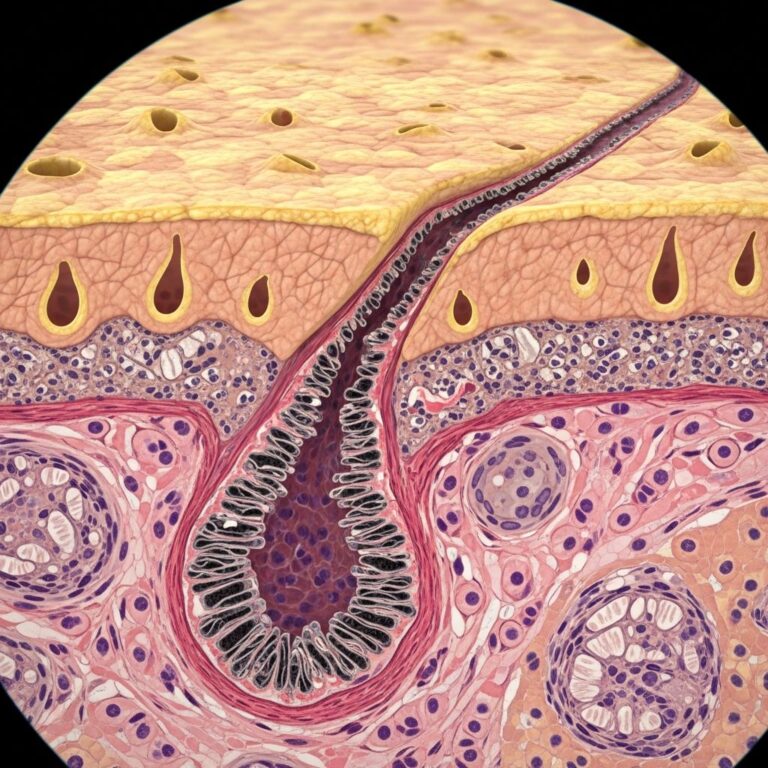
Central to Nikolsky’s sign is acantholysis—loss of desmosomal attachments between keratinocytes due to autoantibodies (pemphigus) or toxins (SSSS). In pemphigus, IgG against desmogleins 1/3 disrupts cell adhesion, creating intraepidermal cleavage even in uninvolved skin. SSSS toxins specifically target desmoglein 1 in the superficial epidermis.
This fragility extends beyond lesions, explaining perilesional positivity.
Investigations
- Tzanck smear: Acantholytic cells.
- Biopsy: Suprabasal cleft, tombstoning in pemphigus.
- Direct immunofluorescence (DIF): Intercellular IgG/C3 in pemphigus.
- Serology: Anti-desmoglein ELISA.
- Culture: For SSSS.
Management
Treatment targets the underlying cause:
- Pemphigus: High-dose corticosteroids, rituximab, immunosuppressants.
- SSSS: IV antibiotics (anti-staphylococcal), supportive care.
- SJS/TEN: Withdraw culprit drug, IVIG, cyclosporine, wound care in burn unit.
Supportive: Barrier nursing, pain control, nutrition.
Frequently Asked Questions
What causes a positive Nikolsky’s sign?
Acantholysis from autoantibodies or bacterial toxins weakening desmosomes.
Is Nikolsky’s sign painful?
Often tender due to exposed dermis; patients report pain on rubbing.
Can Nikolsky’s sign appear in children?
Yes, prominently in SSSS.
How reliable is Nikolsky’s sign for diagnosis?
Supportive but not pathognomonic alone; combine with biopsy/DIF.
Does it resolve with treatment?
Yes, as disease activity decreases.
References
- Nikolsky’s sign – Wikipedia — Wikipedia. 2024. https://en.wikipedia.org/wiki/Nikolsky’s_sign
- Nikolsky sign — ADAM Health. 2024-02-15. https://medlineplus.gov/ency/imagepages/17280.htm
- Nikolsky’s sign: A pathognomic boon – PMC – NIH — National Library of Medicine. 2020. https://pmc.ncbi.nlm.nih.gov/articles/PMC7114071/
- Nikolsky sign: MedlinePlus Medical Encyclopedia Image — MedlinePlus. 2024-02-15. https://medlineplus.gov/ency/imagepages/17280.htm
- Nikolsky’s Sign – DermNet — DermNet NZ. 2025. https://dermnetnz.org/topics/nikolskys-sign
- Nikolsky sign | Health Encyclopedia — Florida Health Finder. 2024. https://quality.healthfinder.fl.gov/health-encyclopedia/HIE/1/003285
Similar Articles








Read full bio of Sneha Tete