Nimodipine: Essential Guide To Uses, Dosage, And Side Effects
Comprehensive guide to nimodipine: its role in preventing brain damage after hemorrhage, usage, effects, and safety considerations for better patient outcomes.
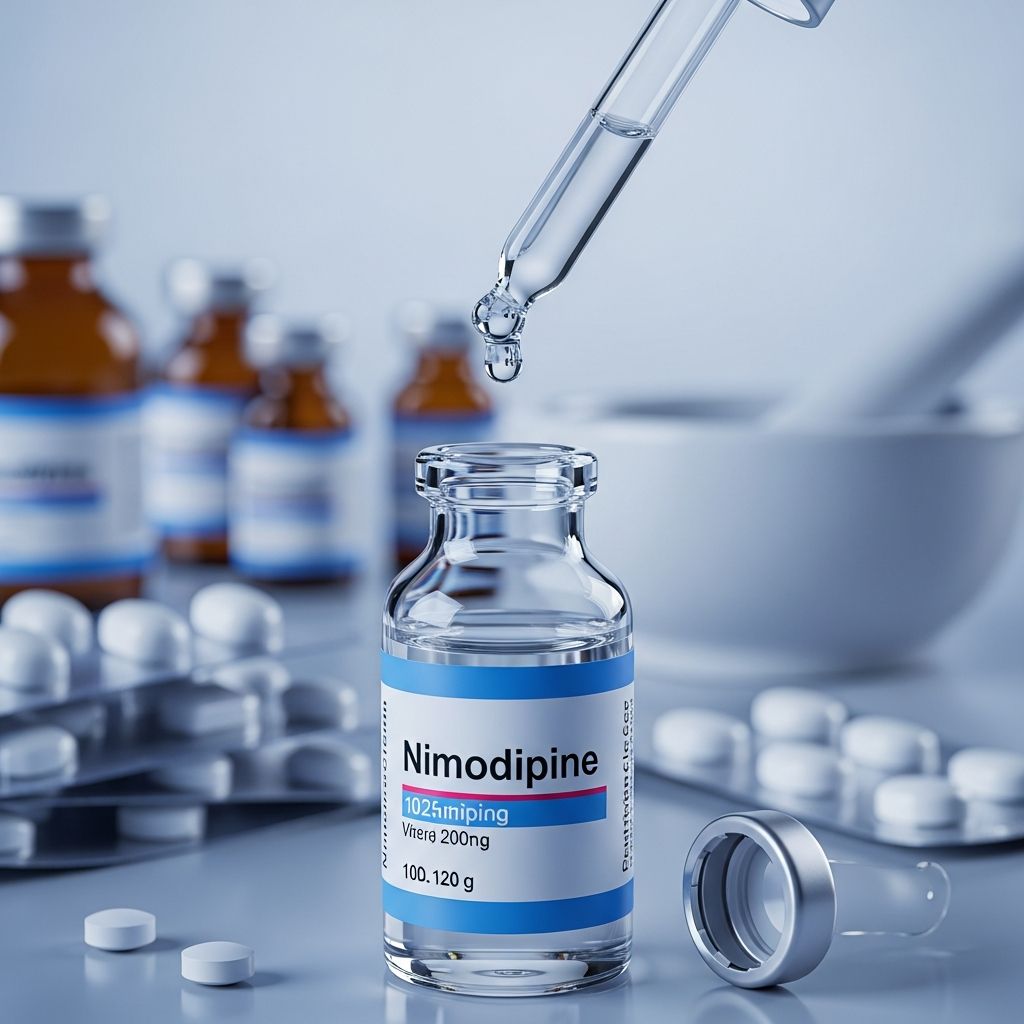
Nimodipine stands out as a specialized calcium channel blocker primarily employed to safeguard brain function following severe hemorrhagic events, particularly subarachnoid hemorrhage from ruptured aneurysms. By targeting cerebral blood vessels, it mitigates the risk of debilitating vasospasm and ischemic damage, offering a vital intervention in critical neurosurgical care.
Understanding Nimodipine’s Core Role in Neurology
Developed initially for broader hypertensive applications, nimodipine’s FDA approval in 1988 pivoted its primary indication toward cerebral vasospasm prevention after subarachnoid hemorrhage (SAH). This condition arises from bleeding around the brain due to aneurysm rupture, leading to potential secondary injuries like delayed cerebral ischemia (DCI). Clinical evidence underscores its ability to enhance neurological recovery by curbing vasospasm incidence and severity, irrespective of initial patient status.
The drug’s unique profile stems from its lipophilic nature, enabling efficient crossing of the blood-brain barrier. This facilitates selective action on cerebral vasculature, promoting dilation of small resistance vessels and bolstering collateral circulation. Unlike general calcium channel blockers, nimodipine exerts pronounced effects on brain arteries over peripheral ones, making it indispensable in SAH management protocols.
How Nimodipine Functions at the Cellular Level
Nimodipine operates as a second-generation 1,4-dihydropyridine derivative, binding to L-type voltage-gated calcium channels on vascular smooth muscle cells. During depolarization, these channels typically permit calcium influx, triggering contraction and vasoconstriction. Nimodipine stabilizes channels in an inactive state, inhibiting this influx and thereby relaxing vessels.
Beyond vasodilation, proposed neuroprotective mechanisms include averting calcium overload in ischemic neurons, augmenting fibrinolytic activity, and reducing angiographic vasospasm. Animal studies highlight its superior impact on cerebral versus peripheral arteries, attributed to high lipophilicity. In SAH contexts, this translates to diminished DCI risk, lower infarction rates, and improved functional outcomes, as evidenced by reduced mortality and vegetative states.
Primary Clinical Applications and Evidence
The cornerstone use of nimodipine is as an adjunct in SAH patients to improve neurologic outcomes post-ruptured intracranial aneurysms. Guidelines recommend its administration even in neurologically intact patients to preempt vasospasm-induced deficits. Landmark trials affirm that oral dosing at 60 mg every four hours diminishes cerebral infarctions and yields better recovery metrics.
- Approved Indication: Prevention/treatment of cerebral vasospasm post-SAH, enhancing outcomes via reduced ischemic deficits.
- Key Benefits: Lowers DCI and CVS incidence; supports long-term functional status despite initial hemorrhage severity.
Off-label explorations include adjunctive therapy in diffuse brain injury with hyperbaric oxygen, cranial nerve recovery, migraine prophylaxis, peripheral vertigo/Ménière’s disease, and delirium prevention in elderly surgical patients. However, efficacy in acute ischemic stroke remains unproven, with hemodynamic drawbacks potentially offsetting neuroprotection.
Dosage Protocols and Administration Best Practices
Standard regimen initiates within 96 hours of SAH onset: 60 mg orally every four hours for 21 consecutive days. If oral intake is infeasible, nasogastric or intravenous alternatives equate efficacy in vasospasm prevention. Dose adjustments are crucial for hepatic impairment or hypotension risks; reduced dosing correlates with heightened DCI/CVS in multivariable analyses.
Related Stories



| Patient Condition | Recommended Dose | Duration | Notes |
|---|---|---|---|
| Standard SAH | 60 mg PO q4h | 21 days | Initiate ASAP post-ictus |
| Hepatic Dysfunction | Reduce to 30 mg q4h | Monitor closely | Avoid abrupt cessation |
| NG/IV Alternative | Equivalent to 60 mg PO | 21 days | Bioequivalent efficacy |
Protect capsules from light; administer intact without crushing to preserve bioavailability. Continuous monitoring for blood pressure drops is essential, with potential dose titration to avert hypotension.
Potential Adverse Reactions and Management
Common side effects encompass headache, dizziness, flushing, nausea, diarrhea, peripheral edema, rash, and palpitations, reflecting systemic calcium channel blockade. Less frequent but serious issues include hypotension, tachycardia, thrombocytopenia, and rare ileus or bradycardia.
- Frequent (>10%): Headache, low BP, nausea.
- Moderate (1-10%): Edema, vertigo, rash.
- Rare/Serious: Allergic reactions, hepatic enzyme elevations, colonic pseudo-obstruction.
Manage by dose reduction or temporary halt; most resolve post-discontinuation. Intraventricular formulations carry risks like arterial narrowing months later.
Critical Drug Interactions and Precautions
Nimodipine amplifies hypotensive effects of antihypertensives (e.g., beta-blockers, ACE inhibitors, PDE5 inhibitors), necessitating dose adjustments. CYP3A4 inhibitors (e.g., certain antifungals, protease inhibitors) elevate levels, while inducers diminish efficacy. Avoid grapefruit juice due to CYP inhibition.
Contraindications include hypersensitivity, severe hypotension, or recent SAH >14 days. Use cautiously in hepatic disease, pregnancy (Category C), or lactation. Elderly patients may require lower starts due to heightened sensitivity.
Special Populations: Adjustments and Monitoring
In pediatrics, data is limited; not routinely recommended. For geriatrics, monitor for amplified side effects like orthostasis. Renal impairment demands no adjustment, but hepatic cases require halving doses. Pregnancy safety is unestablished; weigh benefits against fetal risks.
Therapeutic monitoring involves serial neurological exams, BP tracking, and imaging for vasospasm. Liver function tests aid in prolonged use.
Patient Guidance for Optimal Therapy
Adhere strictly to schedule; do not chew or open capsules. Rise slowly to counter dizziness. Report bleeding, swelling, or severe headache promptly. Alcohol may exacerbate hypotension; maintain hydration.
Recent Research Insights and Future Directions
Contemporary studies reaffirm nimodipine’s primacy in SAH, with fixed-dose oral regimens cutting mortality/infarction. Intraventricular microparticles showed no superiority over oral standards in Phase III trials. Ongoing trials probe optimal dosing amid evolving SAH care, including its adjunctive neuroprotective potential.
Frequently Asked Questions (FAQs)
What is nimodipine primarily used for?
It prevents neurological deficits from vasospasm after subarachnoid hemorrhage.
Are there alternatives to oral nimodipine?
Yes, IV or NG routes offer equivalent vasospasm protection.
Can nimodipine cause low blood pressure?
Yes, hypotension is common; monitor and adjust doses accordingly.
Is nimodipine safe during pregnancy?
Limited data; use only if benefits outweigh risks (Category C).
How long should nimodipine be taken after SAH?
Typically 21 days, starting within 96 hours.
References
- Nimodipine – StatPearls – NCBI Bookshelf — National Center for Biotechnology Information. 2023-08-14. https://www.ncbi.nlm.nih.gov/books/NBK534870/
- Nimodipine: Uses, Interactions, Mechanism of Action | DrugBank — DrugBank Online. 2024-01-15. https://go.drugbank.com/drugs/DB00393
- Nimodipine drug information | CUH — Cambridge University Hospitals NHS Foundation Trust. 2023-05-20. https://www.cuh.nhs.uk/patient-information/nimodipine-drug-information/
- Nimodipine: MedlinePlus Drug Information — MedlinePlus. 2024-02-01. https://medlineplus.gov/druginfo/meds/a689010.html
- Nimodipine capsules – Cleveland Clinic — Cleveland Clinic. 2023-11-10. https://my.clevelandclinic.org/health/drugs/20916-nimodipine-capsules
Similar Articles








Read full bio of Sneha Tete