Nimodipine Tablets: Uses, Dosage, and Side Effects
Complete guide to nimodipine tablets: understand how this calcium-channel blocker prevents complications after subarachnoid hemorrhage.
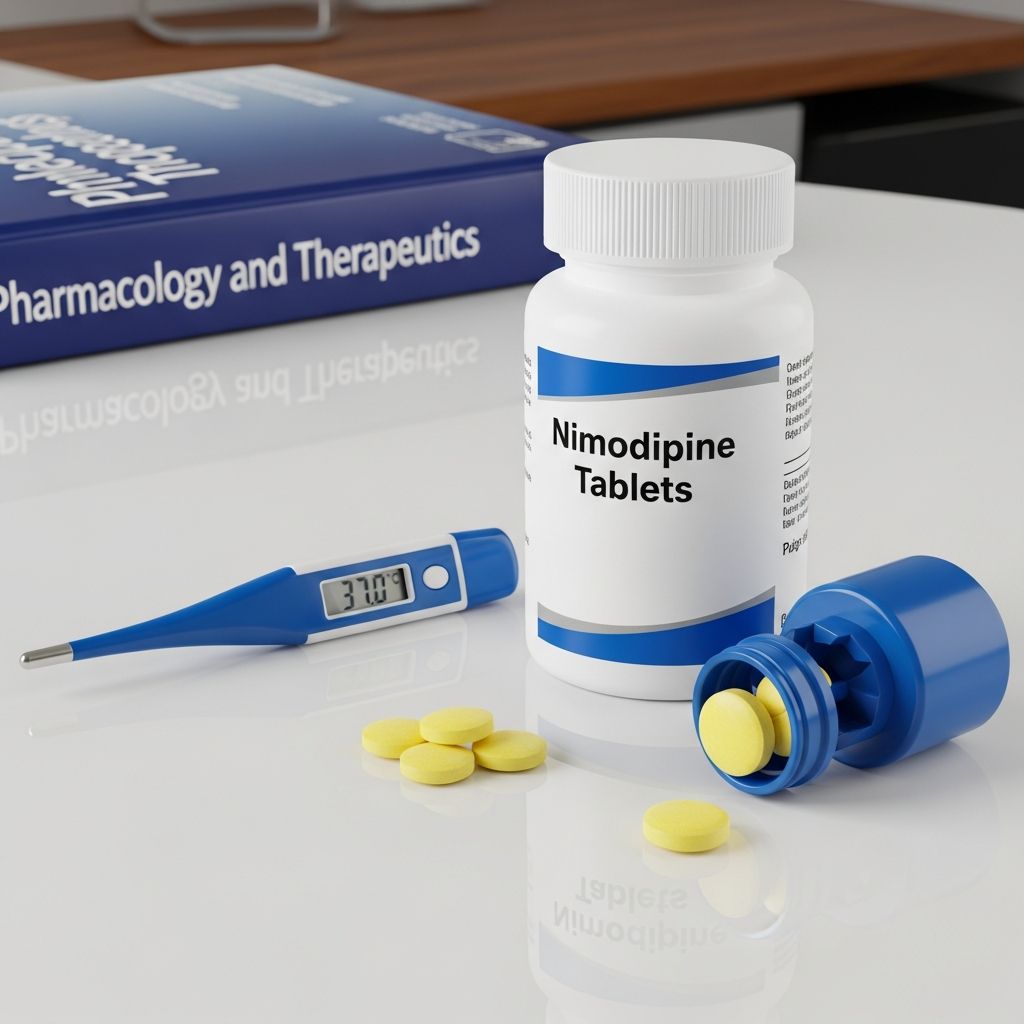
About Nimodipine
Nimodipine is a medication belonging to a class of drugs called calcium-channel blockers. It is specifically prescribed to prevent serious complications that can develop following a subarachnoid hemorrhage, which is bleeding that occurs in the space surrounding the brain. This condition typically results from a ruptured aneurysm—a weakened area in a blood vessel wall that bulges outward and may rupture, causing bleeding in the brain.
The medication works by relaxing blood vessels in the head, which helps prevent vasospasm (involuntary muscle contractions in blood vessels) and reduces the risk of damage caused by insufficient blood flow to the brain tissue following the initial hemorrhage. Nimodipine is also known by its brand name Nimotop and is available in tablet form.
| Category | Details |
|---|---|
| Type of Medicine | Calcium-channel blocker |
| Used For | Prevention of complications after subarachnoid hemorrhage |
| Brand Name | Nimotop® |
| Available As | Tablets |
What is Subarachnoid Hemorrhage?
A subarachnoid hemorrhage is a serious medical condition involving bleeding in the area surrounding the brain. This space, called the subarachnoid space, lies between the brain and the innermost membrane that covers it. The bleeding typically results from the rupture of an intracranial aneurysm—an abnormal, weakened bulge in a blood vessel wall. When this weakened area ruptures, blood spills into the subarachnoid space, creating a life-threatening situation.
Following a subarachnoid hemorrhage, patients face significant risks of secondary complications, particularly vasospasm, which can restrict blood flow to vital brain tissue and cause stroke or permanent neurological damage. Nimodipine is administered to reduce these serious complications and improve long-term neurological outcomes in affected patients.
How Nimodipine Works
Nimodipine functions by causing blood vessels in the head to relax and dilate. By reducing the tension in blood vessel walls, the medication helps prevent vasospasm—the involuntary constriction of blood vessels that frequently occurs after subarachnoid hemorrhage. This vasospasm is a major cause of secondary brain injury because it restricts blood flow (a condition called cerebral ischemia) to areas of the brain that have already been damaged by the initial bleeding.
By maintaining normal blood vessel function and adequate blood flow to the brain, nimodipine reduces the incidence and severity of ischemic deficits—neurological problems caused by insufficient oxygen delivery to brain tissue. Clinical trials have demonstrated that nimodipine significantly improves neurological outcomes and reduces the risk of permanent disability in patients recovering from subarachnoid hemorrhage.
How to Take Nimodipine
It is essential to take nimodipine exactly as your doctor prescribes. Before starting treatment, read the manufacturer’s printed information leaflet included in your medication pack, as it provides comprehensive details about the medication and a complete list of potential side effects.
Standard Dosage Instructions
Related Stories



The usual prescribed dose is two 30 mg tablets every four hours. The specific dose will be printed on the label of your medication pack as a reminder of your doctor’s instructions. It is crucial to maintain consistent dosing intervals; leave exactly four hours between each dose.
You should swallow the tablets with a drink of water. Nimodipine can be taken either before or after food, offering flexibility in your medication schedule. The total course of treatment lasts for 21 consecutive days. If you received nimodipine as an injection while in the hospital, this injectable period counts toward your total 21-day treatment course.
Missed Doses
If you forget to take a scheduled dose, take it as soon as you remember, then continue your regular dosing schedule. Ensure you maintain the four-hour intervals between doses. Do not double-dose or alter your dosing schedule without consulting your healthcare provider.
Timing Considerations
Nimodipine treatment should begin as soon as possible following a subarachnoid hemorrhage, ideally within 96 hours of the bleeding event. Early treatment provides maximum benefit in preventing secondary complications and improving neurological recovery.
Important Precautions and Contraindications
Before taking nimodipine, inform your doctor about any medical conditions or medications you are currently using. Certain conditions and drug interactions require special consideration:
- If you have problems with liver function or kidney function, as these organs are responsible for processing and eliminating the medication from your body
- If you have low blood pressure, since nimodipine can further reduce blood pressure
- If you are pregnant or breastfeeding, as the safety of nimodipine in these situations requires medical evaluation
- If you have a rare blood disorder called porphyria
- If you are taking or using any other medicines, including over-the-counter medications and herbal or complementary remedies
- If you have ever had an allergic reaction to any medication
- If you have had a heart attack within the last month
- If you suffer from angina and have noticed an increase in the frequency or severity of attacks
Additionally, nimodipine should never be given intravenously (directly into a vein), as this can cause serious, life-threatening side effects or death. The intravenous form is only for hospital use and must be administered by medical professionals.
Drug Interactions
Certain medications can interact with nimodipine and affect how the medication works. Always inform your doctor if you are taking:
- High blood pressure medications, including nifedipine, diltiazem, verapamil, alpha-methyldopa, alpha-blockers, or beta-blockers, as nimodipine may increase their effects
- Rifampicin (an antibiotic used for tuberculosis)
- Phenobarbital, phenytoin, or carbamazepine (medications commonly used to treat epilepsy)
Common Side Effects
Like all medications, nimodipine can cause side effects, although not everyone experiences them. The most commonly reported side effects are generally mild to moderate and often improve as your body adjusts to the medication.
| Side Effect | What to Do |
|---|---|
| Headache, feeling hot and flushed | If the headache continues or is severe, speak with your doctor |
| Feeling dizzy or light-headed | Do not drive and do not use tools or machines until you feel better |
| Feeling sick (nausea) | Stick to simple foods and avoid rich or spicy meals |
| Swelling of the face, lips, tongue, or throat | Contact your doctor immediately, as this may indicate an allergic reaction |
| Difficulty breathing | Seek immediate medical attention |
| Rash or itching | Inform your doctor if persistent or bothersome |
| Vomiting | Contact your doctor if severe or persistent |
| Low blood pressure (dizziness) | Contact your doctor immediately if symptoms develop |
| Slow heartbeat | Seek medical attention if you experience this symptom |
| Easier bruising or bleeding | Contact your doctor immediately, as this may indicate reduced blood platelets |
Serious Side Effects Requiring Immediate Attention
Some side effects require immediate medical attention. Contact your doctor immediately if you experience:
- Signs of allergic reaction such as swelling of the face, lips, tongue, or throat
- Difficulty breathing or respiratory distress
- Severe rash or itching
- Persistent nausea or vomiting
- Symptoms of low blood pressure, such as severe dizziness or fainting
- Slow heartbeat or irregular heart rhythm
- Unexplained bruising or bleeding, which may indicate reduced blood platelet counts
- Neurological deterioration or worsening symptoms
Dietary Considerations and Restrictions
While taking nimodipine, you should avoid drinking grapefruit juice. Grapefruit and grapefruit juice can interfere with how your body processes nimodipine, potentially increasing the concentration of the medication in your bloodstream and raising the risk of side effects.
When experiencing nausea, stick to simple, easily digestible foods and avoid rich or spicy meals that may exacerbate symptoms. Maintain a balanced diet to support your recovery from the subarachnoid hemorrhage.
Storage and General Information
Store nimodipine tablets at room temperature away from moisture and heat. Keep the medication in its original container with the label intact. Never use nimodipine after the expiration date printed on the package. If you have unused medication after completing your 21-day course, ask your pharmacist about proper disposal methods.
Keep nimodipine out of reach of children and pets. Do not share your medication with others, even if they have similar symptoms. Nimodipine is prescribed specifically based on your medical condition and individual circumstances.
Frequently Asked Questions
Q: How long do I need to take nimodipine?
A: The standard treatment course is 21 consecutive days. If you received nimodipine by injection in the hospital, this period counts toward your total 21-day treatment duration. Your doctor will provide specific instructions based on your individual case.
Q: Can I stop taking nimodipine early if I feel better?
A: No, you should complete the full 21-day course as prescribed by your doctor, even if you feel well. The medication continues to work to prevent secondary complications even when you don’t notice symptoms. Stopping early may reduce its protective benefit.
Q: What should I do if I miss a dose?
A: Take the missed dose as soon as you remember, then continue with your regular four-hour dosing schedule. Do not double-dose to make up for a missed dose.
Q: Can nimodipine be taken with food?
A: Yes, nimodipine tablets can be taken either before or after food. However, certain foods like grapefruit should be avoided while taking this medication.
Q: Is nimodipine safe during pregnancy?
A: Inform your doctor immediately if you are pregnant or planning to become pregnant. The safety of nimodipine during pregnancy requires medical evaluation, and your doctor will help determine the best course of action.
Q: Can I take nimodipine with other medications?
A: Always inform your doctor about all medications you are taking, including over-the-counter drugs and herbal supplements. Some medications can interact with nimodipine and affect its effectiveness or increase side effects.
Q: What happens if I take too much nimodipine?
A: If you suspect an overdose, contact emergency medical services or your local poison control center immediately. Take your medication container with you to provide information about the drug and dosage.
Q: Why is nimodipine never given intravenously?
A: Intravenous administration of nimodipine can cause serious or life-threatening side effects, including cardiac arrest, cardiovascular collapse, and death. Nimodipine tablets are prescribed for oral use only, continuing treatment begun with intravenous administration in the hospital setting.
Q: Are there alternative medications to nimodipine?
A: Nimodipine is the standard medication for preventing complications after subarachnoid hemorrhage. However, discuss with your doctor if you have concerns about side effects or allergies, as they can advise on alternatives or adjustments to your treatment plan.
Q: How does nimodipine compare to other calcium-channel blockers?
A: Nimodipine is specifically indicated for subarachnoid hemorrhage and has been proven through clinical trials to reduce neurological deficits resulting from vasospasm. Other calcium-channel blockers may be used for different conditions, such as high blood pressure or heart disease, but nimodipine is the established treatment for this neurological complication.
References
- Nimodipine Tablets – Patient Information — Patient.info. 2024. https://patient.info/medicine/nimodipine-tablets-nimotop
- Nimotop 30 mg Tablets – Summary of Product Characteristics — Medicines and Healthcare Products Regulatory Agency (MHRA). 2024. https://www.medicines.org.uk/
- NIMOTOP® (nimodipine) – Prescribing Information — U.S. Food and Drug Administration (FDA). 2006. https://www.accessdata.fda.gov/drugsatfda_docs/label/2006/018869s014lbl.pdf
- Nimodipine (Oral Route) – Side Effects & Dosage — Mayo Clinic. 2024. https://www.mayoclinic.org/drugs-supplements/nimodipine-oral-route/description/drg-20071709
- Nimodipine – Drug Information — MedlinePlus, U.S. National Library of Medicine. 2024. https://medlineplus.gov/druginfo/meds/a689010.html
- Nimodipine – Uses, Interactions, Mechanism of Action — DrugBank. 2024. https://go.drugbank.com/drugs/DB00393
- Nimotop 30 mg Capsule – Drug Information — Kaiser Permanente. 2024. https://healthy.kaiserpermanente.org/health-wellness/drug-encyclopedia/drug.nimotop-30-mg-capsule.200874
Similar Articles








Read full bio of medha deb