Nipple Eczema: Essential Guide To Diagnosis & Treatment
Understanding nipple eczema: causes, symptoms, diagnosis, and effective treatments for this common skin condition affecting the nipple and areola.
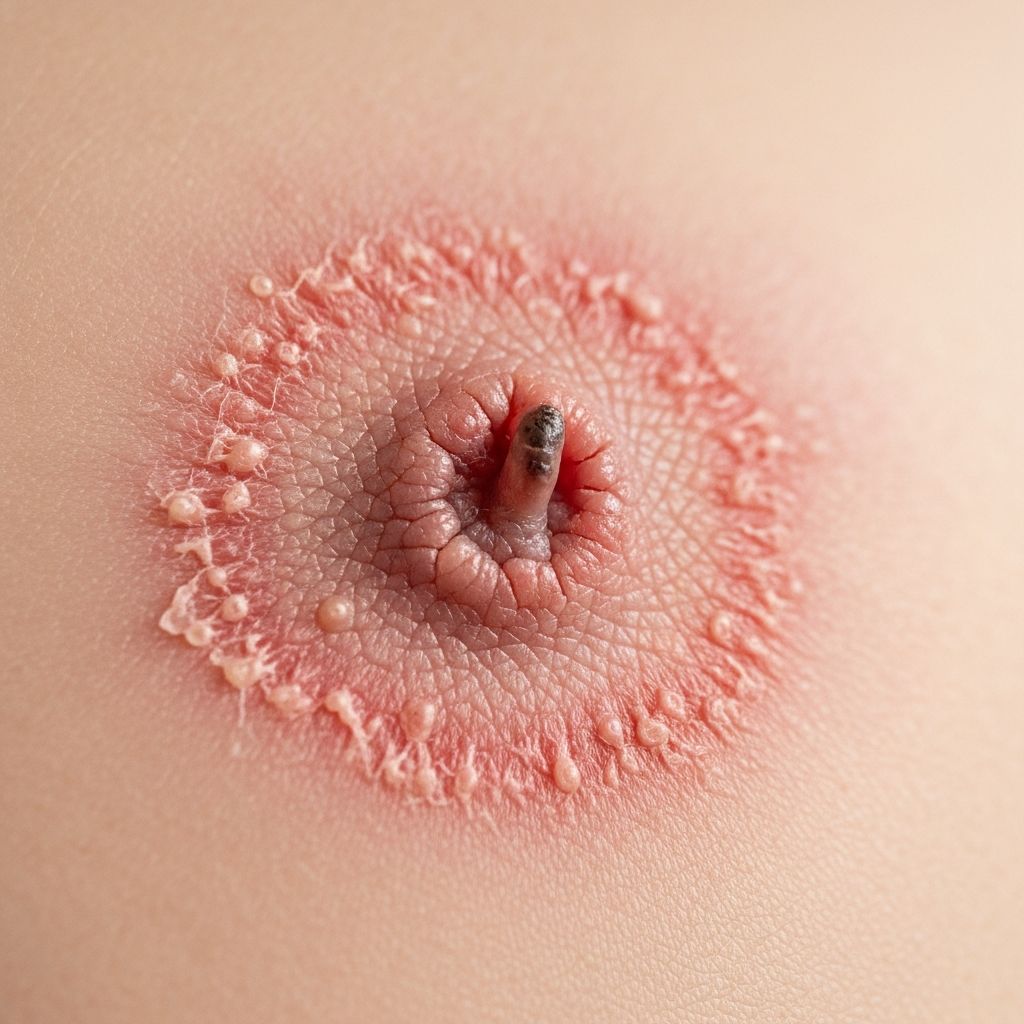
Nipple eczema is a localised form of dermatitis that primarily affects the skin of the nipple and areola, characterised by redness (erythema), scaling, itching, and sometimes pain. It can occur as part of widespread atopic dermatitis or in isolation, often triggered by genetic predisposition combined with environmental factors such as irritants or allergens.
Introduction
Nipple eczema represents a specific manifestation of eczematous dermatitis confined to the nipple and areola regions. This condition is particularly distressing due to its location on sensitive skin, which is thin and prone to irritation. It may present unilaterally or bilaterally and is more common in women, though it can affect anyone. The thin skin barrier in this area allows for rapid absorption of treatments but also makes it vulnerable to exacerbations from friction, moisture, or chemical exposures. Unlike other forms of eczema, nipple eczema requires careful differential diagnosis to exclude serious conditions like Paget’s disease of the breast.
Understanding nipple eczema is crucial for timely intervention, as untreated cases can lead to complications such as fissuring, secondary infections, or disruption of breastfeeding in lactating women. Management focuses on barrier restoration, inflammation control, and trigger avoidance.
Demographics
Nipple eczema predominantly affects women, particularly those of reproductive age, including pregnant and breastfeeding individuals. It is frequently reported in lactating mothers due to factors like moisture from milk, friction from nursing, and hormonal changes. While exact prevalence data is limited, it is a recognised issue in dermatology clinics, with studies indicating it as a common cause of nipple soreness in breastfeeding women.
- Women in reproductive years: Most common group, often linked to hormonal fluctuations during pregnancy or lactation.
- Atopic individuals: Those with a personal or family history of eczema, asthma, or hay fever are at higher risk.
- Breastfeeding mothers: Up to a significant portion experience nipple dermatitis, with eczema being a key subtype.
- Men and non-lactating women: Less common but possible, often due to contact irritants or atopy.
Causes
The aetiology of nipple eczema is multifactorial, involving a genetic predisposition to impaired skin barrier function combined with environmental triggers. It arises in the context of several dermatitis subtypes.
Atopic Dermatitis
In atopic individuals, nipple eczema manifests as part of broader eczema patterns. Genetic mutations, such as in filaggrin genes, lead to defective skin barrier, allowing allergens and irritants to penetrate easily.
Irritant Contact Dermatitis
Common triggers include soaps, detergents, fragranced lotions, rough clothing, and repetitive friction from bras or nursing. In breastfeeding women, saliva, milk residue, and moisture exacerbate irritation.
Allergic Contact Dermatitis
Sensitisation to allergens like nickel in jewellery, preservatives in creams (e.g., lanolin), or latex can cause localised reactions. Patch testing may identify culprits.
Other Factors
- Hormonal influences: Oestrogen and progesterone changes during pregnancy or menstrual cycles.
- Environmental: Sweat, heat, pollen, pet dander.
- Stress: Exacerbates inflammation via immune dysregulation.
Clinical Features
Nipple eczema typically involves the areola, sparing the nipple tip and rarely extending beyond. Symptoms vary by severity.
Related Stories



- Erythema: Redness, often intense on the areola.
- Scaling and dryness: Flaky, dry skin; may crust.
- Itch and pain: Intense pruritus leading to scratching; soreness from fissures.
- Oozing and vesicles: In acute phases, weeping erosions or small blisters.
- Thickening: Chronic cases show lichenification (leathery skin).
In breastfeeding women, symptoms worsen post-feeding due to moisture and friction.
Complications
Untreated nipple eczema can lead to secondary issues:
- Bacterial infection: Crusting, pus from Staphylococcus aureus.
- Fissures and erosions: Painful cracks increasing infection risk.
- Breastfeeding cessation: Pain may prompt premature weaning.
- Psychosocial impact: Distress from visible symptoms and discomfort.
Diagnosis
Diagnosis is primarily clinical, based on history and examination. Key is the eczematous morphology on the areola.
- History: Atopy, triggers, breastfeeding status, unilateral vs. bilateral.
- Examination: Erythema, scaling sparing nipple tip.
- Investigations: Swabs for infection; patch testing for allergies; biopsy if malignancy suspected.
Differential Diagnoses
Important to exclude mimics, especially unilateral cases.
| Condition | Key Features | Differentiator |
|---|---|---|
| Paget Disease | Persistent unilateral erythema, scaling, nipple erosion; may have discharge | Biopsy shows malignant cells; no response to topical steroids |
| Mastitis | Swollen, warm, tender breast with fever; systemic symptoms | Infection-related; responds to antibiotics |
| Psoriasis | Well-defined plaques, silvery scales; may involve other sites | Auspitz sign; family history |
| Inflammatory Breast Cancer | Rapid onset, peau d’orange, swelling | Mammogram/biopsy needed |
| Candidiasis | Satellite pustules, burning pain in lactating women | Responds to antifungals |
Treatment
Treatment is stepwise: trigger avoidance, emollients, and anti-inflammatories. Aim for rapid control to improve quality of life.
General Measures
- Avoid irritants: Fragrance-free soaps, hypoallergenic detergents, cotton bras; extra rinse laundry.
- Emollients: Liberal use of ointment-based moisturisers (e.g., petrolatum) to restore barrier.
- Breastfeeding tips: Apply treatments post-feed, wipe off with expressed milk pre-feed.
Topical Corticosteroids
Mainstay therapy; potent ointments absorbed well by thin skin. Start mild (hydrocortisone), escalate to moderate (mometasone) for severe cases. Safe in lactation if applied correctly.
Other Topicals
- Calcineurin inhibitors: Tacrolimus or pimecrolimus for steroid-sparing, safe on thin skin.
- Antibiotics: If infected (e.g., fusidic acid).
- Antifungals: For candida overlap.
Advanced Options
Phototherapy or systemic agents rarely needed for refractory cases.
Outcome
Nipple eczema follows a chronic relapsing course. With education on skincare, trigger avoidance, and intermittent topicals, most achieve good control. Relapses common without maintenance emollients. Prognosis excellent if malignancy excluded; breastfeeding often continues successfully.
Frequently Asked Questions (FAQs)
Q: Is nipple eczema a sign of breast cancer?
A: Rarely; most cases are benign dermatitis. Unilateral, persistent, non-responsive symptoms warrant biopsy to rule out Paget disease.
Q: Can I breastfeed with nipple eczema?
A: Yes, with proper management. Use treatments post-feed and clean before.
Q: What are the best moisturisers for nipple eczema?
A: Fragrance-free ointments like petrolatum or barrier creams; apply liberally.
Q: How long does treatment take?
A: Improvement in 1-2 weeks with topicals; chronic management needed.
Q: Are topical steroids safe during breastfeeding?
A: Yes, low-moderate potency; minimal systemic absorption when used sparingly.
References
- Breast and Nipple Eczema: What Causes It and How Is It Treated? — BreastCancer.org. 2023. https://www.breastcancer.org/benign-breast-conditions/eczema-of-the-nipple
- Nipple eczema: A systematic review and practical recommendations — PubMed (Dermatology). 2023-01-25. https://pubmed.ncbi.nlm.nih.gov/36695082/
- Breast Eczema: Symptoms, Causes and Treatment Options — Indiana University School of Medicine (dermatrials.medicine.iu.edu). 2024. https://dermatrials.medicine.iu.edu/blogs/need-to-know-about-breast-eczema
- What to Know About Breast Eczema on Nipples — WebMD. 2024. https://www.webmd.com/skin-problems-and-treatments/eczema/what-to-know-about-eczema-on-nipples
- Eczema of the Nipples and Areolae — Consultant360. 2023. https://www.consultant360.com/articles/eczema-nipples-and-areolae
- Nipple eczema – DermNet — DermNet NZ. 2024. https://dermnetnz.org/topics/nipple-eczema
Similar Articles








Read full bio of Sneha Tete