Nipple Shields: When and How to Use Them
Learn when nipple shields help breastfeeding and how to use them effectively as a temporary solution.
Understanding Nipple Shields
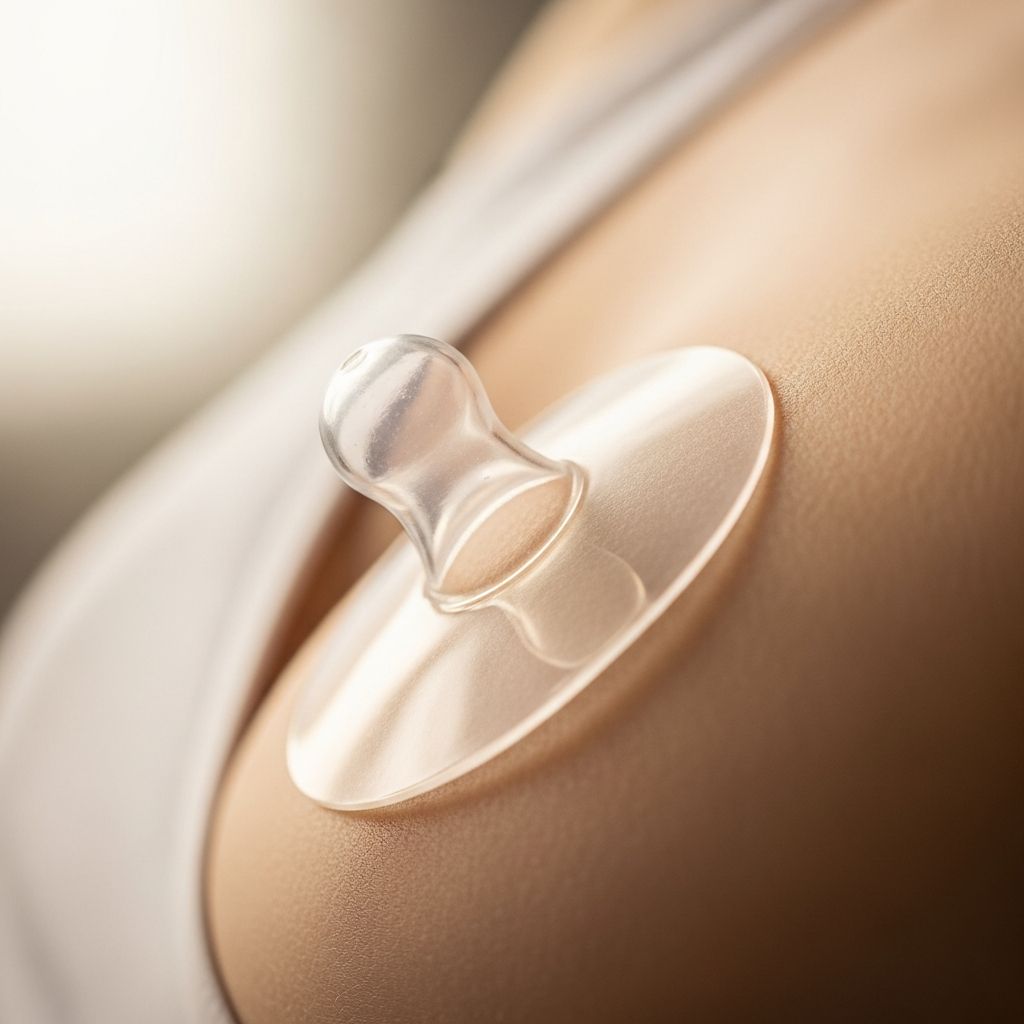
A nipple shield is a thin, silicone device that covers your real nipple during breastfeeding. It helps babies who are having issues latching onto the breast. Designed as a temporary solution, nipple shields feature a base that wraps around your areola—the darker skin surrounding your nipple—with a cone-shaped area for your nipple itself. Some modern nipple shields have a cut-out area to allow more skin-to-skin contact between you and your baby.
The nipple part of the shield contains tiny holes at the tip that allow milk to flow into your baby’s mouth. Most nipple shields are thin, flexible, and transparent, making them discreet during nursing. The device essentially acts like a second nipple, providing your baby with a longer, firmer surface to latch onto. This modified texture can make it easier for infants who struggle with traditional breastfeeding to learn how to latch and suck effectively.
When to Consider Using a Nipple Shield
A nipple shield may be a helpful short-term solution in specific situations. Before deciding to use one, it’s essential to consult with a lactation support provider like a lactation consultant or a breastfeeding medicine specialist. Your provider will identify the underlying cause of any breastfeeding difficulties you’re experiencing and recommend appropriate solutions, which may include temporary nipple shield use.
Common situations where nipple shields may help include:
- Flat or inverted nipples that make it difficult for babies to latch properly
- Failure of the baby to effectively latch onto the breast within the first two days postpartum
- Sore, cracked, or bleeding nipples caused by poor latch
- Transitioning babies from bottle feeding back to breastfeeding
- Prematurity or low birth weight infants who need assistance with latching
- Oversupply situations where milk flow is too rapid
When Nipple Shields Are Not Effective
Nipple shields typically aren’t an effective solution for certain breastfeeding challenges. They’re rarely helpful when transitioning babies who have become accustomed to bottle nipples back to the breast, as the shield texture may reinforce nipple confusion rather than resolve it. Additionally, nipple shields won’t address underlying causes such as tongue tie, improper positioning, or latch problems on their own. In most cases, a nipple shield won’t resolve the fundamental issue causing breastfeeding difficulties.
How to Properly Apply a Nipple Shield
Correct application is crucial for a nipple shield to be effective. Improper use can lead to additional breastfeeding problems or prevent milk from flowing adequately from your breast to your baby. Your nipple shield will come with specific instructions, and a lactation support provider can demonstrate proper application techniques.
Here’s the recommended process for applying a nipple shield correctly:
- Start by turning the nipple shield inside out before applying it, which helps draw your nipple into the cone-shaped area
- Position the shield directly over your nipple and areola
- Perform a series of clockwise rotations that guide your nipple into the shield tunnel
- Gently stretch the shield’s base around your areola
- Each rotation should draw more nipple tissue into the shield
- Secure the edges of the shield’s circumference over the areola with a few drops of water for better adhesion
- Ensure the base feels snug around your areola
- Your nipple should be positioned deep into the cone-shaped area without touching the sides
Related Stories



Assessing Proper Latch with a Nipple Shield
When your baby is latched correctly to the nipple shield, proper positioning is essential. Their mouth should be over the whole nipple shield with their lips extended around the areola. Your baby shouldn’t be sucking on just the tip of the nipple shield, as this indicates inadequate latch.
To verify your baby is properly latched, observe for visible movements in the area of the breast distal to the shield with each suck. If you see little or no breast movement during sucking, your baby may be latched only to the tip of the nipple shield, which suggests repositioning is needed. Proper latch ensures adequate milk transfer and reduces discomfort during nursing.
Benefits of Using a Nipple Shield
Despite controversy in the lactation field, nipple shields can provide important benefits in specific situations. They may help in several ways:
- Reduce stress and anxiety associated with breastfeeding difficulties by providing a functional solution
- Give time to work through breastfeeding issues like correcting a baby’s latch or addressing tongue tie
- Allow damaged nipples the opportunity to heal while continuing breastfeeding
- Enable continuation of breastfeeding when otherwise the mother might stop due to pain or difficulty
- Make it easier for babies with latching issues to learn proper sucking and nursing techniques
- Provide a solution for transitioning infants from bottle to breast in certain cases
Disadvantages and Concerns
Lactation support providers typically don’t recommend nipple shields unless absolutely necessary, as they come with several drawbacks. Understanding these disadvantages helps you make an informed decision with your healthcare provider:
- Reduced milk transfer from breast to baby, which can affect milk supply
- Potential disruption of natural milk supply development and maintenance
- Decreased skin-to-skin contact between mother and baby, which can reduce bonding and milk production stimulation
- Potential for dependency, making it more difficult to wean from the shield over time
- Risk of creating latch confusion or dependency on the modified nipple texture
- The longer you use a nipple shield, the harder it becomes to stop using it
- May mask underlying issues that need proper professional attention and correction
Nipple Shields and Milk Supply
One significant concern with nipple shield use is the potential impact on milk supply. Research shows that nipple shields can decrease the transfer of milk from your breast. To combat this effect, lactation specialists often recommend pumping after nursing sessions while using a nipple shield. This additional pumping helps empty your breasts more completely and stimulates increased milk production to compensate for any reduction in milk transfer during shield use.
If you’re using a nipple shield, your provider will likely monitor your baby’s weight to ensure they’re receiving adequate nutrition. Regular weight checks help confirm that your baby is getting sufficient milk despite any reduction in transfer rates associated with shield use.
Using Nipple Shields for Sore and Cracked Nipples
Nipple shields can be beneficial for managing cracked, sore, or bleeding nipples caused by poor latch. A bad latch is typically the underlying cause of painful nipples. While a nipple shield can provide relief by reducing direct contact and friction, it’s important to address the latch problem simultaneously. If your baby continues to latch poorly to the nipple shield itself, you may still experience pain even while wearing the shield or when attempting to wean from it.
Getting your baby to latch correctly is the fundamental first step in relieving nipple pain. Once proper latch is achieved, you should be able to breastfeed without pain. The nipple shield serves as a temporary protective measure while you work on correcting the underlying latch issues with professional support.
Creating a Weaning Plan
A nipple shield should be viewed as a short-term solution, not a permanent breastfeeding tool. Your lactation support provider should develop a plan to wean your baby from using the shield from day one of implementation. Weaning means gradually transitioning your baby to nursing directly from your breast rather than through the nipple shield.
Your provider will tailor weaning advice to your specific needs and circumstances. Here are general strategies that may be included in your weaning plan:
- Gradually reduce shield use by removing it after your baby has latched and begun nursing
- Try nursing without the shield for shorter periods initially
- Slowly increase the duration of direct breast nursing as your baby adapts
- Ensure your baby’s latch improves progressively before completely discontinuing shield use
- Provide extra comfort and reassurance during the transition period
- Work closely with your lactation consultant throughout the weaning process
Using a nipple shield for the least amount of time possible is crucial. The longer you use a nipple shield, the harder it becomes to stop using it. Extended use can also disrupt your milk supply more significantly. Your provider can help guide both you and your baby through the weaning process to make this transition easier for everyone involved.
When to Seek Professional Support
Before you try using a nipple shield, talk to a lactation support provider. Your provider will observe your baby’s latch and nursing position to identify any issues. Sometimes, minor adjustments to positioning or technique can help your baby latch better without ever needing to use a nipple shield. Professional lactation consultation is valuable because it addresses root causes rather than just treating symptoms.
If your provider recommends nipple shield use, they’ll develop a comprehensive plan from the start, including specific weaning strategies and monitoring protocols. Regular follow-up appointments ensure your baby is receiving adequate nutrition and that progress is being made toward independent breastfeeding without the shield.
Important Considerations
It’s essential to have the right size nipple shield and to apply it correctly. Using an incorrectly sized shield or applying it improperly can lead to more breastfeeding problems or prevent adequate milk flow. Always follow the manufacturer’s instructions that come with your specific nipple shield, and don’t hesitate to ask your lactation support provider for additional guidance.
Remember that nipple shields are a temporary aid, not a permanent solution. They’re most effective when used as part of a comprehensive plan that addresses underlying breastfeeding challenges. Working closely with qualified lactation professionals throughout your breastfeeding journey ensures you receive evidence-based support and guidance.
Frequently Asked Questions
Q: How long should I use a nipple shield?
A: You should use a nipple shield for the least amount of time possible. Your lactation support provider will develop a specific weaning plan, but shields are designed as short-term solutions, typically used for days to weeks rather than months.
Q: Can a nipple shield affect my milk supply?
A: Yes, nipple shields can decrease milk transfer from your breast. To help maintain your milk supply, your provider may recommend pumping after nursing sessions while using a shield.
Q: Will my baby become dependent on the nipple shield?
A: Extended use of nipple shields can make weaning more difficult. This is why having a weaning plan from day one and using the shield for as short a time as possible is important.
Q: Can I use a nipple shield if my baby was bottle-fed?
A: While parents sometimes think a nipple shield can help transition bottle-fed babies back to the breast, nipple shields are rarely helpful in these scenarios and aren’t a good long-term solution for nipple confusion.
Q: What should I do if my baby won’t latch even with a nipple shield?
A: Contact your lactation support provider immediately. If your baby continues to have difficulty latching even with a shield, it may indicate an underlying issue like tongue tie that requires professional evaluation and treatment.
Q: Do I need to clean and sterilize my nipple shield?
A: Yes, follow the manufacturer’s cleaning instructions. Most nipple shields can be hand-washed with warm soapy water and air-dried. Some can be sterilized according to the specific product guidelines.
References
- The Use of Nipple Shields: A Review — PubMed Central (PMC). 2015. https://pmc.ncbi.nlm.nih.gov/articles/PMC4607874/
- Nipple Shields: When & How To Use Them — Cleveland Clinic. 2023. https://my.clevelandclinic.org/health/treatments/22130-nipple-shield
- Sore Nipples from Breastfeeding? Expert Tips for Relief — Huckleberry. 2024. https://huckleberrycare.com/blog/sore-nipples-from-breastfeeding-expert-tips-for-relief
- What Is Nipple Confusion? Myths and Help — Cleveland Clinic Health. 2023. https://health.clevelandclinic.org/nipple-confusion
Similar Articles








Read full bio of medha deb