NIPT: Comprehensive Guide To Safety, Accuracy, And Limits
Discover how noninvasive prenatal testing revolutionizes early detection of fetal chromosomal issues with a simple blood draw, empowering informed choices.

Noninvasive prenatal testing (NIPT) represents a major advancement in prenatal care, allowing expectant parents to assess their baby’s risk for certain chromosomal conditions through a simple maternal blood draw.
Understanding the Fundamentals of NIPT
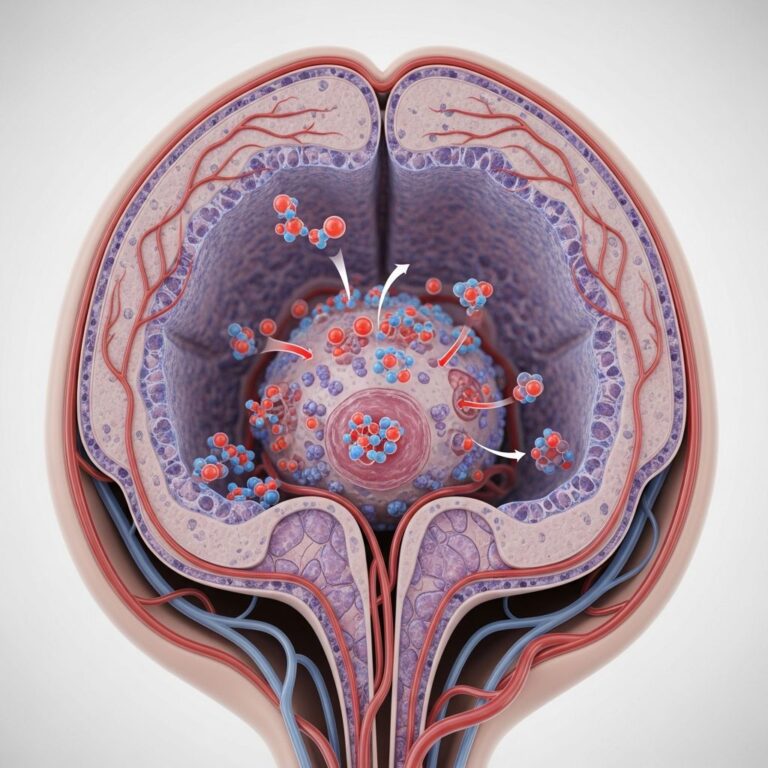
NIPT, also known as cell-free DNA screening, detects fragments of fetal DNA circulating in the mother’s bloodstream. These fragments originate primarily from the placenta, which shares genetic material with the fetus. By analyzing this cell-free DNA (cfDNA), healthcare providers can estimate the likelihood of specific genetic abnormalities without any risk to the pregnancy.
The test’s appeal lies in its simplicity: no needles enter the uterus, eliminating miscarriage risks associated with invasive procedures. Major medical organizations, including the American College of Obstetricians and Gynecologists (ACOG), recommend NIPT for all pregnant individuals, regardless of age or risk factors.
How NIPT Works: From Blood Draw to Results
The process begins with a routine blood sample from the arm of the pregnant person, typically taken after 10 weeks of gestation. Laboratory technicians isolate plasma from the blood, extract cfDNA, and prepare it for sequencing.
Advanced technologies like next-generation sequencing (NGS) scan the entire genome or targeted regions to count DNA fragments from each chromosome. An overrepresentation of material from chromosome 21, for instance, signals a potential trisomy 21 (Down syndrome).
- Blood collection: 10-20 mL maternal blood, as early as 9-10 weeks.
- DNA extraction: cfDNA separated from maternal DNA.
- Analysis: Whole-genome NGS for high sensitivity (≥99% for common trisomies).
- Results: Delivered in 7-14 days, reporting high/low risk.
This workflow outperforms older methods by providing genome-wide insights, including partial deletions or sex chromosome issues.
Key Conditions Screened by NIPT
NIPT excels at identifying common aneuploidies—extra or missing chromosomes. Here’s what it typically covers:
| Condition | Chromosomal Cause | Detection Accuracy |
|---|---|---|
| Trisomy 21 (Down syndrome) | Extra chromosome 21 | ≥99% sensitivity/specificity |
| Trisomy 18 (Edwards syndrome) | Extra chromosome 18 | ≥99% |
| Trisomy 13 (Patau syndrome) | Extra chromosome 13 | ≥99% |
| Sex chromosome aneuploidies | e.g., Turner (XO), Klinefelter (XXY) | High, varies by panel |
Some expanded panels detect microdeletions or all-chromosome aneuploidies, but core screening focuses on the ‘big three’ trisomies.
NIPT Versus Traditional Screening Methods
Conventional screens like the first-trimester combined test or quad screen measure hormones, proteins, and ultrasound markers. While noninvasive, they yield high false-positive rates—about 5% flagged as high-risk unnecessarily—and miss 15-20% of Down syndrome cases.
NIPT dramatically improves this: lower false positives (under 0.1% for trisomy 21) and higher detection rates, especially valuable for less common conditions.
- Timing advantage: NIPT from 9-10 weeks vs. second-trimester results for sequential screens.
- Accuracy boost: Reduces unnecessary invasive tests.
Comparing NIPT to Diagnostic Tests
Unlike screening, diagnostic tests like chorionic villus sampling (CVS) or amniocentesis provide definitive yes/no answers but carry a 0.1-0.5% miscarriage risk.
| Aspect | NIPT (Screening) | CVS/Amnio (Diagnostic) |
|---|---|---|
| Risk to fetus | None | Low but present (0.1-0.5% miscarriage) |
| Timing | 9+ weeks | CVS: 10-13w; Amnio: 15+ weeks |
| Result type | Risk estimate | Definitive diagnosis |
| Scope | Common aneuploidies | Full karyotype + more |
Clinicians often recommend NIPT first; positives prompt diagnostic confirmation.
Related Stories



Accuracy, Limitations, and Potential Pitfalls
NIPT boasts exceptional performance: ≥99% sensitivity for trisomies 21, 18, 13. However, it’s a screen, not a diagnosis. False positives can arise from confined placental mosaicism (CPM), where placenta but not fetus has abnormalities, or maternal conditions.
False negatives are rarer but possible. It misses neural tube defects, single-gene disorders, polyploidy, or autism.
- No-result rate: 1-5%, often due to low fetal fraction (under 4%).
- Twin pregnancies: Reduced accuracy; viable from 10 weeks.
- Obesity/Vanishing twin: May affect results.
Who Should Consider NIPT?
ACOG and SMFM endorse NIPT universally, shifting from high-risk only. It’s ideal for:
- All ages, including advanced maternal age (≥35).
- High-risk via traditional screens.
- Previous aneuploidy-affected pregnancy.
- Parental balanced translocations.
- Early reassurance seekers.
Availability varies by region; consult providers for funding or insurance.
Practical Steps: Getting Tested and Interpreting Results
Discuss with your obstetrician or midwife. Pre-test counseling explains scope and limits. Post-results, genetic counselors aid decisions.
Results classify as low/high risk. High risk warrants CVS/amnio. Negative doesn’t guarantee health but reassures on screened conditions.
Ethical Considerations and Informed Decision-Making
NIPT empowers choices but raises questions on selective termination or resource equity. Comprehensive counseling ensures decisions align with values, avoiding pressure.
Equity issues persist: access in public systems lags private.
Future Directions in Prenatal Genomics
Expanding NIPT to single-gene disorders (gNBS) and broader panels promises comprehensive screening. Integration with AI enhances analysis.
Frequently Asked Questions (FAQs)
What is the cost of NIPT?
Costs vary; insurance often covers high-risk cases. Self-pay: $500-2000 USD equivalent.
Can NIPT determine fetal sex?
Yes, accurately from 9 weeks, but some regions restrict reporting to avoid selection bias.
Is NIPT safe for IVF pregnancies?
Yes, but fetal fraction may be lower; consult specialist.
What if NIPT says high risk?
Pursue diagnostic testing for confirmation.
Does NIPT screen for all genetic issues?
No, limited to chromosomal; not single-gene or structural defects.
References
- Noninvasive Prenatal Testing (NIPT) | NGS-based technology — Illumina. 2024. https://www.illumina.com/clinical/reproductive-genetic-health/nipt.html
- Understanding Noninvasive Prenatal Testing (NIPT) — Natera. 2024. https://www.natera.com/resource-library/panorama/understanding-noninvasive-prenatal-testing-nipt/
- What is noninvasive prenatal testing (NIPT) — MedlinePlus (U.S. National Library of Medicine). 2024. https://medlineplus.gov/genetics/understanding/testing/nipt/
- Non-Invasive Prenatal Testing — American College of Obstetricians and Gynecologists (ACOG). 2024. https://www.acog.org/advocacy/policy-priorities/non-invasive-prenatal-testing
- What is NIPT? — Genomics Education Programme (NHS). 2023. https://www.genomicseducation.hee.nhs.uk/blog/what-is-nipt/
Similar Articles








Read full bio of medha deb