Nodular Panniculitis: Symptoms, Diagnosis & Treatment Guide
Understanding the causes, symptoms, diagnosis, and management of recurrent subcutaneous nodules with systemic symptoms.
Nodular panniculitis is a rare subtype of panniculitis characterised by recurrent, tender or painful subcutaneous nodules. These nodules most commonly arise on the legs but can appear elsewhere on the body. It is often accompanied by acute systemic symptoms such as fever, malaise, and abdominal pain. The condition is diagnosed after excluding other known causes of lobular panniculitis.
What is panniculitis?
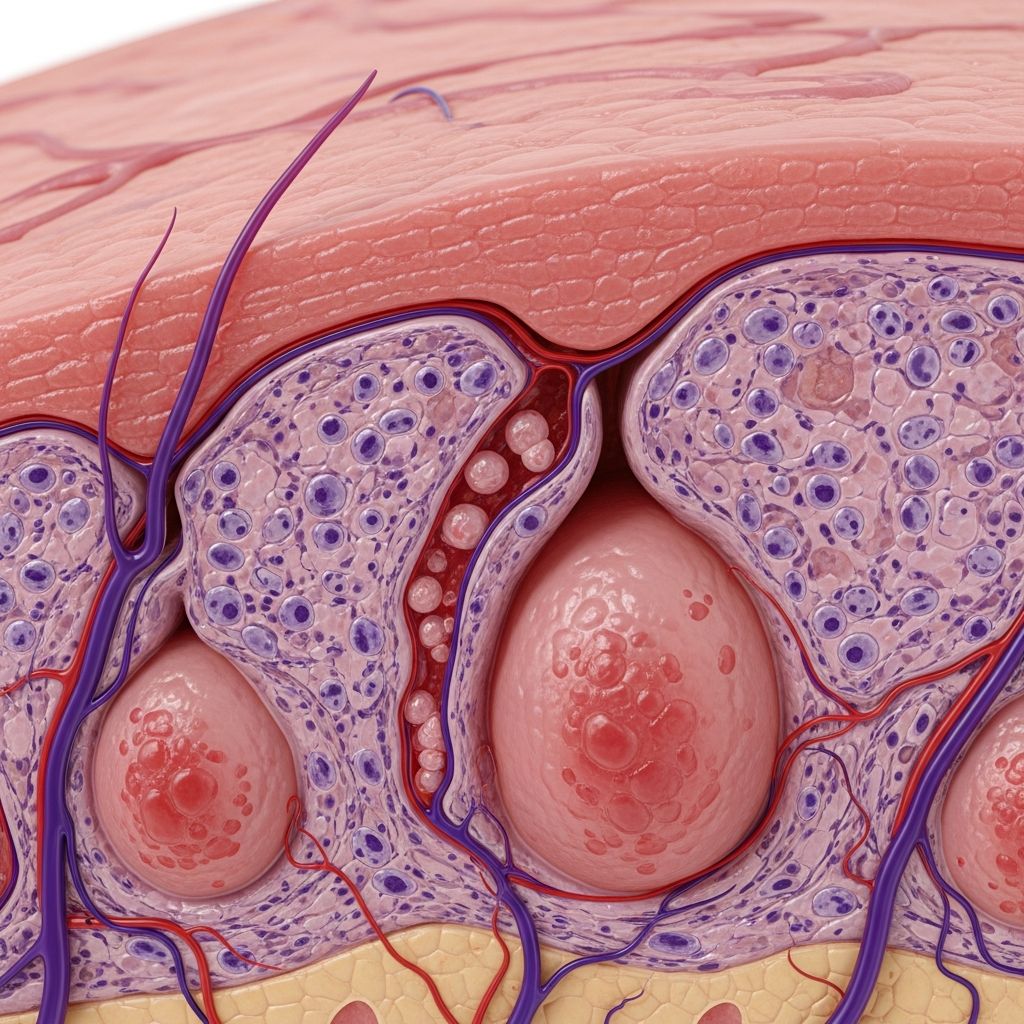
Panniculitis refers to inflammation of the subcutaneous adipose tissue (panniculus adiposus), the layer of fat beneath the skin. This inflammation can arise from various aetiologies, including infections, autoimmune disorders, medications, trauma, or idiopathic causes. Panniculitis is classified histopathologically into lobular, septal, or mixed patterns based on the predominant site of inflammation within the subcutaneous fat.
Lobular panniculitis, as seen in nodular panniculitis, primarily affects the fat lobules and may or may not involve vasculitis. Septal panniculitis affects the fibrous septa dividing the fat lobules. Clinical presentation typically includes erythematous, tender nodules or plaques on the lower extremities, though distribution varies by subtype. Systemic symptoms like fever and arthralgias often accompany the skin findings, distinguishing it from other dermatoses.
What is nodular panniculitis?
Nodular panniculitis, also known as idiopathic lobular panniculitis or historically Weber-Christian disease, manifests as single or multiple recurrent subcutaneous nodules without an identifiable underlying cause. These nodules are typically 1-5 cm in diameter, firm, and tender, predominantly on the legs, thighs, and buttocks, but can involve arms, trunk, face, or even breasts in rare cases. Nodules evolve over weeks, often ulcerating with oily yellow discharge before resolving with atrophy or hyperpigmentation.
The term ‘nodular panniculitis’ is reserved for cases where specific associations like erythema nodosum, alpha-1-antitrypsin deficiency, or pancreatic disease have been excluded. It represents a spectrum of disorders with similar clinical and histological features but unknown aetiology. Recurrence is common, with episodes separated by weeks to years.
Who gets nodular panniculitis?
- Typically affects adults aged 20-50 years, with a female predominance (up to 4:1 ratio).
- Rare in children, though paediatric cases reported.
- More common in those with autoimmune predisposition or family history of connective tissue disease.
- Associations with obesity, trauma, or recent infections in some patients.
What are the clinical features of nodular panniculitis?
The initial presentation involves abrupt onset of painful, erythematous subcutaneous nodules, often on the shins, thighs, or calves. Nodules are warm, indurated, and may migrate or coalesce. Over 1-4 weeks, they soften, ulcerate, and exude a characteristic oily, yellow-brown serous fluid (‘en coup de sabre’ appearance) before healing with depressed scars or lipoatrophy.
Systemic features occur in 50-70% of cases and include:
- High spiking fevers (up to 40°C).
- Malaise, fatigue, and myalgias.
- Abdominal pain, nausea, or diarrhoea.
- Arthralgias or arthritis.
- Rarely, visceral involvement: pancreatitis, hepatitis, pericarditis, or orbital inflammation leading to proptosis.
Physical examination reveals poorly circumscribed nodules without epidermal change initially, progressing to central ulceration in severe cases. Chronic cases may show hyperpigmented atrophic patches.
Related Stories



How is nodular panniculitis diagnosed?
Diagnosis is clinical, supported by histopathology, after excluding mimics. Key steps include:
- Detailed history: rule out infections (TB, streptococcal), drugs (oral contraceptives, corticosteroids), malignancies, connective tissue diseases (SLE, IBD), and pancreatic disorders.
- Examination: assess nodule characteristics and systemic signs.
- Laboratory tests: CBC (leukocytosis), ESR/CRP (elevated), ANA, RF, alpha-1-antitrypsin levels, lipase/amylase, stool studies, PPD/QuantiFERON for TB.
- Imaging: chest X-ray, abdominal US/CT if visceral involvement suspected.
Skin biopsy is essential: deep punch or incisional biopsy showing lobular panniculitis with lymphocytic infiltrate, lipophages, and multinucleated giant cells. Vasculitis may be absent or present. No organisms on special stains. This distinguishes it from septal panniculitis (e.g., erythema nodosum) or infectious causes.
What is the differential diagnosis for nodular panniculitis?
| Condition | Key Features | Distinguishing Tests |
|---|---|---|
| Erythema nodosum | Septal panniculitis, shins, self-limited, streptococcal/Sarcoid assoc. | Biopsy: septal inflammation, no fat necrosis |
| Alpha-1-antitrypsin deficiency panniculitis | Ulcerative, trunk/legs, low A1AT levels | Serum A1AT level, Pi typing |
| Pancreatic panniculitis | Periarticular, lipase elevation, arthritis | Amylase/lipase, abdominal imaging |
| Infectious (TB, atypicals) | Fever, pulmonary symptoms | Culture, PCR, IGRA |
| Factitial | Self-induced, psychiatric history | History, biopsy artefact |
What is the treatment for nodular panniculitis?
No curative therapy exists; management is symptomatic and targets inflammation. Mild cases may remit spontaneously, but recurrences necessitate intervention.
First-line:
- Analgesics/NSAIDs (ibuprofen, naproxen) for pain and fever.
- Wound care for ulcers: non-adherent dressings, topical antibiotics if infected.
Severe or recurrent cases:
- Dapsone (50-150 mg/day): first-line systemic; anti-inflammatory, rapid response in 60-80%.
- Corticosteroids (prednisone 0.5-1 mg/kg): for acute flares, taper slowly.
- Antimalarials (hydroxychloroquine 200-400 mg/day).
Refractory cases:
- Immunosuppressants: azathioprine, ciclosporin, mycophenolate mofetil.
- Other: clofazimine, thalidomide, IVIG, tamoxifen.
- Surgical excision for solitary persistent nodules.
Treat underlying associations if identified (e.g., TB therapy). Monitor for side effects: haemolysis with dapsone (G6PD screen), bone marrow suppression with immunosuppressants.
What is the outcome for nodular panniculitis?
Prognosis is generally good with supportive care; most achieve remission, though recurrences occur in 30-50%. Visceral involvement worsens outlook. Long-term sequelae include lipoatrophy and scarring. Early dapsone initiation reduces episode frequency and severity. Regular follow-up essential to exclude evolving systemic disease.
Frequently Asked Questions (FAQs)
Q: Is nodular panniculitis contagious?
A: No, it is not infectious or contagious; idiopathic cases lack a transmissible agent.
Q: Can nodular panniculitis be cured?
A: No cure, but symptoms managed effectively; many enter prolonged remission.
Q: How long do nodules last?
A: 2-8 weeks per episode, with potential ulceration and scarring.
Q: Is biopsy always needed?
A: Yes, to confirm lobular pattern and exclude mimics like infections.
Q: What triggers recurrences?
A: Unknown; stress, infections, or hormonal changes suspected.
References
- Idiopathic Nodular Panniculitis – Symptoms, Causes, Treatment — National Organization for Rare Disorders (NORD). 2023. https://rarediseases.org/rare-diseases/panniculitis-idiopathic-nodular/
- Nodular panniculitis — DermNet NZ. 2024-01-15. https://dermnetnz.org/topics/nodular-panniculitis
- Erythema Nodosum: A Sign of Systemic Disease — American Academy of Family Physicians (AAFP). 2007-03-01. https://www.aafp.org/pubs/afp/issues/2007/0301/p695.html
- Panniculitis: What It Is, Symptoms, Causes & Treatment — Cleveland Clinic. 2024. https://my.clevelandclinic.org/health/diseases/panniculitis
- Effective treatment of relapsing idiopathic nodular panniculitis — PubMed (Journal of the European Academy of Dermatology and Venereology). 2003. https://pubmed.ncbi.nlm.nih.gov/12745859/
Similar Articles








Read full bio of Sneha Tete