Nodular Prurigo: Causes, Symptoms & Treatment
Comprehensive guide to understanding nodular prurigo, its causes, clinical features, and evidence-based treatment options.
What is Nodular Prurigo?
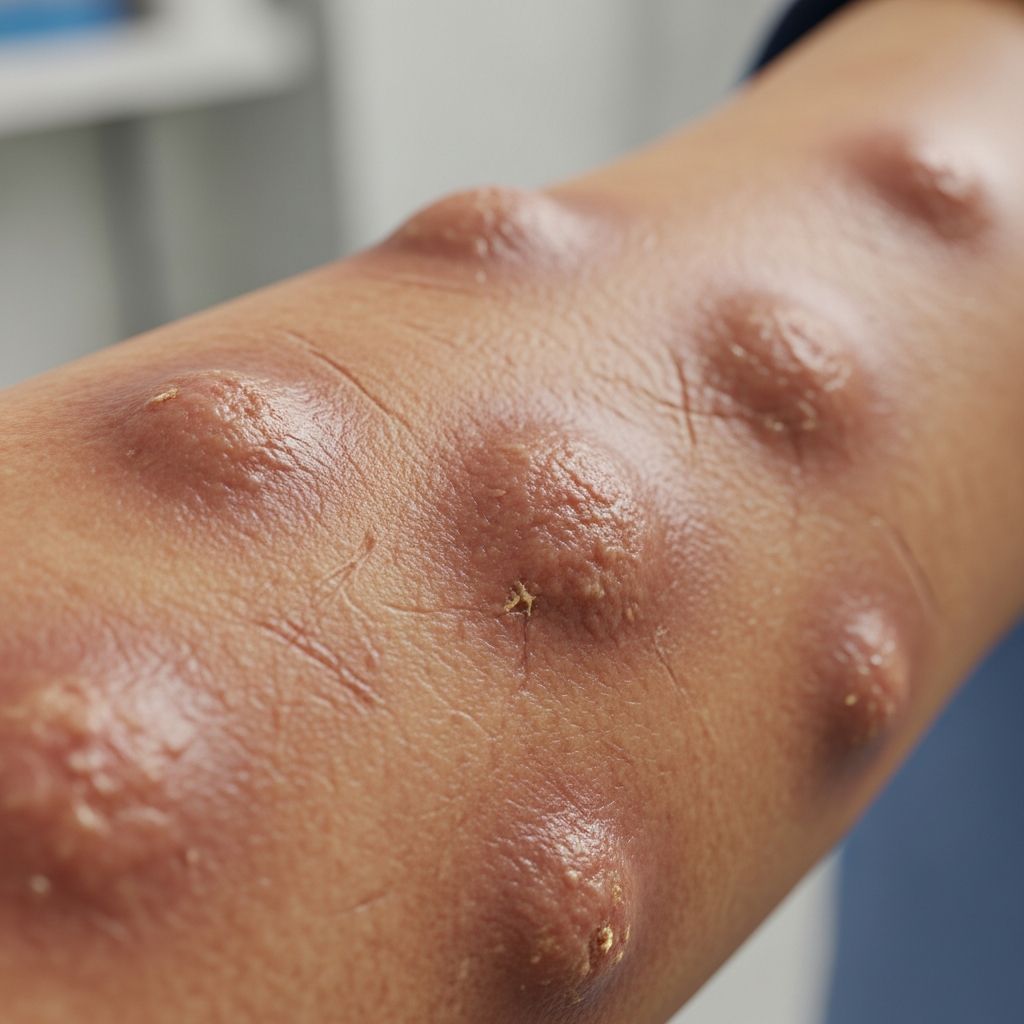
Nodular prurigo (PN) is a chronic inflammatory skin condition characterized by the development of extremely itchy, firm nodules that appear symmetrically distributed across the body, most commonly affecting the arms, legs, and trunk. The condition is marked by an intense itching sensation that drives patients to scratch and pick at the lesions, perpetuating a debilitating itch-scratch cycle. Unlike transient skin irritations, nodular prurigo represents a persistent dermatological challenge that often proves refractory to conventional treatments, requiring long-term, multifaceted management strategies.
The disease significantly impacts quality of life due to both its physical manifestations and psychological burden. Patients experience constant pruritus that disrupts sleep, daily activities, and emotional well-being. The visible nodules combined with the compulsive urge to scratch creates a challenging clinical scenario that demands comprehensive, patient-centered treatment approaches.
Etiology and Associated Conditions
Nodular prurigo does not arise spontaneously but is frequently associated with underlying cutaneous and systemic conditions that serve as precipitating or contributing factors. Understanding these associations is crucial for effective management, as treating the underlying cause may cure PN in some patients, though not all cases resolve completely.
Dermatological Associations
Among dermatological conditions, atopic dermatitis represents one of the most common associations with nodular prurigo. Patients with a history of atopic disease or cutaneous hypersensitivity disorders demonstrate increased susceptibility to developing PN. Other relevant skin conditions include chronic pruritus of varying origins, lichen planus, and psoriasis.
Systemic and Infectious Causes
Nodular prurigo may develop secondary to systemic conditions including renal disease, hepatic disorders, malignancy, endocrine abnormalities, and infectious diseases. Viral infections, particularly herpes zoster (shingles) and herpes simplex, can trigger or exacerbate PN. Proper diagnosis and treatment of these underlying conditions may resolve PN symptoms in responsive patients.
Neurological Factors
Neurological causes relate to damage affecting the brain and spinal cord or the peripheral nervous system throughout the body. Specific neurological conditions associated with PN include nerve damage from herpes or shingles infections, polyneuropathies, brachioradial pruritus, notalgia paresthetica, small fiber neuropathies, sensitive skin manifestations, and post-burn itch.
Pathophysiology
The intense pruritus experienced in nodular prurigo emerges from a complex neurobiological mechanism involving cutaneous neurogenic inflammation mediated by various neuropeptides and cytokines. Understanding this pathophysiology has opened new therapeutic avenues.
Neuropeptide-Mediated Inflammation
Key mediators of pruritus in PN include substance P, calcitonin gene-related peptide (CGRP), and vanilloid receptor subtype 1 (VR-1). These neuropeptides are overexpressed in PN lesions and drive the sensation of itch. VR-1 binds to capsaicin, making topical capsaicin a potential therapeutic agent.
Immune Cytokine Dysregulation
Individuals with PN demonstrate elevated levels of interleukin-31 (IL-31), a T-cell-derived highly prurigenic cytokine. This discovery has led to the development of monoclonal antibody therapies targeting IL-31 receptors.
Related Stories



Nerve Fiber Abnormalities
Immunohistochemical studies reveal increased dermal nerve fibers in the papillary dermis of PN patients. Thin, unmyelinated epidermal nerves serve as transmitters of severe prurigo sensation. Nerve growth factor (NGF) and its receptor, tyrosine receptor kinase A (TrkA), are overexpressed in PN lesions, leading to increased release and accumulation of neuropeptides such as substance P and CGRP.
Clinical Presentation and Diagnosis
Diagnosis of nodular prurigo relies on clinical history, careful examination, and laboratory testing to confirm the diagnosis and differentiate it from other dermatological conditions with similar presentations.
Clinical Features
- Symmetrically distributed, firm nodules primarily on arms, legs, and trunk
- Intense pruritus often described as severe and persistent
- Evidence of excoriation from chronic scratching and picking
- Nodules appear hard, raised, and often dry or crusty
- Lichenification of surrounding skin from chronic rubbing
- Secondary bacterial infection may occur from frequent scratching
Diagnostic Approach
The evaluation process includes detailed history taking to identify precipitating factors, underlying conditions, psychological stressors, and associated pruritic disorders. Physical examination documents the distribution, morphology, and extent of lesions. In ambiguous cases, dermoscopy or skin biopsy may be performed to exclude other diagnoses. Laboratory investigations should assess for underlying systemic causes, including renal and hepatic function, hematologic abnormalities, and infectious diseases based on clinical suspicion.
Treatment and Management Strategies
Management of nodular prurigo requires a multifaceted approach involving education, behavioral modification, and pharmacological interventions tailored to individual patient needs. The chronic, refractory nature of the condition often necessitates long-term therapy and emphasizes the importance of patient education, counseling, and compliance.
General Measures and Patient Education
Patients must be educated on practices to reduce scratching and picking behavior. Key recommendations include:
- Keeping nails short to minimize skin damage when scratching occurs
- Wearing protective clothing to reduce direct skin trauma
- Using frequent emollients to cool and soothe itchy skin; menthol may supplement this effect
- Identifying and avoiding trigger factors specific to the individual
- Practicing stress management techniques
- Diagnosing and treating any associated psychological disorders contributing to scratching and picking behavior
Topical and Intralesional Therapy
Although comprehensive randomized trials remain limited, topical and intralesional treatments form the foundation of PN management.
First-Line Topical Treatments
The suggested first-line therapy consists of potent topical corticosteroids, such as clobetasol dipropionate 0.05% ointment, applied under occlusion with plastic wrap once at nighttime for at least 2 to 4 weeks. Occlusion enhances penetration and therapeutic efficacy of the steroid.
Additional topical options include:
- Class I topical corticosteroids for inflammation reduction
- Topical calcineurin inhibitors as steroid-sparing alternatives
- Topical capsaicin, targeting VR-1 receptors to reduce neuropeptide-mediated itch
- Topical vitamin D analogs
Intralesional Therapy
Intralesional corticosteroids, particularly triamcinolone acetonide injections, deliver high local concentrations of anti-inflammatory medication directly into nodules, promoting resolution while minimizing systemic absorption. This approach is particularly effective for localized lesions that respond inadequately to topical therapy.
Additional Topical Modalities
Cryotherapy with liquid nitrogen can shrink nodules and reduce associated itch. Pulsed dye laser may reduce the vascularity of individual lesions, contributing to symptom improvement.
Phototherapy
Phototherapy represents an important second-line treatment modality, particularly for widespread PN that responds inadequately to topical interventions.
Phototherapy Types and Efficacy
Multiple phototherapy regimens have demonstrated effectiveness in PN management:
- Narrow-band UVB phototherapy significantly improves PN nodules at an average dose of 23.88-26.00 j/cm²
- PUVA (psoralen-ultraviolet-A) including bath and topical PUVA formulations
- Long-wavelength UVA
- Monochromatic excimer light at 308 nm
Phototherapy is suspected to work by decreasing levels of calcitonin gene-related peptide, substance P, and histamine released by inflammatory cells. However, PUVA carries risks of prolonged UV exposure and requires careful patient selection and monitoring.
Systemic Therapies
Systemic medications address the underlying pathophysiology and are reserved for moderate-to-severe PN or cases refractory to topical and phototherapeutic interventions.
Antihistamines and Corticosteroids
Antihistamines may help control itch in some cases, though their efficacy is variable. The response to systemic corticosteroids is very unpredictable, and they are generally not recommended for long-term use in PN due to adverse effects and potential disease rebound.
Immunosuppressive Agents
Cyclosporine at 3 mg/kg daily has been used for treatment-resistant PN, though adverse effects include nephrotoxicity, hypertension, hyperlipidemia, hyperkalemia, and hyperuricemia. Methotrexate represents another traditional immunosuppressive option that can bring significant relief from itch and promote skin healing when other treatments fail, though possible side effects include nausea, high blood pressure, and liver damage.
These agents are used less frequently today due to new FDA-approved treatments with superior safety profiles.
Retinoids
Systemic retinoids, such as acitretin, may shrink nodules and reduce itching, though their mechanism in PN remains incompletely understood.
Novel Immunomodulatory Approaches
Anecdotal evidence supports good response in severe, refractory cases to the immunomodulatory macrolide roxithromycin, either alone or combined with the anti-fibroblast agent tranilast.
Advanced Biological and Targeted Therapies
Recent advances in understanding PN pathophysiology have led to FDA-approved monoclonal antibody therapies with superior efficacy and tolerability profiles compared to traditional immunosuppressants.
Dupilumab (Dupixent)
Dupilumab is FDA-approved to treat adults with prurigo nodularis. This monoclonal antibody works by reducing inflammation thought to cause itchy skin, effectively reducing itch and clearing lesions when other treatments fail. For many patients, itch relief occurs quickly. In clinical trials leading to FDA approval, the most common side effects were mild and included inflamed eyes and eyelids, cold symptoms like a stuffy nose, and diarrhea.
Nemolizumab
Nemolizumab is FDA-approved to treat adults with prurigo nodularis. This monoclonal antibody targets the receptor for interleukin-31 (IL-31), a suspected major contributor to itch in PN patients, making it an ideal candidate for IL-31-driven disease. Nemolizumab can effectively stop the itch-scratch cycle.
Experimental Therapeutic Approaches
Additional novel treatments under investigation or showing promising results include:
- Thalidomide and lenalidomide can be used in severe cases; thalidomide depresses the nervous system by inhibiting tumor necrosis factor-alpha (TNF-alpha) inflammatory cells. Lenalidomide represents a less toxic alternative form of thalidomide. However, toxicity concerns, including potential teratogenicity, make these agents less favorable than newer biologic therapies.
- Opioid receptor antagonists including naloxone and naltrexone, which exert antipruritic effects by inhibiting Mu-opioid receptors on nociceptive neurons and interneurons, resulting in suppression of itch.
- Neurokinin-1 (NK1) receptor antagonists including aprepitant and serlopitant, which prevent substance P-mediated signaling in PN pathogenesis. Significant relief of itch has been achieved in PN patients on aprepitant monotherapy.
Complementary and Alternative Approaches
While conventional medical therapies remain the foundation of PN management, one study reported that hypnosis and acupuncture were beneficial, though evidence remains limited. These approaches may serve as adjunctive therapies in select patients and warrant further investigation.
Management Summary Table
| Treatment Category | First-Line Options | Second-Line Options |
|---|---|---|
| Topical/Intralesional | Clobetasol dipropionate 0.05% ointment under occlusion; intralesional corticosteroids | Topical calcineurin inhibitors; capsaicin; vitamin D analogs |
| Phototherapy | Narrow-band UVB (23.88-26.00 j/cm²) | PUVA; long-wavelength UVA; 308 nm excimer laser |
| Systemic | Dupilumab; nemolizumab | Cyclosporine; methotrexate; retinoids; opioid antagonists; NK1 antagonists |
Frequently Asked Questions
Q: Is there a cure for nodular prurigo?
A: Unfortunately, there is no definitive cure for nodular prurigo. Treatment focuses on managing symptoms and controlling the itch-scratch cycle. However, treating underlying systemic or infectious causes may resolve PN in some patients. Most cases require long-term, multimodal management approaches.
Q: How long does treatment for nodular prurigo typically last?
A: Nodular prurigo tends to be chronic and refractory to conventional treatments, often requiring long-term therapy extending months to years. Treatment duration varies by individual response and the underlying etiology of the disease.
Q: What is the itch-scratch cycle and why is it important to break it?
A: The itch-scratch cycle is a self-perpetuating pattern where pruritus drives scratching, which damages skin, intensifies inflammation, and increases itch sensation. Breaking this cycle through behavioral modification, protective measures, and pharmacological interventions is central to PN management.
Q: Are biologic therapies safe for long-term use in nodular prurigo?
A: FDA-approved biologic therapies like dupilumab and nemolizumab have demonstrated favorable safety profiles in clinical trials with predominantly mild adverse effects. However, long-term safety data continues to accumulate, and individual patient factors should guide treatment selection.
Q: Which patients are candidates for systemic immunosuppressive therapy?
A: Systemic immunosuppressives are reserved for moderate-to-severe PN cases that fail to respond adequately to topical, phototherapeutic, and first-line systemic interventions. Traditional agents like cyclosporine and methotrexate are increasingly replaced by FDA-approved biologic therapies due to superior safety profiles and efficacy.
References
- Prurigo Nodularis – StatPearls — National Center for Biotechnology Information (NCBI) Bookshelf. 2024. https://www.ncbi.nlm.nih.gov/books/NBK459204/
- Prurigo Nodularis (Causes, Symptoms and Treatment) — Patient.info. 2024. https://patient.info/doctor/dermatology/prurigo-nodularis-pro
- Prurigo Nodularis – Pruritic Rash – Skin Disease — National Organization for Rare Disorders (NORD). 2024. https://rarediseases.org/rare-diseases/prurigo-nodularis/
- Prurigo Nodularis: Diagnosis and Treatment — American Academy of Dermatology (AAD). 2024. https://www.aad.org/public/diseases/a-z/prurigo-nodularis-treatment
Similar Articles








Read full bio of medha deb