NOMID/CINCA Syndrome: Key Symptoms, Diagnosis & Treatments
Rare autoinflammatory disorder with rash, joint deformities, and neurological issues from birth.
What is NOMID/CINCA syndrome?
Neonatal-onset multisystem inflammatory disease (NOMID) is also known as chronic infantile neurological, cutaneous and articular syndrome (CINCA). NOMID/CINCA (MIM 607115) represents the most severe and rarest form of cryopyrin-associated periodic syndrome (CAPS), a group of autoinflammatory disorders caused by mutations in the NLRP3 gene encoding cryopyrin, a key protein in the inflammasome complex regulating interleukin-1β (IL-1β) production. Unlike milder CAPS forms like familial cold autoinflammatory syndrome (FCAS) or Muckle-Wells syndrome (MWS), NOMID/CINCA typically arises from de novo mutations rather than inheritance, due to its profound disabilities and high early mortality rate, often before reproductive age.
First described in Europe as CINCA in the 1980s and later termed NOMID in the USA, this condition manifests as a clinical triad of cutaneous rash, arthropathy, and chronic aseptic meningitis from birth or within weeks, leading to multisystem involvement including eyes, ears, bones, and brain. Symptoms are largely continuous rather than episodic, with superimposed flares triggered by cold or stress. Without targeted therapy, approximately 20% of patients succumb before adulthood to complications like infection, amyloidosis, or vasculitis. Early diagnosis and IL-1 inhibitors like anakinra have dramatically improved outcomes, preventing progression to irreversible damage.
Who gets NOMID/CINCA syndrome (Epidemiology)?
NOMID/CINCA is exceedingly rare, with an estimated prevalence below 1 in 1,000,000, though underdiagnosis likely occurs in milder cases overlapping with MWS. It affects both sexes equally and all ethnicities, but sporadic de novo NLRP3 mutations predominate (over 90% of cases), explaining the absence of strong familial patterns despite autosomal dominant inheritance potential. Severity correlates with mutation type; unique severe variants like Y570C, Y570F, F309S, and F523L are NOMID/CINCA-specific, while milder CAPS mutations rarely produce the full phenotype.
Geographically, cases cluster in registries from Europe, North America, and Japan, reflecting diagnostic awareness rather than true incidence variation. Intrafamilial variability exists, but profound NOMID/CINCA features like patellar overgrowth or quadriparesis have never been documented in milder CAPS kindreds. Newborn screening via genetic panels is not routine, but neonatal presentation prompts early testing in specialized centers.
What causes NOMID/CINCA syndrome?
NOMID/CINCA stems from gain-of-function mutations in NLRP3 (chromosome 1q44), encoding cryopyrin (NALP3), which assembles the inflammasome—a cytosolic complex activating caspase-1 to process pro-IL-1β into its active form. Mutant cryopyrin triggers constitutive inflammasome hyperactivation, causing unchecked IL-1β release, systemic inflammation, and tissue damage independent of external triggers. Over 200 NLRP3 variants are known across CAPS, with somatic mosaicism in ~25% of NOMID/CINCA explaining variable severity.
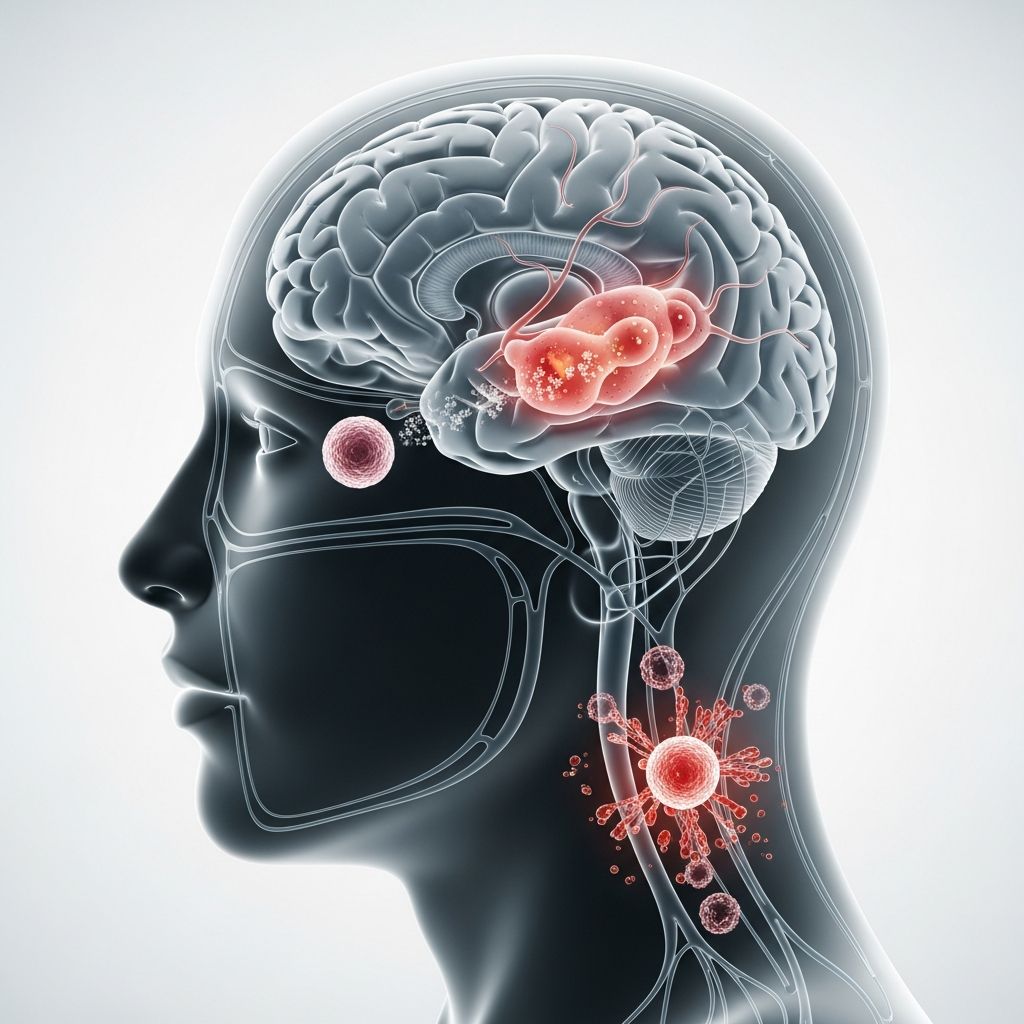
Pathophysiology involves dysregulated innate immunity: elevated IL-1β drives fever, rash, and synovitis; chronic IL-6 and TNF-α amplify joint destruction and aseptic meningitis; amyloid A deposition from sustained acute-phase response leads to renal failure in untreated cases. Neuropathology reveals leptomeningeal thickening, ependymitis, and cerebral atrophy from persistent inflammation. No infectious or environmental triggers are required, though cold exacerbates flares via NLRP3 sensitization.
What are the clinical features of NOMID/CINCA syndrome?
NOMID/CINCA presents continuously from birth with the diagnostic triad: urticarial rash, arthropathy, and neurological inflammation, plus fever, uveitis, and sensorineural issues. Symptoms escalate over months to years, culminating in disability without intervention.
Related Stories



| Symptom | Description |
|---|---|
| Fever | Daily low-grade or high spikes, persistent from neonatal period |
| Skin rash | Urticarial, non-pruritic, migratory maculopapular eruption; worsens with flares/cold |
| Joint changes | Early (first year): swelling, stiffness, contractures Later: epiphyseal overgrowth, ‘triangular patellae’, clubbing, bony ankylosis |
| Chronic aseptic meningitis | CSF pleocytosis, elevated protein; leads to ventriculomegaly, atrophy |
| Neurological | Irritability, seizures, spasticity, developmental delay, macrocephaly |
| Hearing loss | Progressive sensorineural, high-frequency first; >80% affected |
| Eye problems | Anterior/posterior uveitis, conjunctivitis, band keratopathy, papilledema |
| Physical appearance | Frontal bossing, saddle nose, protruding eyes, short stature |
| Other | Splenomegaly, lymphadenopathy, amyloidosis (10-20%), growth failure |
Skin findings
The hallmark is a fine, pink urticarial eruption on trunk/limbs, varying daily without vasculitis or pruritus. Lesions blanch under diascopy and intensify during flares.
Musculoskeletal
Arthropathy begins as symmetric polyarthritis; progresses to erosions, cartilage destruction, and unique radiographic triad: enlarged, misshapen epiphyses; irregular metaphyses; triangular patellae.
Neurological and ocular
Aseptic meningitis causes bulging fontanelle, vomiting, quadriparesis; MRI shows basal enhancement, hydrocephalus. Ocular inflammation risks glaucoma, cataracts.
How is NOMID/CINCA syndrome diagnosed?
Diagnosis relies on neonatal-onset triad plus supportive labs/genetics; no single test suffices. Clinical clues include:
- Urticaria neonatorum unresponsive to antibiotics
- Daily fevers with joint swelling by 1 month
- CSF pleocytosis without infection
- Patellar overgrowth on X-ray
Investigations
| Test | Findings |
|---|---|
| ESR/CRP | Markedly elevated chronically |
| Complete blood count | Anemia, thrombocytosis, leukocytosis |
| CSF analysis | Pleocytosis (50-500 WBC/mm³, mononuclear), high protein |
| Urine | Proteinuria if amyloidosis |
| Serum amyloid A | Persistently high |
| Imaging | MRI brain: leptomeningeal enhancement; skeletal survey: epiphyseal dysplasia |
| Genetic testing | NLRP3 mutation (80-90% detection rate) |
Negative family history and normal infection workup distinguish from mimics like neonatal lupus or infection.
What is the treatment of NOMID/CINCA syndrome?
IL-1 blockade is first-line, transforming prognosis from fatal to manageable. Anakinra (daily SC IL-1Ra) rapidly controls inflammation, prevents organ damage; alternatives include canakinumab (q4-8w SC) or rilonacept. Start ASAP post-diagnosis.
- Anakinra: 1-2 mg/kg/day; >90% response rate
- Corticosteroids: Bridge therapy, taper quickly (side effects)
- NSAIDs: Symptom relief only
- Anti-TNF/IL-6: Adjunct for refractory arthritis
Monitoring: Monthly labs, serial imaging, audiology, ophthalmology. Multidisciplinary care (rheumatology, neurology, genetics) essential.
What is the outcome for NOMID/CINCA syndrome?
Untreated: 20% mortality by adulthood; survivors disabled by deafness, quadriparesis, blindness, amyloid nephropathy. With IL-1 therapy: rash/fever resolve in days; arthropathy/uveitis stabilize; hearing/vision preserved if early. Long-term data show near-normal growth, cognition in treated cohorts. Challenges persist: injection adherence, mosaicism resistance, growth delays.
Frequently asked questions
Is NOMID/CINCA curable?
No cure exists; lifelong IL-1 inhibition controls symptoms.
Can NOMID/CINCA be prevented?
Genetic counseling for mutation carriers; preimplantation diagnosis theoretical.
Does cold trigger flares?
Yes, like other CAPS; avoid extreme cold.
Is genetic testing always positive?
~10-20% mutation-negative; clinical diagnosis stands.
What if anakinra fails?
Switch to canakinumab; check compliance/mosaicism.
References
- Chronic Infantile Neurological Cutaneous and Articular (CINCA) syndrome: a review — Aksentijevich I et al. PMC. 2016-11-29. https://pmc.ncbi.nlm.nih.gov/articles/PMC5142346/
- NOMID/CINCA syndrome — DermNet NZ. 2025-02. https://dermnetnz.org/topics/nomidcinca-syndrome
- Neonatal-Onset Multisystem Inflammatory Disease — NORD. 2024. https://rarediseases.org/rare-diseases/neonatal-onset-multisystem-inflammatory-disease/
- Chronic Infantile Neurological Cutaneous and Articular/Neonatal Onset Multisystem Inflammatory Disease — JAMA Ophthalmology. 2003-04-01. https://jamanetwork.com/journals/jamaophthalmology/fullarticle/413678
- NOMID/CINCA — NOMID Alliance. 2024. https://www.nomidalliance.org/nomid.php
Similar Articles








Read full bio of Sneha Tete