Cancer Risk With Sjögren’s: 6 Key Risk Factors To Watch
Understanding the rare but elevated risk of non-Hodgkin’s lymphoma in Sjögren’s syndrome patients and key warning signs.
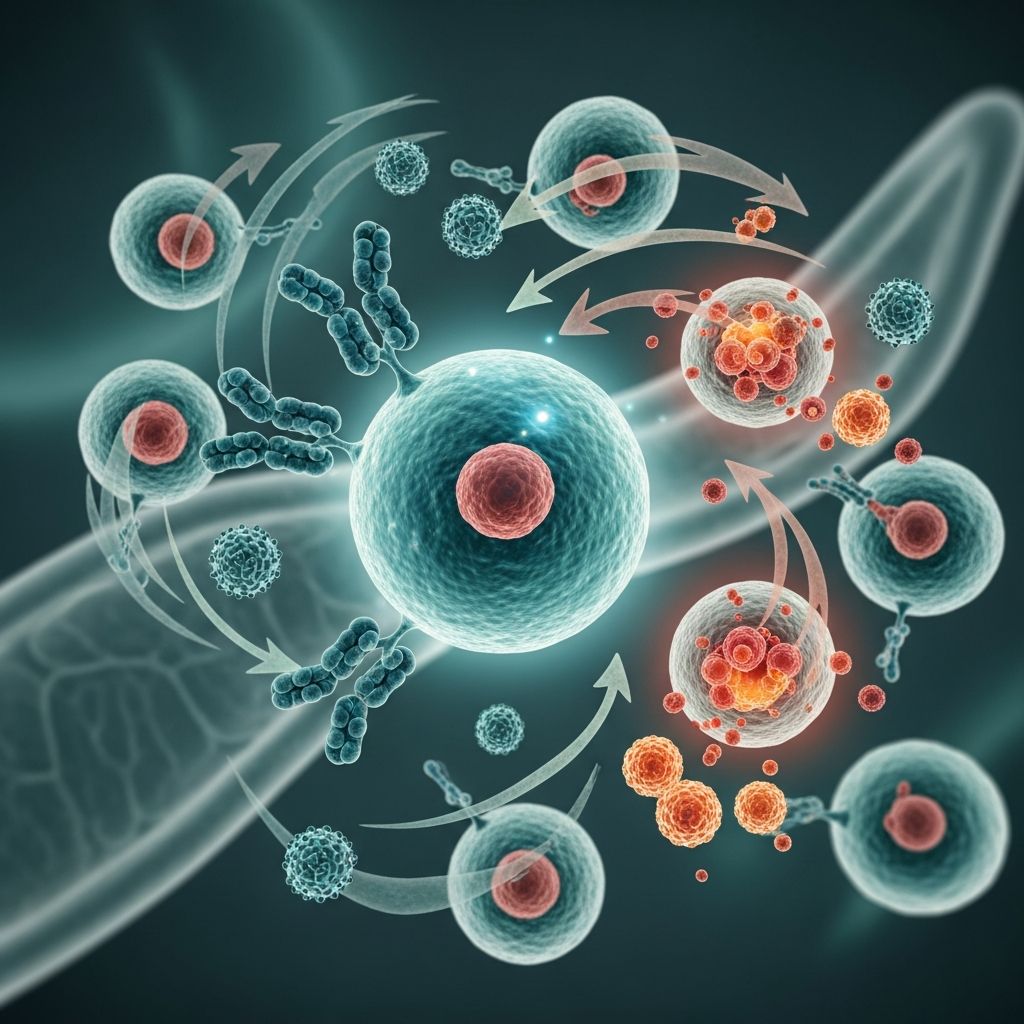
Non-Hodgkin’s lymphoma occurs with this autoimmune disease, but it’s rare.
By Stephanie Watson, Health Writer
Sjögren’s syndrome is an autoimmune inflammatory disease resulting from an abnormal immune system response. Along with causing symptoms such as dry eyes, dry mouth and joint pain, it can increase the risk of non-Hodgkin’s lymphoma (NHL), a cancer of white blood cells called lymphocytes. Just how much the risk for this cancer goes up depends on a few specific factors.
How High is the Risk?
Early studies found that the risk of NHL in people with Sjögren’s was 44 times higher than it was in people who don’t have this autoimmune disease. That sounds like a scary number, but more recent, larger studies have shown that the real risk isn’t nearly as high. “The risk is probably more in the range of six- to nine-fold higher,” says Alan Baer, MD, professor of medicine and director of the Jerome L. Greene Sjögren’s Syndrome Center at Johns Hopkins Medicine.
That number also needs to be put into perspective, because NHL is rare overall. Only about 4% of all new cancers diagnosed are this type. And the odds of developing NHL in one’s lifetime are about 1 in 41 for men and 1 in 52 for women. So even if you have Sjögren’s, your chance of getting this cancer is small. Recent peer-reviewed research confirms that while primary Sjögren’s syndrome (SS) elevates NHL risk, it affects less than 10% of patients, primarily those with primary SS.
What’s the Link?
The connection between Sjögren’s and NHL lies in white blood cells called B lymphocytes. Lymphocytes are immune cells that protect the body from foreign invaders like viruses and bacteria. There are two types:
- B lymphocytes make proteins called antibodies that attach to and destroy germs.
- T lymphocytes both directly attack invaders and activate the immune system against them.
Normally, old lymphocytes die and the body makes new ones to replace them. With NHL, the body makes too many lymphocytes, and they’re abnormal.
In Sjögren’s, B lymphocytes are overactive. That’s what causes inflammation. These immune cells build up in the salivary glands and other glands, damaging them and leading to symptoms. “Sustained stimulation of the lymphocytes can set the stage for developing lymphoma,” says Dr. Baer. Genes can also make a person more susceptible to this cancer.
Sjögren’s isn’t the only condition linked to NHL. Other diseases that involve stimulation of B lymphocytes can also increase the risk, including Helicobacter pylori infection and hepatitis C, Dr. Baer adds. Sjögren’s disease is a systemic autoimmune disorder characterized by lymphocytic infiltration of exocrine glands, leading to dryness, and it predominantly affects postmenopausal women with a 9:1 female-to-male ratio.
Who is at Risk?
Not everyone with Sjögren’s has the same risk. Symptoms and factors that raise the likelihood of developing NHL include:
- Enlarged salivary glands, especially if they stay swollen for months or years
- Persistently swollen lymph nodes (glands) in the neck, armpit or groin
- Pinpoint or button-sized areas of bleeding in the skin (usually on the lower legs) called petechiae or purpura
- Nerve damage known as peripheral neuropathy
- Poor blood flow to the fingers, toes, ears or knees, called Raynaud’s phenomenon
- Abnormal proteins called cryoglobulins and/or gamma globulins in the blood
Related Stories



The number of factors you have is key in determining your risk. In people with fewer than two of these factors, the risk for NHL is less than 4%. In those with three to six of these factors, it’s nearly 40%.
Primary Sjögren’s syndrome shows a particularly strong association with extranodal low-grade B-cell NHL, with risks estimated over 40 times higher in some cohorts.
Monitoring and Early Detection
The doctor will ask about and examine you for possible lymphoma warning symptoms, such as swollen lymph nodes or salivary glands, fevers, night sweats and unintentional weight loss. “Any enlarged node that persists for more than a few weeks would be of concern,” he adds. You may also get blood tests to look for proteins in your blood that could put you at higher risk for NHL.
Regular check-ups are essential. Organizations like Arthritis UK recommend monitoring for persistent salivary gland swelling, enlarged lymph glands, fevers, night sweats, or unexplained weight loss. Sjögren’s can be primary or secondary, often linked to rheumatoid arthritis or lupus, and secondary forms may carry slightly different risks.
What If I Do Get NHL?
It can be frightening to think that you are at higher risk for lymphoma, but take comfort in knowing that even if you do get this cancer, your outlook is likely good. Most non-Hodgkin’s lymphoma in people with Sjögren’s is a type called MALT (mucosa-associated lymphoid tissue), which tends to grow slowly. “The most common form of lymphoma that’s occurring in Sjögren’s has a good prognosis,” according to Dr. Baer. He’s had patients who’ve lived with this cancer for two decades. “Oncologists often question whether it needs treatment or simply observation if it is localized [in one area of the body] and is not causing symptoms.”
MALT lymphoma is the predominant subtype in SS patients, often presenting as stage I B-cell NHL and responding well to localized therapies. Late complications of Sjögren’s, including NHL, underscore the need for holistic management addressing dryness, fatigue, joint pain, and organ involvement.
Risk Factors Table
| Risk Factor | Description | Risk Level Impact |
|---|---|---|
| Enlarged Salivary Glands | Persistent swelling for months/years | High |
| Swollen Lymph Nodes | In neck, armpit, or groin | High |
| Petechiae/Purpura | Skin bleeding spots on legs | Moderate |
| Peripheral Neuropathy | Nerve damage | Moderate |
| Raynaud’s Phenomenon | Poor circulation to extremities | Moderate |
| Cryoglobulins/Gamma Globulins | Abnormal blood proteins | High |
Having 3-6 factors raises risk to nearly 40%; fewer than 2 keeps it under 4%.
Frequently Asked Questions (FAQs)
Q: How much does Sjögren’s increase NHL risk?
A: Recent studies indicate a 6- to 9-fold increase, down from earlier estimates of 44-fold. Absolute risk remains low as NHL is rare overall.
Q: What is the most common NHL type in Sjögren’s?
A: MALT lymphoma, a slow-growing form with good prognosis, often manageable with observation if localized.
Q: Who should monitor closely for lymphoma?
A: Patients with persistent gland swelling, swollen nodes, purpura, neuropathy, Raynaud’s, or abnormal blood proteins.
Q: Can NHL in Sjögren’s be prevented?
A: No direct prevention, but early detection via regular check-ups improves outcomes. Manage underlying inflammation with DMARDs like hydroxychloroquine.
Q: Is Sjögren’s always primary for NHL risk?
A: Risk is highest in primary SS, less than 10% develop NHL, mainly low-grade B-cell types.
Living with Sjögren’s: Broader Management
Beyond lymphoma risk, Sjögren’s affects multiple systems. Dryness leads to eye soreness, dental issues, and fatigue. Associated conditions include rheumatoid arthritis (secondary SS), lung disease, and neuropathy. Treatments focus on symptom relief: artificial tears, saliva substitutes, and DMARDs for inflammation. Hydroxychloroquine may help joint pain but requires eye monitoring.
Rituximab is used for complications like lymphoma or lung involvement, though not NHS-approved specifically for SS. Lifestyle aids include hydration, humidifiers, and avoiding irritants. Chronic fatigue and pain are major disabilities; multidisciplinary care is key.
Research continues into autoantibodies like anti-Ro/SS-A and anti-La/SS-B, which aid diagnosis and may predict complications. Patients average diagnosis at 50, mostly women, emphasizing vigilance in at-risk groups.
References
- Cancer Risk with Sjögren’s | Arthritis Foundation — Arthritis Foundation. 2021-06-07. https://www.arthritis.org/health-wellness/about-arthritis/related-conditions/other-diseases/non-hodgkins-lymphoma-with-sjogrens-syndrome
- Sjogren’s syndrome and Lymphoma — National Center for Biotechnology Information (PMC – NIH). 2021. https://pmc.ncbi.nlm.nih.gov/articles/PMC8580410/
- Sjögren disease | Arthritis UK — Versus Arthritis. Accessed 2026. https://www.arthritis-uk.org/information-and-support/understanding-arthritis/conditions/sjoegren-disease/
- Sjögren’s Disease Information — Johns Hopkins Sjögren’s Center. Accessed 2026. https://www.hopkinssjogrens.org/disease-information/
- Sjögren’s Disease – Arthritis Foundation — Arthritis Foundation. Accessed 2026. https://www.arthritis.org/diseases/sjogrens-syndrome
- Risk of Non‐Hodgkin’s Lymphoma in Primary Sjögren’s Syndrome — Arthritis & Rheumatology (ACR Journals). 2014-02-28. https://acrjournals.onlinelibrary.wiley.com/doi/10.1002/acr.21887
Similar Articles








Read full bio of Sneha Tete