Non-Sexually Acquired Human Papillomavirus Infection Guide
Understanding non-sexual transmission routes, clinical features, diagnosis, and management of HPV infections beyond sexual contact.

Human papillomavirus (HPV) infections are primarily known for sexual transmission, but non-sexual routes play a significant role, particularly in children, immunocompromised individuals, and certain skin conditions. These infections manifest as various warts and lesions on skin and mucosa, caused by over 200 HPV genotypes.
What is non-sexually acquired human papillomavirus infection?
Non-sexually acquired HPV refers to infections transmitted through routes other than sexual contact, including skin-to-skin contact, fomites, autoinoculation, and perinatal transmission. HPV belongs to the Papillomaviridae family, epitheliotropic viruses infecting squamous epithelia. While sexual transmission is most common, non-sexual pathways account for cases in virgins, children, and extragenital sites.
Low-risk HPV types (e.g., 6, 11) cause benign warts, while high-risk types (e.g., 16, 18) may lead to dysplasia or cancer, though non-sexual acquisition rarely progresses to malignancy.
Who gets non-sexually acquired human papillomavirus infection?
Non-sexual HPV affects diverse groups:
- Children and infants: Perinatal transmission from mother to child during delivery, leading to juvenile-onset recurrent respiratory papillomatosis (JORRP) or anogenital warts.
- Immunocompromised individuals: Higher risk due to impaired immunity, including HIV patients or those on immunosuppressants.
- Virgin adolescents and adults: Autoinoculation from common warts to genital areas.
- Healthcare workers and patients: Via contaminated instruments like gynecological tools or gloves.
- General population: Through fomites, shared towels, or close non-sexual contact.
Prevalence is higher in unvaccinated populations; vaccination significantly reduces incidence.
What causes non-sexually acquired human papillomavirus infection?
Transmission occurs via:
- Direct skin-to-skin contact: Non-intimate touching, e.g., hands to genitals.
- Autoinoculation: Self-transfer from one body site to another, common in picked warts leading to subungual or linear warts (pseudo-Koebner phenomenon).
- Fomites: Contaminated objects; HPV survives on surfaces for days, detected on 17.9% of gynecological equipment.
- Perinatal: Vertical transmission during birth, with mothers having warts at 200-fold risk for child JORRP.
- Iatrogenic: Medical procedures with poor hygiene, e.g., ultrasound probes harboring virions.
Incubation varies from weeks to years; microabrasions facilitate entry into basal epithelia.
What are the clinical features of non-sexually acquired human papillomavirus infection?
Lesions depend on HPV type and site:
Skin warts
- Common warts (verruca vulgaris): Rough, hyperkeratotic papules on hands/feet (HPV 2, 4).
- Plantar warts (verruca plantaris): Painful, callus-like on soles (HPV 1).
- Flat warts (verruca plana): Smooth, brown papules on face/legs (HPV 3, 10).
- Mosaic warts: Clustered plantar lesions.
Anogenital warts (non-sexual)
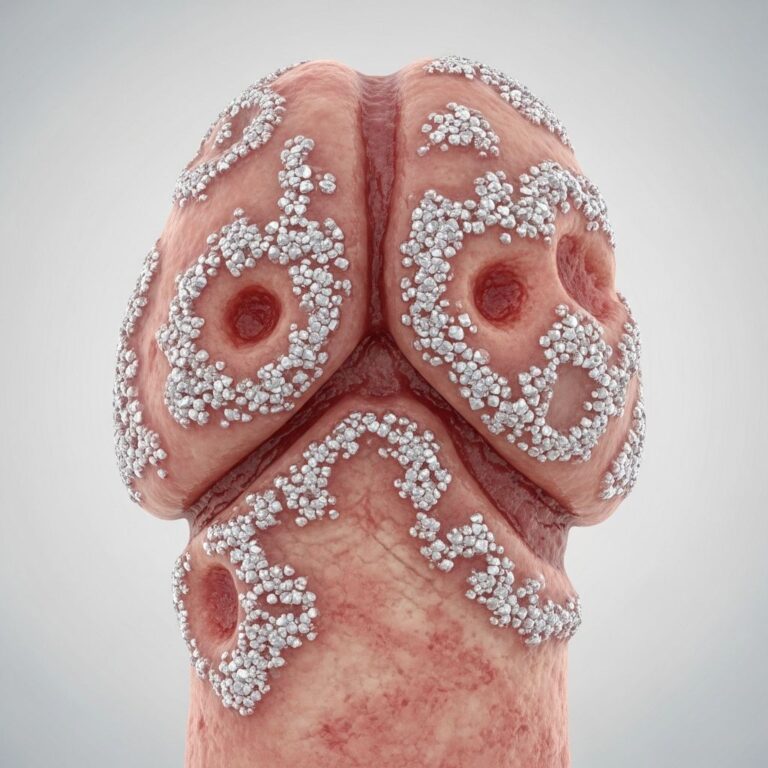
Cauliflower-like growths from autoinoculation (HPV 6, 11); appear 3-6 months post-exposure in children.
Oropharyngeal
Papillomas in larynx (JORRP from perinatal HPV 6/11).
Other
Filiform warts on face, butcher’s warts on hands from occupational exposure.
Immunosuppression leads to extensive, refractory warts.
How is non-sexually acquired human papillomavirus infection diagnosed?
Related Stories



Diagnosis is clinical, based on appearance:
- Typical verrucous lesions with black dots (thrombosed capillaries).
- Dermoscopy shows mosaic patterns or dotted vessels.
Confirmatory tests:
| Method | Purpose | Details |
|---|---|---|
| Biopsy/Histology | Rule out malignancy | Acanthosis, koilocytes, hypergranulosis. |
| HPV PCR/DNA test | Typing (high/low risk) | COBAS 4800 for HR-HPV; not routine. |
| Acetowhitening | Subclinical lesions | 4% acetic acid highlights flat warts. |
Differential includes seborrheic keratosis, condyloma lata, molluscum.
What is the treatment for non-sexually acquired human papillomavirus infection?
Treatment targets lesions; no cure for latent virus. Options:
- Physical destruction: Cryotherapy (first-line, 70-90% efficacy), curettage, electrocautery, laser.
- Topicals: Podophyllotoxin, imiquimod (induces immune response), salicylic acid for skin warts.
- Systemic: Cimetidine (children), retinoids for extensive disease.
- Observation: 65% spontaneous regression in 2 years.
Recurrence common (20-30%); treat contacts if visible lesions.
What is the outcome for non-sexually acquired human papillomavirus infection?
Benign, self-limiting in immunocompetent; rare malignant transformation except high-risk types in mucosa. Vaccination (Gardasil 9) prevents 90% warts/cancers; recommended pre-exposure.
Perinatal cases may require multiple surgeries for JORRP.
Prevention of non-sexually acquired human papillomavirus infection
- HPV vaccination: 9-valent covers key types; routine at 9-12 years.
- Hygiene: Handwashing, glove use, instrument disinfection.
- Avoid picking warts to prevent autoinoculation.
- Cesarean for mothers with active genital warts (reduces perinatal risk).
Frequently asked questions
Can HPV be transmitted non-sexually?
Yes, via fomites, autoinoculation, perinatal routes, and non-intimate skin contact; documented in children and virgins.
Do non-sexual HPV infections cause cancer?
Rarely; low-risk types cause warts, high-risk need cofactors like immunosuppression.
Is HPV testing recommended for non-sexual cases?
Not routinely; clinical diagnosis suffices unless atypical or immunocompromised.
Does vaccination protect against non-sexual transmission?
Yes, prevents infection from covered types regardless of route.
How long do non-sexual HPV warts last?
Most resolve in 1-2 years; treatment accelerates clearance.
References
- Non-sexual HPV transmission and role of vaccination for a better future — Ralli M et al. 2020-10-15. https://pmc.ncbi.nlm.nih.gov/articles/PMC7579832/
- Anogenital warts, human papillomavirus — DermNet NZ. 2023-09-01. https://dermnetnz.org/topics/anogenital-warts
- About HPV — HPV.org.nz. 2023-09-01. https://www.hpv.org.nz/about-hpv/about-hpv
- Viral wart — DermNet NZ. 2023-01-01. https://dermnetnz.org/topics/viral-wart
- Human papillomavirus (HPV) — Immunisation Advisory Centre. 2024-01-01. https://immune.org.nz/diseases/human-papillomavirus-hpv
Similar Articles








Read full bio of Sneha Tete