Non-Small Cell Lung Cancer Symptoms: 11 Signs To Watch
Recognizing the early signs of non-small cell lung cancer can lead to timely diagnosis and better outcomes for this common lung cancer type.
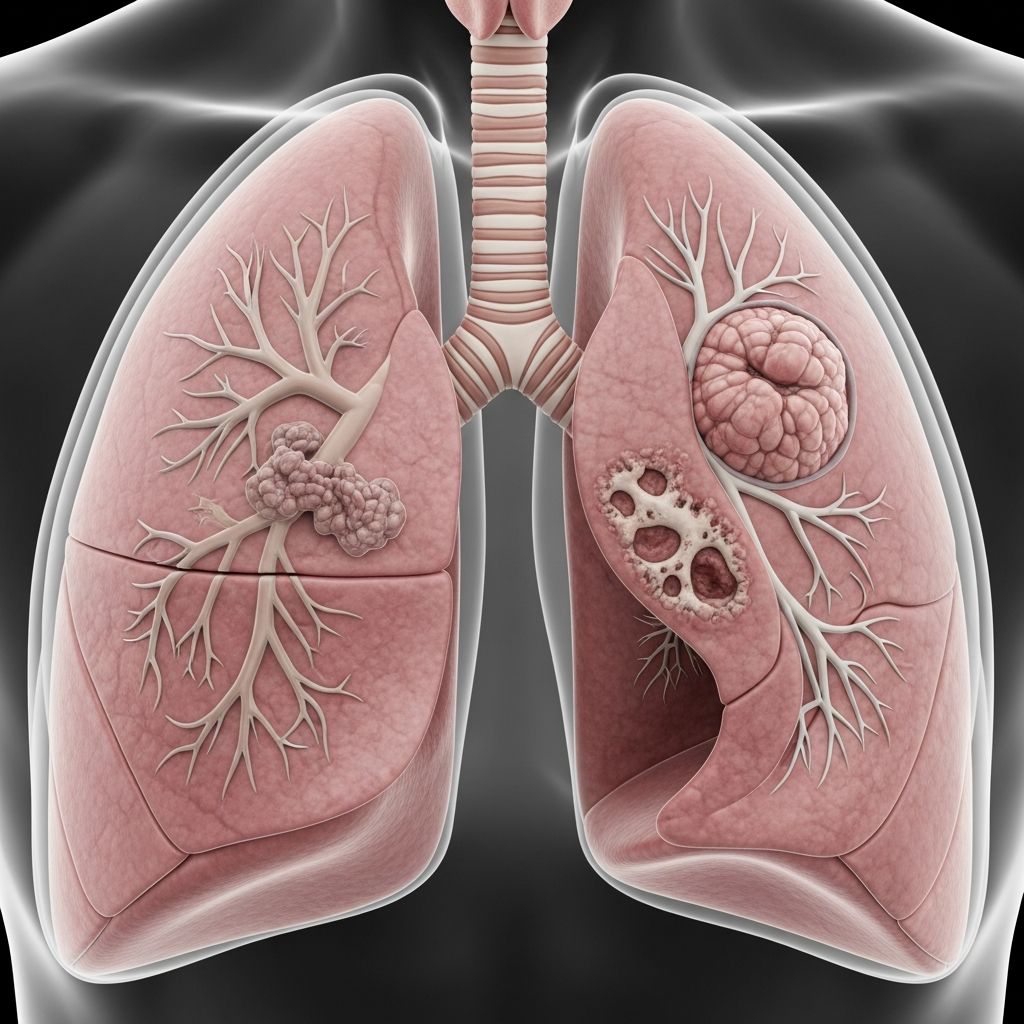
Non-small cell lung cancer (NSCLC) accounts for about 85% of all lung cancer cases and is the most common form of lung cancer. It originates in the tissues of the lung and grows more slowly than small cell lung cancer, but often spreads beyond the lungs by diagnosis in 40% of cases.
What Is Non-Small Cell Lung Cancer?
NSCLC begins at the cellular level, where abnormal cells in the lungs reproduce rapidly and uncontrollably. These are carcinomas affecting the cells lining the lung airways, including bronchi, bronchioles, and alveoli. Unlike small cell lung cancer, NSCLC progresses more slowly but can still metastasize to other body parts.
The primary subtypes include adenocarcinoma (40% of cases), which affects mucus-producing cells in the outer lung areas and impacts both smokers and nonsmokers; squamous cell carcinoma (25-30%), linked to the bronchial lining and more prone to spreading; and large cell carcinoma, which grows quickly.
Symptoms of Non-Small Cell Lung Cancer
Early-stage NSCLC often presents no symptoms, making it challenging to detect promptly. Symptoms typically emerge as the cancer advances and may mimic common respiratory issues or smoking effects. Common signs include:
- A persistent cough that worsens over time or doesn’t resolve after 3 weeks
- Coughing up blood (hemoptysis)
- Chest pain or discomfort, especially when breathing or coughing
- Shortness of breath or trouble breathing
- Wheezing
- Hoarseness
- Unexplained weight loss and loss of appetite
- Fatigue or persistent tiredness
- Recurrent chest infections
- Trouble swallowing
- Swelling in the face or neck veins
Less common symptoms are bone pain, headaches, finger clubbing (curved fingers or enlarged ends), and persistent shoulder pain. These arise from tumor growth, airway obstruction, or metastasis. If you smoke or have risk factors and notice these, seek medical evaluation promptly.
Risk Factors for Non-Small Cell Lung Cancer
Smoking is the leading risk factor, responsible for most NSCLC cases, though nonsmokers can develop it. Other factors include:
- Secondhand smoke exposure
- Radon gas inhalation (a colorless, odorless gas from uranium decay in soil)
- Workplace carcinogens like asbestos, arsenic, chromium, or diesel exhaust
- Air pollution
- Previous radiation therapy to the chest
- Family history of lung cancer
- Genetic mutations (e.g., EGFR, ALK)
Annual low-dose CT screenings are recommended for high-risk individuals aged 50-80 with a 20-pack-year smoking history who currently smoke or quit within 15 years.
Stages of Non-Small Cell Lung Cancer
NSCLC staging uses the TNM system (Tumor size, Node involvement, Metastasis) to guide treatment. Stages range from 0 to IV:
Related Stories



| Stage | Description |
|---|---|
| Occult (Hidden) | Cancer cells in sputum or bronchial washings but not visible on imaging; may have spread. |
| Stage 0 (Carcinoma in Situ) | Cancer confined to lung lining. |
| Stage I | Tumor ≤4 cm, no lymph node spread. Subdivided into IA (≤3 cm) and IB (>3 cm or invading nearby structures). |
| Stage II | Tumor ≤5 cm with nearby lymph nodes or >5 cm without nodes. Includes IIA and IIB. |
| Stage III | Spread to lymph nodes on same side or chest wall/structures. Divided into IIIA, IIIB, IIIC; more advanced regional spread. |
| Stage IV | Metastasis to distant organs (e.g., brain, bones, liver). IVA (limited) and IVB (widespread). |
About 80% of diagnoses occur at advanced stages (III-IV) due to subtle early symptoms.
Diagnosis of Non-Small Cell Lung Cancer
Diagnosis starts with a medical history and physical exam. If suspected, imaging includes:
- Chest X-ray
- CT scan (preferred for detail)
- PET-CT for staging and metastasis detection
- MRI or bone scans if spread suspected
Confirmation requires biopsy: bronchoscopy, needle biopsy, or surgery to examine tissue under microscope. Sputum cytology checks mucus for cancer cells. Molecular testing identifies mutations for targeted therapies.
Treatment Options for Non-Small Cell Lung Cancer
Treatment depends on stage, type, genetics, and health. Options include:
- Surgery: Lobectomy, pneumonectomy, or segmentectomy for early stages (I-II).
- Radiation Therapy: Stereotactic body radiotherapy (SBRT) for inoperable early tumors; combined with chemo for later stages.
- Chemotherapy: Shrinks tumors pre/post-surgery or for advanced disease.
- Targeted Therapy: Drugs like EGFR inhibitors (osimertinib) for specific mutations.
- Immunotherapy: PD-1/PD-L1 inhibitors (pembrolizumab) boost immune response, often for advanced NSCLC.
- Palliative Care: Manages symptoms in stage IV.
Multidisciplinary teams tailor plans. Early detection improves 5-year survival: 60% for stage I vs. <10% for stage IV.
Prevention and Screening
Quit smoking to reduce risk by 50% after 10 years. Test homes for radon. Avoid carcinogens. High-risk screening: annual LDCT for ages 50-80 with heavy smoking history.
Living with Non-Small Cell Lung Cancer
Support includes counseling, support groups, nutrition, and exercise. Clinical trials offer new therapies. Palliative care enhances quality of life from diagnosis.
Frequently Asked Questions (FAQs)
What are the first signs of non-small cell lung cancer?
The earliest signs often include a persistent cough, shortness of breath, and chest pain. Many cases are asymptomatic early on.
Is non-small cell lung cancer curable?
Yes, especially in stages I-II with surgery; cure rates drop in advanced stages but treatments extend life.
How fast does NSCLC spread?
It grows slower than small cell but 40% have spread at diagnosis; speed varies by subtype.
Can nonsmokers get NSCLC?
Yes, adenocarcinoma commonly affects nonsmokers due to other factors like radon or genetics.
What is the survival rate for NSCLC?
Overall 5-year survival is ~25%; stage-dependent: 92% stage IA, 10% stage IV.
References
- Non-Small Cell Lung Cancer | Fact Sheets — Yale Medicine. 2023. https://www.yalemedicine.org/conditions/non-small-cell-lung-cancer
- Non-Small Cell Lung Cancer: Symptoms & Causes — Massachusetts General Hospital. 2024. https://www.massgeneral.org/cancer-center/treatments-and-services/thoracic-cancers/lung-cancer/nsclc
- Non-Small Cell Lung Cancer Treatment – NCI — National Cancer Institute. 2025-01-10. https://www.cancer.gov/types/lung/patient/non-small-cell-lung-treatment-pdq
- Lung cancer – Symptoms — NHS. 2024. https://www.nhs.uk/conditions/lung-cancer/symptoms/
Similar Articles








Read full bio of Sneha Tete