Nonspecific Viral Exanthems: 4 Common Types And Management
Exploring childhood rashes from viral infections: pityriasis rosea, Gianotti-Crosti, laterothoracic exanthem, and Kawasaki disease.
An
exanthem
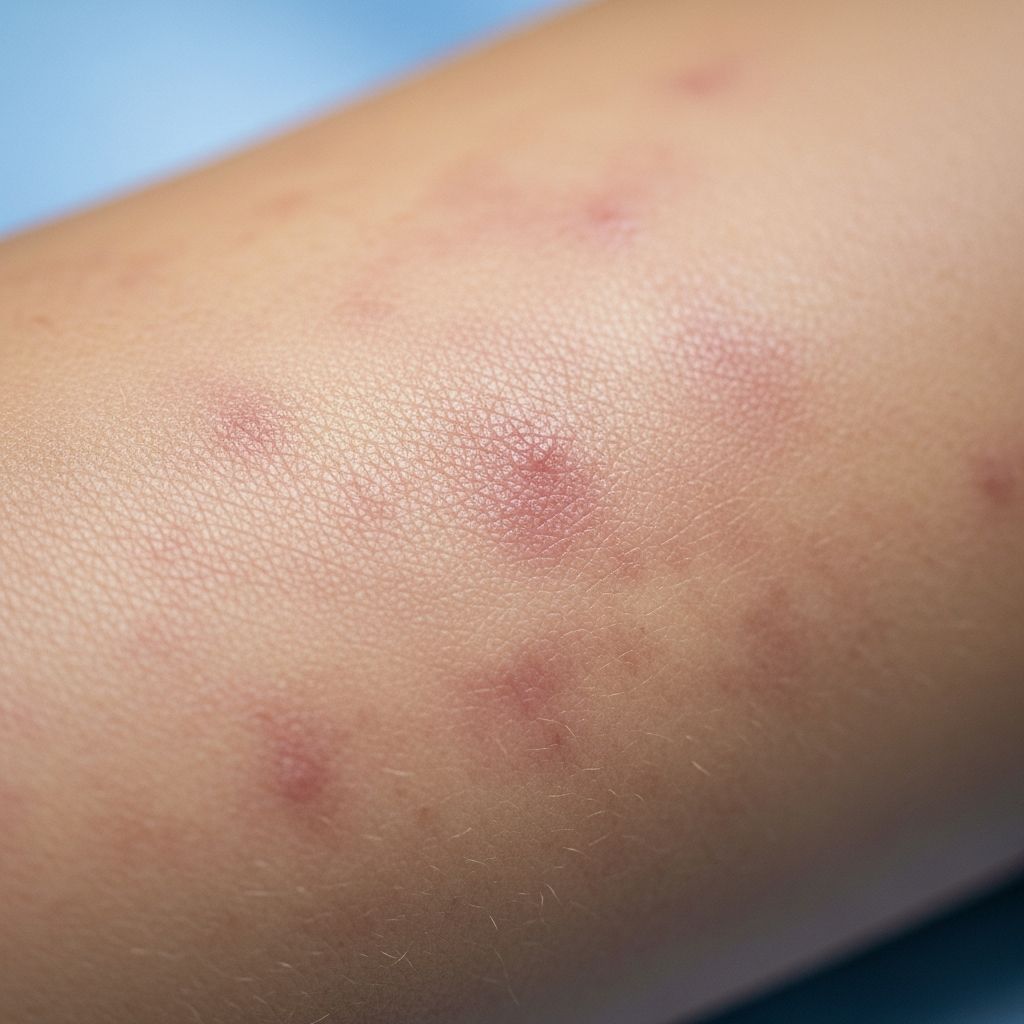
is defined as a widespread erythematous rash accompanied by systemic symptoms such as fever, headache, and malaise. These rashes are particularly common in childhood and are frequently associated with viral infections. They may arise from a reaction to a toxin produced by the virus, direct damage to the skin by the organism, or an immune response triggered by the infection.What are nonspecific viral exanthems?
Nonspecific viral exanthems represent a category of rashes where the exact viral cause is not always identifiable, distinguishing them from specific viral exanthems like measles or chickenpox, which have characteristic lesions and prodromal symptoms. Common winter and summer viruses, including respiratory and enteroviruses, are often implicated. These rashes typically manifest as spots or blotches, which may or may not be itchy, and are usually more extensive on the trunk than the extremities.
Patients often experience prodromal symptoms prior to the rash onset, including malaise, fever, headache, sore throat, coryza (runny nose), anorexia, vomiting, diarrhoea, or localised lymphadenopathy. These exanthems can occur in small epidemics, particularly among children.
Clinical approach
Diagnosis of nonspecific viral exanthems is primarily clinical, relying on history, rash morphology, distribution, and associated symptoms. While many resolve spontaneously, definitive diagnosis becomes crucial if there is exposure to vulnerable populations such as pregnant women or immunocompromised individuals, as some viruses like parvovirus can pose risks. Differential diagnoses include drug eruptions (e.g., morbilliform rashes mimicking viral patterns) and bacterial toxin-mediated exanthems.
Laboratory tests are rarely needed but may include viral serology or PCR if a specific aetiology is suspected. Skin biopsy is not typically required unless the presentation is atypical.
Pityriasis rosea
**Pityriasis rosea** is a distinctive self-limiting eruption most commonly affecting teenagers and young adults. Although its precise cause remains unknown, herpes viruses 6 and 7 have been most frequently associated, suggesting a post-viral immune reaction.
The eruption typically begins with a solitary oval
herald patch
, measuring 2-5 cm, appearing 7-14 days before the generalised rash. This patch features a dry surface with an inner circlet of scaling. Subsequently, smaller plaques (1-2 cm) erupt predominantly in afir tree pattern
on the trunk, following Langer’s skin tension lines. The morphology can vary but often includes peripheral collarette scaling. The rash is mildly pruritic and resolves within 6-12 weeks without scarring or recurrence.- Duration: 6-12 weeks
- Itch: Mild
- Treatment: Symptomatic; mild topical steroids or emollients for itch. UVB phototherapy for extensive/persistent cases
Gianotti-Crosti syndrome
**Gianotti-Crosti syndrome** (also known as papulovesicular acrodermatitis, papular acrodermatitis of childhood, or acrodermatitis papulosa infantum) is a characteristic papular rash in young children aged 6 months to 12 years, lasting 2-8 weeks. It is triggered by specific viruses including Epstein-Barr virus (EBV), cytomegalovirus (CMV), hepatitis B virus (HBV), coxsackievirus, parainfluenza virus, respiratory syncytial virus (RSV), adenovirus, and rotavirus.
Over 3-4 days, a profuse eruption of erythematous
macules, papules, plaques
, and occasionally vesicles develops, starting on the thighs and buttocks, spreading to the outer arms, and finally the face. The rash is often asymmetrical, monomorphic (uniform lesions), and minimally pruritic. Lesions are flesh-coloured to red-brown papules (1-5 mm) with flat tops. Liver enlargement or lymphadenopathy may accompany it. Recurrence is rare.Related Stories



- Key features: Acral distribution (extremities), symmetrical, persistent
- Duration: 2-8 weeks
- Treatment: Supportive; resolves spontaneously
Laterothoracic exanthem
**Laterothoracic exanthem**, or Asymmetric Periflexural Exanthem of Childhood (APEC), is an uncommon self-limiting rash primarily affecting young children, especially girls under 4 years. It is presumed viral in origin, though the specific agent is unidentified.
The rash initiates unilaterally in the axilla (armpit) or groin, gradually extending outward while remaining predominantly unilateral. It may involve the face, genitalia, hands, or feet and persist up to 12 weeks. Tiny papules coalesce into itchy, dry plaques resembling dermatitis; older patches fade to dusky grey, sometimes forming net-like or annular patterns. Prodromal viral symptoms like fever, sore throat, rhinitis, vomiting, diarrhoea, or lymphadenopathy may precede it.
- Distribution: Unilateral, starting in flexures
- Morphology: Papules → plaques, eczematous
- Duration: Up to 12 weeks
- Treatment: Emollients, topical steroids for itch
Kawasaki disease
**Kawasaki disease** (mucocutaneous lymph node syndrome) is a rare vasculitis primarily affecting children under 4 years, with highest incidence in Asian (especially Japanese) populations—5000-6000 cases annually in Japan. It is the leading cause of acquired heart disease in children in the US and Japan. While superantigens like streptococci are implicated in some cases, a viral trigger is suspected in others.
Diagnostic criteria include fever ≥5 days plus 4/5 principal features:
- Bilateral conjunctivitis (non-exudative)
- Oral mucous membrane changes (strawberry tongue, red/cracked lips)
- Peripheral extremity changes (erythema, oedema; later periungual desquamation)
- Polymorphous exanthem (perioral/perineal accentuation, may be morbilliform, scarlatiniform, or erythema multiforme-like)
- Cervical lymphadenopathy (>1.5 cm)
The child appears unwell with widespread small- and medium-vessel inflammation, especially coronary arteries, risking aneurysms. Early IV immunoglobulin (IVIG) and aspirin therapy are critical to prevent cardiac complications.
Management
For most nonspecific viral exanthems, no specific treatment is required as they are short-lived and self-resolving. Symptomatic relief includes:
- Paracetamol or ibuprofen for fever and malaise
- Topical/oral antihistamines, emollients, or mild topical steroids for itch and dryness
- UVB phototherapy for persistent pityriasis rosea
Kawasaki disease mandates urgent hospitalisation for IVIG (2 g/kg single infusion), high-dose aspirin, and echocardiogram monitoring. Follow-up for cardiac sequelae is essential.
Prevention involves hygiene, isolation during contagious phases, and vaccination where applicable (e.g., against known viral triggers). Consult dermatology or paediatrics for atypical or prolonged cases.
Frequently Asked Questions (FAQs)
Q: How long do nonspecific viral exanthems last?
A: Most resolve in 1-12 weeks spontaneously, depending on the type—e.g., pityriasis rosea (6-12 weeks), Gianotti-Crosti (2-8 weeks).
Q: Are these rashes contagious?
A: Often yes, via respiratory droplets or contact, especially if prodromal viral symptoms are present. Isolate until fever resolves.
Q: When should I seek medical attention?
A: If high fever persists >5 days, cardiac symptoms, exposure to at-risk groups, or rash lasts >12 weeks.
Q: Can adults get these exanthems?
A: Yes, though less common; pityriasis rosea frequently affects young adults.
Q: Is Kawasaki disease curable?
A: Early treatment prevents complications; it’s not ‘curable’ but manageable with IVIG and aspirin.
References
- Viral skin infections. Nonspecific viral exanthems — DermNet NZ. 2009 (updated). https://dermnetnz.org/cme/viral-infections/nonspecific-viral-exanthems
- Viral exanthem — DFTB Skin Deep. Recent. https://dftbskindeep.com/all-diagnoses/viral-exanthem/
- Viral skin infections. Specific viral exanthems — DermNet NZ. 2009 (updated). https://dermnetnz.org/cme/viral-infections/specific-viral-exanthems
- Exanthems (reactive rashes) — DermNet NZ. Recent. https://dermnetnz.org/topics/exanthems
- Viral Exanthem Rash: Symptoms, Causes & Treatment — Cleveland Clinic. 2023-11-27. https://my.clevelandclinic.org/health/diseases/22510-viral-exanthem-rash
Similar Articles








Read full bio of Sneha Tete