Noonan Syndrome: Comprehensive Guide To Diagnosis & Management
Comprehensive guide to Noonan syndrome: genetic disorder with facial, cardiac, growth, and multi-system features.
Noonan Syndrome
Noonan syndrome (NS) is a relatively common autosomal dominant genetic disorder classified as a RASopathy, characterized by distinctive facial features, short stature, congenital heart defects, and a broad spectrum of other anomalies affecting multiple organ systems. It arises from mutations primarily in genes of the RAS-MAPK signaling pathway, with an estimated incidence of 1 in 1,000 to 2,500 live births.
What is Noonan Syndrome?
Noonan syndrome represents one of the most frequent genetic syndromes involving the RAS/mitogen-activated protein kinase (MAPK) pathway, leading to dysregulated cell signaling that impacts growth, development, and organ formation. This pathway disruption results in heterogeneous phenotypic manifestations that evolve over time, from prenatal features like increased nuchal translucency and polyhydramnios to postnatal issues including failure to thrive, developmental delays, and adult-onset complications.
Clinically, NS is distinguished by its variability; some individuals exhibit mild traits, while others face severe, life-threatening conditions such as severe hypertrophic cardiomyopathy or lymphatic dysplasias. Early recognition is crucial for multidisciplinary management to optimize outcomes across cardiac, endocrine, hematologic, and developmental domains.
Who gets Noonan Syndrome? (Epidemiology)
Noonan syndrome affects males and females equally, with no strong racial or ethnic predisposition reported. Its prevalence is estimated at approximately 1:1000 to 1:2500 newborns, making it one of the more common RASopathies. Up to 30-50% of cases arise de novo (sporadic), while familial inheritance follows an autosomal dominant pattern with high but incomplete penetrance and variable expressivity.
Prenatal diagnosis is possible via increased nuchal translucency on ultrasound, cystic hygroma, or hydrops fetalis, prompting genetic testing through chorionic villus sampling or amniocentesis. Postnatally, diagnosis often occurs in infancy due to cardiac anomalies or later in childhood when growth failure and facial features become evident.
What causes Noonan Syndrome?
NS results from germline heterozygous mutations in at least 11 genes encoding components of the RAS-MAPK pathway, with PTPN11 (50-60% of cases), SOS1 (10-15%), RAF1 (5-15%), and RIT1 (5%) being most common. These mutations cause gain-of-function, hyperactivating the pathway and disrupting normal development.
- PTPN11: Associated with pulmonic stenosis and milder HCM.
- RAF1: Linked to severe hypertrophic cardiomyopathy.
- KRAS: Often milder phenotype but higher malignancy risk.
Genetic testing via multigene panel confirms diagnosis in 70-80% of clinically suspected cases. Parental testing identifies familial recurrence risk (50% per child).
What are the clinical features of Noonan Syndrome?
The phenotype evolves with age, but cardinal features include:
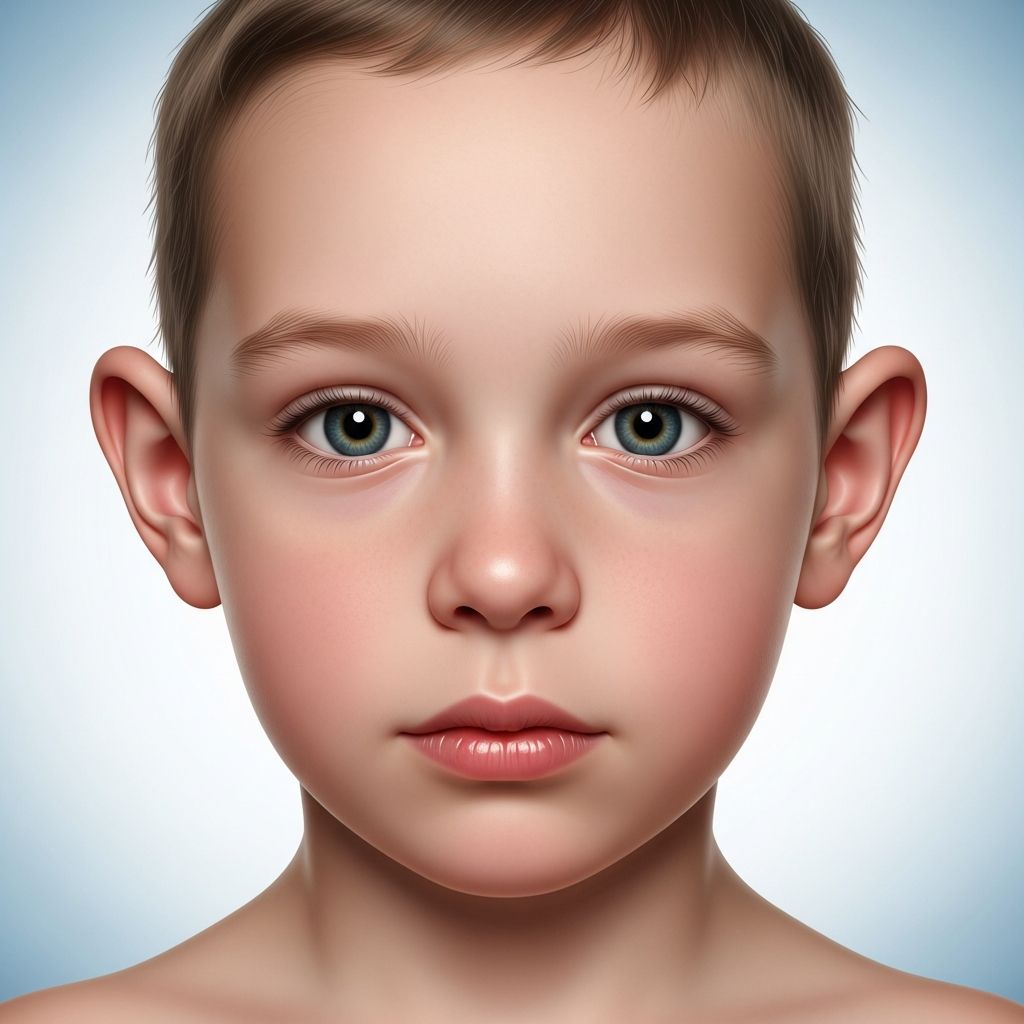
- Facial dysmorphisms: Hypertelorism, downslanting palpebral fissures, ptosis, low-set posteriorly rotated ears, high-arched palate, and triangular face shape that becomes more pronounced post-infancy.
- Short stature: Present in 60-100%; prenatal growth normal, postnatal deceleration, with adult height 20-30cm below mean.
- Congenital heart defects (CHD): 50-80%; pulmonic valve stenosis (50%), hypertrophic cardiomyopathy (20-30%), atrial septal defects.
- Skeletal anomalies: Pectus excavatum/carinatum, cubitus valgus, scoliosis, short neck with webbing.
- Hematologic: Bleeding diathesis (easy bruising, prolonged PTT) in 40%; thrombocytopenia, factor XI deficiency.
- Lymphatic: Lymphedema (20%), pleural effusions, chylothorax.
- Genitourinary: Cryptorchidism (60-80% males), renal anomalies.
- Ocular: Strabismus (up to 95%), refractive errors, posterior embryotoxon.
- Auditory: Conductive hearing loss from recurrent otitis.
Cardiac Features Table
| Defect Type | Prevalence | Management Notes |
|---|---|---|
| Pulmonic Stenosis | 50-60% | Balloon valvuloplasty if severe |
| Hypertrophic Cardiomyopathy | 20-30% | Beta-blockers, screening echo |
| Atrial Septal Defect | 10% | Closure if symptomatic |
Diagnosis
Diagnosis combines clinical criteria (e.g., van der Burgt score: major criteria include typical facies + CHD + short stature + sternal anomaly) and genetic confirmation. Fagan criteria or updated scoring systems aid clinical suspicion.
Baseline Investigations:
- ECG/echocardiogram
- Full blood count, coagulation screen (PT, aPTT, factor XI)
- Renal ultrasound
- Thyroid function, IGF-1
- Genetic testing (RASopathy panel)
- Ophthalmology/hearing assessment
Management
Multidisciplinary, lifelong care tailored by age:
Infancy/Neonates
- Cardiac evaluation at birth
- Feeding support (NG if needed), monitor growth on NS charts
- Screen for hearing loss, treat otitis
- Developmental surveillance
Childhood
- Growth monitoring; GH therapy if velocity <25th centile post-3yrs
- Neurodevelopmental assessment at school entry
- Orthopaedics for pectus/scoliosis
- Puberty induction if delayed
Adolescence/Adulthood
- Annual ECG/echo for HCM progression
- Cancer screening (leukemia, neuroblastoma risk)
- Fertility counseling; orchiopexy for cryptorchidism
- Psychosocial support for learning difficulties
Complications
Short stature persists; CHD complications (arrhythmia, heart failure); bleeding risks with surgery; lymphedema; mild ID (IQ 70-90); rare malignancies.
Prognosis
Excellent with early intervention; life expectancy near normal if no severe HCM. Quality of life impacted by physical/developmental issues but improved via targeted therapies.
Frequently Asked Questions (FAQs)
Q: Is Noonan syndrome curable?
A: No, it is genetic and lifelong, but symptoms are manageable with multidisciplinary care.
Q: What is the inheritance pattern?
A: Autosomal dominant; 50% recurrence risk in offspring.
Q: Does Noonan syndrome affect intelligence?
A: Mild delays common; IQ typically low-normal, with speech/motor/executive issues.
Q: Can growth hormone help?
A: Yes, increases final height by ~9cm in selected cases.
Q: What heart problems are common?
A: Pulmonic stenosis and hypertrophic cardiomyopathy most frequent.
Additional Resources
Refer to genetic counseling; support groups like Noonan Syndrome Association.
References
- Noonan Syndrome – StatPearls — NCBI Bookshelf/StatPearls Publishing. 2023. https://www.ncbi.nlm.nih.gov/books/NBK532269/
- Noonan Syndrome — Merck Manuals. 2024. https://www.merckmanuals.com/home/children-s-health-issues/chromosome-and-gene-abnormalities/noonan-syndrome
- Noonan Syndrome Guidelines — RASopathies Network. 2014. https://rasopathiesnet.org/wp-content/uploads/2014/01/265_Noonan_Guidelines.pdf
- About Noonan Syndrome — Genome.gov/National Human Genome Research Institute. 2023. https://www.genome.gov/Genetic-Disorders/Noonan-Syndrome
- Noonan Syndrome: Clinical Features, Diagnosis, and Management — AAP Pediatrics. 2010. https://publications.aap.org/pediatrics/article/126/4/746/65699/Noonan-Syndrome-Clinical-Features-Diagnosis-and
Similar Articles



Read full bio of Sneha Tete