Norepinephrine: Function, Deficiency & Effects
Understanding norepinephrine: the neurotransmitter and hormone behind your fight-or-flight response.
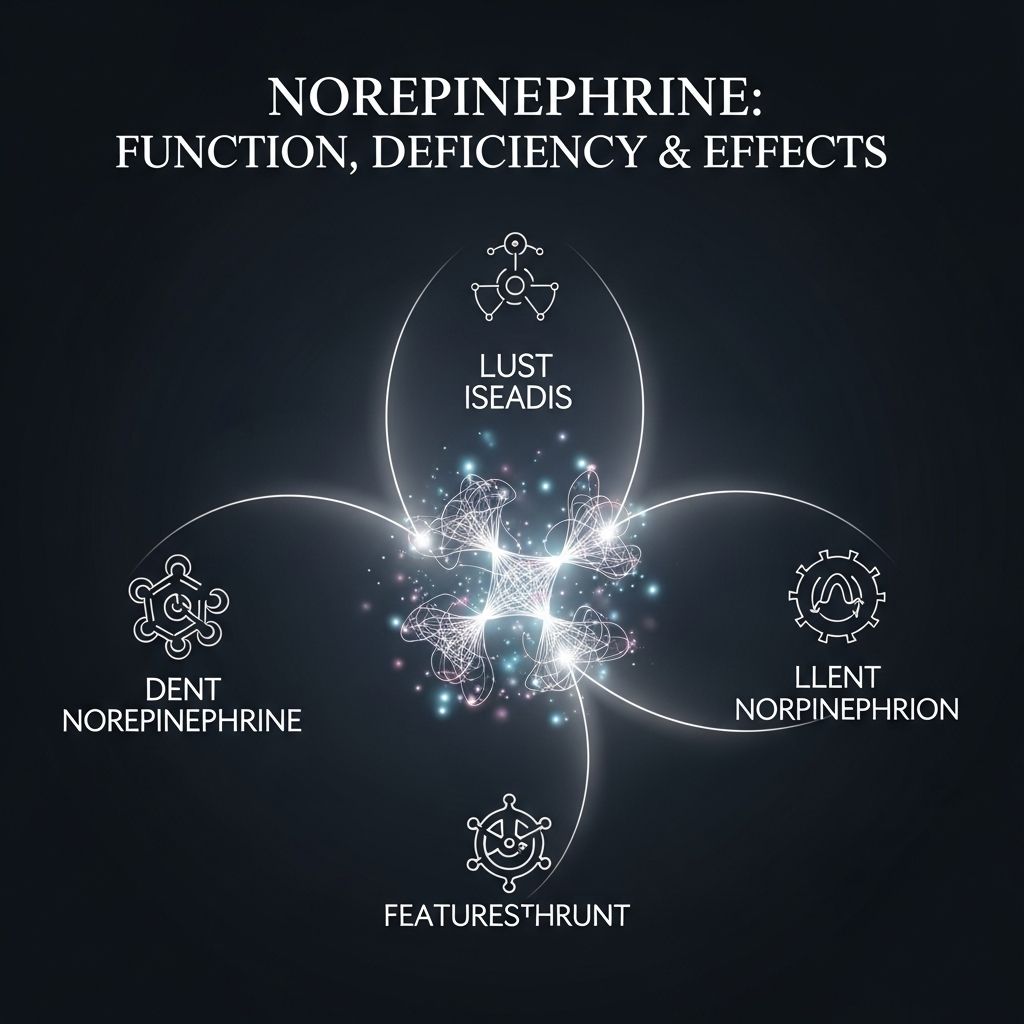
Understanding Norepinephrine: The Neurotransmitter and Hormone
Norepinephrine, also known as noradrenaline, is a chemical compound that serves a dual role in your body as both a neurotransmitter and a hormone. This versatile substance plays a crucial role in regulating numerous physiological and psychological processes. As a neurotransmitter, norepinephrine transmits signals between nerve cells in your brain and throughout your nervous system. As a hormone, it is released into your bloodstream by your adrenal glands to trigger widespread effects across your body. Understanding norepinephrine is essential for comprehending how your body responds to stress, maintains alertness, and manages various vital functions.
What Is Norepinephrine?
Norepinephrine is a catecholamine, a class of neurotransmitters derived from the amino acid tyrosine. Your body produces this chemical naturally, and it is stored in nerve terminals and the medulla of your adrenal glands. When you encounter a stressor or threat, your nervous system releases norepinephrine, triggering a cascade of physical and mental responses designed to help you cope with challenging situations. The release of norepinephrine is part of your body’s intricate alarm system, often referred to as the sympathetic nervous system.
The Role of Norepinephrine in Your Body
Norepinephrine influences multiple body systems and cognitive functions, making it one of the most important chemicals in maintaining your overall health and well-being. Here are the primary functions of norepinephrine:
Fight-or-Flight Response
The most well-known function of norepinephrine is its role in initiating your body’s “fight-or-flight” response. When you encounter a perceived threat or stressor, your brain signals your adrenal glands to release norepinephrine. This hormone floods your bloodstream, preparing your body to either confront the threat or escape from it. This response is essential for survival in dangerous situations.
Cardiovascular Effects
Norepinephrine significantly impacts your heart and blood vessels. It increases your heart rate, making your heart beat faster and more forcefully. The hormone also constricts blood vessels, which increases blood pressure and directs blood flow to vital organs and muscles. This ensures that oxygen and nutrients reach the tissues that need them most during a stress response.
Mental Alertness and Attention
In your brain, norepinephrine enhances focus, attention, and mental alertness. It helps you concentrate on the task at hand and improves your ability to process information quickly. This is why you might feel more awake and mentally sharp during stressful situations.
Mood Regulation
Norepinephrine plays an important role in regulating your mood and emotional state. Imbalances in norepinephrine levels can contribute to mood disorders, and many antidepressants work by increasing norepinephrine availability in your brain.
Pain Perception
Norepinephrine influences how your body perceives and processes pain. It can modulate pain signals traveling through your nervous system, which is why certain medications that affect norepinephrine are used to treat chronic pain conditions.
Sleep-Wake Cycle
Norepinephrine helps regulate your circadian rhythm and sleep-wake cycle. Adequate norepinephrine levels support healthy sleep patterns and daytime wakefulness.
Medical Applications of Norepinephrine
Beyond its natural functions, norepinephrine is used as a medication in clinical settings. Norepinephrine injection, commonly marketed under the brand name Levophed, is used to treat low blood pressure, a condition called hypotension. The medication works by narrowing blood vessels, which increases the pressure required for blood to travel through them, thereby raising overall blood pressure. This medication is administered intravenously in hospital or clinical settings and is typically given to patients experiencing severe hypotension due to septic shock, trauma, or other critical conditions.
Related Stories



Causes of Norepinephrine Deficiency
Low norepinephrine levels can result from various factors and may contribute to several health conditions. Understanding the causes of norepinephrine deficiency is important for identifying potential health issues.
Neurological Conditions
Certain neurological disorders can affect norepinephrine production or utilization. Parkinson’s disease, for example, involves degeneration of neurons that produce norepinephrine, leading to reduced levels of this neurotransmitter.
Depression and Anxiety Disorders
Research suggests that depression and anxiety disorders may be associated with low norepinephrine levels. This is why medications that increase norepinephrine, such as serotonin and norepinephrine reuptake inhibitors (SNRIs), are effective in treating these conditions.
Chronic Stress
Prolonged stress can deplete norepinephrine stores in your body. Chronic stress keeps your sympathetic nervous system in overdrive, potentially exhausting your norepinephrine reserves over time.
Sleep Deprivation
Inadequate sleep can impair your body’s ability to produce and regulate norepinephrine, leading to deficiency symptoms such as fatigue, poor concentration, and mood disturbances.
Nutritional Deficiencies
Since norepinephrine is synthesized from the amino acid tyrosine, deficiencies in this amino acid or related cofactors (such as B vitamins and minerals) can impair norepinephrine production.
Symptoms of Low Norepinephrine
When norepinephrine levels are abnormally low, you may experience various symptoms affecting your physical health and mental well-being:
- Fatigue and low energy
- Difficulty concentrating or brain fog
- Depression or persistent sadness
- Anxiety or nervousness
- Low blood pressure or dizziness
- Reduced motivation or drive
- Sleep disturbances
- Sluggish reflexes
- Decreased heart rate
- Reduced pain perception (in some cases)
Side Effects and Complications
While norepinephrine is essential for health, abnormally high levels or medical use of norepinephrine injections can produce unwanted side effects and complications.
Side Effects of Norepinephrine Medication
When norepinephrine is administered as a medication, patients may experience side effects that require monitoring by healthcare professionals. Common side effects may include:
- Headache
- Anxiety or nervousness
- Tremor or shaking
- Rapid or irregular heartbeat
- Increased blood pressure
- Difficulty sleeping
- Restlessness or agitation
Serious Complications
In some cases, norepinephrine administration may cause more serious complications that require immediate medical attention:
- Severe allergic reactions
- Ischemic tissue injury from extravasation (leakage from the IV site)
- Coronary artery narrowing or reduced blood flow to the heart
- Abnormal heart rhythms
- Dangerously elevated blood pressure
- Peripheral tissue damage
High Norepinephrine Levels
Elevated norepinephrine levels can occur due to stress, certain medications, or medical conditions such as pheochromocytoma (a rare tumor of the adrenal gland). Symptoms of high norepinephrine may include excessive anxiety, rapid heart rate, elevated blood pressure, tremors, and excessive sweating. Chronic elevation of norepinephrine can contribute to anxiety disorders, hypertension, and increased risk of cardiovascular events.
Treatment Options for Norepinephrine Imbalances
Managing norepinephrine levels involves various approaches depending on whether levels are too high or too low and the underlying cause of the imbalance.
For Low Norepinephrine
Treatment strategies may include stress reduction techniques, regular exercise, adequate sleep, dietary modifications to support norepinephrine synthesis, and medications such as SNRIs (serotonin and norepinephrine reuptake inhibitors) that increase norepinephrine availability in the brain. SNRIs block the reabsorption of norepinephrine and serotonin, allowing these neurotransmitters to remain active in your brain for longer periods, thereby improving mood, reducing anxiety, and alleviating chronic pain.
For High Norepinephrine
Treatment may involve stress management, relaxation techniques, medications that reduce norepinephrine release or activity, and addressing any underlying medical conditions causing elevated levels. In cases of pheochromocytoma, surgical removal of the tumor may be necessary.
Peripheral Administration of Norepinephrine
Recent advances in clinical practice have expanded the options for administering norepinephrine in medical settings. Historically, norepinephrine was administered exclusively through a central venous catheter (CVC) due to concerns about ischemic tissue injury if the medication leaked from a peripheral intravenous catheter. However, recent research has demonstrated that peripheral administration of norepinephrine can be safe when proper protocols are followed. A study of peripheral norepinephrine administration found that 51.6% of patients never required CVC insertion, and the protocol avoided an average of 1 day of CVC use per patient, with no patients experiencing significant ischemic tissue injury. Early initiation of norepinephrine via peripheral or central catheter has been shown to improve shock control and hemodynamic stabilization in critically ill patients.
Frequently Asked Questions
Q: What is the difference between norepinephrine and epinephrine?
A: While both norepinephrine (noradrenaline) and epinephrine (adrenaline) are catecholamines involved in the fight-or-flight response, they have distinct roles. Epinephrine is primarily released by the adrenal medulla and has stronger effects on increasing heart rate and metabolism. Norepinephrine, released by nerve terminals and the adrenal gland, has more pronounced effects on blood vessel constriction and blood pressure elevation.
Q: How long does it take for SNRIs to work?
A: Most people begin to notice benefits from SNRIs after four to six weeks at the appropriate dose. For some individuals, it may take nine to twelve weeks to experience significant improvements. If you don’t feel better within this timeframe, consult your healthcare provider about adjusting your treatment plan.
Q: Can I stop taking SNRI medications abruptly?
A: No, you should not stop SNRI medications abruptly. Quitting suddenly can lead to antidepressant discontinuation syndrome, a group of withdrawal symptoms that typically occur if you’ve been on the medication for six weeks or longer. Always work with your healthcare provider to gradually reduce your dose when discontinuing these medications.
Q: Is norepinephrine injection safe for peripheral administration?
A: Yes, when appropriate protocols are followed, peripheral administration of norepinephrine is generally safe. However, extravasation (leakage from the IV site) can occur, and patients require careful monitoring. Most extravasation events cause minimal or no tissue injury when proper management protocols are implemented.
Q: What should I do if I experience side effects from SNRI medications?
A: Report any side effects to your healthcare provider or pharmacist. They can help manage side effects, adjust your dose, or explore alternative medications if necessary. Do not change or stop your medication without professional guidance.
Q: How can I naturally increase my norepinephrine levels?
A: Natural ways to support healthy norepinephrine levels include regular exercise, managing stress through relaxation techniques, maintaining consistent sleep patterns, consuming adequate protein and tyrosine-rich foods, and limiting caffeine to avoid depleting your norepinephrine stores.
References
- Norepinephrine Injection: Uses & Side Effects — Cleveland Clinic. 2024. https://my.clevelandclinic.org/health/drugs/20588-norepinephrine-injection
- Peripheral Administration of Norepinephrine — National Center for Biotechnology Information (PubMed). 2023. https://pubmed.ncbi.nlm.nih.gov/37611862/
- Serotonin and Norepinephrine Reuptake Inhibitors — Cleveland Clinic. 2024. https://my.clevelandclinic.org/health/treatments/24797-snri
- Do I always need a central venous catheter to administer norepinephrine? — Cleveland Clinic Journal of Medicine. 2023. https://www.ccjm.org/content/91/5/287
- Adrenal Gland: What It Is, Function, Symptoms & Disorders — Cleveland Clinic. 2024. https://my.clevelandclinic.org/health/body/23005-adrenal-gland
- Neurotransmitters: What They Are, Functions & Types — Cleveland Clinic. 2024. https://my.clevelandclinic.org/health/articles/22513-neurotransmitters
- Epinephrine (Adrenaline): What It Is, Function, Deficiency & Side Effects — Cleveland Clinic. 2024. https://my.clevelandclinic.org/health/articles/22611-epinephrine-adrenaline
Similar Articles








Read full bio of medha deb