Normal Pressure Hydrocephalus: Symptoms, Diagnosis & Treatment
Understanding NPH: A treatable brain condition affecting gait, cognition, and bladder control in older adults.
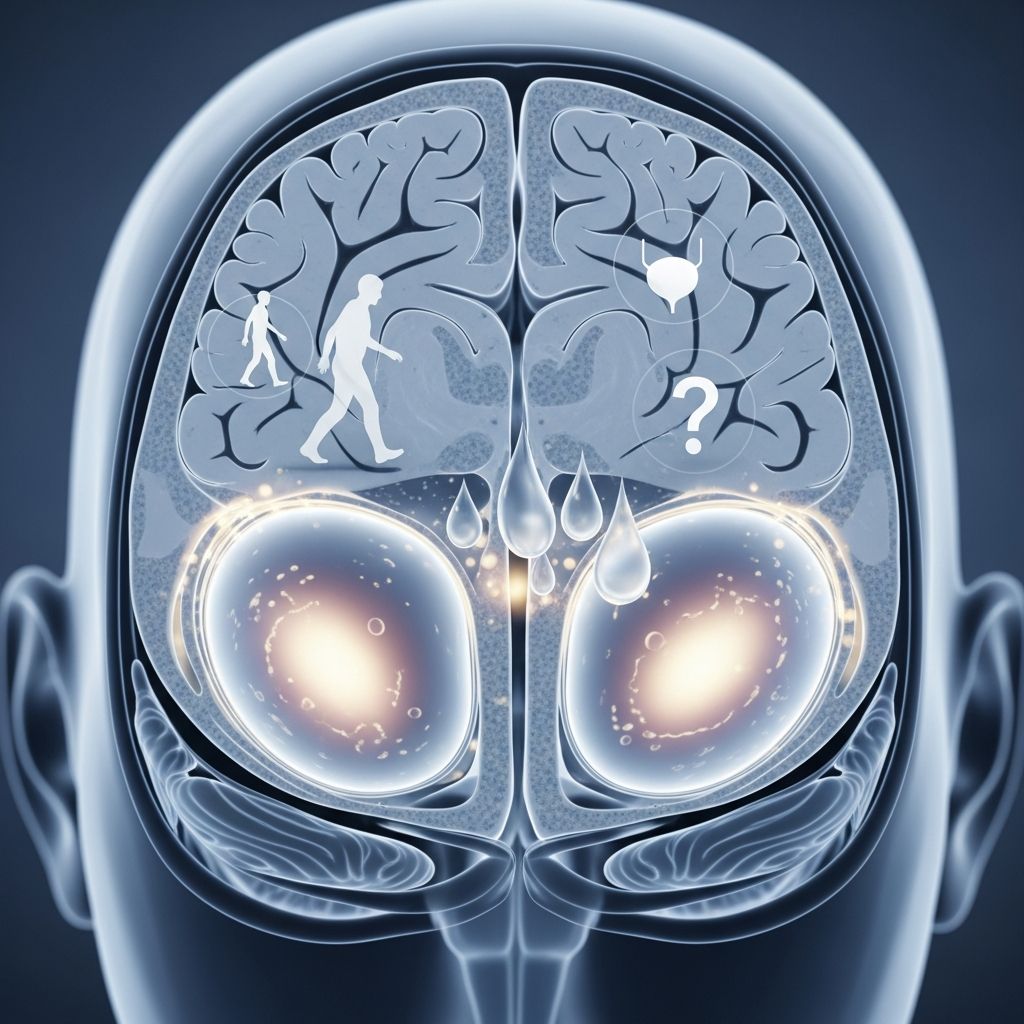
Normal pressure hydrocephalus (NPH) is a neurological condition characterized by the accumulation of cerebrospinal fluid (CSF) within the brain’s ventricles—fluid-filled chambers that normally circulate and protect the brain. Despite its name, NPH involves the progressive buildup of excess fluid that can compress and damage surrounding brain tissue, leading to distinctive symptoms affecting movement, cognitive function, and urinary control. What makes NPH particularly important to understand is that, unlike many neurological disorders, it represents one of the few dementia-related conditions that can potentially be treated and even reversed with appropriate medical intervention.
What Is Normal Pressure Hydrocephalus?
Normal pressure hydrocephalus is a brain disorder in which excess cerebrospinal fluid accumulates within the brain’s ventricles. The term “normal pressure” refers to a somewhat counterintuitive feature of the condition: despite the excess fluid present, the cerebrospinal fluid pressure measured during a spinal tap often remains within the normal range. This occurs because the fluid buildup happens gradually, allowing the brain tissue to slowly compress and adapt to the increased volume, rather than experiencing sudden pressure spikes typical of acute hydrocephalus.
As the brain’s ventricles enlarge due to accumulated CSF, they can disrupt and damage nearby brain tissue, leading to three characteristic symptoms: difficulty with walking and balance, problems with thinking and reasoning, and loss of bladder control. The condition most commonly affects people over 65 years of age, though it can occur in younger individuals. NPH is often called “idiopathic” or “primary” when the cause is unknown, which represents the majority of cases.
Understanding Cerebrospinal Fluid and Its Role
To fully appreciate NPH, it is essential to understand the normal function of cerebrospinal fluid. The adult brain typically contains approximately 5 fluid ounces (150 milliliters) of CSF, which is continuously produced, circulated, and reabsorbed by the body. This fluid serves critical functions: it provides essential nutrients to brain tissue, removes metabolic waste products, maintains appropriate brain pressure, and protects the brain from trauma by cushioning it within the skull.
Under normal circumstances, the body maintains a precise balance between CSF production and absorption. However, when this delicate equilibrium is disrupted—whether through impaired drainage, increased production, or absorption difficulties—fluid begins to accumulate. In normal pressure hydrocephalus, the fluid has nowhere to go, causing the ventricles to expand and compress the surrounding brain tissue. If this compression persists without treatment, permanent damage to brain cells and tissue can result.
Causes and Risk Factors of NPH
Primary (Idiopathic) NPH
In the majority of normal pressure hydrocephalus cases, the cause remains unknown. This is referred to as primary or idiopathic NPH and represents the most common form of the condition. Researchers continue to investigate underlying mechanisms, with some evidence suggesting that poor venous compliance—particularly involving the superior sagittal sinus—may impair both cerebrospinal fluid circulation and absorption through arachnoid granulations.
Notably, hypertension is present in approximately 83% of individuals with idiopathic NPH. This observation has led researchers to suggest potential links between NPH, hypertension, cerebrovascular disease, and Alzheimer’s disease, though further research is needed to clarify these connections.
Related Stories



Secondary NPH
In some cases, normal pressure hydrocephalus develops as a result of other identifiable brain disorders or events. Secondary causes include:
– Head trauma or traumatic brain injury- Intracranial hemorrhage or bleeding within the brain- Brain tumors that obstruct CSF flow- Infections of the brain or meninges- Inflammatory conditions affecting the nervous system- Arachnoid cysts or other structural abnormalities
Identifying secondary causes is clinically important because treating the underlying condition may help resolve the hydrocephalus and prevent further deterioration.
Clinical Symptoms and Presentation
Normal pressure hydrocephalus presents with a characteristic triad of symptoms, though not all patients exhibit all three features equally:
Gait Disturbance
The walking difficulties associated with NPH are distinctive and often described as a “magnetic gait” or shuffling walk. Patients typically experience difficulty lifting their feet from the ground, resulting in a slow, cautious gait with short steps. This gait disturbance often emerges as the earliest symptom and frequently responds most favorably to treatment. Individuals may experience falls, balance problems, and overall instability that significantly impacts their mobility and independence.
Cognitive Changes
Cognitive symptoms in NPH reflect frontal and subcortical brain dysfunction. Patients may experience slowed thinking, difficulty with concentration and attention, memory problems, apathy, and reduced executive function. These cognitive changes can sometimes be mistaken for Alzheimer’s disease or other dementias, which is why accurate diagnosis is essential. Unlike some irreversible dementias, cognitive changes in NPH may improve with appropriate treatment.
Urinary Incontinence
Loss of bladder control, or urinary incontinence, represents the third component of the classic NPH triad. This occurs due to involvement of brain regions controlling bladder function and results from detrusor overactivity. Incontinence in NPH is more likely to persist even after successful surgical treatment, compared to improvements in gait and cognition.
Diagnostic Evaluation and Testing
Clinical Examination
Because normal pressure hydrocephalus symptoms may overlap with Alzheimer’s disease, Parkinson’s disease, and other neurological conditions, expert evaluation is crucial. A comprehensive neurological examination by a neurologist with extensive experience in evaluating brain disorders affecting movement, thinking, and physical functions is essential for accurate diagnosis. The clinical picture for NPH is variable, and symptoms may present in different combinations and severities among patients.
Neuroimaging: MRI and CT Scans
Magnetic resonance imaging (MRI) or computed tomography (CT) scanning provides essential diagnostic information. Characteristic findings include:
– Enlarged cerebral ventricles with an Evan’s index of at least 0.3- Temporal horn enlargement- Periventricular signal changes or edema- Aqueductal or fourth ventricular flow void patterns
These imaging findings, combined with clinical symptoms, help establish diagnostic suspicion for NPH.
Cerebrospinal Fluid Testing
Several CSF-related tests help predict shunt responsiveness and guide treatment decisions:
Lumbar Puncture and CSF Opening Pressure
During a lumbar puncture (spinal tap), CSF is collected and pressure is measured. In NPH, opening pressures typically range from 70 to 245 millimeters of water (mm H₂O), which falls within or just above the normal range—hence the “normal pressure” designation. This distinctive pressure profile helps differentiate NPH from other hydrocephalus types.
High-Volume Spinal Tap
A high-volume spinal tap is a diagnostic procedure in which physicians remove a substantial amount of cerebrospinal fluid (typically 40 to 50 milliliters) and observe the patient for 30 to 60 minutes to assess for improvements in walking, thinking, or other symptoms. A positive response—demonstrating symptom improvement after fluid removal—suggests that the patient may benefit from permanent shunt placement. However, it is important to note that most people initially suspected of having NPH do not show improvement following this diagnostic test.
Measurement of CSF Outflow Resistance
This more specialized test requires a lumbar tap combined with simultaneous infusion of artificial cerebrospinal fluid and measurement of CSF pressure. The procedure assesses the degree of blockage in CSF absorption back into the bloodstream. If the calculated resistance value is abnormally high, there is a significantly higher probability that the patient will benefit from shunt surgery, since the shunt mimics the body’s normal CSF drainage pathways.
External Lumbar Drainage
External lumbar drainage (ELD) may be used to further evaluate patients who do not respond to a high-volume tap. This procedure involves temporary placement of a catheter in the lumbar spine to allow controlled drainage of CSF over several days, providing a longer observation period to assess potential symptom improvement.
Intracranial Pressure Monitoring and Isotopic Cisternography
In some cases, direct intracranial pressure (ICP) monitoring or isotopic cisternography—which tracks CSF flow patterns using radioactive tracers—may provide additional diagnostic information, though these tests are used selectively based on clinical circumstances.
Treatment Approaches for Normal Pressure Hydrocephalus
Surgical Treatment: Shunt Implantation
Normal pressure hydrocephalus stands out among neurological conditions as one of the few that can be controlled or even reversed through appropriate treatment. The most common and typically only available surgical treatment is the implantation of a shunt system. A shunt is a long, thin tube consisting of two catheters (one for fluid entry and one for fluid exit) connected by a valve that regulates fluid flow. When ventricular pressure rises due to excess CSF, the pressure opens the valve, allowing excess fluid to drain through the outflow catheter.
The shunt system typically diverts cerebrospinal fluid from the brain’s ventricles to the peritoneal cavity (abdominal space)—a procedure called ventriculoperitoneal shunting. Alternative drainage routes include the pleural space around the lungs (ventriculopleural shunting) or the right atrium of the heart (ventriculoatrial shunting), though ventriculoperitoneal shunting remains most common.
Shunt implantation is a relatively straightforward neurosurgical procedure typically completed in less than one hour. However, the decision to proceed with surgery is complex and requires careful consideration of diagnostic test results, symptom severity, and individual patient factors.
Effectiveness of Shunt Surgery
Clinical studies demonstrate that cerebrospinal fluid shunting leads to significant clinical improvement in approximately 60% of patients with idiopathic NPH. However, treatment outcomes vary:
–
Gait dysfunction
: Most likely to improve with shunting and often shows the most dramatic response-Cognitive changes
: Moderate likelihood of improvement, though less reliable than gait improvement-Urinary incontinence
: Least likely to resolve, with many patients continuing to experience bladder control problems despite successful shuntingThe uncertainty about predicting which patients will benefit from shunting, combined with variability in symptom improvement duration, remains an important clinical consideration. Recent advances in diagnostic techniques, shunt design improvements, and better recognition of prognostic factors have enhanced patient selection and outcomes over the past decade.
Nonsurgical Treatment Options
Researchers have not identified effective nonsurgical treatments for primary normal pressure hydrocephalus. Medications that remove excess fluid throughout the body, such as diuretics, do not appear to improve NPH symptoms. While medications may help manage specific symptoms related to NPH (such as incontinence medications for bladder control), they do not address the underlying CSF accumulation problem. This makes surgical intervention the primary therapeutic approach.
Potential Complications and Considerations
While shunt surgery offers significant potential benefits, it is not without risks. Complications can develop days or even months after surgery and may include:
– Shunt malfunction or blockage- Overdrainage of cerebrospinal fluid- Infection at the surgical site or along the shunt catheter- Catheter migration or disconnection- Subdural hematoma from excessive fluid drainage- Abdominal complications (if using ventriculoperitoneal shunting)
These potential complications underscore the importance of careful patient selection and appropriate postoperative monitoring.
Current Research and Future Directions
Despite significant clinical experience with normal pressure hydrocephalus, important research gaps remain. Current areas requiring further investigation include:
– Determining the true prevalence of NPH in the general population- Understanding the specific mechanisms by which excess CSF causes symptoms affecting movement, cognition, and bodily functions- Clarifying the possible benefits and identifying ideal candidates for shunt insertion- Improving diagnostic accuracy to better predict shunt responsiveness- Developing alternative treatment approaches for patients who do not respond to shunting- Investigating the long-term duration of benefit from shunt placement
Frequently Asked Questions About Normal Pressure Hydrocephalus
Q: What is the difference between normal pressure hydrocephalus and other types of hydrocephalus?
A: The primary distinction is the cerebrospinal fluid pressure measurement. In normal pressure hydrocephalus, CSF pressure measured by lumbar puncture remains within or just above the normal range (70-245 mm H₂O), whereas acute hydrocephalus involves significantly elevated pressure. Additionally, NPH develops gradually, allowing brain tissue to adapt, whereas acute hydrocephalus presents with sudden, severe symptoms from rapid pressure increases.
Q: Is normal pressure hydrocephalus reversible?
A: Yes, NPH is potentially reversible with appropriate treatment. It represents one of the few dementia-related conditions that can be controlled or reversed through surgical intervention. However, not all patients respond to treatment, and individual outcomes vary. Gait disturbances typically show the best response to shunting, while cognitive changes and urinary incontinence are less reliably reversible.
Q: Who is most at risk for developing normal pressure hydrocephalus?
A: Normal pressure hydrocephalus most commonly affects people over 65 years of age. Other risk factors include history of head trauma, intracranial hemorrhage, brain infection, or other neurological conditions. Individuals with hypertension may also have increased risk, though further research is needed to clarify this relationship.
Q: How is normal pressure hydrocephalus distinguished from Alzheimer’s disease?
A: While NPH and Alzheimer’s disease can present with similar cognitive symptoms, NPH typically features the distinctive triad of gait disturbance, cognitive changes, and urinary incontinence. Additionally, characteristic imaging findings (enlarged ventricles with specific patterns) and CSF findings help differentiate NPH from Alzheimer’s disease. Specialized neurological evaluation and diagnostic testing are essential for accurate diagnosis.
Q: What should someone do if they suspect they have normal pressure hydrocephalus?
A: Anyone experiencing symptoms suggestive of NPH—particularly the combination of gait problems, memory or thinking difficulties, and urinary incontinence—should seek evaluation by a neurologist experienced in diagnosing this condition. Early diagnosis and appropriate referral for evaluation are important, as timely diagnosis can lead to reversal of symptoms through appropriate treatment.
References
- Normal Pressure Hydrocephalus (NPH) — Alzheimer’s Association. 2024. https://www.alz.org/alzheimers-dementia/what-is-dementia/types-of-dementia/normal-pressure-hydrocephalus
- Normal Pressure Hydrocephalus (NPH): Symptoms & Treatment — Cleveland Clinic. 2024. https://my.clevelandclinic.org/health/diseases/15849-normal-pressure-hydrocephalus-nph
- Normal Pressure Hydrocephalus: Diagnosis and Treatment — National Institutes of Health/PubMed Central. 2009. https://pmc.ncbi.nlm.nih.gov/articles/PMC2674287/
- What is Normal Pressure Hydrocephalus (NPH)? — Hydrocephalus Association. 2024. https://www.hydroassoc.org/normal-pressure-hydrocephalus-2/
- Hydrocephalus – Treatment — National Health Service (NHS). 2024. https://www.nhs.uk/conditions/hydrocephalus/treatment/
Similar Articles








Read full bio of Sneha Tete