Notalgia Paraesthetica: Causes, Symptoms & Treatment Options
Understanding the causes, symptoms, and management of notalgia paraesthetica, the common neuropathic itch on the upper back.
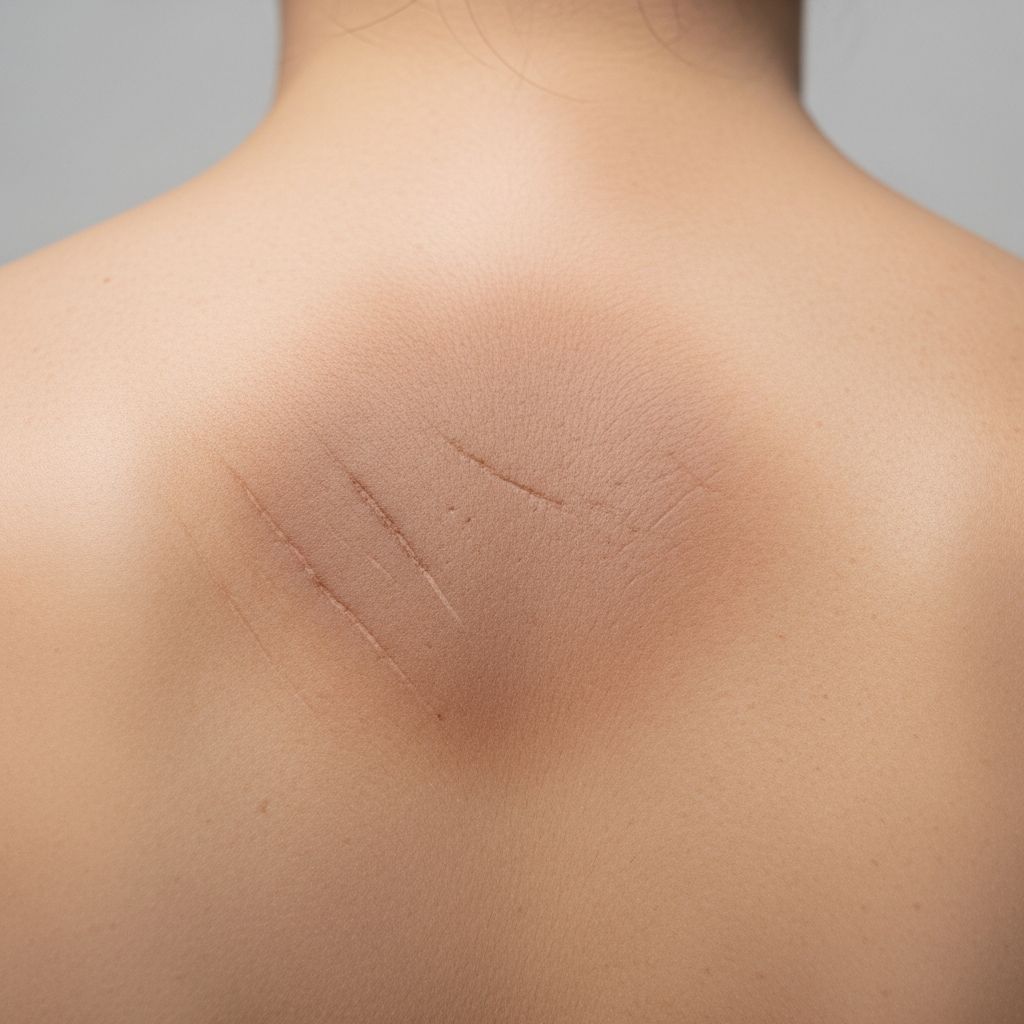
Notalgia paraesthetica is a common localised itch, affecting the mid-back, with a higher incidence in middle-aged women. It is a sensory neuropathy characterised by pruritus (itch) due to altered sensory nerves in the skin. The condition is benign but can be intensely irritating and difficult to treat effectively.
What is the cause of notalgia paraesthetica?
The precise cause of notalgia paraesthetica remains unclear, but it is believed to result from nerve entrapment or compression. The posterior rami of the spinal nerves (T2–T6) exit the spinal column and course through the rhomboid and trapezius muscles before innervating the skin of the mid-back. Entrapment or irritation of these nerves at any point along their path can lead to sensory disturbances in the corresponding dermatomes.
Possible underlying mechanisms include:
- Spinal cord or degenerative vertebral changes leading to nerve root compression
- Repetitive motion or overuse injuries affecting the back muscles
- Postural abnormalities or muscle imbalances that alter nerve pathways
- Trauma or scarring in the paraspinal region
Associated conditions may include cervical spinal stenosis, degenerative disc disease, osteoarthritis of the spine, or herniated discs. Rarely, it can be linked to genetic disorders such as multiple endocrine neoplasia type 2A (MEN 2A), metabolic diseases like diabetes, or prior infections such as shingles.
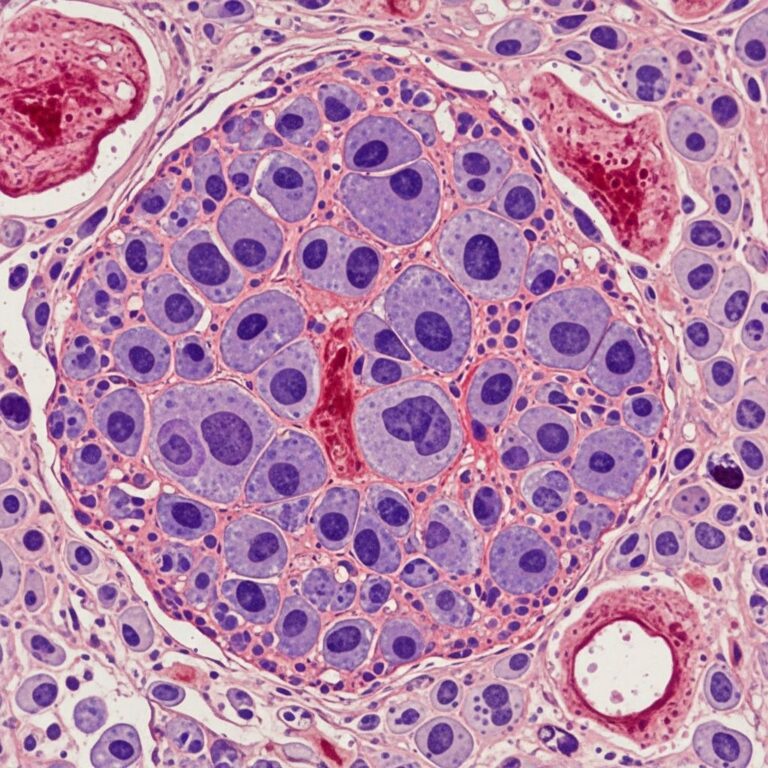
Histologically, affected skin shows increased nerve fibres in the papillary dermis, axonal swelling, and degeneration, confirming a neuropathic aetiology.
Who gets notalgia paraesthetica?
Notalgia paraesthetica typically affects adults aged 30–60 years, with a female predominance (up to 80% of cases). It is more common in individuals with spinal degenerative changes, which increase with age. Risk factors include occupations involving repetitive back movements, poor posture, or a history of spinal trauma. The condition is unilateral in most cases, localised to the right or left mid-back.
What are the clinical features of notalgia paraesthetica?
Patients report intense pruritus localised to a 5–10 cm area on the mid to upper back, typically 5–10 cm to the right or left of the midline, at the level of the T4–T6 dermatomes. The itch is often described as burning or stinging and may worsen with heat, exercise, or tight clothing.
Associated sensory symptoms include:
- Paraesthesia (abnormal sensations like tingling or pins-and-needles)
- Hyperalgesia (increased pain sensitivity)
- Allodynia (pain from non-painful stimuli)
- Numbness or reduced sensation in the area
Chronic scratching leads to secondary skin changes:
- Hyperpigmentation (darkening of the skin)
- Lichenification (thickened, leathery skin)
- Excoriations (scratch marks)
The affected patch is usually oval or rectangular, measuring 5–15 cm in size. Symptoms are persistent but can fluctuate in intensity.
How is notalgia paraesthetica diagnosed?
Diagnosis is primarily clinical, based on the characteristic location, sensory symptoms, and history of chronic itch unresponsive to standard antipruritics. Key diagnostic features include:
- Unilateral mid-back itch in T2–T6 distribution
- Presence of paraesthesia or altered sensation
- Secondary skin changes from rubbing/scratching
- Absence of primary skin eruption
Related Stories



Differential diagnoses to exclude include:
| Condition | Distinguishing Features |
|---|---|
| Macular amyloidosis | Rippled brown patches, pruritic, often bilateral |
| Notch pruritus | Itch at bra line or belt line, mechanical irritation |
| Herpes zoster sine herpete | Unilateral dermatomal pain/itch without rash |
| Brachioradial pruritus | Affects outer arms, UV-related |
Investigations may include:
- Dermatomal sensory testing (reduced pinprick or temperature sensation)
- Spinal X-rays or MRI to assess for degenerative changes
- Skin biopsy (shows nerve hyperplasia)
Nerve conduction studies are usually normal as this is a small-fibre neuropathy.
What is the treatment for notalgia paraesthetica?
There is no curative treatment for notalgia paraesthetica, as it is a chronic sensory neuropathy. Management focuses on symptom relief and reassurance that the condition is benign. Many patients find simple explanation sufficient. Treatments target neuropathic itch mechanisms and have variable success.
General measures
- Avoid scratching; use soft back-scratchers or patting instead
- Keep skin cool and moist; apply cooling lotions (menthol/camphor)
- Daily moisturisers to prevent dryness
- Wear loose clothing to reduce friction
- Correct posture and ergonomics
Topical therapies
- Capsaicin cream (0.025–0.075%): Apply 3–5 times daily; desensitises C-fibres. Initial burning common, 70% improvement but symptoms recur on cessation.
- Topical anaesthetics: Lidocaine 2.5%/prilocaine 2.5% cream twice daily for numbing effect.
- Topical corticosteroids: Potent steroids (e.g., betamethasone) for inflamed/lichenified skin; short-term use only.
Oral medications
- Gabapentin: Start 300 mg nightly, titrate to 600–1800 mg/day. Most effective for itch reduction; mild GI side effects.
- Pregabalin: Alternative to gabapentin, 75–300 mg/day.
- Antidepressants: Duloxetine (SNRI) or amitriptyline for neuropathic symptoms.
- Oxcarbazepine: 300–900 mg/day; partial improvement.
Physical and interventional therapies
- Transcutaneous electrical nerve stimulation (TENS): 20 min sessions, 5x/week; 60% itch reduction in studies.
- Physical therapy: Stretching rhomboids, strengthening posture muscles; alters muscle tension on nerves.
- Botulinum toxin A (Botox) injections: Into affected area; relief up to 18 months in cases, mixed results.
- Nerve blocks: Local anaesthetic/steroid; prolonged relief possible.
- Acupuncture: 2–6 sessions; 75% relief but relapses.
- Osteopathic manipulation: Improves musculoskeletal alignment.
Surgical decompression is reserved for severe refractory cases.
Table: Treatment Options Summary
| Treatment | Description | Efficacy |
|---|---|---|
| Gabapentin | 300–1800 mg/day oral | High; symptoms recur on stopping |
| Capsaicin cream | 0.025% 3–5x/day | 70% improve, short-term |
| TENS | 20 min 5x/week | 60% reduction |
| Physical therapy | Stretching/strengthening | Good for posture-related cases |
| Botox injections | 4 units/cm² | Variable, up to 18 months |
Frequently Asked Questions
Is notalgia paraesthetica dangerous?
No, it is a benign sensory neuropathy with no serious complications. It does not indicate underlying malignancy or systemic disease in most cases.
Does notalgia paraesthetica go away on its own?
It is chronic but may improve spontaneously. Many patients experience reduced symptoms over time with conservative management.
Why is the itch so hard to reach?
The location on the mid-upper back (scapular region) is notoriously difficult to scratch due to arm length limitations, exacerbating frustration.
Can posture correction help?
Yes, exercises to improve thoracic posture and strengthen paraspinal muscles can reduce nerve compression.
Is gabapentin safe long-term?
It is generally well-tolerated; monitor for dizziness, sedation. Taper slowly to avoid withdrawal.
References
- Notalgia Paresthetica – MD Searchlight — MD Searchlight. 2023. https://mdsearchlight.com/nerve-health/notalgia-paresthetica/
- Notalgia Paresthetica: Causes, Treatment, and More — Healthline. 2023-10-18. https://www.healthline.com/health/notalgia-paresthetica
- Notalgia paresthetica: the unreachable itch — PMC – NIH. 2013-05-29. https://pmc.ncbi.nlm.nih.gov/articles/PMC3663387/
- Notalgia Paresthetica: Causes, Symptoms & Treatment — Cleveland Clinic. 2023. https://my.clevelandclinic.org/health/diseases/24850-notalgia-paresthetica
- Notalgia Paresthetica — StatPearls – NCBI Bookshelf. 2023. https://www.ncbi.nlm.nih.gov/books/NBK470597/
Similar Articles








Read full bio of medha deb