NSTEMI Heart Attack: Symptoms, Diagnosis & Treatment
Complete guide to NSTEMI heart attacks: understand symptoms, diagnosis methods, and effective treatment options.
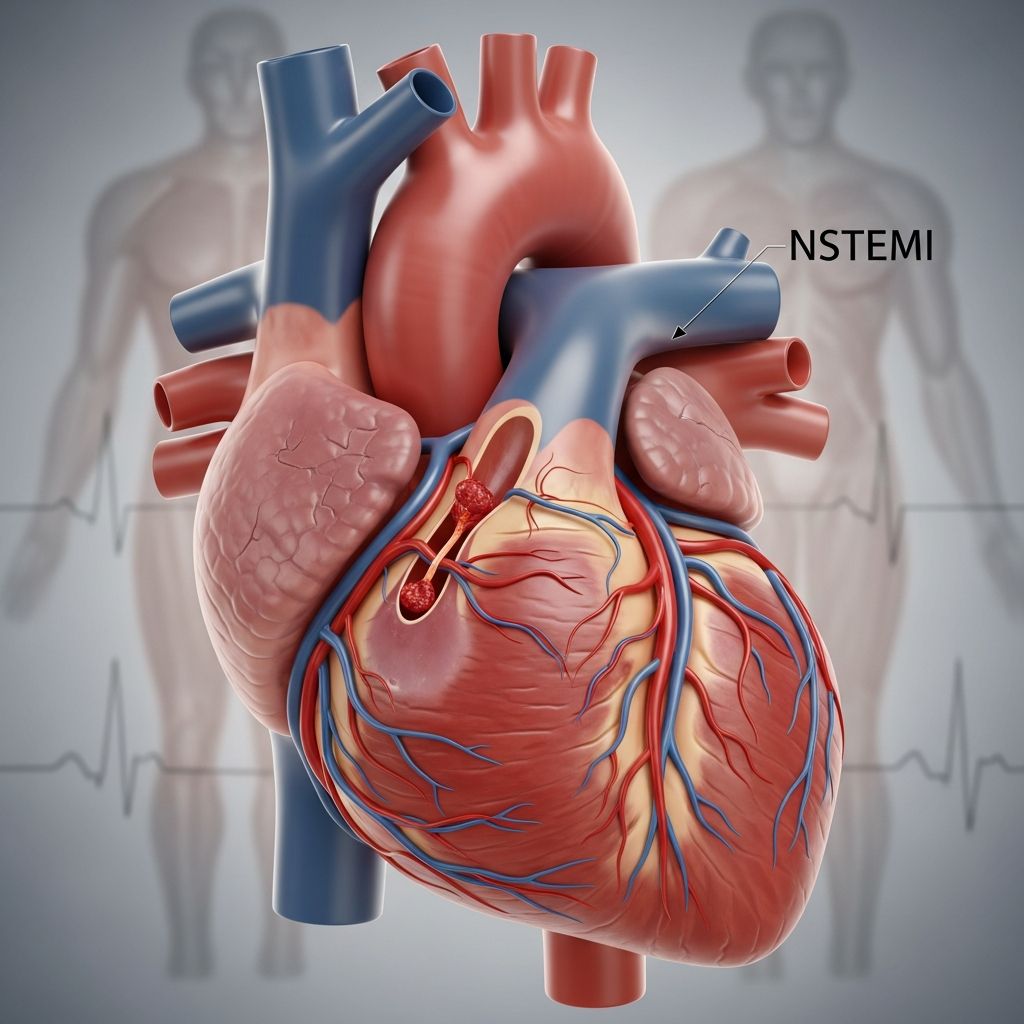
Understanding NSTEMI: Non-ST-Elevation Myocardial Infarction
A non-ST-elevation myocardial infarction (NSTEMI) is a type of heart attack that occurs when one of the coronary arteries supplying blood to the heart muscle becomes partially blocked or severely narrowed. This partial or incomplete blockage reduces blood flow to the heart, causing damage to the heart muscle. Unlike a STEMI (ST-elevation myocardial infarction), which involves a complete blockage of a main coronary artery, an NSTEMI typically results from a partial blockage of a coronary artery or a complete blockage in a smaller branch vessel. While the damage from an NSTEMI is generally less severe than that from a STEMI, it remains a serious medical emergency that requires immediate professional medical attention.
Understanding the differences between NSTEMI and other cardiac events is crucial for recognizing when emergency care is needed. The key distinction lies in the electrocardiogram (ECG) patterns and the degree of coronary blockage. In recent years, research has shown that while NSTEMI was once considered less serious than STEMI, long-term outcomes may be similar or in some cases even slightly worse, emphasizing the importance of proper diagnosis and treatment.
Recognizing NSTEMI Symptoms
The symptoms of NSTEMI are similar to those of other types of heart attacks and chest discomfort conditions. It is critical to understand that any symptoms associated with a potential heart attack are serious and require immediate medical attention. The faster you receive treatment for a heart attack, the less damage occurs to your heart muscle.
Common symptoms of NSTEMI include:
- Chest pain or discomfort that may feel like pressure, heaviness, tightness, or squeezing
- Difficulty or trouble breathing (dyspnea)
- Pain or discomfort that radiates to the jaw, neck, shoulders, arms, back, or belly
- Nausea or vomiting
- Lightheadedness or dizziness
- Increased or unexplained sweating
- Fatigue or unusual weakness
- Heart palpitations or irregular heartbeat
It is important to note that chest pain lasting at least 10 minutes is the most common symptom of NSTEMI. However, symptoms can vary significantly between individuals, and some people may not experience all of these signs.
Gender Differences in Symptom Presentation
Women may experience any of the symptoms described above, but research shows they are less likely to report typical chest discomfort that feels like indigestion or pain in the center of their chest. Women are more likely to report atypical symptoms such as radiating pain to the jaw, neck, shoulders, or back. This difference in symptom presentation is why women may sometimes experience delays in diagnosis. Being aware of these gender-specific differences can help ensure faster recognition and treatment.
When to Seek Emergency Care
Anyone experiencing symptoms suggestive of a heart attack should contact emergency services immediately by calling 911 or visiting an emergency room without delay, regardless of the severity of the symptoms. High-risk symptoms that warrant immediate emergency attention include chest pain, presyncope (feeling faint), syncope (fainting), severe shortness of breath, and heart palpitations. Do not wait or try to self-diagnose; every minute counts in heart attack care. Early intervention significantly reduces the risk of serious complications and heart damage.
Diagnosis of NSTEMI
A physician diagnoses NSTEMI based on a combination of clinical evaluation, laboratory tests, and electrocardiographic findings. Because NSTEMI can have less distinctive symptoms and test results compared to STEMI or other cardiac conditions, using multiple diagnostic methods is especially important for accurate diagnosis.
Related Stories



Electrocardiogram (ECG)
An electrocardiogram is a crucial diagnostic tool for identifying NSTEMI. The ECG records the electrical activity of the heart and displays it as wavy lines representing heartbeats. Doctors analyze these waveforms for characteristic patterns and features of NSTEMI. In NSTEMI, the ECG typically shows a depressed ST segment or T-wave inversion (which appears as a dip in the wave), and there is no progression to a Q wave. This distinguishes NSTEMI from STEMI, where the ST segment is persistently elevated. If the initial ECG appears normal or is not diagnostic, follow-up ECGs may be conducted every 15 to 30 minutes, particularly if the patient continues to experience symptoms suggesting a myocardial infarction.
Blood Tests
Blood tests are essential for confirming NSTEMI diagnosis. Doctors look for elevated levels of cardiac biomarkers that indicate heart muscle damage. Key biomarkers include troponin I, troponin T, and creatine kinase-myocardial band (CK-MB). These chemicals are released by the heart following injury and serve as markers of cardiac damage. The elevation of these biomarkers in blood tests combined with characteristic ECG changes and clinical symptoms confirms the diagnosis of NSTEMI. Blood tests alone, however, are not sufficient to confirm diagnosis; they must be combined with other diagnostic methods.
Diagnostic Imaging and Catheterization
Additional diagnostic procedures may include cardiac catheterization, which allows physicians to visualize the coronary arteries and identify the location and severity of blockages. This invasive procedure involves threading a thin catheter through blood vessels to the heart, where contrast dye is injected to reveal the anatomy of the coronary arteries on X-ray imaging. This information helps guide treatment decisions.
NSTEMI vs. STEMI: Key Differences
Understanding the differences between NSTEMI and STEMI is important for recognizing the severity and appropriate response to symptoms:
| Feature | NSTEMI | STEMI |
|---|---|---|
| Coronary Artery Blockage | Partial or branch vessel blockage | Complete blockage of main coronary artery |
| ST Segment on ECG | Depressed or transiently elevated | Persistently elevated |
| T Wave Pattern | May be inverted | Typically elevated |
| Heart Muscle Damage | Usually less severe | Generally more severe |
| Cardiac Biomarkers | Elevated | Usually more elevated |
Treatment Strategies for NSTEMI
Treatment for NSTEMI aims to restore blood flow to the heart, alleviate symptoms, and prevent complications. A treatment plan typically involves a combination of medications and, in many cases, invasive procedures. The patient’s symptoms, individual risk factors, and clinical presentation are the major factors used to determine the most appropriate management strategy.
Ischemia-Guided Strategy
The ischemia-guided strategy relies primarily on medications to manage NSTEMI. This approach uses blood thinners and other medications to prevent blood clots from forming and to reduce the workload on the heart. Procedures are performed only if necessary based on the patient’s response to medical therapy and the presence of ongoing ischemia or high-risk features.
Early Invasive Strategy
The early invasive strategy involves more aggressive intervention with procedures such as cardiac catheterization, percutaneous coronary intervention (PCI), or coronary artery bypass grafting (CABG). In PCI, a catheter with a balloon or stent is used to open the blocked coronary artery and restore blood flow. CABG is a surgical procedure in which a graft vessel is used to bypass the blocked coronary artery. These invasive approaches are often preferred in patients with high-risk features or those who do not respond adequately to medical therapy alone.
Medications Used in NSTEMI Treatment
Several classes of medications are used to treat NSTEMI and prevent complications:
- Anticoagulants: These medications prevent blood clots from forming and include drugs such as heparin, fondaparinux, and newer anticoagulants. They reduce the risk of thrombosis and recurrent cardiac events.
- Antiplatelets: These drugs thin the blood and prevent platelet aggregation. Common antiplatelets include aspirin, clopidogrel (Plavix), and ticagrelor. Dual antiplatelet therapy is often used after PCI with stent placement.
- Beta-Blockers: These medications slow the heart rate and reduce the force of heart contractions, decreasing the heart’s oxygen demand. Beta-blocker therapy should be started within 24 hours after NSTEMI presentation in patients without contraindications.
- Nitrates: Nitrate medications provide relief from chest pain and improve blood flow by dilating blood vessels. They are particularly useful for acute symptom management.
- Statins: These cholesterol-lowering medications reduce inflammation, stabilize plaques, and decrease the risk of future cardiac events. High-dose statins should be initiated for cholesterol management.
- Angiotensin-Converting-Enzyme (ACE) Inhibitors: ACE inhibitors reduce the swelling and remodeling of the heart and improve cardiac function. They should be initiated in patients with ejection fraction less than 40%, hypertension, diabetes, or chronic kidney disease.
Hospital Care and Recovery
When NSTEMI has been diagnosed, patients should be admitted to cardiac care units for continuous monitoring and further management. This specialized care allows for close observation of heart rhythm, oxygen levels, and other vital parameters. The cardiac care team monitors for complications and adjusts medications as needed. Patients typically remain hospitalized for several days while medications are optimized and their condition stabilizes.
Recovery from NSTEMI involves both in-hospital rehabilitation and continued outpatient care. Patients are often referred to cardiac rehabilitation programs, which include supervised exercise, patient education about heart disease risk factors, and psychological support. Lifestyle modifications are crucial for long-term recovery and include adopting a heart-healthy diet, quitting smoking, managing stress, maintaining a healthy weight, and engaging in regular physical activity.
Complications and Long-Term Outlook
While NSTEMI is generally considered less immediately severe than STEMI, it can still lead to serious complications if not treated promptly. Potential complications include arrhythmias, cardiogenic shock, heart failure, and recurrent myocardial infarction. Recent research suggests that long-term outcomes and mortality rates for NSTEMI may be similar to or even slightly worse than STEMI in some populations, particularly if not managed aggressively. This emphasizes the importance of appropriate diagnosis and treatment.
Without proper treatment, NSTEMI can progress to STEMI, representing a worsening cardiac condition. Therefore, prompt recognition and treatment are essential to prevent further cardiac damage and improve patient outcomes.
Frequently Asked Questions (FAQs)
Q: What is the difference between NSTEMI and unstable angina?
A: NSTEMI involves myocardial necrosis (heart muscle death) with elevated cardiac biomarkers, while unstable angina presents with similar symptoms but without evidence of myocardial infarction on blood tests or ECG. Both conditions indicate a serious cardiac problem requiring immediate medical attention.
Q: How long does recovery from NSTEMI take?
A: Recovery varies based on the extent of heart damage and individual factors. Most patients spend several days in the hospital and gradually return to normal activities over weeks to months. Cardiac rehabilitation programs typically last 6-12 weeks, though lifestyle changes are ongoing for life.
Q: Can NSTEMI happen again after treatment?
A: Yes, there is a risk of recurrent myocardial infarction. This risk is reduced through adherence to medications, lifestyle modifications, cardiac rehabilitation, and regular medical follow-up. Managing risk factors such as high blood pressure, high cholesterol, and diabetes is essential.
Q: What should I do if I experience symptoms similar to NSTEMI?
A: Call 911 or your local emergency number immediately. Do not drive yourself to the hospital. Time is critical in heart attack care, and emergency services can begin treatment while transporting you to the hospital. Do not delay seeking help based on uncertainty about your symptoms.
Q: What lifestyle changes are important after NSTEMI?
A: Critical lifestyle modifications include following a heart-healthy diet low in sodium and saturated fat, quitting smoking, engaging in regular supervised physical activity, managing stress through relaxation techniques, maintaining a healthy weight, limiting alcohol consumption, and taking all prescribed medications as directed.
References
- NSTEMI: Non-ST-Elevation Myocardial Infarction (Heart Attack) — Cleveland Clinic. 2024. https://my.clevelandclinic.org/health/diseases/22233-nstemi-heart-attack
- Non–ST-Segment Elevation Myocardial Infarction — National Center for Biotechnology Information (NCBI). 2024. https://www.ncbi.nlm.nih.gov/books/NBK513228/
- Heart Attack Treatment — American Heart Association. 2024. https://www.heart.org/en/health-topics/heart-attack/treatment-of-a-heart-attack
- Diagnosing a Heart Attack — National Health Service (NHS). 2024. https://www.nhs.uk/conditions/heart-attack/diagnosis/
- Non-ST-Elevation Myocardial Infarction (NSTEMI) — Baptist Health. 2024. https://www.baptisthealth.com/care-services/conditions-treatments/nonstelevation-myocardial-infarction-nstemi
- NSTEMI: Treatment, Symptoms, and Diagnosis — Medical News Today. 2024. https://www.medicalnewstoday.com/articles/321059
Similar Articles








Read full bio of Sneha Tete