Nummular Dermatitis: Diagnosis, Treatment, Prevention Guide
Comprehensive guide to nummular dermatitis: causes, symptoms, diagnosis, and effective management strategies for coin-shaped eczema.
Authoritative facts about nummular dermatitis: what it is, clinical features, diagnosis, management, and more.
Introduction
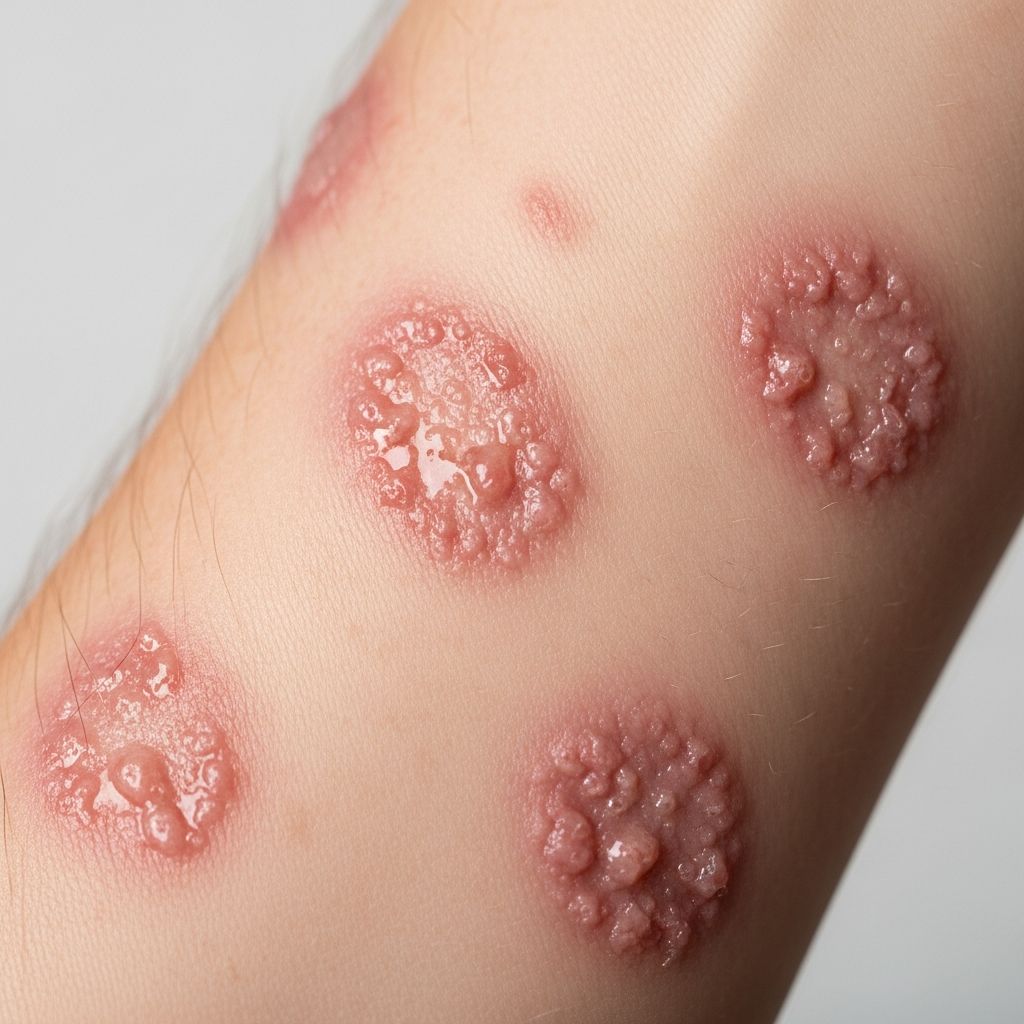
Nummular dermatitis, also known as discoid eczema or nummular eczema, is a chronic inflammatory skin condition characterized by pruritic, coin-shaped lesions. These round or oval patches typically appear on the extremities, particularly the lower legs, and occasionally on the trunk. It affects middle-aged and older adults more commonly, though it can occur at any age. The condition is considered a subtype of endogenous eczema, with a generally favorable prognosis when managed properly. Effective treatment often involves topical corticosteroids and conservative skin care measures, leading to remission in most cases.
Lesions are often intensely itchy and may ooze clear fluid or become crusted, distinguishing them from other eczemas. Postinflammatory hyperpigmentation or hypopigmentation frequently persists after resolution. While not contagious, it can significantly impact quality of life due to discomfort and cosmetic concerns.
Who Gets Nummular Dermatitis?
Nummular dermatitis primarily affects adults, with a peak incidence in those aged 50-65 years. Men are affected more frequently than women. It is less common in children but can occur, especially in those with atopic backgrounds. Individuals with a history of hay fever, asthma, or other atopic conditions are at higher risk. The lower extremities are most commonly involved, followed by the upper extremities and trunk; the face and scalp are typically spared.
- Prevalence: More common in temperate climates with low humidity, particularly during winter months when skin dryness exacerbates the condition.
- Risk factors: Dry skin (xerosis), history of atopy, bacterial colonization (e.g., Staphylococcus aureus), and environmental exposures.
Causes
The exact etiology of nummular dermatitis remains unknown, but multiple factors contribute to its development. It is often multifactorial, involving a compromised skin barrier that allows irritants and allergens to trigger inflammation.
Key Contributing Factors
- Xerosis (dry skin): Weakens the skin’s natural barrier, making it prone to irritation.
- Skin trauma: Koebner phenomenon from cuts, scrapes, insect bites, or chemical burns can initiate lesions.
- Contact allergies: Sensitivity to metals (nickel, cobalt, chromate), rubber, or fragrances; patch testing reveals allergies in 33-50% of persistent cases.
- Environmental triggers: Low humidity, cold weather, dry air, frequent hot showers, harsh soaps, and irritating fabrics like wool.
- Infections: Staphylococcal colonization or secondary bacterial infection.
- Other: Medications (interferon, retinoids, antivirals), stress, alcohol consumption, breast implants, and venous stasis.
Aging, chronic venous insufficiency, and decreased cutaneous lipid production further impair the barrier, leading to cytokine release (e.g., IFN-γ, IL-17) and T-cell recruitment, resulting in epidermal hyperplasia.
Clinical Features
Lesions present as well-demarcated, round or discoid plaques, 1-10 cm in diameter, resembling coins—hence the name ‘nummular’ (Latin for coin-like). Early lesions are vesicular or bullous, progressing to eczematous plaques with oozing, crusting, and scaling. They are often intensely pruritic, worsened by scratching.
| Stage | Appearance | Common Locations |
|---|---|---|
| Acute | Small vesicles, oozing, weeping | Extensors of limbs |
| Subacute | Crusted, scaling plaques | Lower legs, arms, trunk |
| Chronic | Lichenified, hyperpigmented | Persistent on legs |
Symptoms include mild to severe itching, exacerbated by dry environments or irritants. Dermoscopy may show scales, yellow clods, and brownish-red globules. Secondary infection presents with purulent discharge and golden crusts.
Diagnosis
Diagnosis is primarily clinical, based on characteristic coin-shaped lesions. Key differentials include tinea corporis (ringworm), psoriasis, contact dermatitis, and cutaneous T-cell lymphoma.
- Patch testing: Recommended for persistent cases to identify contact allergies (positive in up to 50%).
- Biopsy: Rarely needed; shows spongiosis, acanthosis, and parakeratosis.
- Culture/swab: For suspected secondary infection (S. aureus).
- Wood’s lamp/KOH prep: To rule out fungal infection.
Allergic reactions or bacterial colonization may be underlying triggers, necessitating targeted testing.
Management
Treatment focuses on restoring the skin barrier, reducing inflammation, and preventing flares. Most cases respond to topical therapies and lifestyle modifications.
General Skin Care
- Daily moisturization with thick emollients (petrolatum, ceramide-based) immediately after short, lukewarm showers (<5 min).
- Use fragrance-free, hypoallergenic soaps; avoid hot water and irritants.
- Humidifier in dry environments; wear breathable cotton clothing.
Related Stories



Topical Therapies
- Corticosteroids: First-line; high-potency (classes I-III) for body, mild for face. Apply 1-2x daily until clearance.
- Calcineurin inhibitors: Tacrolimus or pimecrolimus for steroid-sparing, especially sensitive areas.
- Intralesional steroids: Triamcinolone 4-5 mg/mL for recalcitrant lesions.
Systemic and Adjunctive Therapies
- Antibiotics: Oral (doxycycline) for impetiginized lesions; culture-guided.
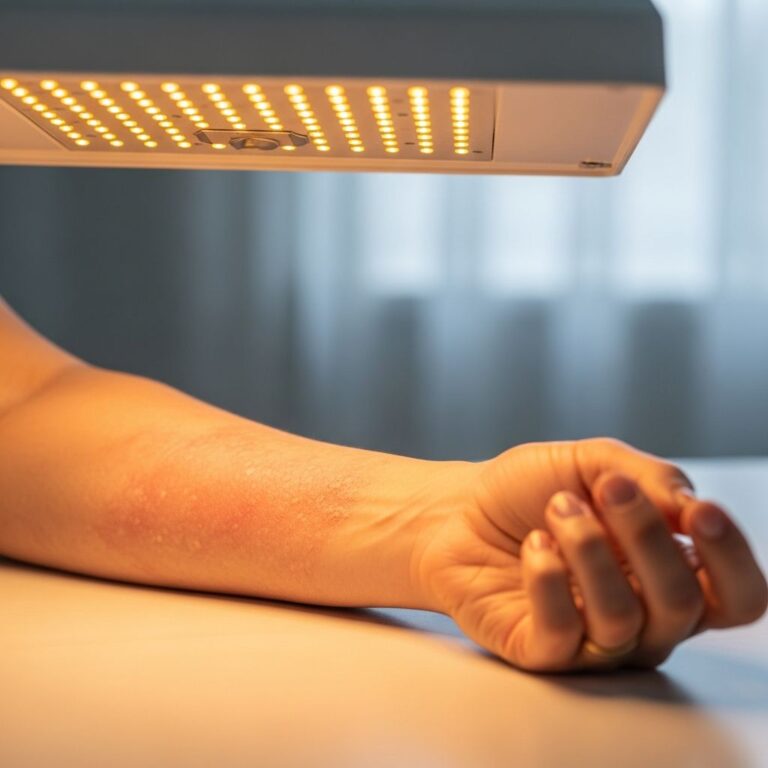
- Phototherapy: Narrowband UVB for widespread disease.
- Other: Dupilumab, crisaborole, or oral corticosteroids for severe cases.
Astringent compresses dry oozing lesions. Avoid triggers like alcohol, stress, and new medications.
Prevention
Long-term control requires barrier maintenance and trigger avoidance:
- Consistent moisturizing routine.
- Fragrance-free products; gentle laundering.
- Manage stress and stay hydrated.
- Patch test for allergies; treat promptly.
Complications
Impaired barrier leads to secondary S. aureus infection (impetiginization). Chronic scratching causes lichenification and pigment changes. Rarely, erythroderma or cellulitis.
Prognosis
Favorable with treatment; most achieve remission. Recurrences common in winter or with triggers. Early intervention prevents chronicity.
Frequently Asked Questions
Q: Is nummular dermatitis contagious?
A: No, it is not infectious; it results from skin barrier dysfunction and inflammation.
Q: How long do lesions take to heal?
A: With treatment, 2-6 weeks; chronic lesions may persist longer without adherence.
Q: Can diet affect nummular dermatitis?
A: No direct link, but hydration and avoiding alcohol help prevent flares.
Q: When to see a dermatologist?
A: If unresponsive to topicals, widespread, or infected.
Q: Is it related to atopic eczema?
A: Often considered a subtype; atopic history increases risk.
References
- Nummular Eczema: Causes, Symptoms & Treatment Options — Indiana University School of Medicine Dermatology Trials. 2023. https://dermatrials.medicine.iu.edu/blogs/need-to-know-about-nummular-eczema
- Nummular Dermatitis – StatPearls — NCBI Bookshelf, NIH. 2023-10-15. https://www.ncbi.nlm.nih.gov/books/NBK565878/
- Nummular Eczema: Causes, Symptoms, Treatment — National Eczema Association. 2024. https://nationaleczema.org/types-of-eczema/nummular-eczema/
- Nummular Dermatitis – Skin Disorders — Merck Manuals (Professional Version). 2024. https://www.merckmanuals.com/home/skin-disorders/itching-and-dermatitis/nummular-dermatitis
- Nummular eczema diagnosis and treatment — American Academy of Dermatology. 2024. https://www.aad.org/public/diseases/eczema/types/nummular-dermatitis/treatment
- Nummular Eczema: vs Ringworm, Causes, Symptoms, Treatment — Cleveland Clinic. 2023-11-20. https://my.clevelandclinic.org/health/diseases/22757-nummular-eczema
Similar Articles








Read full bio of Sneha Tete