Nutmeg Nutrition, Benefits, And Risks: Evidence Based Guide
Discover the antioxidant power, health benefits, and potential risks of nutmeg, the versatile spice enhancing your meals and wellness.
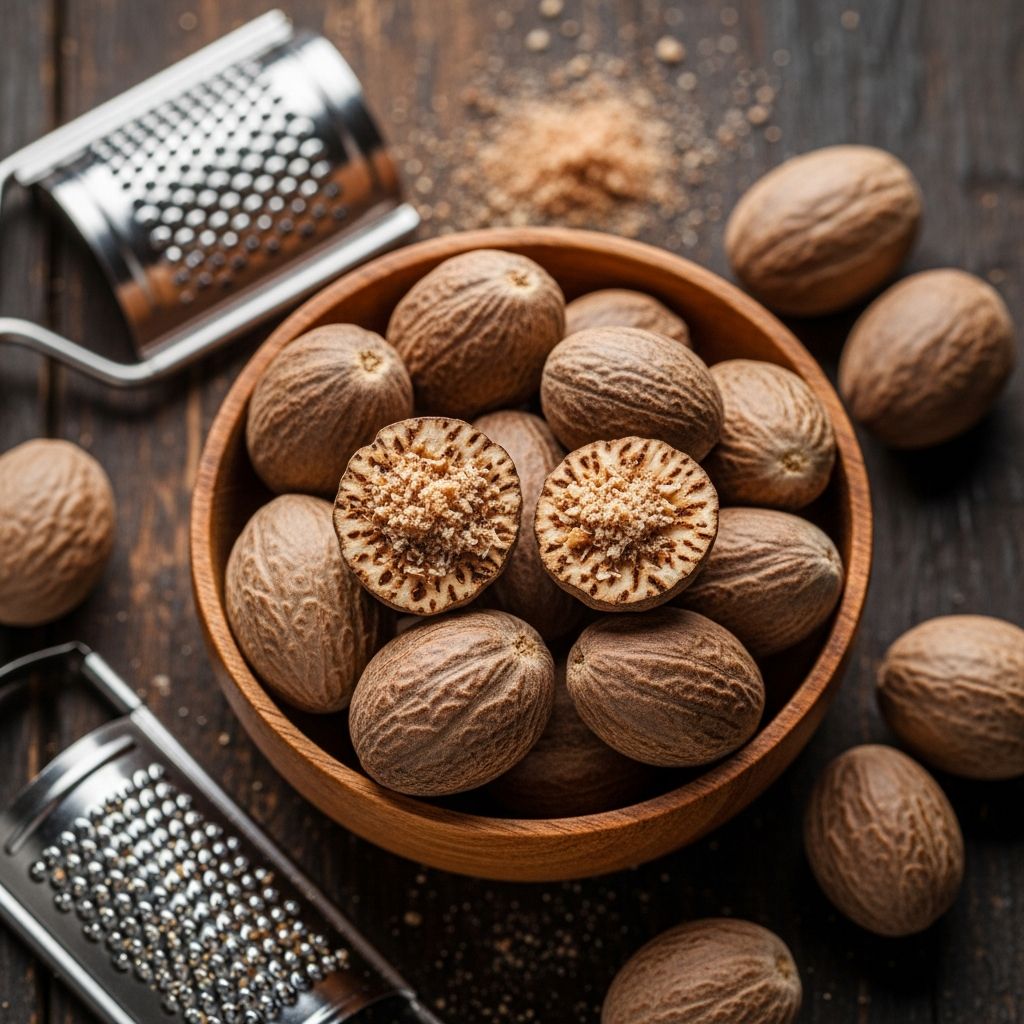
Nutmeg, derived from the seed of the Myristica fragrans tree, is a warm, aromatic spice long cherished in culinary traditions worldwide. Beyond its flavor-enhancing qualities in dishes like pumpkin pie and savory sauces, nutmeg offers a wealth of potential health benefits backed by scientific research, primarily from animal, test-tube, and preclinical studies. This article delves into its nutritional profile, key health advantages such as antioxidant and anti-inflammatory effects, possible risks including toxicity, practical ways to incorporate it into your diet, and answers to common questions.
What Is Nutmeg?
Nutmeg is the inner seed of the fruit from the evergreen Myristica fragrans tree, native to the Banda Islands in Indonesia but now cultivated in tropical regions like India, Sri Lanka, and Grenada. The seed is encased in a lacy aril, which is dried to produce mace, another spice from the same plant. Whole nutmeg seeds are grated fresh for maximum flavor and potency, releasing essential oils like myristicin, sabinene, and safrole that contribute to its distinctive nutty, slightly sweet aroma.
Historically, nutmeg was a prized commodity in ancient trade routes, valued not just for cooking but for its purported medicinal properties in traditional systems like Ayurveda and Traditional Chinese Medicine. Today, it’s a staple in holiday baking, beverages like eggnog, and even meat rubs. While culinary use is safe in small amounts—typically 1/4 to 1/2 teaspoon per serving—its bioactive compounds hold promise for health support, though human clinical trials remain limited.
Nutmeg Nutrition Facts
A single teaspoon (about 2.3 grams) of ground nutmeg provides approximately 12 calories, with minimal macronutrients: 1 gram of fat, 1 gram of carbohydrates (including 0.7 grams of fiber), and trace protein. It’s low in sodium but packs micronutrients like manganese (providing up to 37% of the daily value), copper (10% DV), magnesium (4% DV), and small amounts of iron, calcium, potassium, and vitamins such as vitamin C, thiamine, riboflavin, and niacin.
Nutmeg’s true nutritional power lies in its phytochemicals: high levels of terpenoids, flavonoids, alkaloids, tannins, and phenolic compounds like protocatechuic, ferulic, and caffeic acids. It also contains essential oils including phenylpropanoids, monoterpenes (sabinene, terpineol, pinene), and plant pigments like cyanidins. These contribute to its antioxidant capacity, far exceeding many common spices.
| Nutrient (per 1 tsp ground nutmeg) | Amount | % Daily Value* |
|---|---|---|
| Calories | 12 | — |
| Total Fat | 0.8g | 1% |
| Carbohydrates | 1.1g | 0% |
| Dietary Fiber | 0.7g | 2% |
| Manganese | 0.8mg | 37% |
| Copper | 0.2mg | 10% |
| Magnesium | 14mg | 4% |
| *Based on a 2,000-calorie diet. Data synthesized from sources. | ||
Potential Health Benefits of Nutmeg
1. Contains Powerful Antioxidants
Nutmeg is loaded with antioxidants that combat free radicals—unstable molecules causing oxidative stress linked to chronic diseases like cancer, heart disease, and neurodegeneration. Key compounds include cyanidins, essential oils (phenylpropanoids, terpenes), and phenolics (protocatechuic, ferulic, caffeic acids). Animal studies demonstrate nutmeg extract prevents cellular damage from oxidative stressors like isoproterenol, while test-tube research shows potent free radical scavenging.
These antioxidants neutralize excess free radicals, maintaining cellular health and potentially lowering disease risk. Nutmeg’s profile rivals or exceeds that of many spices, making it a simple addition for oxidative defense.
2. May Have Anti-Inflammatory Properties
Chronic inflammation underlies conditions like heart disease, diabetes, and arthritis. Nutmeg’s monoterpenes—sabinene, terpineol, pinene—inhibit pro-inflammatory enzymes, reducing bodily inflammation in preclinical models. This could benefit inflammatory disorders, though human studies are needed to confirm.
By targeting enzymes that promote inflammation, nutmeg supports a balanced immune response, with preclinical evidence showing vascular protection and reduced lipid peroxidation.
3. Antibacterial Properties
Test-tube studies reveal nutmeg extract’s strong antibacterial action against pathogens like Streptococcus mutans, Aggregatibacter actinomycetemcomitans, Porphyromonas gingivalis (oral health threats), and E. coli O157 (foodborne illness cause). Methanolic extracts inhibit Staphylococcus aureus, Escherichia coli, and Proteus mirabilis, suggesting potential for infection prevention.
Related Stories



In zebrafish models, nutmeg enhanced innate immunity via increased lysozyme, immunoglobulins, and antioxidant enzymes, improving stress survival. More human research is required for clinical applications.
4. Other Potential Benefits
- Heart Health: Animal studies show high-dose nutmeg reduces cholesterol, triglycerides, lipid peroxidation, and LDL oxidation while improving lipid excretion and cardiac function.
- Brain Health and Mood: Rodent research indicates antidepressant effects; psychotropic compounds like myristicin may support neurological function, with preclinical anxiogenic and narcotic properties noted.
- Blood Sugar Control: Rat studies demonstrate reduced blood sugar and enhanced pancreatic function with high doses.
- Immune Support: Boosts defenses in animal models via antimicrobials and immunomodulation.
- Digestion: Small doses aid flatulence, indigestion, nausea, diarrhea, and may lower blood pressure; topical use relieves pain, rheumatism, sores.
These benefits stem from nutmeg’s bioactive synergy but require human trials for validation.
Potential Downsides and Risks
While culinary nutmeg is safe, high doses pose risks due to myristicin, a hallucinogenic compound. Intoxication reports occur at 5 grams (0.5–0.9 mg myristicin per pound body weight), causing nausea, vomiting, rapid heartbeat, disorientation, agitation, and potential death with drug interactions. No fatalities from nutmeg alone up to 80g in studies, but adolescents often require intervention when abusing it.
Avoid during pregnancy/lactation due to CNS effects and unestablished safety. Culinary doses (1/4–1/2 tsp) are far below toxic levels; skip concentrated oils/extracts without guidance. Those with liver issues or on medications should consult professionals.
How to Use Nutmeg Safely
- Grate fresh whole nutmeg for potency; store in cool, dark place.
- Use sparingly: 1/4 tsp max per serving in recipes.
- Incorporate in beverages (eggnog, chai), baked goods, sauces, veggies.
- Topical: Dilute oil for pain relief, but patch-test.
- No established medicinal dose; stick to food amounts.
Sample Nutmeg Recipes
- Pumpkin Spice Latte: Add 1/8 tsp grated nutmeg to coffee, milk, pumpkin puree, cinnamon.
- Creamy Alfredo Sauce: Stir 1/4 tsp into cheese sauce for pasta.
- Baked Apples: Stuff with nutmeg, cinnamon, oats; bake until tender.
- Golden Milk: Simmer with turmeric, ginger, milk, pinch of nutmeg.
Frequently Asked Questions (FAQs)
What are the main benefits of nutmeg?
Nutmeg offers antioxidants, anti-inflammatory, antibacterial effects, and potential support for heart, brain, immunity, and digestion, per preclinical studies.
Is nutmeg safe to consume daily?
Yes, in small culinary amounts (under 1/2 tsp/day); excess risks toxicity from myristicin.
Can nutmeg help with sleep or mood?
Animal studies suggest mood-boosting and mild sedative effects, but human evidence lacks.
Is nutmeg good for digestion?
Traditional and preliminary evidence supports relief from indigestion, nausea, flatulence in small doses.
What happens if you eat too much nutmeg?
High doses (5g+) cause hallucinations, nausea, tachycardia; severe cases need medical attention.
References
- 8 Science-Backed Benefits of Nutmeg — Healthline. 2023 (approx., based on content). https://www.healthline.com/nutrition/nutmeg-benefits
- Is Nutmeg Good for You? Evidence-Based Benefits for Brain, Heart and Immunity — News-Medical.net. 2024 (recent). https://www.news-medical.net/health/Is-Nutmeg-Good-for-You-Evidence-Based-Benefits-for-Brain-Heart-and-Immunity.aspx
- Therapeutic, and pharmacological prospects of nutmeg seed — PMC (NCBI). 2024-04-15. https://pmc.ncbi.nlm.nih.gov/articles/PMC11059288/
- Five things everyone should know about…nutmeg — CALS News, University of Wisconsin-Madison. 2015-12-10. https://news.cals.wisc.edu/2015/12/10/five-things-everyone-should-know-aboutnutmeg/
Similar Articles








Read full bio of Sneha Tete