Nutritional Interventions and Natural Products Research
Comprehensive guide for researchers on NCCIH funding priorities for natural products and nutritional intervention studies.
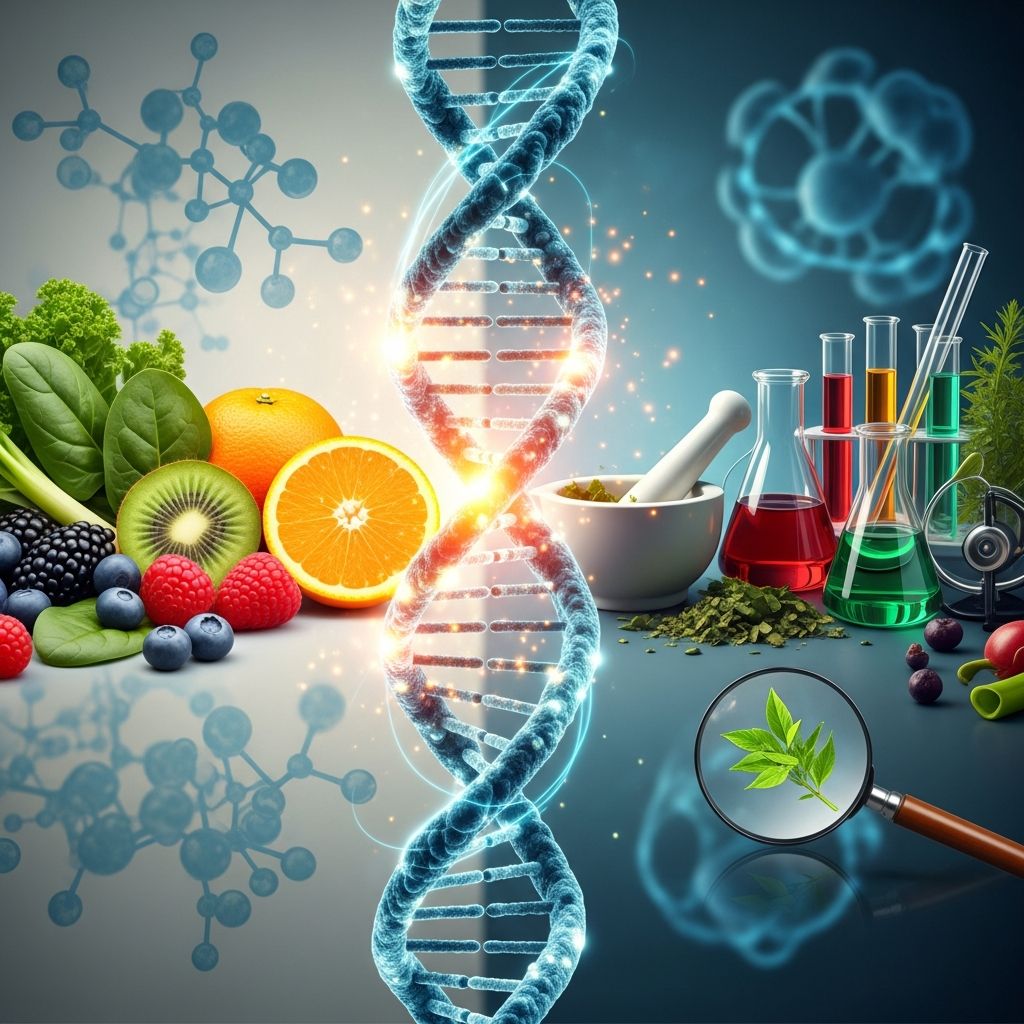
Nutritional Interventions and Natural Products Research—Information for Researchers
The National Center for Complementary and Integrative Health (NCCIH) maintains a comprehensive and dynamic interest in investigating the biological activities of nutritional interventions and natural products. This research encompasses a wide range of therapeutic agents, including probiotics (also known as microbial-based therapeutics), prebiotics, dietary supplements, botanicals, and vitamins. The NCCIH’s commitment to this field is driven by recognition that these interventions have deep historical roots in medical practice across multiple cultures and continue to be widely utilized by the American public for health promotion and disease prevention.
A central focus of NCCIH’s research strategy emphasizes products for which there exists compelling preclinical evidence demonstrating potential biological activity that may lead to measurable health benefits or therapeutic interventions. Additionally, NCCIH prioritizes the study of products that are extensively used by Americans, recognizing the public health significance of understanding their safety and efficacy. This dual focus ensures that research funding and scientific attention are directed toward interventions with both scientific promise and practical relevance to population health.
Strategic Research Priorities and Scientific Direction
Four Core Priority Areas
NCCIH’s 2021–2025 Strategic Plan identifies complex interactions involving nutritional interventions as one of the Center’s foremost scientific priorities. This strategic framework encompasses four specific priority areas that guide funding decisions, research collaborations, and scientific initiatives:
- Botanicals: Research on plant-based therapeutic agents and their mechanisms of action in promoting health and treating disease
- Dietary Phytochemicals: Investigation of bioactive compounds naturally present in fruits, vegetables, and other plant sources
- Probiotics: Studies examining microbial-based therapeutics and their effects on human health through various biological pathways
- Methods Development: Innovation in research methodologies and technologies to overcome existing barriers in nutritional interventions and natural products research
Whole-Person Health Approach
A distinctive element of NCCIH’s current strategic direction is an emphasis on whole-person health rather than the traditional narrow focus on disease treatment alone. This paradigm shift recognizes that health and wellness involve complex interactions between nutritional, physical, and psychological components. By adopting this integrated perspective, NCCIH supports research that examines how nutritional interventions and multicomponent therapeutic approaches contribute to overall well-being, preventive health, and resilience across the lifespan.
Understanding Natural Products and Their Classification
Defining Natural Products for Research Purposes
For research funding and investigation purposes, NCCIH defines natural products broadly to include botanicals, dietary supplements, probiotics, and promising nutritional regimens that standardize the amount of specific naturally occurring nutritional compounds. Examples of these standardized compounds include omega-3 fatty acids, anthocyanidins, and polyphenols. This definition ensures clarity in research design and allows for rigorous comparison across studies while accommodating the diversity of natural product categories.
Natural Product Integrity Policy
NCCIH’s commitment to rigorous scientific investigation is operationalized through the Natural Product Integrity Policy. This comprehensive policy establishes essential guidance on the information required by NCCIH for different types of products utilized in both mechanistic and clinical research contexts. The policy provides detailed specifications for complex botanical products, complex animal products, probiotics, refined products, and placebo formulations. By establishing clear standards for product characterization, quality control, and documentation, this policy enhances the scientific rigor and reproducibility of research funded by NCCIH.
Advancing Methodological Innovation and Technological Approaches
Overcoming Research Barriers
To advance the field of nutritional interventions and natural products research, NCCIH prioritizes research designed to overcome significant methodological and technological barriers that currently hinder progress. These barriers include the challenge of studying complex mixtures with multiple bioactive components, the difficulty of standardizing interventions, and the limitations of existing tools for measuring biological effects.
High-Throughput Technologies and Omics Approaches
NCCIH encourages researchers to harness omics-based and other high-throughput technologies to enhance the validity and efficiency of natural products research. These advanced approaches include:
- Genomics for understanding genetic factors influencing response to interventions
- Proteomics for identifying protein-level changes and biomarkers
- Metabolomics for assessing metabolic pathway alterations
- Microbiomics for characterizing changes in microbial communities
These technologies enable researchers to evaluate the validity of hypothesized additive or synergistic effects, providing molecular-level evidence for how multiple components of a natural product may work together to produce health benefits.
Network Pharmacology and Systems-Level Understanding
Network pharmacology represents a powerful emerging approach that NCCIH advocates for in natural products research. This discipline studies the complex web of biologic targets for any bioactive substance, enabling researchers to investigate the multifaceted effects of nutritional interventions and natural products on multiple biological targets simultaneously. This systems-level perspective acknowledges that natural products rarely work through single mechanisms but rather through complex networks of interactions, making network pharmacology particularly suited to understanding their mechanisms of action.
Clinical Trial Frameworks and Research Opportunities
Early Phase Clinical Trials
NCCIH offers substantial funding support through its Early Phase Clinical Trial program (PAR-25-270) for investigator-initiated trials of natural products that demonstrate strong scientific premises justifying further clinical testing. These early phase studies are critical for establishing proof-of-concept, identifying optimal dosages, assessing safety profiles, and gathering preliminary efficacy data that inform later-stage research. Early phase trials require rigorous study designs while remaining flexible enough to explore mechanistic pathways and identify target populations most likely to benefit from the intervention.
Mid-Phase Clinical Trials
For natural products that have successfully demonstrated measurable effects in early phase studies, NCCIH provides funding through its Mid-Phase Clinical Trial program (PAR-25-271) through R01 mechanisms. Mid-phase trials aim to gain additional knowledge about a natural product’s mechanisms of action, optimize intervention parameters, and generate preliminary data supporting the design of fully powered efficacy or effectiveness trials. These studies emphasize the importance of well-formulated hypotheses built on sound foundations of basic mechanistic and pharmacologic understanding.
Designing Rigorous Natural Product Studies
To enhance rigor, reproducibility, and generalizability in natural products research, NCCIH emphasizes the incorporation of rigorous methodological approaches. Particularly for trials of natural products that constitute part of regular or occasional dietary intake, researchers must employ rigorous methods to account for dietary intake and heterogeneity across study participants. This includes:
- Assessment of baseline nutritional status and ongoing monitoring throughout the trial
- Collection of comprehensive dietary intake data at baseline and throughout the study period
- Documentation of factors that may impact absorption or metabolism of the natural product
- Study design strategies such as stratified randomization to ensure balance across study arms
- Prespecified subgroup analyses examining treatment heterogeneity by background nutritional status or other relevant participant characteristics
Complex Interactions Involving Nutritional Interventions
Understanding Multi-System Effects
Nutritional interventions represent a unique research challenge because they are typically delivered as complex mixtures rather than as single, isolated compounds. These complex mixtures are thought to act across multiple biological systems simultaneously, creating potential for synergistic or additive effects that may not be apparent when individual components are studied in isolation. Natural products may manifest their health benefits through several distinct mechanisms:
- Multiple components of a dietary intervention acting on a single biological system (such as the nervous or digestive system)
- A single component acting on multiple biological systems (as exemplified by omega-3 fatty acids)
- Multiple components acting on multiple systems (as seen in traditional herbal medicine formulations and multicomponent probiotic preparations)
Research Success and Expected Outcomes
NCCIH envisions successful research in this area as building a robust portfolio of studies focused on nutritional interventions, including individual plants and probiotics as well as multibotanical and multistrain formulas that may have potentially synergistic interactions. Success also involves developing and implementing enhanced multisystem research approaches that integrate various cellular, gut microbial, and genetic contributors to health restoration and disease prevention. This integrated approach acknowledges that optimal health outcomes often require interventions that address multiple biological systems and mechanisms simultaneously.
Regulatory Pathway and FDA Considerations
IND and IDE Requirements
Researchers proposing clinical trials of natural products must carefully navigate regulatory requirements established by the Food and Drug Administration (FDA). Depending on the nature of the natural product and the specific study design, investigations may require an Investigational New Drug (IND) application or an Investigational Device Exemption (IDE). NCCIH requires applicants to provide correspondence from the FDA indicating whether the proposed study will necessitate an IND or IDE, ensuring transparency about regulatory status before funding is awarded.
Timeline and Approval Process
Researchers must clearly describe the process that will be employed for attaining all necessary FDA and other applicable regulatory agency approvals required to conduct the trial, including a realistic and detailed timeline for completing these approvals. Anticipating potential regulatory delays and building appropriate contingencies into research timelines is essential for successful trial execution and timely completion of research objectives.
Frequently Asked Questions
Q: What types of products qualify as natural products under NCCIH funding criteria?
A: NCCIH defines natural products to include botanicals, dietary supplements, probiotics, and standardized nutritional regimens containing specific naturally occurring compounds such as omega-3 fatty acids, anthocyanidins, and polyphenols. All products must have compelling preclinical or preliminary clinical evidence for potential health benefits.
Q: How does NCCIH prioritize which natural products to fund?
A: NCCIH prioritizes products with compelling preclinical evidence for biological activity that may lead to health benefits, as well as products that are widely used by the American public. Research must align with the Center’s strategic priorities in botanicals, dietary phytochemicals, probiotics, and methods development.
Q: What methodological approaches does NCCIH recommend for studying natural products?
A: NCCIH advocates for rigorous study designs incorporating stratified randomization, high-throughput omics technologies, network pharmacology approaches, and careful characterization of participant dietary intake and nutritional status. Research should employ prespecified subgroup analyses to examine treatment heterogeneity.
Q: Are there different funding mechanisms for early versus late-stage natural products research?
A: Yes. NCCIH offers early phase clinical trial funding (PAR-25-270) for proof-of-concept studies and mid-phase clinical trial funding through R01 mechanisms (PAR-25-271) for optimization and preliminary efficacy studies in natural products that have demonstrated measurable effects.
Q: What is the Natural Product Integrity Policy and why is it important?
A: The Natural Product Integrity Policy establishes guidance on product characterization and documentation required for both mechanistic and clinical research. It ensures standardization across studies, enhances reproducibility, and maintains scientific rigor in natural products investigations.
Q: How does NCCIH’s whole-person health approach differ from traditional disease-focused research?
A: Rather than focusing narrowly on disease treatment, NCCIH’s whole-person health approach examines how nutritional, physical, and psychological components interact to promote overall wellness, prevention, and resilience. This integrated perspective better reflects how natural products actually function in complex biological systems.
Getting Started with NCCIH-Funded Research
Researchers interested in pursuing NCCIH funding for natural products and nutritional interventions research should thoroughly review the specific Notice of Funding Opportunities (NOFOs) relevant to their research stage and scientific questions. Early career researchers are encouraged to begin with early phase clinical trial mechanisms, while investigators with established preliminary data may pursue mid-phase trial funding. All applicants should ensure their proposed research aligns with NCCIH’s strategic priorities and incorporates the methodological rigor and innovative technological approaches that the Center emphasizes. Consultation with NCCIH program officers during the pre-application phase can provide valuable guidance on alignment with funding priorities and study design optimization.
References
- PAR-25-270: NCCIH Natural Product Early Phase Clinical Trial — National Institutes of Health. 2025. https://grants.nih.gov/grants/guide/pa-files/PAR-25-270.html
- PAR-25-271: NCCIH Natural Product Mid Phase Clinical Trial (R01) — National Institutes of Health. 2025. https://grants.nih.gov/grants/guide/pa-files/PAR-25-271.html
- Nutritional Interventions and Natural Products Research—Information for Researchers — National Center for Complementary and Integrative Health. 2025. https://www.nccih.nih.gov/grants/nutritional-interventions-and-natural-products-research-information-for-researchers
- Complex Interactions Involving Nutritional Interventions — National Center for Complementary and Integrative Health. 2025. https://www.nccih.nih.gov/about/nccih-strategic-plan-2021-2025/top-scientific-priorities/complex-interactions-involving-nutritional-interventions
- NCCIH Policy: Natural Product Integrity — National Center for Complementary and Integrative Health. 2025. https://www.nccih.nih.gov/research/nccih-policy-natural-product-integrity
- NCCIH Strategic Plan 2021-2025 — National Center for Complementary and Integrative Health. 2021. https://www.nccih.nih.gov/about/strategic-plans-and-reports
- Research Framework: Complementary and Integrative Health Interventions — National Center for Complementary and Integrative Health. 2025. https://www.nccih.nih.gov/grants/nccih-clinical-trials-funding-opportunities/research-framework
Similar Articles







Read full bio of Sneha Tete