Nystatin For Oral Thrush: Dosage, Uses & Side Effects
Comprehensive guide to using Nystan suspension for effective treatment and prevention of oral thrush infections.
About nystatin suspension
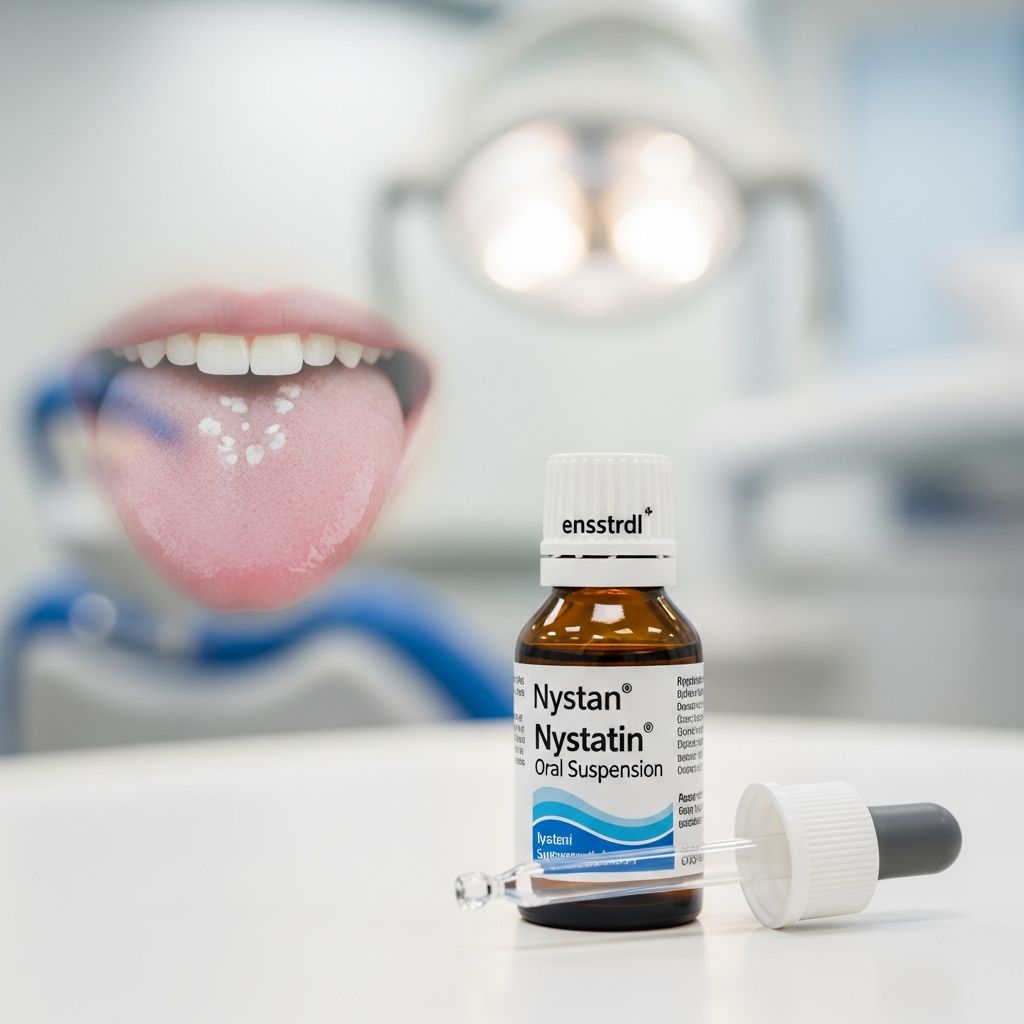
Nystatin suspension, commonly known by the brand name Nystan®, is an antifungal medicine specifically used for treating thrush in the mouth or throat.
| Type of medicine | Used for | Also called | Available as |
|---|---|---|---|
| An antifungal medicine | Treatment of thrush in the mouth or throat | Nystan® | Oral suspension (drops) |
Thrush, medically known as oral candidiasis, is an infection caused by the Candida yeast fungus, most commonly Candida albicans. This fungus naturally resides in small amounts in the healthy mouth without causing harm. However, under certain conditions, it can overgrow, leading to infection.
The mouth is a frequent site for Candida infections, resulting in oral thrush characterized by soreness, redness, and white patches on the tongue, inner cheeks, gums, tonsils, or roof of the mouth. These white spots may bleed if scraped. In severe cases, the infection can spread to the throat or esophagus, causing difficulty swallowing.
Factors that trigger Candida overgrowth include wearing dentures (especially if not cleaned properly), recent antibiotic use which disrupts normal mouth bacteria, corticosteroid inhalers for asthma, uncontrolled diabetes, anemia, weakened immune system from illness, smoking, dry mouth, or infancy in babies whose immune systems are still developing. Babies often get thrush from passing through the birth canal if the mother has vaginal candidiasis, or from breastfeeding if the mother’s nipples are infected.
Nystatin suspension works by binding to the fungal cell membrane, creating pores that cause the cell contents to leak out, effectively killing the Candida fungus. Unlike systemic antifungals, nystatin is poorly absorbed from the gastrointestinal tract, acting locally in the mouth with minimal systemic side effects.
Before using nystatin suspension
Before starting nystatin, consult your doctor to ensure it’s suitable. Inform them if:
- You are taking or using any other medicines, including over-the-counter, herbal, or complementary therapies, as interactions are rare but possible.
- You have a history of allergic reactions to any medicines, particularly antifungals[10].
- You are pregnant or breastfeeding. Nystatin is not known to harm the baby, as it acts locally and is not significantly absorbed, but disclosure is essential.
For babies, parents should note any allergies in the infant or mother. Denture wearers must maintain good oral hygiene, as nystatin treats the mouth but not dentures directly.
Those with immunosuppression (e.g., HIV, chemotherapy patients) may require longer treatment or alternative antifungals if nystatin fails.
How to use nystatin suspension
Always follow your doctor’s instructions and read the patient information leaflet (PIL) provided with Nystan. The standard regimen is four times daily, spaced evenly (e.g., after breakfast, lunch, dinner, and bedtime), with at least 3 hours between doses.
Dosage varies by age and severity:
| Group | Dose per administration | Frequency | Duration |
|---|---|---|---|
| Adults and children over 1 month | 1 ml (100,000 units) | 4 times daily | 7-14 days, or 2 days post-symptoms |
| Neonates and infants under 1 month (prevention) | 0.5-1 ml | Once or twice daily | As prescribed |
| Babies with thrush | 0.5-1 ml | 4 times daily | 7 days typically |
Related Stories



Administration steps:
- Shake the bottle vigorously before each use to ensure even distribution.
- Use the provided dropper to measure the exact dose. For adults: Drop 1 ml directly onto affected areas (tongue, cheeks). Avoid touching the mouth with the dropper to prevent contamination.
- Swish gently around the mouth, holding on affected sites as long as possible (at least 30-60 seconds) before swallowing. This maximizes contact time for efficacy.
- Administer after meals to avoid food/drink washing it away prematurely.
For babies: Place drops on the tongue or affected areas using the dropper. Do not wipe off white patches; let the medicine work. If breastfeeding, treat mother’s nipples with nystatin to prevent reinfection.
Missed dose: Take as soon as remembered, unless near the next dose. Do not double up.
Course length: Continue for the full prescribed duration, typically 7 days, plus 48 hours after symptoms resolve, to eradicate all fungus and prevent recurrence. Stopping early risks relapse.
Getting the most from your treatment
To optimize results:
- Use consistently; symptoms often improve within 2-3 days, but complete the course.
- If no improvement after 7 days, revisit your doctor—may need miconazole gel, fluconazole tablets, or tests for underlying issues.
- For dentures: Soak nightly in nystatin suspension or diluted bleach, clean daily, and leave out overnight.
- Babies: Sterilize bottles/pacifiers; check mother’s nipples.
- Practice good hygiene: Brush teeth twice daily, floss, avoid smoking, control blood sugar if diabetic.
Can oral thrush be prevented?
Prevention targets risk factors:
- Denture wearers: Clean thoroughly daily, soak in antifungal solution, remove at night.
- After antibiotics/steroids: Use nystatin prophylactically if high-risk.
- Infants: Maintain nipple hygiene during breastfeeding; treat maternal infections promptly.
- General: Manage dry mouth (sip water, use saliva substitutes), quit smoking, control diabetes, rinse mouth after inhalers.
In high-risk patients (e.g., post-surgery, immunocompromised), prophylactic nystatin 1 ml once/twice daily may be prescribed.
Possible side effects
Nystatin is generally well-tolerated due to poor absorption. Common side effects are mild and local.
| Side Effect | Advice |
|---|---|
| Mouth irritation or sensitivity | Stop use and consult doctor |
| Nausea, vomiting, diarrhea | Hydrate; persist or see doctor if ongoing |
| Rare: Allergic reactions (rash, swelling) | Seek immediate medical help |
Steep hypersensitivity is uncommon; report any unusual symptoms to your doctor or pharmacist.
Frequently Asked Questions (FAQs)
How quickly does nystatin work for oral thrush?
Improvement often starts in 2-3 days, but complete the full course (usually 7-14 days) to prevent recurrence.
Is nystatin safe for babies?
Yes, it’s first-line for infant thrush. Use dropper to apply 0.5-1 ml four times daily after feeds.
Can I eat/drink after taking nystatin drops?
Wait 30-60 minutes after dosing to allow contact time; best used post-meals.
What if nystatin doesn’t clear my thrush?
See your doctor for alternatives like miconazole or fluconazole, especially if immunocompromised.
Does nystatin treat denture-related thrush?
Yes, but soak dentures in nystatin nightly alongside mouth treatment.
References
- Nystatin for oral thrush – Patient.info — Patient.info. 2024-06-10. https://patient.info/medicine/nystatin-for-oral-thrush-nystan
- Oral Thrush (Yeast Infection): Causes, Symptoms, and Treatment — Patient.info. Accessed 2026. https://patient.info/infections/oral-thrush-yeast-infection
- How and when to take or use nystatin – NHS — NHS.uk. Accessed 2026. https://www.nhs.uk/medicines/nystatin/how-and-when-to-take-or-use-nystatin/
- Package leaflet: Nystan 100,000 units/ml Oral Suspension — medicines.org.uk. Accessed 2026. https://www.medicines.org.uk/emc/files/pil.408.pdf
- Nystatin Oral Suspension: Uses & Side Effects — Cleveland Clinic. Accessed 2026. https://my.clevelandclinic.org/health/drugs/20541-nystatin-suspension
- Oral Thrush in Babies — Patient.info. Accessed 2026. https://patient.info/childrens-health/oral-thrush-in-babies
- Nystatin (oral route) – Mayo Clinic — Mayo Clinic. Accessed 2026. https://www.mayoclinic.org/drugs-supplements/nystatin-oral-route/description/drg-20065146
Similar Articles








Read full bio of medha deb